The 27th General Assembly of the International Union of Geodesy and Geophysics (IUGG) in Montréal, Canada

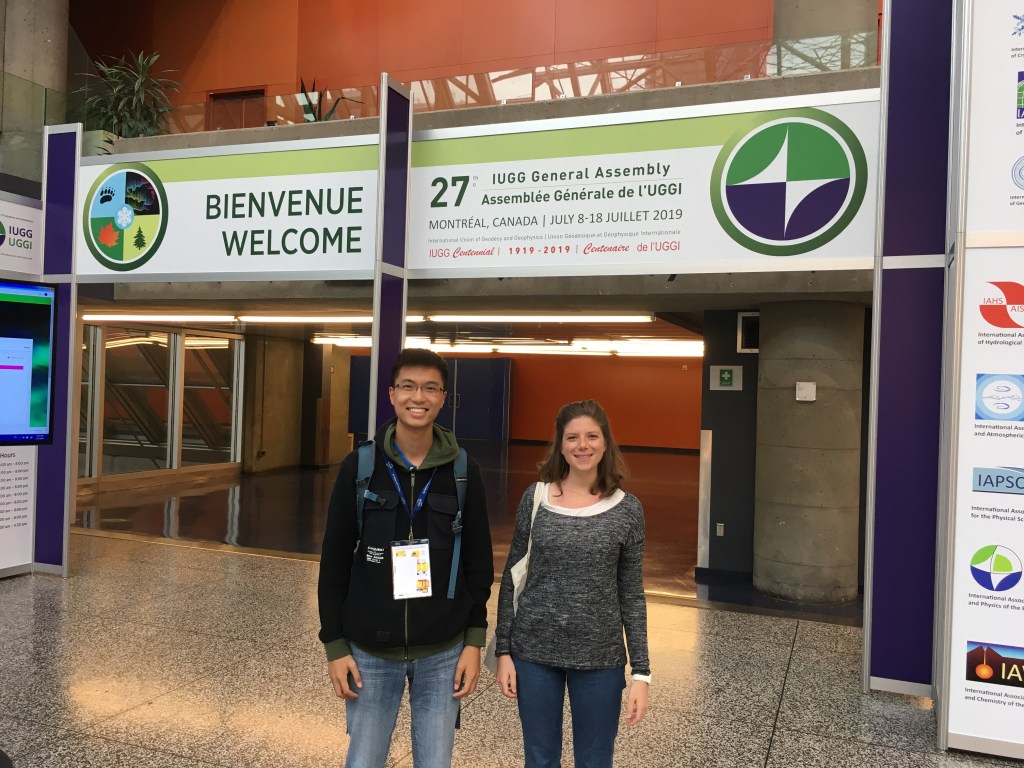
Earlier this month (9th – 17th July, 2019), Elena Saggioro and I from the Mathematics of Planet Earth Centre of Doctoral Training (MPE CDT) were in Montréal for the General Assembly of the IUGG, a quadrennial gathering of nearly 4000 geoscientists from all over the world sharing their latest scientific advances.

At the conference centre.

The IUGG, which celebrates its centenary this year, is an international organisation ‘dedicated to advancing, promoting, and communicating knowledge of the Earth system, its space environment, and the dynamical processes causing change’ (from the Mission Statement on its website).  The IUGG consists of eight constituent associations, among which the International Association of Meteorology and Atmospheric Sciences (IAMAS) and the International Association for the Physical Sciences of the Oceans (IAPSO) are of the most relevance to meteorology students here in Reading.  Other fields under the IUGG umbrella include hydrology, cryospheric sciences, seismology, volcanology, geodesy and geomagnetism.

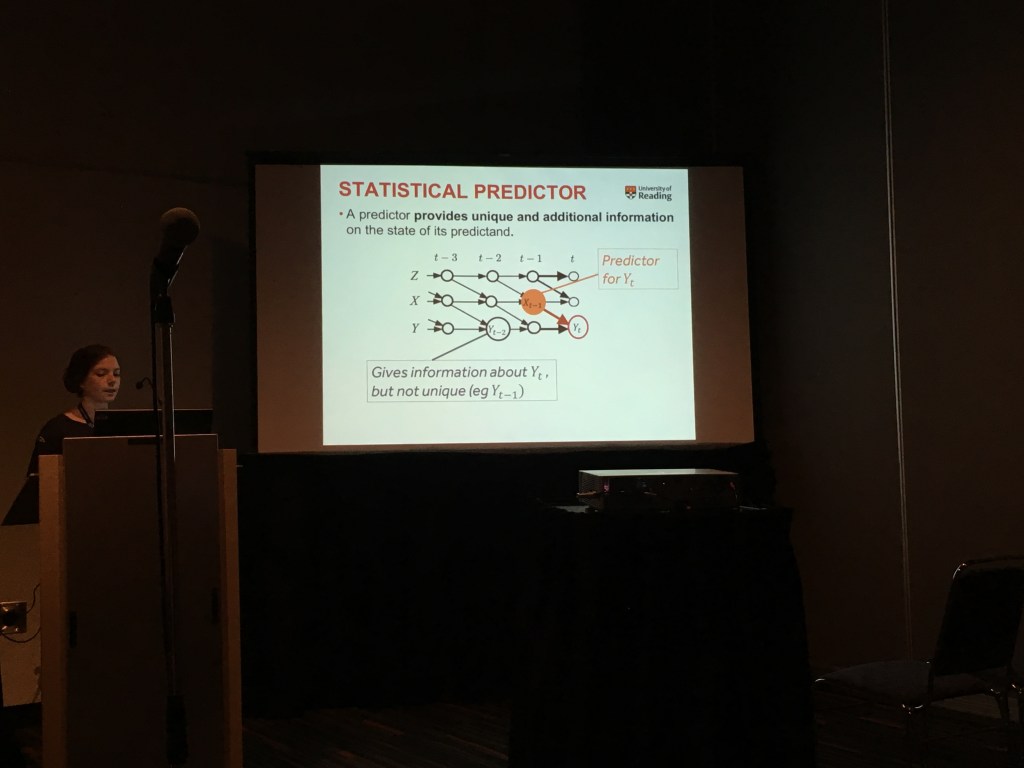
In the General Assembly I presented a poster on my own PhD research, revisiting and proposing a new argument for the finite-time barrier of weather predictability. The poster turned out to be popular, with a good number of scientists visiting and discussing in depth. It is great to know these people, especially those who work in the relatively small field of predictability. Earlier that day, Elena gave an interesting talk on studying southern-hemisphere stratosphere-troposphere coupling using casual network. A member in the audience came to her after the talk for a follow-up chat which lasted for hours! In addition, our supervisor Ted Shepherd gave a solicited talk advocating his storylines approach to the construction of regional climate-change information.

Elena Saggioro’s oral presentation.
With my poster.

For the variety of subjects covered, the General Assembly was also an excellent opportunity for us to interact with geoscientists of other fields and to get an idea of their research. I did this primarily through the poster sessions, as there’s already so much going on in the oral-presentation sessions of the IAMAS symposia (just a matter of fact: the IAMAS, at 21%, was by far the association with the most attendees), and because it’s easier for a beginner to learn through interacting with a poster presenter than listening to short talks that usually presume some background knowledge in the field. The outcome of visiting posters in such an international conference could be somewhat unexpected. This time, I gave a little more focus on posters from remote parts of the world and learnt how research is being done in these places. To give an example, I saw how hydrologists in French Polynesia use analogue techniques to forecast rainfall and flood on the island of Tahiti which has a complex geography of drainage basins (poster by Lydie Sichoix, University of French Polynesia). This is a very challenging problem, and I think their commitment to protecting the public’s safety during floods is clear, yet there’s only so much they can do as they don’t have the money to buy even a single RADAR instrument for nowcasting. The situation in underprivileged places like this definitely deserves more attention.

Aside from the scientific programme, Elena and I spent some time as a tourist in Montréal. We are delighted to learn how committed Montréal is to sustainability and climate-change adaptation. The Biosphère Museum of the Environment nicely outlines the resilient city’s master plan 50 years ahead: new space reserved for nature in the city centre, green alleyways throughout the city, and harvesting storm and rain water are just a few examples in their long-term plan.

The Biosphère Museum.

Montréal is also rich in history, culture and diversity. Churches and museums are everywhere. There were also a multi-cultural festival and a series of fireworks depicting different national themes during our stay, and we went to some of them. Situated along St Lawrence’s River, the city is also home to a range of water sports, including white-water rafting which was a fun experience. Before coming home, Elena and I went up to Mount Royal for an exhilarating view of Montréal, a city that we much enjoyed!

A panoramic view from the Mount Royal Lookout.

The 2nd ICTP Summer School in Hierarchical Modelling of Climate Dynamics

Between the 1st and 12th July 2019, I attended the 2nd International Centre for Theoretical Physics (ICTP) Summer School in Hierarchical Modelling of Climate Dynamics at the ICTP guesthouse in Trieste, Italy. The focus of this summer school was on convective organisation and climate sensitivity, which is incredibly relevant to my PhD topic: Interactions between Radiation and Convective Organisation. So, I felt I had to attend this summer school (and not just because my lead supervisor, Chris Holloway, was one of the lead directors).

This was an international conference with staff and students coming together from all corners of the globe. In total there were 111 people attending the school, made up of 84 participants, 20 speakers and 7 directors. Without knowing anyone else going to this school (except my supervisor), I was initially a little apprehensive as I didn’t know what to expect but as soon as I met some of the other students I was put at ease. It was amazing to meet other people working on very similar projects to me, especially since my supervisor was the only other person I previously knew working on this convective organisation topic. So, it was great to not only make new friends but also meet potential future colleagues.

Group photo of all those involved in the summer school.

As expected, the schedule was pretty intense, with most days working from 9am until 6pm except for lunch and a couple of coffee breaks. The mornings consisted of a couple of lectures given by some of the leading experts in the field including Kerry Emanuel, Bjorn Stevens and Sandrine Bony, then in the afternoons we would do some group project work. In our groups of 4 or 5, we analysed some numerical model data, to study how convection organises within our model. I was surprised to find that our group tasks were very similar to what I’ve been doing for my first year, so I was a bit worried that we’d manage to do what I’ve been working on this past year within a couple of weeks! But actually, it ended up giving me almost too many new ideas for my own research! In the second week, each group then had to give a quick presentation on their work.

Talk by Kerry Emanuel about the consequences of climate change on our weather.

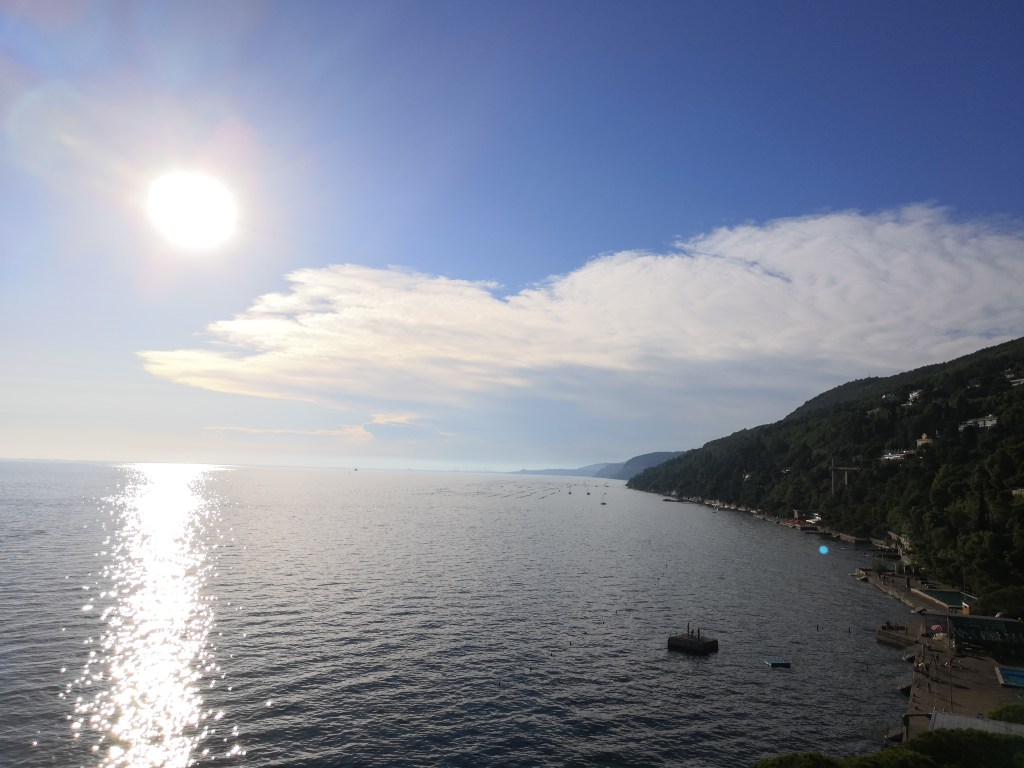
Each day, after the lectures and the group work, we were free to do what we wanted for the rest of the evening. With the venue being right on the coast, and with temperatures consistently between 26 – 32C in the day, it was perfect to relax by the sea or go for a swim. Or, if we were bored with the relentless supply of pasta in the canteen then we’d often go into town in search of pizza and of course gelato!

At the start of the second week, there was a poster session in which a lot of the participants brought posters to showcase their projects. This was the first time I’d presented my research at an event like this, so it was great to show what I’ve been working on in front of so many people. It was exciting to see so many people genuinely interested in my work and I got lots of useful feedback and ideas.

Presenting my work at the poster session.

So overall, this summer school far surpassed my expectations and I would strongly recommend attending a summer school if you get the chance. I learned so much through the lectures, the group work, through chatting to the professors and students and through presenting my work. I now have far too many ideas to explore with my research, probably more than I can realistically achieve! Perhaps the most valuable aspect of the school was being able to meet so many people working in this field. Since this topic is very niche, I have been very lucky to meet a very large proportion of the people working in the topic so I’m sure some of our paths will cross in the future and we will be able to collaborate on future projects.

RMetS Student and Early Career Scientists Conference 2019

Email: d.w.j.jones@pgr.reading.ac.uk

This year at the University of Birmingham, from the 2nd to the 5th of July, the Royal Meteorological Society (RMetS) held two national conferences. The first, the Atmospheric Science Conference, was well attended by staff and post-docs. The second, the Student and Early Career Scientists Conference, was attended by PhD students, including some of us from Reading. It proved a great opportunity to share research and best practices as well as network with both old and new colleagues from other institutions.

The Student and Early Career conference is open to all students and researchers just embarking upon their science career. It aims to give those in the field the opportunity to meet and present work before going on to attend more specialized conferences. For some of the Reading delegates this was the first opportunity to present work outside of the department to a wider audience who they weren’t already familiar with, or in quite the same field as. Presentations from Reading students ranged from topics such as thermal updrafts to atmosphere and ocean model coupling (summaries below). There were also keynote sessions that discussed important topics in atmospheric sciences as well as addressing the impact and reach that social media can give research.

There was also time to socialize, with an ice-breaker event on the Wednesday before the conference and a conference dinner on the Thursday evening. Keen to give the participants an opportunity to maximise their networking time, on Wednesday several scientists who had attended the Atmospheric Science Conference that day volunteered to stay behind, share their experiences during their careers and chat to the Early Career conference delegates over a few drinks.

Having also attended events through other institutions (such as the doctoral training partnership SCENARIO) there were also many friendly faces from outside Reading in attendance, and it was a great opportunity to catch up and share progress on our work. One of the delegates was even an old friend from when I was an undergraduate, so you never know what familiar faces you might find!

The student conference is organised by a committee of students and early career scientists (usually but not always attendees from previous conferences) from around the UK. Being a member of the committee is a fantastic opportunity to hone one’s organizational and planning skills, as well as getting invaluable practice for things like chairing sessions. If you’re interested in helping organise next year’s conference please do get in touch with Catherine Bicknell at RMetS (catherine.bicknell@rmets.org) or if you’re thinking about attending then you can start by joining the society where you’ll hear about all the other great events they host.

Highlights of the work presented by Reading students:

  • Kris Boykin presented work on clustering ensemble members in high resolution forecasts in order to extract likely scenarios and assign probabilities to each one.
  • Liam Till presented results from tracking thermals in deep convective clouds using the world’s largest fully steerable meteorological radar.
  • Sally Woodhouse presented a study of the effect of resolution of atmospheric models on heat transport into the Arctic using a coupled ocean-atmosphere climate model.
  • Emanuele Gentile presented a poster on his work determining how coupled models can improve extreme surface wind predictions using storm Helene as a case study.
  • Jake Bland presented a poster on the humidity biases in the stratosphere in the Met Office operational model assessed relative to experimental radiosonde data gathered during the North Atlantic Waveguide and Downstream impacts EXperiment (NAWDEX) field campaign.

Simulating measurements from the ISMAR radiometer using a new light scattering approximation

Email: karina.mccusker@pgr.reading.ac.uk

It is widely known that clouds pose a lot of difficulties for both weather and climate modelling, particularly when ice is present. The ice water content (IWC) of a cloud is defined as the mass of ice per unit volume of air. The integral of this quantity over a column is referred to as the ice water path (IWP) and is considered one of the essential climate variables by the World Meteorological Organisation. Currently there are large inconsistencies in the IWP retrieved from different satellites, and there is also a large spread in the amount produced by different climate models (Eliasson et al., 2011).
A major part of the problem is the lack of reliable global measurements of cloud ice. For this reason, the Ice Cloud Imager (ICI) will be launched in 2022. ICI will be the first instrument in space specifically designed to measure cloud ice, with channels ranging from 183 to 664 GHz. It is expected that the combination of frequencies available will allow for more accurate estimations of IWP and particle size. A radiometer called ISMAR has been developed by the UK Met Office and ESA as an airborne demonstrator for ICI, flying on the FAAM BAe-146 research aircraft shown in Fig. 1.

Figure 1: The Facility for Airborne Atmospheric Measurements (FAAM) aircraft which carries the ISMAR radiometer.

As radiation passes through cloud, it is scattered in all directions. Remote sensing instruments measure the scattered field in some way; either by detecting some of the scattered waves, or by detecting how much radiation has been removed from the incident field as a result of scattering. The retrieval of cloud ice properties therefore relies on accurate scattering models. A variety of numerical methods currently exist to simulate scattering by ice particles with complex geometries. In a very broad sense, these can be divided into 2 categories –
1: Methods that are accurate but computationally expensive
2: Methods that are computationally efficient but inaccurate

My PhD has involved developing a new approximation for aggregates which falls somewhere in between the two extremes. The method is called the Independent Monomer Approximation (IMA). So far, tests have shown that it performs well for small particle sizes, with particularly impressive results for aggregates of dendritic monomers.

Radiometers such as ICI and ISMAR convert measured radiation into brightness temperatures (Tb), i.e. the temperature of a theoretical blackbody that would emit an equivalent amount of radiation. Lower values of Tb correspond to more ice in the clouds, as a greater amount of radiation from the lower atmosphere is scattered on its way to the instrument’s detector (i.e. a brightness temperature “depression” is observed over thick ice cloud). Generally, the interpretation of measurements from remote-sensing instruments requires many assumptions to be made about the shapes and distributions of particles within the cloud. However, by comparing Tb at orthogonal horizontal (H) and vertical (V) polarisations, we can gain some information about the size, shape, and orientation of ice particles within the cloud. If large V-H polarimetric differences are measured, it is indicative of horizontally oriented particles, whereas random orientation produces less of a difference in signal. According to Gong and Wu (2017), neglecting the polarimetric signal could result in errors of up to 30% in IWP retrievals. Examples of Tb depressions and the corresponding V-H polarimetric differences can be seen in Fig. 2. In the work shown here, we explore this particular case further.

Figure 2: (a) ISMAR measured brightness temperatures, showing a depression (decrease in Tb) caused by thick cloud; (b) Polarimetric V-H brightness temperature difference, with significant values reaching almost 10 K.

Using the ISMAR instrument, we can test scattering models that could be used within retrieval algorithms for ICI. We want to find out whether the IMA method is capable of reproducing realistic brightness temperature depressions, and whether it captures the polarimetric signal. To do this, we look at a case study that was part of the NAWDEX (North Atlantic Waveguide and Downstream Impact Experiment) campaign of flying. The observations from the ISMAR radiometer were collected on 14 October 2016 off the North-West Coast of Scotland, over a frontal ice cloud. Three different aircraft took measurements from above the cloud during this case, which means that we have coincident data from ISMAR and two different radar frequencies of 35 GHz and 95 GHz. This particular case saw large V-H polarimetric differences reaching almost 10 K, as seen in Fig. 2(b). We will look at the applicability of the IMA method to simulating the polarisation signal measured from ISMAR, using the Atmospheric Radiative Transfer Simulator (ARTS).

For this study, we need to construct a model of the atmosphere to be used in the radiative transfer simulations. The nice thing about this case is that the FAAM aircraft also flew through the cloud, meaning we have measurements from both in-situ and remote-sensing instruments. Consequently, we can design our model cloud using realistic assumptions. We try to match the atmospheric state at the time of the in-situ observations by deriving mass-size relationships specific to this case, and generating particles to follow the derived relationship for each layer. The particles were generated using the aggregation model of Westbrook (2004).

Due to the depth of the cloud, it would not be possible to obtain an adequate representation of the atmospheric conditions using a single averaged layer. Hence, we modelled our atmosphere based on the aircraft profiles, using 7 different layers of ice with depths of approximately 1 km each. These layers are located between altitudes of 2 km and 9 km. Below 2 km, the Marshall-Palmer drop size distribution was used to represent rain, with an estimated rain rate of 1-2mm/hr taken from the Met Office radar. The general structure of our model atmosphere can be seen in Fig. 3, along with some of the particles used in each layer. Note that this is a crude representation and the figure shows only a few examples; in the simulations we use between 46 and 62 different aggregate realisations in each layer.

Figure 3: Examples of particles used in our model atmosphere. We represent the ice cloud using 3 layers of columnar aggregates and 4 layers of dendritic aggregates, and include a distribution of rain beneath the cloud.

To test our model atmosphere, we simulated the radar reflectivities at 35 GHz and 95 GHz using the particle models generated for this case. This allowed us to refine our model until sufficient accuracy was achieved. Then we used the IMA method to calculate the scattering quantities required by the ARTS radiative transfer model. These were implemented into ARTS in order to simulate the ISMAR polarisation observations.
Fig. 4 shows the simulated brightness temperatures using different layers of our modelled atmosphere, i.e. starting with the clear-sky case and gradually increasing the cloud amount. The simulations using the IMA scattering method in the ARTS model were compared to the measurements from ISMAR shown in Fig. 2. Looking at the solid lines in Fig. 4, it can be seen that the aggregates of columns and dendrites simulate the brightness temperature depression well, but do not reproduce the V-H polarization signal. Thus we decided to include some horizontally aligned single dendrites which were not included in our original atmospheric model. The reason we chose these particles is that they tend to have a greater polarization signal compared to aggregates, and there was evidence in the cloud particle imagery that they were present in the cloud during the time of interest. We placed these particles at the cloud base, without changing the ice water content of the model. The results from that experiment are shown by the diagonal crosses in Fig. 4. It is clear that adding single dendrites allow us to simulate a considerably larger polarimetric signal, closely matching the ISMAR measurements. Using only aggregates of columns and dendrites gives a V-H polarimetric difference of 1.8K, whereas the inclusion of dendritic particles increases this value to 8.4K.

Figure 4: Simulated brightness temperatures using different layers of our model atmosphere. Along the x-axis we start with the clear-sky case, followed by the addition of rain. Then we add one layer of cloud at a time, starting from the top layer of columnar aggregates.

To conclude, we have used our new light scattering approximation (IMA) along with the ARTS radiative transfer model to simulate brightness temperature measurements from the ISMAR radiometer. Although the measured brightness temperature depressions can generally be reproduced using the IMA scattering method, the polarisation difference is very sensitive to the assumed particle shape for a given ice water path. Therefore, to obtain good retrievals from ICI, it is important to represent the cloud as accurately as possible. Utilising the polarisation information available from the instrument could provide a way to infer realistic particle shapes, thereby reducing the need to make unrealistic assumptions.

References

Eliasson, S., S. A. Buehler, M. Milz, P. Eriksson, and V. O. John, 2011: Assessing observed and modelled spatial distributions of ice water path using satellite data. Atmos. Chem. Phys., 11, 375-391.

Gong, J., and D. L. Wu, 2017: Microphysical properties of frozen particles inferred from Global Precipitation Measurement (GPM) Microwave Imager (GMI) polarimetric measurements. Atmos. Chem. Phys., 17, 2741-2757.

Westbrook, C. D., R. C. Ball, P. R. Field, and A. J. Heymsfield, 2004: A theory of growth by differential sedimentation with application to snowflake formation. Phys. Rev. E, 70, 021403.

Met Department Summer BBQ 2019

On Friday the 14th of June at 6.30pm the Department of Meteorology had its 2019 summer BBQ! And what a fun, pleasant and well attended affair it was.

BBQ turnout – downtime for the department!

The weather that week had been especially awful, and the prospects of being able to have the BBQ outside were looking distinctly grim, but in a rather fluky stroke of luck, the weather took a rather unexpected turn for the better… and almost unbelievably, by Friday PM the grass was deemed dry enough – and therefore safe enough – for the event to be an outdoor, in-the-sun affair!

The event required a lot of preparation. For the most part this went smoothly, save for one or two things:

1: A sudden and panicky realisation on my part on the morning of the BBQ (thanks Michael L!) that we probably weren’t going to get very far without tongs/cooking implements of some kind! (This is my first Met BBQ, okay!)

2: The butcher delivery van going seriously AWOL (even from the butchers themselves). The van apparently departed the Reading depot at 9am and must have then gotten lost as it took them some 8 hours to find us! This caused some nerves to fray…

The event took off at 6.30pm and thanks to a small army of well-trained BBQing PhD students, both meat and plant-based sausages and burgers soon began to appear and (as we had slightly over ordered on the food front) attendees got offered seconds! No one present was to go hungry!

The BBQing army.

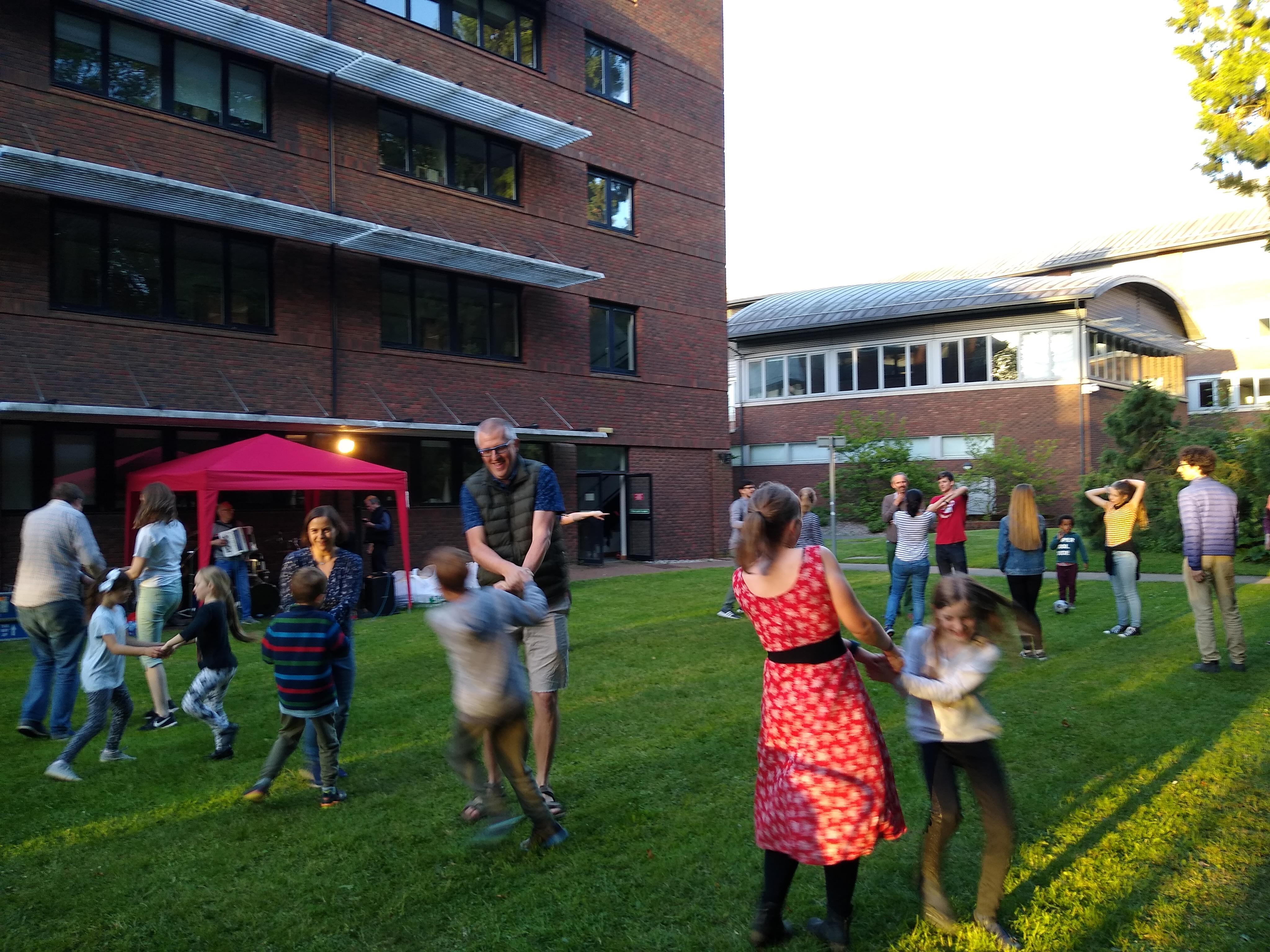
At around 8pm the perennial Hogs Back Band & caller began their ceilidh/barn dance. Many of us were duly terrified of this part of the evening, but such concerns quickly vanished following a few nervous giggles, a couple of bungled dance steps… and of course one or two beers. Before long, everyone, both dancers and onlookers, children and staff alike were totally caught up in the band’s buoyant jig, and all feeling of self-consciousness evaporated!

2 hours of ceilidh as it turns out, is incredibly tiring! I managed about half of the 10 dances and towards the end was beginning to seriously unravel at the seams. Perhaps a prize in future years for he or she who can manage to stick out every single dance? Surely one of the Met runners has the stamina?

As the evening drew to a close at 10pm I was impressed by the sustained, voluntary and joint effort of many to return the area to its original clean state. And, for those with energy to spare, the after-party with DJ Shonk and his new disco ball awaited!

A special thanks to Dan Shipley (one of the 2018 organisers) who despite supposedly having retired the year before, provided much help and advice at all stages of the planning and on the day! Numerous others also contributed in ways both big and small to make the event the success that it was. Thank you! Long live this particular Met Department tradition!

The ceilidh in full swing!

PhD Visiting Scientist 2019: Prof. Cecilia Bitz

r.frew@pgr.reading.ac.uk

With thanks to all my helpers who enabled the week to go smoothly! Adam Bateson, Sally Woodhouse, Kaja Milczewska and Agnieszka Walenkiewicz

Each year PhD students in the Department of Meteorology invite a distinguished scientist to spend a week with us.  This year we invited Prof. Cecilia Bitz, who visited between the 28th-31st May. Cecilia is based at the University of Washington, Seattle. 

Cecilia’s research interests are the role of sea ice in the climate system, and high latitude climate and climate change. She has also done a lot of work on the predictability of Arctic sea ice, and is involved in the Sea Ice Prediction Network.

The week began with a welcome reception in the coffee area, introducing Cecilia to the department, followed by a seminar by Cecilia on ‘Polar Regions as Sentinels of Different Climate Change’. The seminar predominantly focused on Antarctic sea ice, and the possible reasons why Antarctic sea ice behaviour is so different to the Arctic. Whilst Arctic sea ice has steadily declined we have seen Antarctic sea ice expansion over the past four decades, with extreme Antarctic sea ice extent lows since 2016.

Throughout the week Cecilia visited a number of the research groups, including Mesoscale, HHH (dynamics) and Cryosphere, where PhD students from each group presented to her, giving a taste of the range of PhD research within our department. 

Cecilia gave a second seminar later in the week in the Climate and Ocean Dynamics (COD) group meeting, this time focusing on the other pole, ‘Arctic Amplification: Local Versus Remote Causes and Consequences’. Cecilia discussed her work quantifying the role of feedbacks in Arctic Amplification, how they compare with meridional heat transports, and what influence Arctic warming has on the rest of the globe.

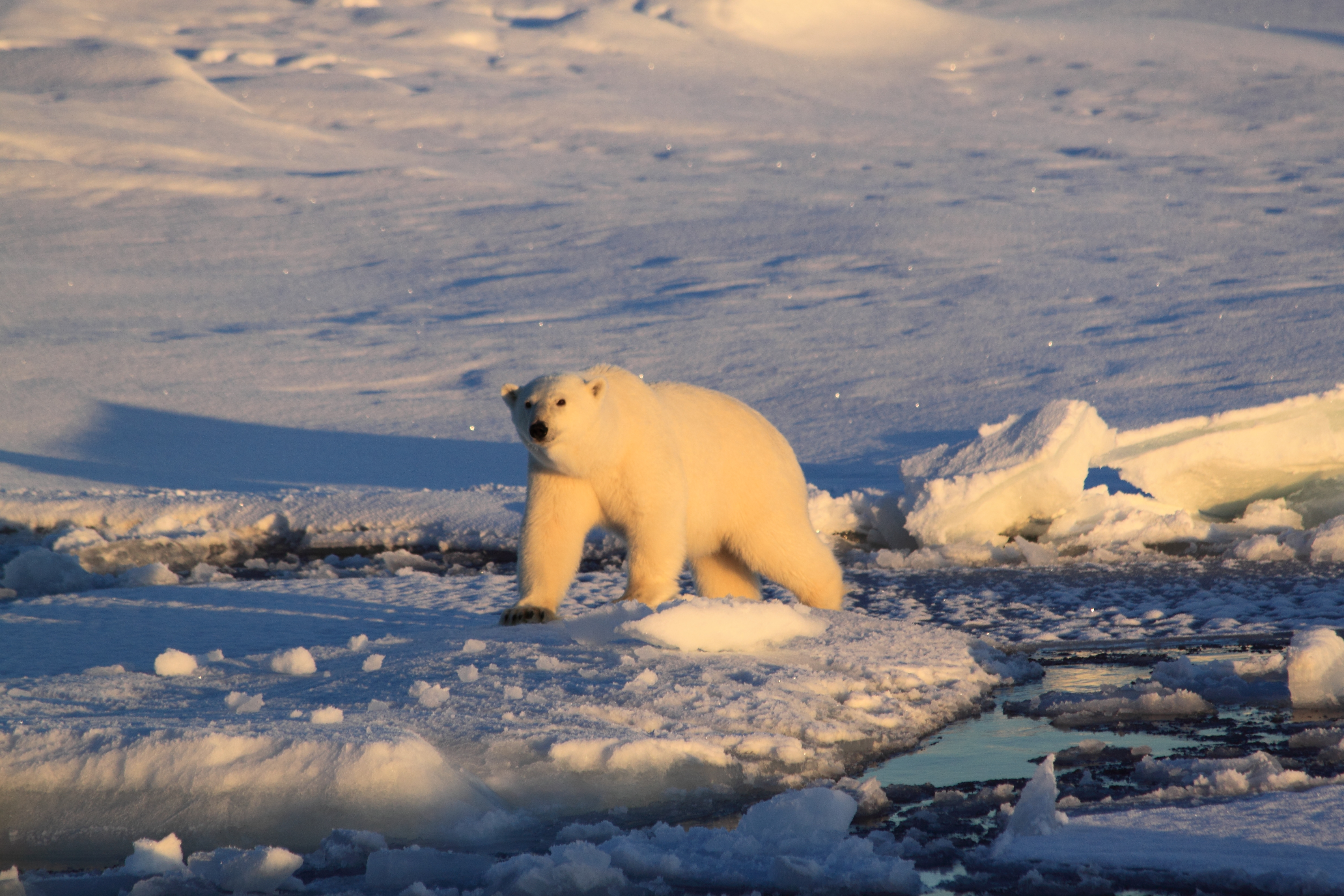
cuteness_on_ice
Photo Credit: Cecilia Bitz

On Wednesday afternoon the normal PhD group slot consisted of a career discussion, with Cecilia. Cecilia shared some of her career highlights with us, including extra opportunities she has taken such as doing some fieldwork in Antarctica and working for the charity, Polar Bears International, her insights and advice from her own experiences, as well as about post-doctoral opportunities in the US. A few of my personal take-aways from this session were to try give yourself space to learn one new thing at a time in your career (e.g. teaching, writing proposals, supervising etc). Try to work on a range of problems, and keep your outlook broad and open to new ideas and approaches. Take opportunities when they appear, such as fieldwork or short projects/collaborations. 

A small group of PhDs also met with her on the Friday to have an informal discussion about climate policy. In particular about her experiences speaking to the US senate, being a part of the IPCC reports and about the role of scientists in speaking about climate change, and whether we have a responsibility to do so.

Thursday evening the PhDs took Cecilia to Zero Degrees (a very apt choice for a polar researcher!), and enjoyed a lovely evening chatting over pizza and beer. 

The week ended with a farewell coffee morning on Friday, where we gave Cecilia some gifts to thank her for giving us her time this week including some tea, chocolates, a climate stripes mug and a framed picture of us… 

All the PhDs had a great week. We hope Cecilia enjoyed her visit as much as we did!

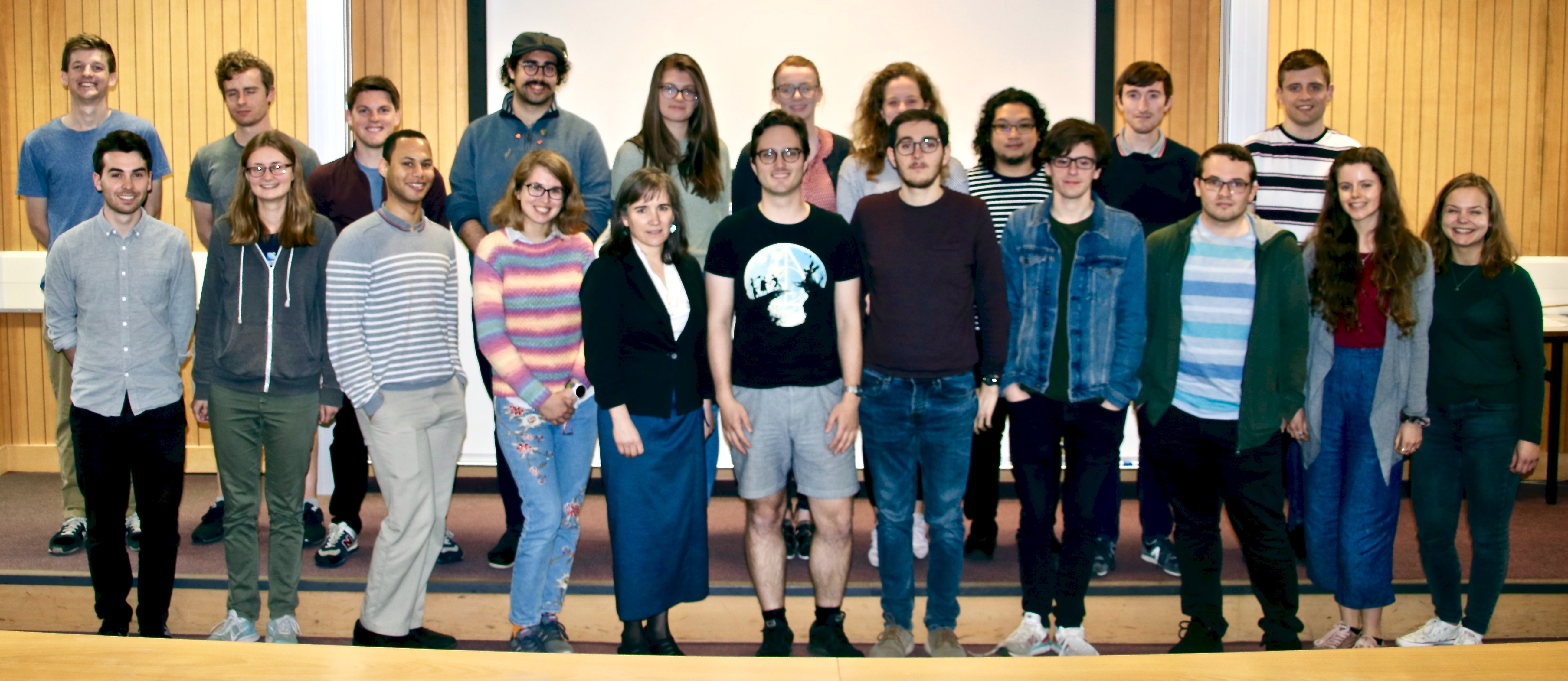
GroupPhoto
PhD students with Cecilia Bitz before the Careers Discussion.

Island convection and its many shapes and forms: a closer look at cloud trails

Despite decades of research, convection continues to be one of the major sources of uncertainty in weather and climate models. This is because convection occurs across scales that are smaller than the numerical grids used to integrate these models – in other words, the convection is not resolved in the model. However, its role in the vertical transport of heat, moisture, and momentum could still be important for phenomena that are resolved so the impact of convection is estimated from a set of diagnosed parameters (i.e. a parameterisation scheme).

As the community moves toward modelling with smaller numerical grids, convection can be partially resolved. This numerical regime consisting of partially resolved convection is sometimes called the ‘Convection Grey Zone’. New parameterisations for convection are required for the convection grey zone as the underlying assumptions for existing parameterisations are no longer valid.

With smaller grid spacing, other important processes are better represented – for example, the interaction with the surface. In some coarse climate models, many islands are so small that they are neglected altogether. We know that islands regularly force different kinds of convection and so they offer a real-world opportunity to study the kind of locally driven convection that can now be resolved in operational weather models. My thesis aims to take existing research on small islands a step further by considering the problem from the perspective of convection parameterisation.

Bermuda_DEM
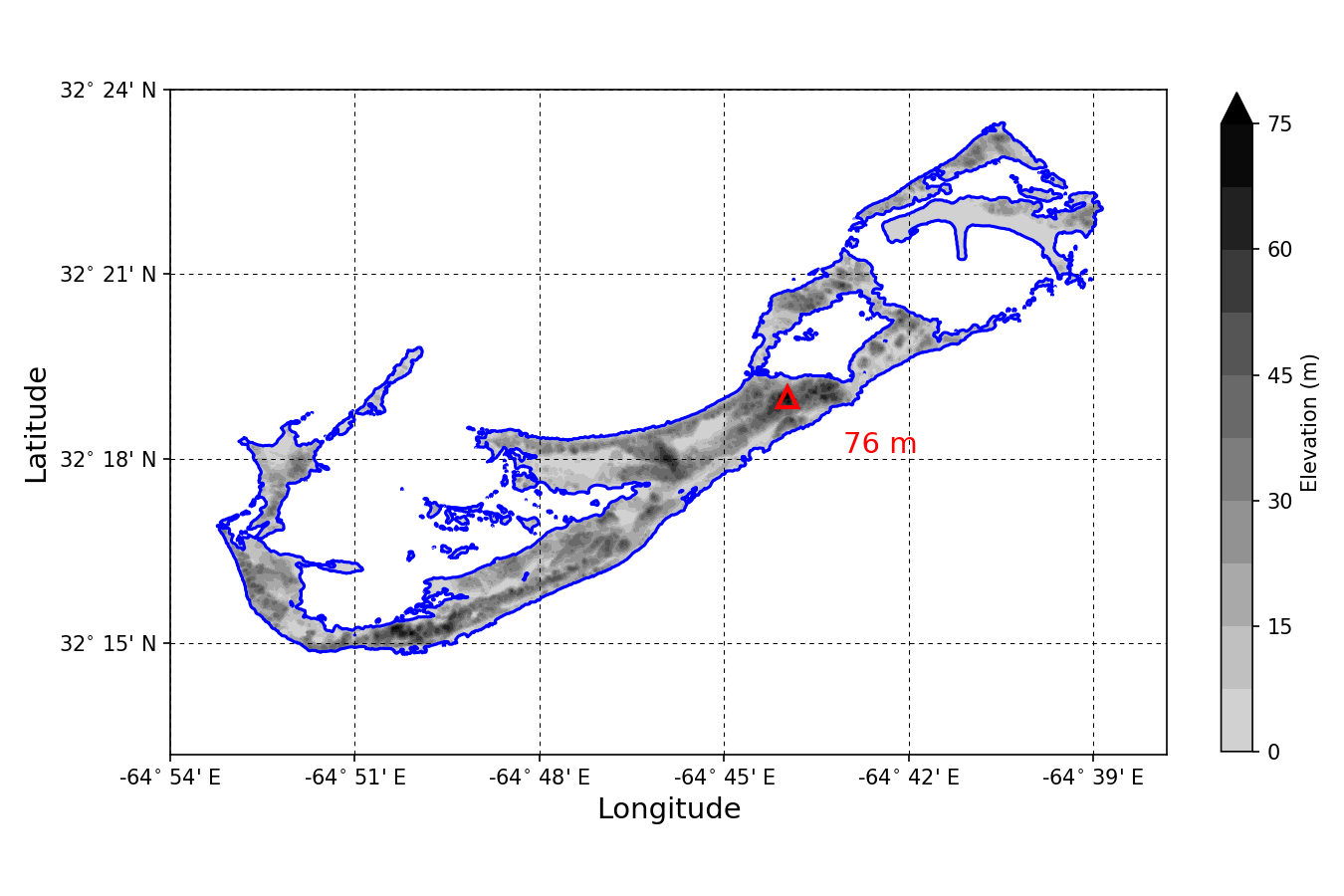
Figure 1. Topographic map of Bermuda showing the coastline in blue, elevation above sea level in grey shading, and the highest elevation is marked by a red triangle.

Bermuda (where I’m from) is a small, relatively flat island located in the western North Atlantic Ocean (e.g. Fig. 1). Cloud trails (CT) here have been unwittingly incorporated into a local legend surrounding an 18th century heist during the American Revolution. This plot to steal British gunpowder to help the American revolutionaries involved the American merchant ‘Captain Morgan’, whose ghost is said to haunt Bermuda on hot, humid summer evenings when dark cloud looms over the east end of the island. This legend is where the local name for the cloud trail “Morgan’s Cloud” comes from (BWS Glossary, 2019).

This story highlights what a CT might look like from a ground observer – a dark cloud which hangs over one end of the island. In fact, CT could only be observed from the ground until research aircraft became feasible in the 1940s and 50s. Aircraft measurements revealed the internal structure of the CT including an associated plume of warmer, drier air immediately downwind of the island.

In the coming decades, the combination of publicly available high-quality satellite imagery and computing advances introduced new avenues for research. This allowed case studies of one-off events and short satellite climatologies constructed by hand (e.g. Nordeen et al., 2001).

Observed from space, CTs look like bands of cloud that stream downwind of, and appear anchored to, small islands. They can be found downwind of small islands around the world, mainly in the tropics and subtropics.

fig1
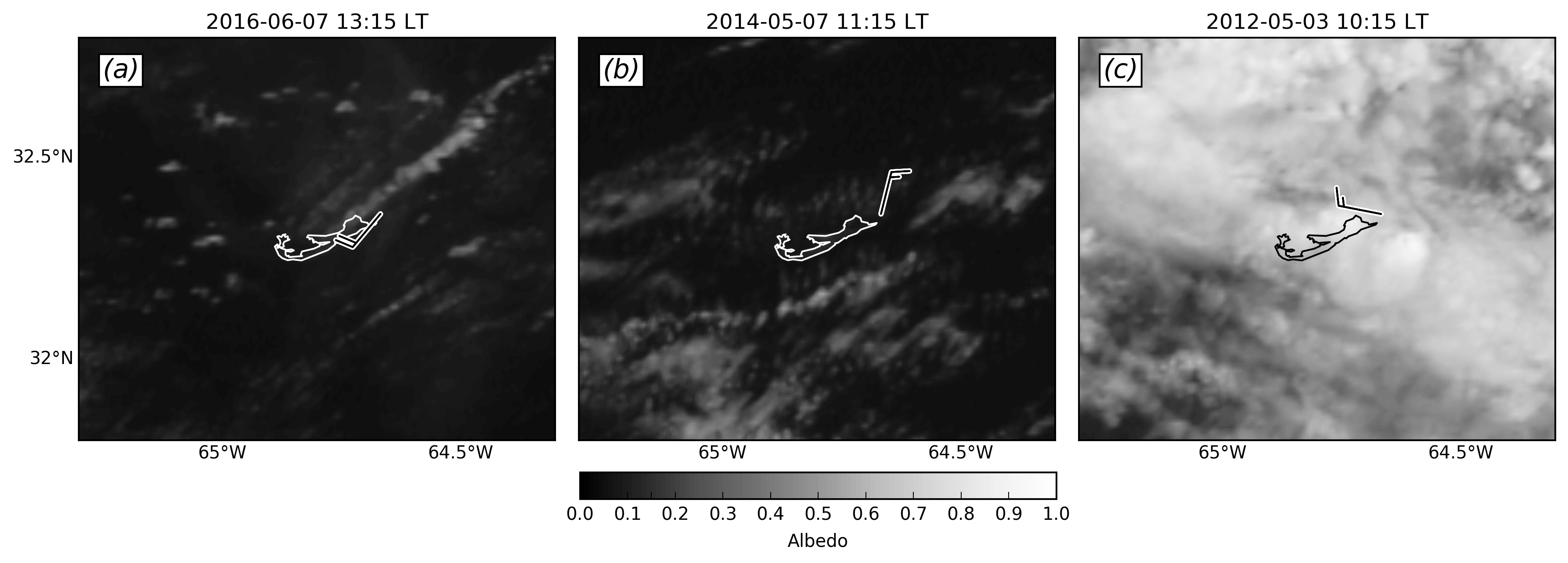
Figure 2. (Johnston et al., 2018) Observations from visible satellite imagery showing (a) an example CT, (b) an example NT, and (c) an example obscured scene. Imagery from GOES-13 0.64 micron visible channel. In each instance a wind barb indicating the wind speed (knots) and direction. Full feathers on the wind barbs represent 10 kts, and half feathers 5 kts.

In my thesis, we design an algorithm to automate the objective classification of satellite imagery into one of three categories (Fig. 2): CT, NT (Non-Trail), and OB (Obscured). We find that the algorithm results are comparable to manually classified satellite imagery and can construct a much longer climatology of CT occurrence quickly and objectively (Johnston et al., 2018). The algorithm is applied to satellite imagery of Bermuda for May through October of 2012-2016.

We find that CT occurrence peaks in the afternoon and in July. This highlights the strong link to the solar cycle. Furthermore, radiosonde measurements taken via weather balloon by the Bermuda Weather Service show that cloud base height (which is controlled by the low-level humidity) is too high for NT days. This reduces cloud formation in general and prevents the CT cloud band forming. Meanwhile, large-scale disturbances result in widespread cloud cover on OB days (Johnston et al., 2018).

These observations and measurements can only tell us so much. A case CT day is then used to design numerical experiments to consider poorly observed features of the phenomenon. For example, the interplay between the warm plume, CT circulation, and the clouds themselves. These experiments are completed with very small grid spacing (i.e. 100 m vs. the ~10 km in weather models, and ~50 km in climate models). This allows us to confidently simulate both convection and a small island without the use of parameterisations.

Within the boundary layer which buffers the impacts from surface on the free atmosphere, a circulation forms downwind of the heated island. We show that this circulation consists of near-surface convergence, which leads to a band of ascent, and a region of divergence near the top of the boundary layer. This circulation acts as a coherent structure tying the boundary layer to convection in the free atmosphere above.

Further experiments which target the relationship between the island heating, low-level humidity, and wind speed have been completed. These experiments reveal a range of circulation responses. For instance, responses associated with no cloud, mostly passive cloud, and strongly precipitating cloud can result.

We are now using the set of CT experiments to develop a set of expectations upon which existing and future convection parameterisation schemes can be tested and evaluated. We plan to use a selection of the CT experiments with grid spacing increased to values consistent with current operational grey zone models. We believe that this will help to highlight deficiencies in existing parameterisation schemes and focus efforts for the improvement of future schemes.

Further Reading:

Bermuda Weather Service (BWS) Glossary, accessed 2019: Morgan’s Cloud/Morgan’s Cloud (Story). https://www.weather.bm/glossary/glossary.asp

Johnston, M. C., C. E. Holloway, and R. S. Plant, 2018: Cloud Trails Past Bermuda: A Five-Year Climatology from 2012-2016. Mon. Wea. Rev., 146, 4039-4055, https://doi.org/10.1175/MWR-D-18-0141.1

Matthews, S., J. M. Hacker, J. Cole, J. Hare, C. N. Long, and R. M. Reynolds, 2007: Modification of the atmospheric boundary layer by a small island: Observations from Nauru. Mon. Wea. Rev., 135, 891-905, https://doi.org/10.1175/MWR3319.1

Nordeen, M. K., P. Minnis, D. R. Doelling, D. Pethick, and L. Nguyen, 2001: Satellite observations of cloud plumes generated by Nauru. Geophys. Res. Lett., 28, 631-634, https://doi.org/10.1029/2000GL012409

Investigating the use of early satellite data to test historical reconstructions of sea surface temperature

Email: t.hall@pgr.reading.ac.uk

Observations of sea surface temperature (SST) form one of the key components of the climate record. There are a number of different in-situ based reconstructions of SST extending back over 150 years, but they are not truly independent of each other because the observations they are based on are largely the same (Berry et al., 2018). Datasets of SST retrieved from satellite radiometers exist for the 1980s onwards, providing an independent record of SST. Before this, SST reconstructions are based on sparse, ship-based measurements.

There were meteorological measurements being made from satellites in the 1960s and 70s, however, some of which can potentially be used to retrieve SST. My PhD focuses on investigating if we can retrieve SST from one of these early satellite instruments, to test the reliability of the SST reconstructions before the 1980s. This instrument is the Infrared Interferometer Spectrometer (IRIS), which made measurements of atmospheric emission spectra on-board the Nimbus 4 satellite from April 1970 to January 1971. IRIS had over 800 thermal infrared (IR) channels, covering the 400-1600 cm-1 spectral region. Figure 1 shows an example of two typical IRIS radiance spectra, with the main spectral absorption features labelled as well as the atmospheric window regions, which are the main spectral regions used for SST retrieval.

blog_fig1
Figure 1: Example of two typical IRIS radiance spectra; the main spectral absorption features are labelled as well as the atmospheric window regions.

Before using the IRIS data to retrieve SST, it was necessary to apply a series of quality assurance tests to filter out bad data. A few months into my PhD, work by Bantges et al. (2016) revealed evidence for a wavelength dependent cold bias of up to 2K in the data. A large part of my PhD was spent trying to quantify this bias. This was done by comparing clear-sky IRIS spectra with spectra simulated with a radiative transfer model. Unfortunately, this meant that the SSTs eventually retrieved from IRIS are not totally independent of the SST reconstructions as the simulations are based on reanalysis data forced by the HadISST2 reconstruction. Figure 2 compares our estimate of the IRIS spectral bias with globally averaged spectral differences between IRIS, the Interferometric Monitor for Greenhouse Gases (IMG) and the Infrared Atmospheric Sounding Instrument (IASI) from Bantges et al. (2016). This shows close agreement between our bias estimate and the IRIS-IMG and IRIS-IASI differences outside of the ozone spectral region, which is not relevant for SST retrieval.

It cannot just be assumed that the bias is the same for each IRIS measurement. Comparison of IRIS (bias-corrected using our initial bias estimate) with window channel data from the Temperature-Humidity Infrared Radiometer (THIR), also on-board Nimbus 4, reveals that the relative IRIS-THIR bias varies with window brightness temperature and orbit angle. The THIR, however, may have biases of its own, so these biases cannot be attributed to IRIS.

blog_fig2
Figure 2: Area-weighted global mean brightness temperature difference averaged over AMJ between IRIS (1970), IMG (1997) and IASI (2012) (black and blue lines) from Bantges et al. (2016), compared with our IRIS bias estimate, also area-weighted and averaged over AMJ (red line). The ozone absorption band is not used for SST retrieval, so is shaded grey.

The technique of optimal estimation was applied to retrieve SST from IRIS. This uses the observation-simulation differences together with information about the sensitivity of the simulations to the state of the atmosphere and ocean to estimate the SST. IR satellite retrievals of SST are usually performed in clear-sky conditions only. However, the low spatial resolution of IRIS means that very few cases are fully clear-sky. For this reason, we had to adapt the retrieval method to be tolerant of some cloud. This involves retrieving SST simultaneously with cloud fraction (CF). The retrieval method was then tested on partly cloudy (≤0.2 CF) IASI spectra made ‘IRIS-like’ by spatial averaging, spectral smoothing and simulating IRIS-like errors. The retrieved IRIS-like SSTs were validated against quality-controlled drifting buoy SSTs. This revealed latitudinal biases in the retrieved SSTs for the partly cloudy cases, not present in the SSTs for clear-sky cases.

SSTs were then retrieved for all IRIS cases with an expected CF ≤ 0.2. Figure 3 shows the difference between the gridded, monthly average IRIS SSTs and two of the SST reconstructions (HadSST3 and HadISST2) for July 1970. There are large, spatially correlated differences between the IRIS SSTs and reconstructions. We expect a latitudinal bias in the IRIS SSTs and some level of remaining bias in the IRIS spectra is likely, contributing to further SST bias. It is therefore likely that the differences in Figure 3 are mainly due to bias in the IRIS SSTs rather than the reconstructions.

iris_recon_07_70
Figure 3: Gridded IRIS-HadSST3 (left) and IRIS-HadISST2 (right) SST for July 1970. HadISST2 is a globally complete, interpolated dataset whereas HadSST3 is not globally complete.

Despite being unable to retrieve bias-free SST estimates from IRIS, my work has contributed towards better understanding the characteristics of IRIS. This ties in with a current project aiming to recover and assess the quality of data from a number of different historic satellite sensors, including IRIS, for assimilation in the next generation of climate reanalyses.

References

Bantges, R., H. Brindley, X. H. Chen, X. L. Huang, J. Harries, J. Murray (2016), On the detection of robust multi-decadal changes in the Earth’s Outgoing Longwave Radiation spectrum. J. Climate, 29, 4939-4947. https://doi.org/10.1175/JCLI-D-15-0713.1

Berry, D. I., G. K. Corlett, O. Embury, C. J. Merchant (2018), Stability assessment of the (A)ATSR Sea Surface Temperature climate dataset from the European Space Agency Climate Change Initiative. Remote Sens., 10, 126. https://doi.org/10.3390/rs10010126