Online comic “xkcd” set a trend for explaining complicated things using only the 1000 most common words when they created this schematic of Saturn-V. They have subsequently published more on how microwaves, plate tectonics and your computer work, using the same style.

So we thought we’d jump on the bandwagon in a recent PhD group meeting, and have a go at explaining our research topics using the ten-hundred most common words. You can have a go yourselves, and tweet us with it @SocialMetwork on Twitter. Enjoy!
The Role of the Asian Summer Monsoon in European Summer Climate Variability – Jonathan Beverley
I look at how heavy rain in in-dear in summer makes rain, sun, wind and other things happen in your-up. This happens by big waves high up in the sky moving around the world. We might be able to use this to make a long know-before better and to help people live longer and not lose money.
Contribution of near-infrared bands of greenhouse gases to radiative forcing – Rachael Byrom
I study how the sun’s light warms the sky. This happens when these really tiny things in the air that we can’t see eat the sun’s light which then makes the sky warmer. I use computers to look into how this happens, especially how exactly the really tiny things eat the sun’s light and how this leads to warming. By this I mean, if I add lots of the tiny things to a pretend computer sky, all over the world, then will the sky also warm over all of the world too and by how much will it warm? This might be interesting for people who lead the world so that they can see how much of the really tiny things we should be allowed to put into the sky.
Wind profile effects on gravity wave drag and their impact on the global atmospheric circulation – Holly Turner
I look at waves in the air over high places and how they slow down the wind. When the wind gets faster the higher up you go, it changes how it slows down. I want to use this to make computer wind pictures better.
The pulsatory nature of Bagana volcano, Papua New Guinea – Rebecca Couchman-Crook
To be a doctor, I look at a fire-breathing ground thing with smoke and rocks on a hot place surrounded by water. I look at space pictures to understand the relationships between the air that smells and fire-rock bits in the air, and other stuff. It’s a very angry fire-breathing ground thing and might kill the near-by humans
Surface fluxes, temperatures and boundary layer evolutions in the building grey zone in London – Beth Saunders
I work on numbers which come out of the Met Office’s computer world. These numbers are different to what is seen and felt in real life for cities. True numbers, seen in real life, help to say how hot cities are, and how different the hot city is to areas that aren’t cities, with trees and fields, because of the city’s people, cars and houses. Numbers saying how fast the wind goes, and the wind’s direction, change in cities because of all the areas with tall houses. Finding times where the computer world numbers are bad for cities will help to make the Met Office’s computer give numbers more like the true numbers.
Cloud electrification and lightning in the evolution of convective storms – Ben Courtier
To be a doctor, I look at sudden light shocks from angry water air that happens with noise in the sky and how the angry water air changes before the light shock happens. I do this in order to better guess when the sudden light shock happens.
 A true revolutionary in the field of theoretical physics and abstract algebra, Amelie Emmy Noether was a German-born inspiration thanks to her perseverance and passion for research. Instead of teaching French and English to schoolgirls, Emmy pursued the study of mathematics at the University of Erlangen. She then taught under a man’s name and without pay because she was a women. During her exploration of the mathematics behind Einstein’s general relativity alongside renowned scientists like Hilbert and Klein, she discovered the fundamentals of conserved quantities such as energy and momentum under symmetric invariance of their respective quantities: time and homogeneity of space. She built the bridge between conservation and symmetry in nature, and although Noether’s Theorem is fundamental to our understanding of nature’s conservation laws, Emmy has received undeservedly small recognition throughout the last century.
 Claudine Hermann is a French physicist and Emeritus Professor at the École Polytechnique in Paris. Her work, on physics of solids (mainly on photo-emission of polarized electrons and near-field optics), led to her becoming the first female professor at this prestigious school. Aside from her work in Physics, Claudine studied and wrote about female scientists’ situation in Europe and the influence of both parents’ works on their daughter’s professional choices. Claudine wishes to give girls “other examples than the unreachable Marie Curie”. She is the founder of the Women and Sciences association and represented it at the European Commission to promote gender equality in Science and to help women accessing scientific knowledge. Claudine is also the president of the European Platform of Women Scientists which represents hundreds of associations and more than 12,000 female scientists.
 For most people being handpicked to be one of three students to integrate West Virginia’s graduate schools would probably be the most notable life achievements. However for Katherine Johnson’s this was just the start of a remarkable list of accomplishments. In 1952 Johnson joined the all-black West Area Computing section at NACA (to become NASA in 1958). Acting as a computer, Johnson analysed flight test data, provided maths for engineering lectures and worked on the trajectory for America’s first human space flight.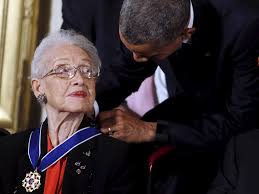
 Women however were not allowed on such ships, thus Marie Tharp was stationed in the lab, checking and plotting the data. Her drawings showed the presence of the North Atlantic Ridge, with a deep V-shaped notch that ran the length of the mountain range, indicating the presence of a rift valley, where magma emerges to form new crust. At this time the theory of plate tectonics was seen as ridiculous. Her supervisor initially dismissed her results as ‘girl talk’ and forced her to redo them. The same results were found. Her work led to the acceptance of the theory of plate tectonics and continental drift.
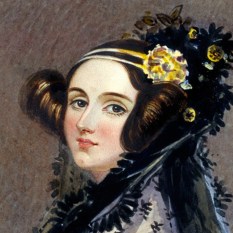 Ada Lovelace was a 19th century Mathematician popularly referred to as the “first computer programmer”. She was the translator of “Sketch of the Analytical Engine, with Notes from the Translator”, (said “notes” tripling the length of the document and comprising its most striking insights) one of the documents critical to the development of modern computer programming. She was one of the few people to understand and even fewer who were able to develop for the machine. That she had such incredible insight into a machine which didn’t even exist yet, but which would go on to become so ubiquitous is amazing!

 The Social Metwork