Discovering COP22

Email: j.f.talib@pgr.reading.ac.uk

Over the past two weeks 25,000 delegates have been gathering in Marrakech to discuss mitigation and adaptation for climate change. On the 4th November 2016 the Paris Agreement came into force and as a result discussions during the conference debated its implementation. The Walker Institute and the Department of Meteorology (University of Reading), with the support of the NERC SCENARIO doctoral training partnership and an UNFCCC partnership, supported two PhD students to be official UN observers at COP22, and enabled remote participation with students back at Reading University. To find out more about our work with COP22 continue reading this blog post and check out:

Today (18/11/16) the UK government are set to announce that the United Kingdom has ratified the Paris Agreement. Yesterday, Boris Johnson (UK foreign secretary) signed the Paris Agreement after no objections were raised by the House of Commons or House of Lords. The United Kingdom in accordance with the Intended Nationally Determined Contributions (INDCs) of the European Union, are set to reduce greenhouse gas emissions by 40% by 2030 relative to 1990 emission levels. Today also marks the end of the 22nd Conference of the Parties (COP) for the United Nations Framework Convention on Climate Change and here are some quick summary points that PhD students took away from observing the process in Marrakech:

1) The significance of the Paris Agreement.

“Now that we have Paris, we need to take action immediately”

Teresa Anderson, ActionAid UK.

The Paris Agreement marks a change in the intentions during the COP process. Due to the success and ratification of the Paris Agreement more discussions can be based on the adaptation and mitigation against climate change, rather than negotiating global targets on climate change prevention. The Paris Agreement states that a global response is needed to respond to the threat of climate change and that global temperature rise should be kept well below 2°C and that efforts should be pursued to limit the global temperature rise to 1.5°C. COP22 Marrakech, began by stating that this is the “COP of Action”, and therefore the focus seen during side events, negotiations, dignitary speeches and press conferences was on the need for action.

“Countries have strongly supported the [Paris] Agreement because they realize their own national interest is best secured by pursuing the common good. Now we have to translate words into effective policies and actions.”

Mr Ban Ki-Moon, Secretary General of the United Nations.

paris-agreement-signing

2) A continued effort is needed to concentrate on the individual.

As SCENARIO PhD students we were challenged to understand the process that takes place during a UNFCCC conference. To do this we interviewed many conference delegates including policymakers, research organisations, industry experts, entrepreneurs, environmental consultants and funding sources to name a few. A common theme that ran through most of our interviews is that action is needed to prioritise the individual as well as thinking in terms of national- and community-level. To ensure the successful mitigation and adaptation to climate change, strategies need to come into place that protect the rights of the individual. This poses a global challenge, stretching from protecting the livelihoods of indigenous cultures and those impacted by sea level rise on low-lying islands, to supporting workers who rely on the non-renewable energy industry. In terms of climate research we need to ensure that we make our scientific conclusions accessible on an individual-level so that our work has a greater impact.

“a key goal for us is making climate change research accessible to the user community”

Clare Kapp, WMO Press Office Communications Leader.

3) Action is needed now, however the Paris Agreement only implies action post-2020.

Throughout our attendance in plenary meetings and side events there was an emphasis that whilst the Paris Agreement is an important stepping stone to combatting climate change, action is needed before 2020 for the Paris Agreement to be reached. Currently INDCs are proposed for between 2021-2030, however for the intended global temperature targets to be achieved it was argued that action is needed now. Although, pre-2020 action raises much contention, with the most popular argument against pre-2020 action being that more time and effort is needed for negotiations to ensure that a better understanding of national efforts to climate change mitigation is determined.

“We need to take action before 2020. Working for action post-2020 is not going to be enough. We need to start acting now.”

Honduras Party Representative.

“We need more time to work on the rule book for the Paris Agreement. Discussions on this should continue.”

Switzerland Party Representative.

4) There is a difference in opinion on whether 1.5°C can be reached.

For me the most interesting question we asked conference delegates was “do you think the target of 1.5°C can be reached?” This question brought a difference of opinion including some party members arguing that the change in our non-renewable energy dependence is far too great for the target to be achieved. Meanwhile, other political representatives and NGO delegates argued that accepting the target is unachievable before even trying makes negotiations and discussions less successful. There was also anticipation for the future IPCC report titled, Special Report on Global Warming of 1.5°C above pre-industrial levels and related global greenhouse gas emission pathways.

“Of course we want to fight for 1.5°C, why fight for 2°C? It just makes sense to fight for 1.5°C”

Martina Duncan, Party Representative for Grenada.

COP22 has been a fantastic opportunity for PhD students in our department to interact and understand the process that takes place during a UNFCCC conference. Whilst the past couple of weeks have been dominated by the results of the US election and the associated uncertainties, there has been an increasing global recognition of climate change and that action should be taken. In the next few years the challenge to mitigate and adapt towards climate change will be an increasing priority, and let us hope that these annual UNFCCC conferences are key stepping stones for climate change action.

“This is a problem people are recognising, and that it is time to change”

Jonathan Pershing, US Climate Envoy

Thank you all those who have supported our work at COP22 this year. Thank you to the Walker Institute, NERC SCENARIO doctoral training partnership and UNFCCC for this brilliant opportunity. Thank you to all those who have supported us with publicity including NERC, Royal Meteorological Society, members of staff and PhD students at the University of Reading and Lucy Wallace who has ensured the appropriate communication of our project. Plus a huge thanks to all delegates and staff at COP22 who volunteered their time to talk to us.
Robots and COP?

Email: c.m.dunning@pgr.reading.ac.uk

Robots aren’t a frequent topic of conversation amongst PhD students in the Met department, but currently everyone seems to be talking about a robot, virtual reality and COP. What’s going on?

COP stands for the Conference of the Parties, and forms the decision making body of the United Nations Framework Convention on Climate Change (UNFCCC). This is the UN body with the responsibility of “stabilizing greenhouse gas concentrations in the atmosphere at a level that would prevent dangerous anthropogenic interference with the climate system”. They meet once a year to review and assess the implementation of the UNFCCC and associated agreements and protocols. The 22nd COP will be held in Morocco next week.

So what is significant about this year’s COP? Well 2015 was a landmark year in terms of creation of UN agreements. Firstly, the Sendai Framework for Disaster Risk Reduction aims to substantially reduce disaster risk and losses in lives, livelihoods and health. Secondly, the Sustainable Development Goals, call for action to end poverty, protect the planet and encourage peace and prosperity. Thirdly, and finally the Paris Agreement, when all nations agreed to limit the global temperature rise this century to below 2 degrees Celsius and to try to limit the temperature increase to 1.5 degrees Celsius. Additionally, the agreement aims to strengthen the ability of countries to deal with the impacts of climate change.

We, as PhD students studying meteorology understand that robust evidence underpins the three major global agreements of 2015. The first priority for action under the Sendai Framework is ‘understanding disaster risk’, where science is one of the major contributors. Many of the Sustainable Development Goals, which link strongly with both the Paris Agreement and Sendai Framework , require a strong scientific basis. As early career scientists, appreciating the role of research and importance of our science is crucial.

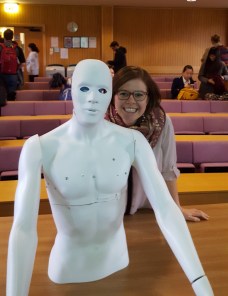
So where does the robot come into this? Next week, Josh Talib and Caroline Dunning will be attending COP22 in Morocco on behalf of the Walker Institute. Accompanying us will be a robot avatar, which will enable remote participation in COP. Back in Reading, other PhD students will be running a Climate Action Studio, operating the robot and using virtual reality to interact with the COP and conduct interviews with participants. The hope is that, with the help of the robot avatar, we will all be able to engage with the discussions in Marrakech, and gain a greater understanding of climate governance.

20161104_1302220


If you are interested in hearing more, or intrigued about how we are using a robot to conduct interviews, we will be posting updates on this blog under the COP22 link (https://thesocialmetwork.wordpress.com/cop22/). We will also be tweeting using the hashtag #COPbot on @SocialMetwork. Thank you to NERC, SCENARIO DTP and the Walker Institute for this incredible opportunity.

nerc-logo-largescenario_logowalker_rgb

NERC Into the Blue – the Science We Live and Breathe

Email: d.l.a.flack@pgr.reading.ac.uk

One of the key aspects of science is communicating our work, not only to other scientists but also to the public. As part of the Manchester Science Festival the Natural Environment Research Council (NERC) have been holding a number of events and last week (25 – 29 Oct) Into the Blue (a science showcase) was held at the Runway Visitor Centre underneath the wings of a Concorde. Along with a fellow PhD student from Reading (Kieran Hunt, who helped out on a stand about the monsoon) I was privileged to help man a stand (on flash flooding).

The event was used to showcase all the science that NERC funds from the atmosphere through to ecology. There were 40 exhibits and the chance to take tours of Concorde and the FAAM aircraft.

Concorde (left) and FAAM aircraft (right)

Exhibits involved a variety of interactive activities from making clouds in a bottle, using Infra-red cameras, making rivers in sand boxes, meeting Boaty McBoatface and a virtual reality flash flood!

During the quieter moments at their stands the exhibitors were allowed to wander around the rest of the event (including getting tours on the planes). In doing this we were able to talk to a number of different scientists about their work and engage in all the activities.

Personal highlights for me were touring both the Concorde and the FAAM aircraft. Although the best bit was the interaction with the public and being able to give everyone (no matter the age, from kids to adults) a “wow moment”.

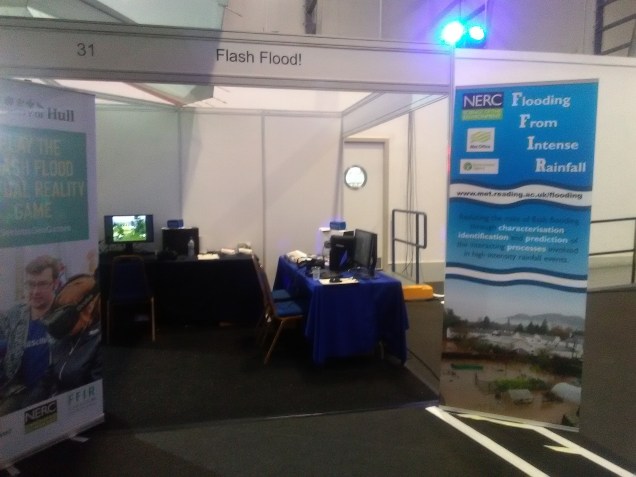
The stand I was helping run was called FlashFlood! This stall was run predominantly by the University of Hull on behalf of the Flooding From Intense Rainfall (FFIR) project. They had created a virtual reality flash flood that was based on a real event (Thinhope Burn, 17 July 2007) which enabled us to place the stand’s visitor into a river valley and take them through the process of flooding from intense rainfall and how floods can change the characteristics of the rivers. It also gave us the ability (because of the case we had chosen) to show people that just because its not raining heavily at your location does not mean you won’t get flooded.

img_20161029_0915221

Having virtual reality was a massive draw for people to come to our stand so we were always fairly busy, but the feedback we had was very positive with the most frequent comments being,

  • “It felt like I was really there”
  • “It really helps me to visualise the science”
  • “Wow, this is really amazing”.

Comments like this really make events such as Into the Blue worth while for us as scientists as we then realise we are getting our messages through to people, and it shows the usefulness of scientific research to the public.

Events like this can be exhausting, but they are definitely worth the effort as you get to see the delight of the public as they learn about different science and have fun at the same time.

A big thank you must be said to NERC and Manchester Runway Visitor Centre for organizing and hosting the event and to all the exhibitors who did a great job in communicating science to the public.

EnvironmentYes

Email: luke.storer@pgr.reading.ac.uk

What happens when you ask a bunch of PhD meteorologists (and a space physicist) to come up with an innovative business idea and pitch it to leading experts in business development?

If we’re honest, a bunch of crazy ideas that happened to land us with something believable and attainable. Some of our brainstorming ideas included:

  • Cow Power: Using Pizoelectric sheets to generate electricity from the movement of cows in turnstables.
  • Pick Me Cup: A brand new portable cup created from biodegradable products as part of a reusable scheme.
  • PVC Insulate: Encouraging PVC recycling (i.e. plastics found in food wrap) and use the products for loft insulation.
  • Satellite Design Detection: Using satellite data and weather forecast models to predict the movement of crop diseases.

As scientists we tried to develop ideas that we thought would be plausible, effective and reduce the environmental impact of humans. Therefore the idea we settled on before the start of the workshop was Pick Me Cup. We aimed to use biodegradable materials that are waste products from the agriculture industry such as straw to make a durable and reusable coffee cup. We developed a strategy that would allow consumers to use the cup, deposit it in a recycle type bin, and get a new clean one next time they buy a drink. The scheme’s aim was to reduce waste in an easy manner for customers.

When we arrived at the workshop it quickly became evident that our idea wasn’t interesting enough, and our idea had to be plausible… but importantly not real. So we developed our idea adding in what we called ‘fake science’, which we found difficult as scientists. After talks outlining important things to remember when creating a business plan, we were set loose to work on our idea, with time spent with mentors helping us with the business strategy and intellectual property.

We wrestled with our idea trying to think of something interesting that we could incorporate, then patent and sell the license for. This finally led us to ‘ThermoPaper’. The idea was adding a chemical to the paper, increasing its thermal properties without compromising its recyclability, weight or increasing the costs significantly. This way fewer paper cups would be used as people don’t have to ‘double cup’. It also removes the need for a protective sleeve.

slide1

The workshop was an interesting insight into the world of business and entrepreneurship, informing us of patenting, licensing and the most important part of any small business… the exit strategy. By combining all these elements we forged a business plan that we thought was ambitious, asking for £200 000 investment, and an estimated sale price of £14 million in 5 years. So we gave our Dragons Den style pitch and they loved our idea, but apparently we were not ambitious enough! We aimed to start small and build our way up, developing new uses for ThermoPaper, but they said we should have just gone straight for the top. As a result we didn’t win, but it was an interesting few days.

A big thanks to NERC, Syngenta and all the other organisations that made the workshop possible, and also to the speakers and mentors that helped shape our idea and business plan throughout!

What will make the public and politicians take climate change seriously?

slide1

Email: j.f.talib@pgr.reading.ac.uk

Imagine you’re creating a problem that we don’t understand. A problem where the majority of people just go, “meh, not important, I don’t really get it”.

What would it look like?

It would be complex, uncertain, something in the future and possibly an issue that was geographically distant.

Now those factors should you remind of climate change, and on 5th October 2016 the South-East Royal Meteorological Society local centre hosted a meeting where a panel of experts were presented with the question, “What will make the public and politicians take climate change seriously?”

The panel included professionals from a range of backgrounds including Professor Sir Brian Hoskins, leading expert in meteorology and climate, and first director of the Grantham Institute for Climate Change, Imperial College London. Dr Rachel McCloy a well-respected figure in behavioural science with experience in policy making in the former Department of Energy and Climate Change and the Treasury. Finally, Paul Simons a prominent journalist for the Times known for the depth of scientific understanding in his articles.

Images taken during the RMetS South East local centre meeting (06/10/16). Left image: Panelists (from left to right) including Dr Rachel McCloy, Sir Brian Hoskins and Paul Simons.

Sir Brian Hoskins opened the discussion with the challenge that we have a responsibility to “encourage” rather than “make” the public take climate change seriously, and recognised the progress in politics including targets announced in COP21, Paris and the UK Climate Change Act 2008. However, it was also recognised that climate change may not be prioritised high enough in political agendas, and the question was raised on whether governments take their environmental global responsibility seriously enough?

Discussion then moved onto personal actions each one of us can take to increase the public response. Repeating the “doom and gloom” message over climate change can become boring and repetitive, and we need to bring a positive message to tackling this global issue. We also need to recognise the responsibility of the individual in a global context and introduce small steps that can be taken to reduce our environmental impact.

One key message from Brian’s talk, and the meeting as whole, was that it’s currently hard for a member of the public to understand what climate change actually means to their daily lives. What impact will a 2°C global temperature rise actually cause? Researchers, the media and policymakers need to relate the science of global warming to our everyday lives, whether that’s through health, nutrition, the working environment, or air quality to name a few.

Our second speaker, Dr Rachel McCloy, introduced psychological behavioural frameworks that are introduced by climate change and how they impact the progression towards successful mitigation. For example, emotional reactions towards climate change can include dread and injustice, and this combined with typical adjectives used to describe the environmental changes including “natural” and “uncontrollable”, can lead to an increased likelihood of no effort being taken at all against climate change.

A component of Rachel’s talk I found particularly interesting was the impact of over-congratulating individuals and societies for taking “baby steps”. When we congratulate or applaud an action too much it reduces the likelihood of an even better action taking place. Therefore, as a society, we need to keep looking at the next step to mitigating against climate change. If we think about this in the present day, could we agree that we congratulated the agreements met in COP21 Paris too much, and as a result the likelihood of ratification and progress being made has been dropped. We as a community need to hold each other to account even when those “baby steps” have been made.

And finally, Paul, a leading science journalist for The Times, brought to the discussion how the media can be used to encourage climate change to be taken seriously. Everything in the media is a story and when a phenomena such climate change impacts health, water or even transportation it can gain a public interest. To increase the media’s attention to climate change, greater emphasis is needed on how environmental changes will impact our daily lives. Paul also reminded us that the public have begun to associate extreme weather events to climate change, whether proven to be a result of anthropogenic action or not. A recent example that comes to my mind is the recent European thunderstorms that occurred last summer. The media should be used to successfully “shape opinions” and it is up to us to grasp the opportunities that they have to offer.

After an intriguing set of three short talks to answer the question “What will make the public and politicians take climate change seriously?”, discussion was opened to the audience. Questions included: What is the importance of education to solving climate change? How much advocacy work should a climate scientist get involved in? The meeting as a whole stimulated a continued discussion on how climate change can be communicated effectively to “encourage” the public and politicians to take climate change seriously.

I would like to thank all three panellists for a set of thought-provoking and challenging talks. Thank you to the Royal Meteorological Society for supporting the local centre event, and to find out more about meetings taking place in your region check out https://www.rmets.org/events/forthcoming-meetings.