When the Lakes Remember: Unravelling the Sudd Floods of 2022

By Douglas Mulangwa – d.mulangwa@pgr.reading.ac.uk

Between 2019 and 2024, East Africa experienced one of the most persistent high-water periods in modern history: a flood that simply would not recede. Lakes Victoria, Kyoga, and Albert all rose to exceptional levels, and the Sudd Wetland in South Sudan expanded to an unprecedented 163,000 square kilometres in 2022. More than two million people were affected across Uganda and South Sudan as settlements, roads, and farmland remained inundated for months.

At first, 2022 puzzled stakeholders, observers and scientists alike. Rainfall across much of the region was below average that year, yet flooding in the Sudd intensified. This prompted a closer look at the wider hydrological system. Conventional explanations based on local rainfall failed to account for why the water would not recede. The answer, it turned out, lay far upstream and more than a year earlier, hidden within the White Nile’s connected lakes and wetlands.
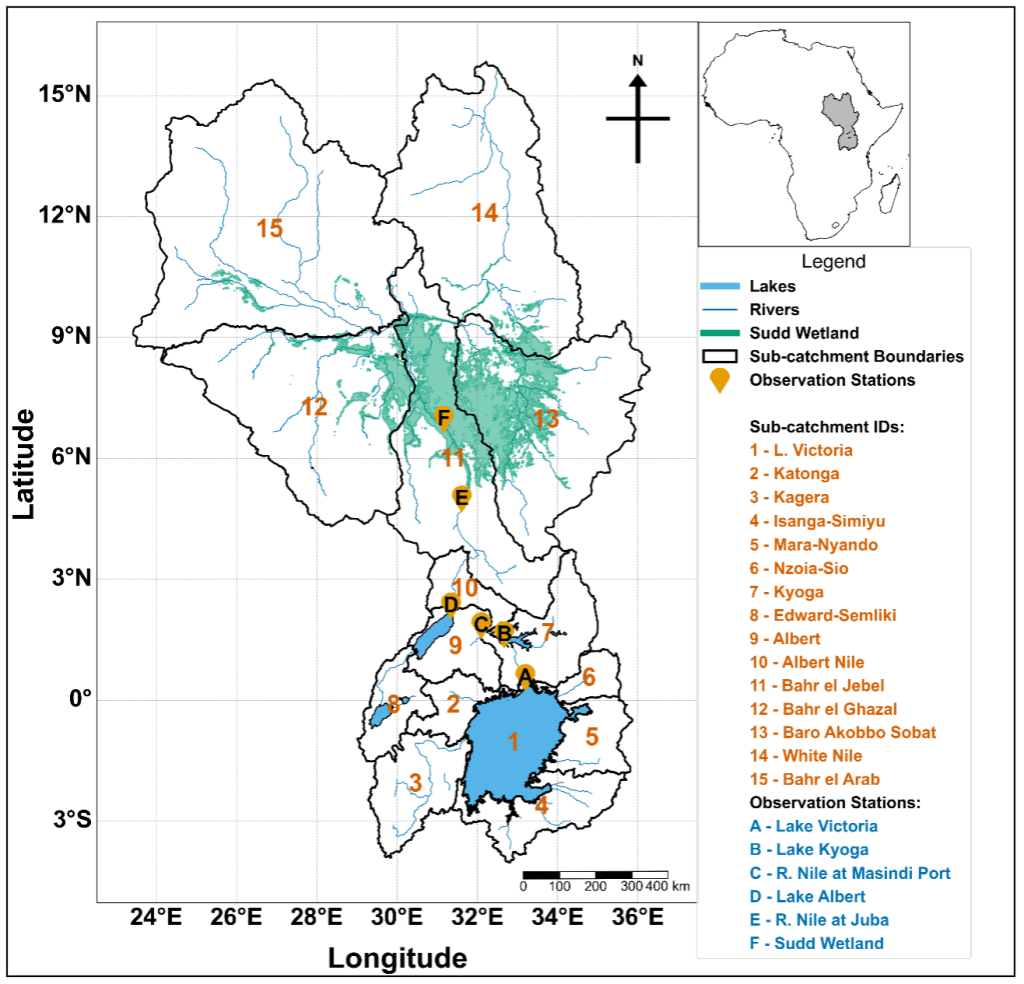
Figure 1: Map of the White Nile Basin showing delineated sub-catchments, lakes, major  rivers, and the Sudd Wetland extent. Sub-catchments are labelled numerically (1–15) with names listed in the legend. Observation stations (A–F) mark key hydrological data collection  locations used in this study: Lake Victoria (A), Lake Kyoga (B), River Nile at Masindi Port (C), Lake Albert (D), River Nile at Juba (E), and the Sudd Wetland (F). Background river networks and sub-catchment boundaries are derived from the HydroSHED dataset, and wetland extent is based on MODIS flood mask composites. The map is projected in geographic coordinates (EPSG:4326) with a graduated scale bar for accurate distance representation using UTM Zone 36N.

The White Nile: A Basin with Memory

The White Nile forms one of the world’s most complex lake, river, and wetland systems, extending from Lake Victoria through Lakes Kyoga and Albert into the Sudd. Hydrologically, it is a system of connected reservoirs that store, delay, and gradually release floodwaters downstream.

For decades, operational planning assumed that floodwaters take roughly five months to travel from Lake Victoria to the Sudd. That estimate was never actually tested with data; it originated as a rule of thumb based on Lake Victoria annual maxima in May and peak flooding in South Sudan in September/October.

Our recent study challenged that assumption. By combining daily lake-level and discharge data (1950–2024) with CHIRPS rainfall and MODIS flood-extent records (2002–2024), we tracked how flood peaks propagated through the system, segment by segment. Using an automated peak-matching algorithm, we quantified the lag between successive annual maxima peaks in Lake Victoria, Lake Kyoga, Lake Albert, and the Sudd Wetland.

The unprecedented high-water regime of 2019-2024
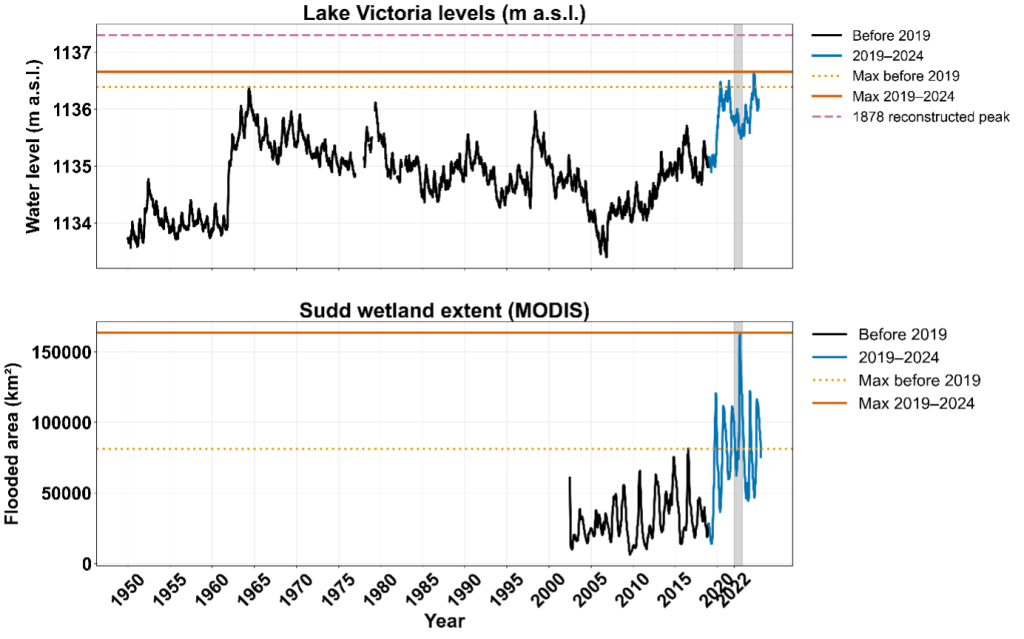
Figure 2: Lake Victoria water levels (1950–2024) and Sudd Wetland extents (2002–2024), with the 2019–2024 anomalous period shown in dark blue and earlier observations in black. The orange dotted line marks the pre-2019 maximum, while the solid vermillion line denotes the highest peak observed during 2019–2024. The dashed magenta line represents the reconstructed 1878 Lake Victoria peak (1137.3 m a.s.l.) from Nicholson & Yin (2001). The shaded grey band highlights the 2022 flood year, when the Sudd reached its largest extent in the MODIS record.

Between 2019 and 2024, both Lake Victoria and the Sudd reached record levels. Lake Victoria exceeded its historic 1964 peak in 2020, 2021, and 2024, while the Sudd expanded to more than twice its previous maximum extent. Each year from 2019 to 2024 stayed above any pre-2019 record, revealing that this was not a single flood season but a sustained multi-year regime.

The persistence of the 2019–2024 high-water regime mirrors earlier basin-wide episodes, including the 1961–64 and 1870s floods, when elevated lake levels and wetland extents were sustained across multiple years rather than confined to a single rainy season.  However, the 2020s stand out as the most extensive amongst all the episodes since the start of the 20th century. These data confirm that both the headwaters and terminal floodplain remained at record levels for several consecutive years during 2019–2024, highlighting the unprecedented nature of this sustained high-water phase in the modern observational era.

2019–2024: How Multi-Year Rainfall Triggers Propagated a Basin-Wide Flood

The sequence of flood events began with the exceptionally strong positive Indian Ocean Dipole of 2019, which brought extreme rainfall across the Lake Victoria basin. This marked the first in a series of four consecutive anomalous rainfall seasons that sustained elevated inflows into the lake system. The October–December 2019 short rains were among the wettest on record, followed by above-normal rainfall in the March–May 2020 long rains, another wet short-rains season in late 2020, and continued high rainfall through early 2021. Together, these back-to-back wet seasons kept catchments saturated and prevented any significant drawdown of lake levels between seasons. Lake Victoria rose by more than 1.4 metres between September 2019 and May 2020, the highest increase since the 1960s, and remained near the 1960s historical maximum for consecutive years. As that excess water propagated downstream, Lakes Kyoga and Albert filled and stayed high through 2021. Even when regional rainfall weakened in 2022, these upstream lakes continued releasing stored water into the White Nile. The flood peak that reached the Sudd in 2022 corresponded closely to the 2021 Lake Victoria high-water phase.

This sequence shows that the 2022 disaster was not driven by a single rainfall event but by cumulative wetness over multiple seasons. Each lake acted as a slow reservoir that buffered and then released the 2019 to 2021 excess water, resulting in multi-year flooding that persisted long after rainfall had returned to near-normal levels.

Transit Time and Floodwave Propagation

Quantitative tracking showed that it takes an average of 16.8 months for a floodwave to travel from Lake Victoria to the Sudd. The fastest transmission occurs between Victoria and Kyoga (around 4 months), while the slowest and most attenuated segment lies between Albert and the Sudd (around 9 months).

This overturns the long-held assumption of a five-month travel time and reveals a system dominated by floodplain storage and delayed release. The 2019–2021 period showed relatively faster propagation because of high upstream storage, while 2022 exhibited the longest lag as the Sudd absorbed and held vast volumes of water. By establishing this timing empirically, the study offers a more realistic foundation for early-warning systems.
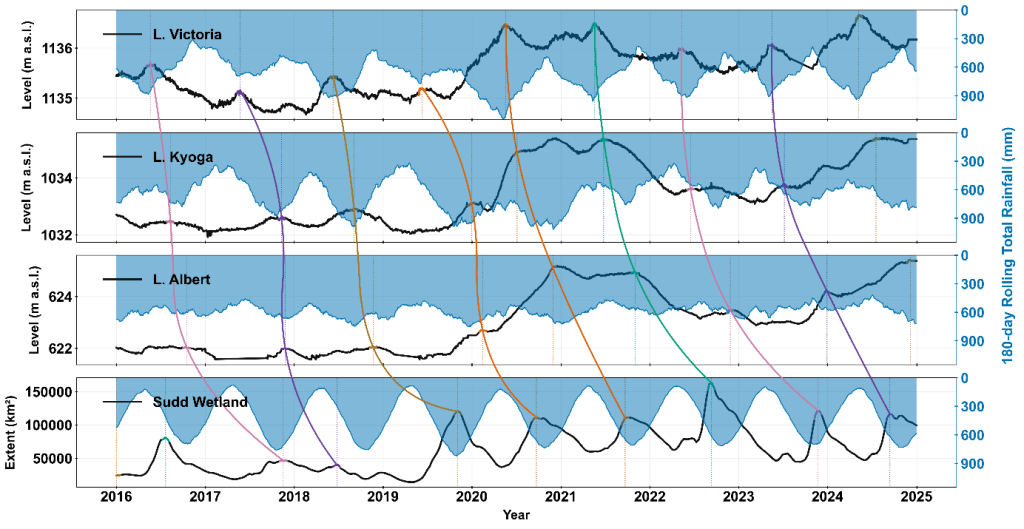
Figure 3: Lake Victoria, Lake Kyoga, and Lake Albert water levels, and Sudd Wetland inundated extent, from 2016 to 2024. Coloured spline curves indicate annual flood-wave trajectories traced from the timing of Lake Victoria annual maxima through the downstream of the White Nile system. Blue shading on the secondary (right) axis shows 180-day rolling rainfall totals over each basin. The panel sequence (Victoria–Kyoga, Kyoga–Albert, Albert–Sudd) highlights the progressive translation of flood waves through the connected lake–river–wetland network.

Wetland Activation and Flood Persistence

Satellite flood-extent maps reveal how the Sudd responded once the inflow arrived. The wetland expanded through multiple activation arms that progressively connected different sub-catchments:

  • 2019: rainfall-fed expansion on the east (Baro–Akobo–Sobat and White Nile sub-basins)
  • 2020–2021: a central-western arm from Bahr el Jebel extending into Bahr el Ghazal and a north-western connection from Bahr el Jebel to Bahr el Arab connected around Bentiu in Unity State.
  • 2022: The two activated arms persisted so the JJAS seasonal rainfall in South Sudan and the inflow from the upstream lakes just compounded the activation leading to the massive flooding in Bentiu, turning the town into an island surrounded by water.

This geometry confirms that the Sudd functions not as a single floodplain but as a network of hydraulically linked basins. Once activated, these wetlands store and recycle water through backwater effects, evaporation, and lateral flow between channels. That internal connectivity explains why flooding persisted long after rainfall declined.

The Bigger Picture

Understanding these long lags is vital for effective flood forecasting and anticipatory humanitarian action. Current early-warning systems in South Sudan and Uganda mainly rely on short-term rainfall forecasts, which cannot capture the multi-season cumulative storage and delayed release that drive multi-year flooding.

By the time floodwaters reach the Sudd Wetland, the hydrological signature of releases from Lake Victoria has been substantially transformed by storage, delay, and attenuation within the intermediate lakes and wetlands. This means that downstream flood conditions are not a direct reflection of upstream releases but the result of cumulative interactions across the basin’s interconnected reservoirs.

The results suggest that antecedent storage conditions in Lakes Victoria, Kyoga, and Albert should be incorporated into regional flood outlooks. When upstream lake levels are exceptionally high, downstream alerts should remain elevated even if rainfall forecasts appear moderate. This approach aligns with impact-based forecasting, where decisions are informed not only by rainfall predictions but also by hydrological memory, system connectivity and potential impact of the floods.

The 2019–2024 high-water regime joins earlier basin-wide flood episodes in the 1870s, 1910s, and 1960s, each linked to multi-year wet phases across the equatorial lakes. The 1961–64 event raised Lake Victoria by about 2.5 metres and reshaped the Nile’s flow for several years. The 1870s flood appears even more extensive, showing that compound, persistent flooding is part of the White Nile’s natural variability.

Climate-change attribution studies indicate that the 2019–2020 rainfall anomaly was intensified by anthropogenic warming, increasing both its magnitude and probability. If such events become more frequent, the basin’s long-memory behaviour could convert short bursts of rainfall into multi-year high-water regimes.

This work reframes how we view the White Nile. It is not a fast, responsive river system but a slow-moving memory corridor in which floodwaves propagate, store, and echo over many months. Recognising this behaviour opens practical opportunities: it enables longer forecast lead times based on upstream indicators, supports coordinated management of lake releases, and strengthens early-action planning for humanitarian agencies across the basin.

It also highlights the need for continued monitoring and data sharing across national borders. Sparse observations remain a major limitation: station gaps, satellite blind spots, and non-public lake-release data all reduce our ability to model the system in real time. Improving this observational backbone is essential if we are to translate scientific insight into effective flood preparedness.

By Douglas Mulangwa (PhD researcher, Department of Meteorology, University of Reading), with contributions from Evet Naturinda, Charles Koboji, Benon T. Zaake, Emily Black, Hannah Cloke, and Elisabeth M. Stephens.

Acknowledgements

This research was conducted under the INFLOW project, funded through the CLARE programme (FCDO and IDRC), with collaboration from the Uganda Ministry of Water and Environment, the South Sudan Ministry of Water Resources and Irrigation, the World Food Programme(WFP), IGAD Climate Prediction and Application Centre  (ICPAC), Médecins Sans Frontières (MSF), the Red Cross Red Crescent Climate Centre, Uganda Red Cross Society (URCS), the South Sudan Red Cross Red Crescent Society (SSRCS) and the Red Cross Red Crescent Climate Centre (RCCC).
POST fellowship at UK Parliament on carbon offsetting

Helen Hooker – h.hooker@pgr.reading.ac.uk

What is POST?

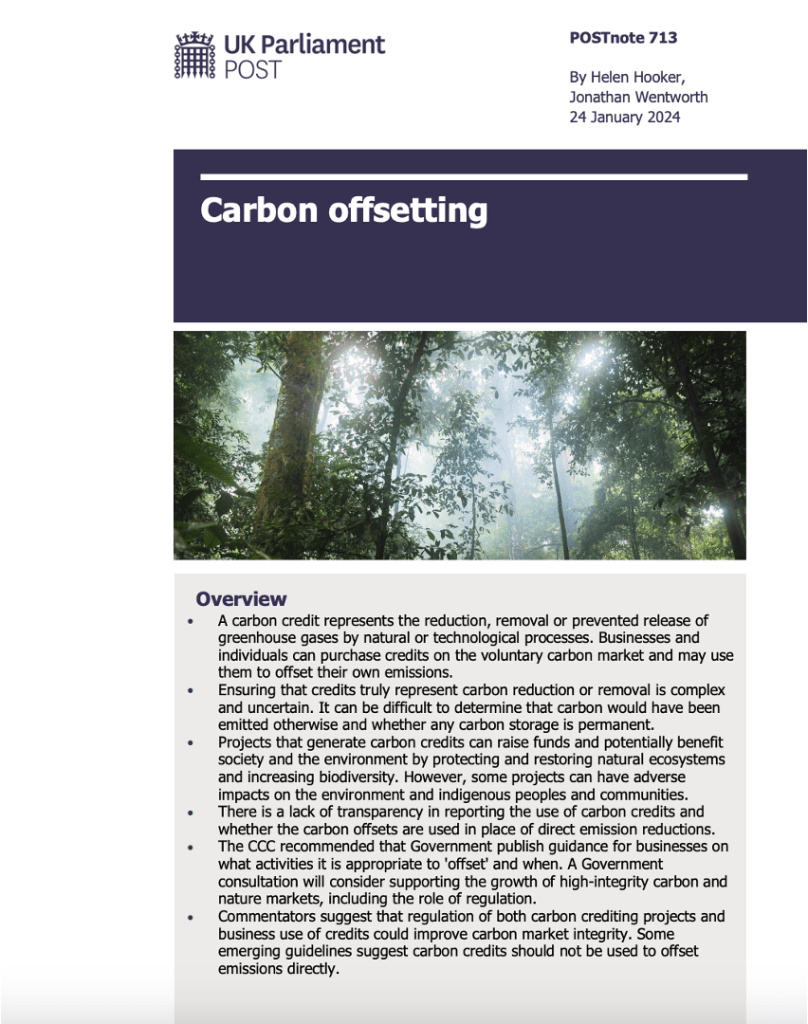
The Parliamentary Office for Science and Technology (POST) is a research and knowledge exchange service at UK Parliament. POST uses the best available research evidence and information to inform the legislative process and scrutiny of Government. POST advisors and fellows create POSTnotes and POSTbriefs on hot topics of interest to MPs and peers (members of the House of Lords) that are published online. Members may use information from POST publications during committee meetings or debates in Parliament.

The POSTnote process

POST fellows work for three months on an assigned topic outside of their usual area of research. The research is rapid! Fellows quickly identify experts from Academia, NGOs, Industry, and Government departments to speak to, and try to think of insightful questions to ask.

I was assigned the topic of carbon offsetting – yay! I interviewed almost 40 people that varied from those working with Indigenous Peoples in Guyana to others working with farming communities on Biochar (the carbon rich remains of super-heated organic material) research in the UK.

What is carbon offsetting?

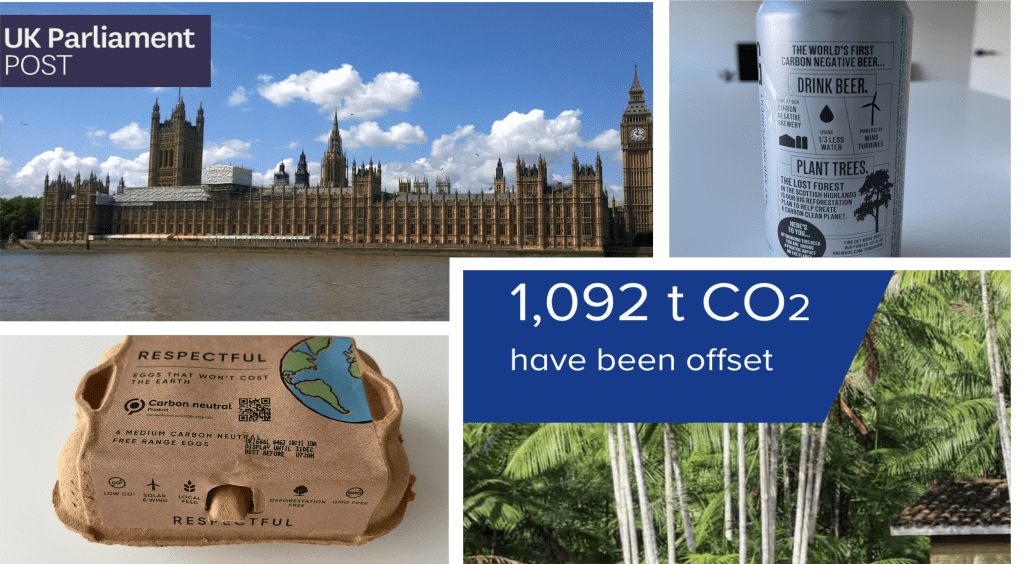
A carbon credit is a token representing the avoidance, reduction or removal of atmospheric greenhouse gases (GHG), measured in tonnes of carbon dioxide equivalent (tCO2e). There are three main outcomes for projects creating carbon credits: Avoided emissions, for example by preventing deforestation and forest degradation; Reduced emissions, for example by restoring peatlands; and Removal and storage of CO2, for example by direct air capture or restoring forests. Businesses and individuals can purchase credits on the voluntary carbon market and may use them to offset their own emissions.

After lots of reading and reference gathering, the impartial POSTnote is drafted at around 3500 words and includes 100+ references. Internal and (a monster) external review follow (the draft note is sent to all contributors for comment) before final publication.

Working at Parliament

It was great to be a part of a team of POSTies, some seconded to select committees such as the Environmental Audit Committee or the Library. Others worked on different POSTnote topics like Green skills, AI in education and The future of fertiliser use. Westminster Palace is beautiful, awe-inspiring and a motivating place to work. There are lots of opportunities to enter ballots for activities and events. I was fortunate to attend the State Opening of Parliament (from the pavement, the King definitely waved at me), visit the archive tower (I counted nearly 300 steps up 12 floors and saw the original Freedom of Information Act 2000), and sing Christmas carols in Mr Speakers House.

Summary

I applied for a POST fellowship to learn more about policy and how research can have an impact. I loved the learning process, and I will use it in my research going forwards. I would like to thank SCENARIO DTP for funding the opportunity.

Addressing the elephant in the room that wandered off to the village; Patterns of Asian elephant space-use and habitat preference

Bismay Tripathy – bismaytripathy@outlook.com

Already an endangered species, the Asian Elephants (Elephas maximus) continue to be increasingly threatened by habitat degradation, poaching for ivory, and conflicts with people (Sukumar 2003; Menon et al., 2017). India harbours 60% of the current Asian elephant population, but only 23% of its elephant habitats reside within protected zones while the rest are perpetually disturbed by escalating anthropogenic pressures (such as expansion of human settlements and agriculture, livestock grazing and fuelwood gathering) and economic activities (mining, construction of road-railway networks etc.). Habitat degradation contributes to increasing elephant encounters with people and triggering human-elephant conflict (HEC). The conflict scenario in India escalates day by day gaining in severity and frequency.  In the four-year period between 2015 and 2018 alone, it had caused deaths of around 2,400 people and 490 elephants and annually, 0.5 million households suffered due to crop loss by elephant raiding from 2000 through 2010 (MOEF 2012; MoEF & CC, 2018). Elephants have the capacity to adapt to a mosaic of natural and modified habitats and their preference of habitat selection is often determined by the landscape composition as well as space and resource availability (such as vegetation and water). Thus, comprehension of elephants’ space-use with respect to their distribution is crucial for managing human-wildlife coexistence. We conducted our study on the space-use of elephants in the Keonjhar forest division in eastern India, where several hundreds of elephants have been killed as a result of electrocution, road-train mishaps, poaching and HEC.

Figure. 1: Pattern of estimated elephant occupancy, which was evaluated using the top model for occupancy probability.  Keonjhar forest division has seven forest ranges (Barbil, Bhuiyan-Juang Pihra (BJP), Champua, Ghatgaon, Keonjhar, Patna and Telkoi). Five elephant habitat cores (light blue color polygon) were identified and named as CFR, KFR, BFR, GFR and TFR

We used a popular species distribution technique called occupancy modeling, which analyzed the histories of elephant presence or absence on the survey sites (MacKenzie et al. 2017) to estimate the probability of elephant presence and underlying driving factors. For occupancy modeling, we used elephant GPS location at different sites along with anthropogenic and environmental variables, including climate variables such as precipitation data derived from monthly rain gauge data and mean annual temperature from MODIS-MOD11A1. Sentinel-2A satellite images were very helpful for extracting variables such as forests, cropland and settlements.

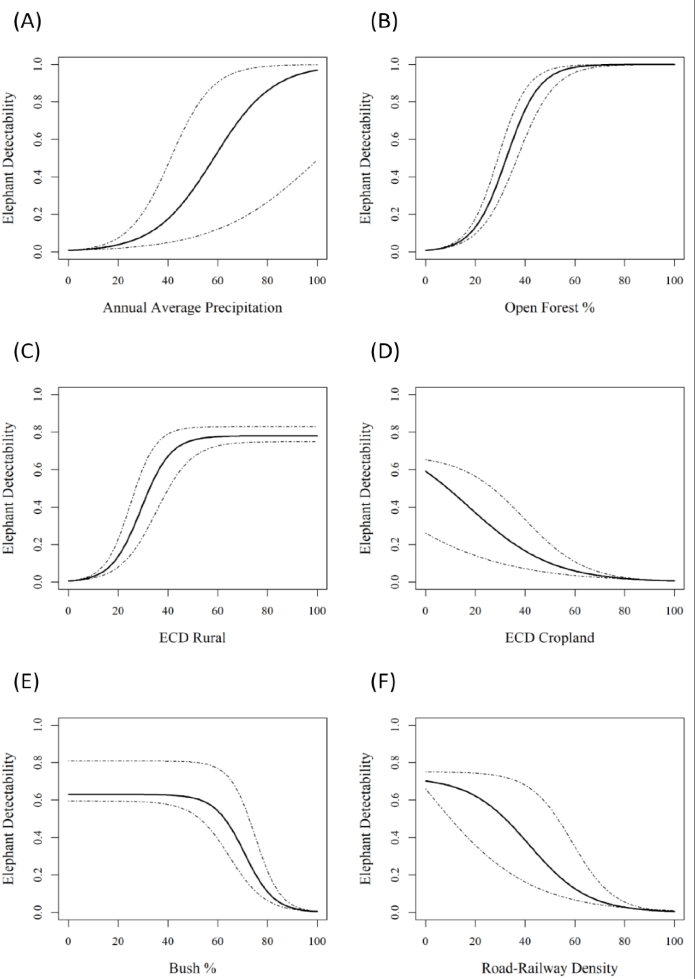
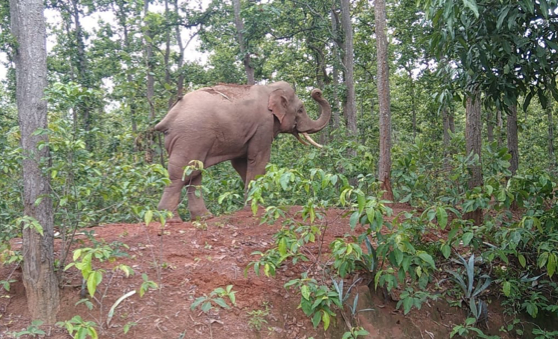
We observed elephant occupancy in 43% of the study region (about 2710 km2) (Figure 1) and occupancy was found to be higher in the regions with over 40% open forest cover (Figure 2B). It is easy to believe that a mega herbivore species like the elephants would prefer dense forests with minimum anthropogenic disturbances. However, we were surprised to find that elephants were actually drawn towards forests in human dominated landscapes with multiple land-use activities, over relatively intact forests (Sitompul et al., 2013; Huang et al. 2019). Scrubs and grasses, which are a primary forage of elephants, can grow easily in open forests as they receive better space and light conditions. Thus, open forests are the strongest variable influencing elephant occupancy, which specifically plays an important role in providing food and shelter for elephants as well as in their thermoregulation.

Figure. 2: Relationships between elephant detectability and the influential covariates

Furthermore, train-vehicle collisions have been one of the major causes of elephant mortality through the years (Jha et al., 2014; Dasgupta & Ghosh, 2015), so we evidenced a lower elephant occupancy in the regions with denser transportation networks (Figure. 2F). Even though crops are not natural forage for elephants, they preferred crops over grazing on natural forage, due to higher accessibility, palatability and nutrition (Sukumar, 1990; Campos-Arceiz et al., 2008). Thus, elephant detectability near croplands was relatively high.

When it comes to climate variables, we found a positive influence of precipitation on elephant detection, which was contrary to a study conducted in an extremely wet landscape of Southern India, that found how precipitation was the least influential covariate. However, we believe that favourable rainfall conditions improved water availability, while also increasing the productivity of deciduous forests with an abundance of palatable trees (Kumar et al., 2010; Jathanna et al., 2015), which attracted more elephants to these regions in the study area. Therefore, it is reasonable that variations in precipitation will be immediately reflected in the elephants’ space-use as rain-driven vegetation can prompt highly opportunistic elephant movement patterns.

Elephant sighting in an open forest
Elephant sighting in croplands

It is very challenging to demarcate exclusive regions for people and elephants within the varying landscapes of India where both human and elephant populations are high. However, owing to the presence of areas which are more frequently used by elephants such as the five habitat cores that we identified in our study (Figure 1), we can conclude that this region still has the potential to support a significant elephant population (Tripathy et al., 2021). Hence, for efficient landscape management and planning it is critical to understand the spatial factors that potentially influence the preference of space-use by elephants in this region which will in turn ensure peaceful coexistence between elephants and people while also facilitating elephant conservation strategies.

Main challenges for extreme heat risk communication

Chloe Brimicombe – c.r.brimicombe@pgr.reading.ac.uk, @ChloBrim

For my PhD, I research heatwaves and heat stress, with a focus on the African continent. Here I show what the main challenges are for communicating heatwave impacts inspired by a presentation given by Roop Singh of the Red Cross Climate Center at Understanding Risk Forum 2020.  

There is no universal definition of heatwaves 

Having no agreed definition of a heatwave (also known as extreme heat events) is a huge challenge in communicating risk. However, there is a guideline definition by the World Meteorological Organisation and for the UK an agreed definition as of 2019. In simple terms a heatwave is: 

“A period of above average temperatures of 3 or more days in a region’s warm season (i.e. all year in the tropics and in the summer season elsewhere)”  

We then have heat stress which is an impact of heatwaves, and is the killer aspect of heat. Heat stress is: 

“Build-up of body heat as a result of exertion or external environment”(McGregor, 2018) 

Attention Deficit 

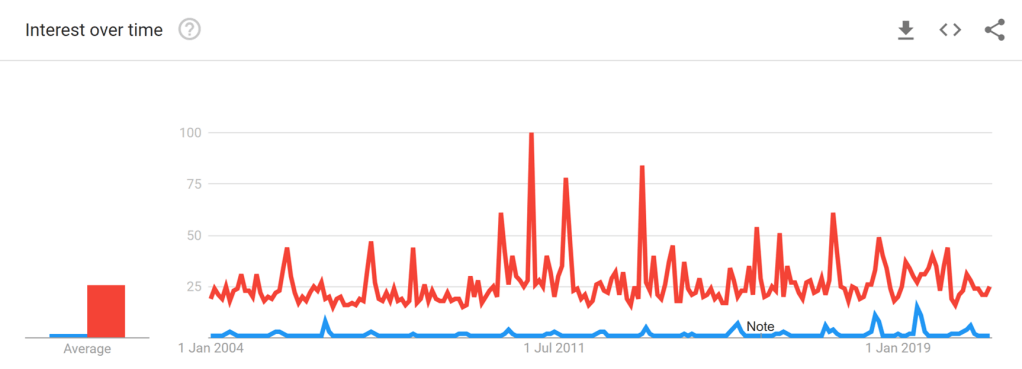
Heatwaves receive low attention in comparison to other natural hazards I.e., Flooding, one of the easiest ways to appreciate this attention deficit is through Google search trends. If we compare ‘heat wave’ to ‘flood’ both designated as disaster search types, you can see that a larger proportion of searches over time are for ‘flood’ in comparison to ‘heat wave’.  

Figure 1: Showing ‘Heat waves’ (blue)  vs ‘Flood’ (red) Disaster Search Types interest over time taken from: https://trends.google.com/trends/explore?date=all&q=%2Fm%2F01qw8g,%2Fm%2F0dbtv 

On average flood has 28% search interest which is over 10 times the amount of interest for heat wave. And this is despite Heatwaves being named the deadliest hydro-meteorological hazard from 2015-2019 by the World Meteorological Organization. Attention is important if someone can remember an event and its impacts easily, they can associate this with the likelihood of it happening. This is known as the availability bias and plays a key role in risk perception. 

Lack of Research and Funding 

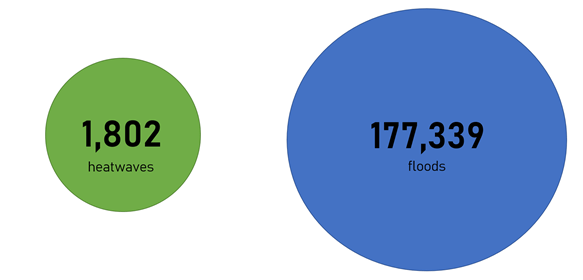
One impact of the attention deficit on extreme heat risk, is there is not ample research and funding on the topic – it’s very patchy. Let’s consider a keyword search of academic papers for ‘heatwave*’ and ‘flood*’ from Scopus an academic database.  

Figure 2: Number of ‘heatwave*’ vs number of ‘flood*’ academic papers from Scopus. 

Research on floods is over 100 times bigger in quantity than heatwaves. This is like what we find for google searches and the attention deficit, and reveals a research bias amongst these hydro-meteorological hazards. And is mirrored by what my research finds for the UK, much more research on floods in comparison to heatwaves (https://doi.org/10.1016/j.envsci.2020.10.021). Our paper is the first for the UK to assess the barriers, causes and solutions for providing adequate research and policy for heatwaves. The motivation behind the paper came from an assignment I did during my masters focusing on UK heatwave policy, where I began to realise how little we in the UK are prepared for these events, which links up nicely with my PhD. For more information you can see my article and press release on the same topic. 

Heat is an invisible risk 

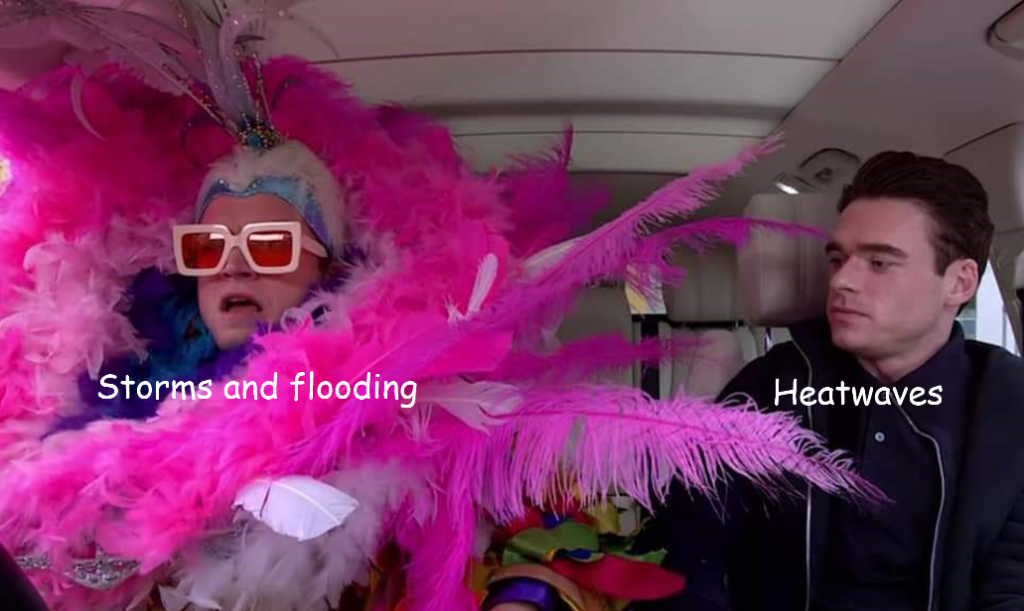
Figure 3: Meme that sums up not perceiving heat as a risk, in comparison, to storms and flooding.

Heatwaves are not something we can touch and like Climate Change, they are not ‘lickable’ or visible. This makes it incredibly difficult for us to perceive them as a risk. And this is compounded by the attention deficit; in the UK most people see heatwaves as a ‘BBQ summer’ or an opportunity to go wild swimming or go to the beach.  

And that’s really nice, but someone’s granny could be experiencing hospitalising heat stress in a top floor flat as a result of overheating that could result in their death. Or for example signal failures on your railway line as a result of heat could prevent you from getting into work, meaning you lose out on pay. I even know someone who got air lifted from the Lake District in their youth as a result of heat stress.  

 A quote from a BBC one program on wild weather in 2020 sums up overheating in homes nicely:

“It is illegal to leave your dog in a car to overheat in these temperatures in the UK, why is it legal for people to overheat in homes at these temperatures

For Africa the perception amongst many is ‘Africa is hot’ so heatwaves are not a risk, because they are ‘used to exposure’ to high temperatures. First, not all of Africa is always hot, that is in the same realm of thinking as the lyrics of the 1984 Band Aid Single. Second, there is not a lot of evidence, with many global papers missing out Africa due to a lack of data. But, there is research on heatwaves and we have evidence they do raise death rates in Africa (research mostly for the West Sahel, for example Burkina Faso) amongst other impacts including decreased crop yields.  

What’s the solution? 

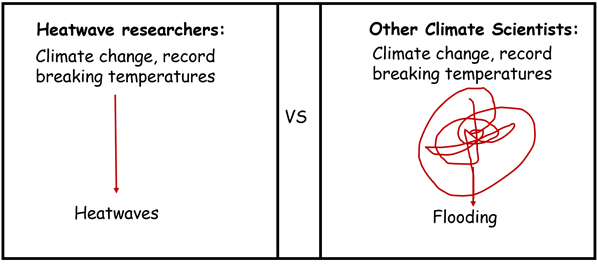
Talk about heatwaves and their impacts. This sounds really simple, but I’ve noticed a tendency of a proportion of climate scientists to talk about record breaking temperatures and never mention land heatwaves (For example the Royal Institute Christmas Lectures 2020). Some even make a wild leap from temperature straight to flooding, which is just painful for me as a heatwave researcher. 

Figure 4: A schematic of heatwaves researchers and other climate scientists talking about climate change. 

So let’s start by talking about heatwaves, heat stress and their impacts.  

Modelling windstorm losses in a climate model

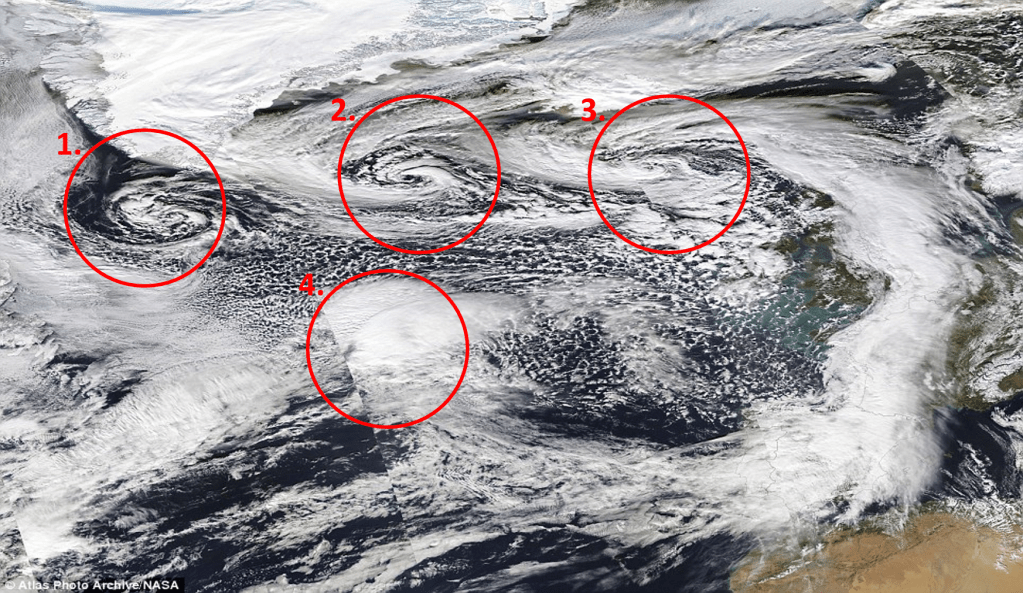
Extratropical cyclones cause vast amounts of damage across Europe throughout the winter seasons. The damage from these cyclones mainly comes from the associated severe winds. The most intense cyclones have gusts of over 200 kilometres per hour, resulting in substantial damage to property and forestry, for example, the Great Storm of 1987 uprooted approximately 15 million trees in one night. The average loss from these storms is over $2 billion per year (Schwierz et al. 2010) and is second only to Atlantic Hurricanes globally in terms of insured losses from natural hazards. However, the most severe cyclones such as Lothar (26/12/1999) and Kyrill (18/1/2007) can cause losses in excess of $10 billion (Munich Re, 2016). One property of extratropical cyclones is that they have a tendency to cluster (to arrive in groups – see example in Figure 1), and in such cases these impacts can be greatly increased. For example Windstorm Lothar was followed just one day later by Windstorm Martin and the two storms combined caused losses of over $15 billion. The large-scale atmospheric dynamics associated with clustering events have been discussed in a previous blog post and also in the scientific literature (Pinto et al., 2014; Priestley et al. 2017).

Picture1
Figure 1. Composite visible satellite image from 11 February 2014 of 4 extratropical cyclones over the North Atlantic (circled) (NASA).

A large part of my PhD has involved investigating exactly how important the clustering of cyclones is on losses across Europe during the winter. In order to do this, I have used 918 years of high resolution coupled climate model data from HiGEM (Shaffrey et al., 2017) which provides a huge amount of winter seasons and cyclone events for analysis.

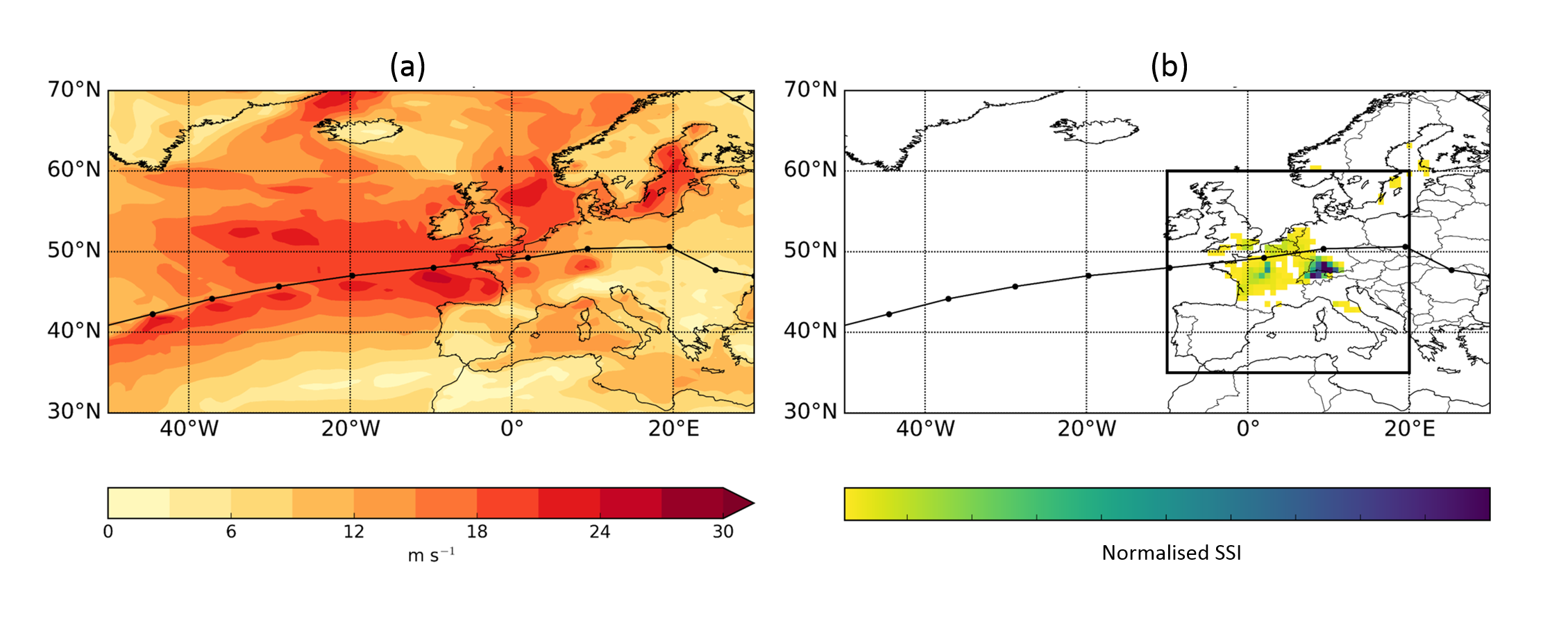
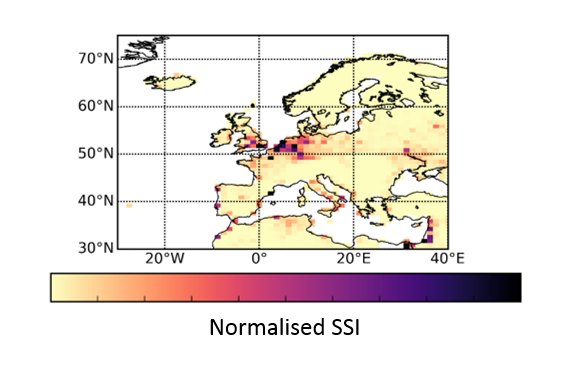
In order to understand how clustering affects losses, I first of all need to know how much loss/damage is associated with each individual cyclone. This is done using a measure called the Storm Severity Index (SSI – Leckebusch et al., 2008), which is a proxy for losses that is based on the 10-metre wind field of the cyclone events. The SSI is a good proxy for windstorm loss. Firstly, it scales the wind speed in any particular location by the 98th percentile of the wind speed climatology in that location. This scaling ensures that only the most severe winds at any one point are considered, as different locations have different perspectives on what would be classed as ‘damaging’. This exceedance above the 98th percentile is then raised to the power of 3 due to damage from wind being a highly non-linear function. Finally, we apply a population density weighting to our calculations. This weighting is required because a hypothetical gust of 40 m/s across London will cause considerably more damage than the same gust across far northern Scandinavia, and the population density is a good approximation for the density of insured property. An example of the SSI that has been calculated for Windstorm Lothar is shown in Figure 2.


figure_2_blog_2018_new
Figure 2. (a) Wind footprint of Windstorm Lothar (25-27/12/1999) – 10 metre wind speed in coloured contours (m/s). Black line is the track of Lothar with points every 6 hours (black dots). (b) The SSI field of Windstorm Lothar. All data from ERA-Interim.


From Figure 2b you can see how most of the damage from Windstorm Lothar was concentrated across central/northern France and also across southern Germany. This is because the winds here were most extreme relative to what is the climatology. Even though the winds are highest across the North Atlantic Ocean, the lack of insured property, and a much high climatological winter mean wind speed, means that we do not observe losses/damage from Windstorm Lothar in these locations.

figure_3_blog_2018_new
Figure 3. The average SSI for 918 years of HiGEM data.


I can apply the SSI to all of the individual cyclone events in HiGEM and therefore can construct a climatology of where windstorm losses occur. Figure 3 shows the average loss across all 918 years of HiGEM. You can see that the losses are concentrated in a band from southern UK towards Poland in an easterly direction. This mainly covers the countries of Great Britain, Belgium, The Netherlands, France, Germany, and Denmark.

This blog post introduces my methodology of calculating and investigating the losses associated with the winter season extratropical cyclones. Work in Priestley et al. (2018) uses this methodology to investigate the role of clustering on winter windstorm losses.

This work has been funded by the SCENARIO NERC DTP and also co-sponsored by Aon Benfield.


Email: m.d.k.priestley@pgr.reading.ac.uk


References

Leckebusch, G. C., Renggli, D., and Ulbrich, U. 2008. Development and application of an objective storm severity measure for the Northeast Atlantic region. Meteorologische Zeitschrift. https://doi.org/10.1127/0941-2948/2008/0323.

Munich Re. 2016. Loss events in Europe 1980 – 2015. 10 costliest winter storms ordered by overall losses. https://www.munichre.com/touch/naturalhazards/en/natcatservice/significant-natural-catastrophes/index.html

Pinto, J. G., Gómara, I., Masato, G., Dacre, H. F., Woollings, T., and Caballero, R. 2014. Large-scale dynamics associated with clustering of extratropical cyclones affecting Western Europe. Journal of Geophysical Research: Atmospheres. https://doi.org/10.1002/2014JD022305.

Priestley, M. D. K., Dacre, H. F., Shaffrey, L. C., Hodges, K. I., and Pinto, J. G. 2018. The role of European windstorm clustering for extreme seasonal losses as determined from a high resolution climate model, Nat. Hazards Earth Syst. Sci. Discuss., https://doi.org/10.5194/nhess-2018-165, in review.

Priestley, M. D. K., Pinto, J. G., Dacre, H. F., and Shaffrey, L. C. 2017. Rossby wave breaking, the upper level jet, and serial clustering of extratropical cyclones in western Europe. Geophysical Research Letters. https://doi.org/10.1002/2016GL071277.

Schwierz, C., Köllner-Heck, P., Zenklusen Mutter, E. et al. 2010. Modelling European winter wind storm losses in current and future climate. Climatic Change. https://doi.org/10.1007/s10584-009-9712-1.

Shaffrey, L. C., Hodson, D., Robson, J., Stevens, D., Hawkins, E., Polo, I., Stevens, I., Sutton, R. T., Lister, G., Iwi, A., et al. 2017. Decadal predictions with the HiGEM high resolution global coupled climate model: description and basic evaluation, Climate Dynamics, https://doi.org/10.1007/s00382-016-3075-x.

Trouble in paradise: Climate change, extreme weather and wildlife conservation on a tropical island.

Joseph Taylor, NERC SCEARNIO DTP student. Zoological Society of London.

Email: J.Taylor5@pgr.reading.ac.uk

Projecting the impacts of climate change on biodiversity is important for informing

Mauritius Kestrel by Joe Taylor
Male Mauritius kestrel (Falco punctatus) in the Bambous Mountains, eastern Mauritius. Photo by Joe Taylor.

mitigation and adaptation strategies. There are many studies that project climate change impacts on biodiversity; however, changes in the occurrence of extreme weather events are often omitted, usually because of insufficient understanding of their ecological impacts. Yet, changes in the frequency and intensity of extreme weather events may pose a greater threat to ecosystems than changes in average weather regimes (Jentsch and Beierkuhnlein 2008). Island species are expected to be particularly vulnerable to climate change pressures, owing to their inherently limited distribution, population size and genetic diversity, and because of existing impacts from human activities, including habitat destruction and the introduction of non-native species (e.g. Fordham and Brook 2010).

Mauritius is an icon both of species extinction and the successful recovery of threatened species. However, the achievements made through dedicated conservation work and the investment of substantial resources may be jeopardised by future climate change. Conservation programmes in Mauritius have involved the collection of extensive data on individual animals, creating detailed longitudinal datasets. These provide the opportunity to conduct in-depth analyses into the factors that drive population trends.

My study focuses on the demographic impacts of weather conditions, including extreme events, on three globally threatened bird species that are endemic to Mauritius. I extended previous research into weather impacts on the Mauritius kestrel (Falco punctatus), and applied similar methods to the echo parakeet (Psittacula eques) and Mauritius fody (Foudia rubra). The kestrel and parakeet were both nearly lost entirely in the 1970s and 1980s respectively, having suffered severe population bottlenecks, but all three species have benefitted from successful recovery programmes. I analysed breeding success using generalised linear mixed models and analysed survival probability using capture-mark-recapture models. Established weather indices were adapted for use in this study, including indices to quantify extreme rainfall, droughts and tropical cyclone activity. Trends in weather indices at key conservation sites were also analysed.

The results for the Mauritius kestrel add to a body of evidence showing that precipitation is an important limiting factor in its demography and population dynamics. The focal population in the Bambous Mountains of eastern Mauritius occupies an area in which rainfall is increasing. This trend could have implications for the population, as my analyses provide evidence that heavy rainfall during the brood phase of nests reduces breeding success, and that prolonged spells of rain in the cyclone season negatively impact the survival of juveniles. This probably occurs through reductions in hunting efficiency, time available for hunting and prey availability, so that kestrels are unable to capture enough prey to sustain themselves and feed their young (Nicoll et al. 2003, Senapathi et al. 2011). Exposure to heavy and prolonged rainfall could also be a direct cause of mortality through hypothermia, especially for chicks if nests are flooded (Senapathi et al. 2011). Future management of this species may need to incorporate strategies to mitigate the impacts of increasing rainfall.

References:

Fordham, D. A. and Brook, B. W. (2010) Why tropical island endemics are acutely susceptible to global change. Biodiversity and Conservation 19(2): 329‒342.

Jentsch, A. and Beierkuhnlein, C. (2008) Research frontiers in climate change: Effects of extreme meteorological events on ecosystems. Comptes Rendus Geoscience 340: 621‒628.

Nicoll, M. A. C., Jones, C. G. and Norris, K. (2003) Declining survival rates in a reintroduced population of the Mauritius kestrel: evidence for non-linear density dependence and environmental stochasticity. Journal of Animal Ecology 72: 917‒926.

Senapathi, D., Nicoll, M. A. C., Teplitsky, C., Jones, C. G. and Norris, K. (2011) Climate change and the risks associated with delayed breeding in a tropical wild bird population. Proceedings of the Royal Society B 278: 3184‒3190.

Climate model systematic biases in the Maritime Continent

Email: y.y.toh@pgr.reading.ac.uk

The Maritime Continent commonly refers to the groups of islands of Indonesia, Borneo, New Guinea and the surrounding seas in the literature. My study area covers the Maritime Continent domain from 20°S to 20°N and 80°E to 160°E as shown in Figure 1. This includes Indonesia, Malaysia, Brunei, Singapore, Philippines, Papua New Guinea, Solomon islands, northern Australia and parts of mainland Southeast Asia including Thailand, Laos, Cambodia, Vietnam and Myanmar.

subsetF1
Figure 1: JJA precipitation (mm/day) and 850 hPa wind (m s−1) for (a) GPCP and ERA-interim, (b) MMM biases and (c)–(j) AMIP biases for 1979–2008 over the Maritime Continent region (20°S–20ºN, 80°E–160ºE). Third panel shows the Maritime Continent domain and land-sea mask

The ability of climate model to simulate the mean climate and climate variability over the Maritime Continent remains a modelling challenge (Jourdain et al. 2013). Our study examines the fidelity of Coupled Model Intercomparison Project phase 5 (CMIP5) models at simulating mean climate over the Maritime Continent. We find that there is a considerable spread in the performance of the Atmospheric Model Intercomparison Project (AMIP) models in reproducing the seasonal mean climate and annual cycle over the Maritime Continent region. The multi-model mean (MMM) (Figure 1b) JJA precipitation and 850hPa wind biases with respect to observations (Figure 1a) are small compared to individual model biases (Figure 1c-j) over the Maritime Continent. Figure 1 shows only a subset of Fig. 2 from Toh et al. (2017), for the full figure and paper please click here.

We also investigate the model characteristics that may be potential sources of bias. We find that AMIP model performance is largely unrelated to model horizontal resolution. Instead, a model’s local Maritime Continent biases are somewhat related to its biases in the local Hadley circulation and global monsoon.

cluster2
Figure 2: Latitude-time plot of precipitation zonally averaged between 80°E and 160°E for (a) GPCP, (b) Cluster I and (c) Cluster II. White dashed line shows the position of the maximum precipitation each month. Precipitation biases with respect to GPCP for (d) Cluster I and (e) Cluster II.

To characterize model systematic biases in the AMIP runs and determine if these biases are related to common factors elsewhere in the tropics, we performed cluster analysis on Maritime Continent annual cycle precipitation. Our analysis resulted in two distinct clusters. Cluster I (Figure 2b,d) is able to reproduce the observed seasonal migration of Maritime Continent precipitation, but it overestimates the precipitation, especially during the JJA and SON seasons. Cluster II (Figure 2c,e) simulate weaker seasonal migration of Intertropical Convergence Zone (ITCZ) than observed, and the maximum rainfall position stays closer to the equator throughout the year. Tropics-wide properties of clusters also demonstrate a connection between errors at regional scale of the Maritime Continent and errors at large scale circulation and global monsoon.

On the other hand, comparison with coupled models showed that air-sea coupling yielded complex impacts on Maritime Continent precipitation biases. One of the outstanding problems in the coupled CMIP5 models is the sea surface temperature (SST) biases in tropical ocean basins. Our study highlighted central Pacific and western Indian Oceans as the key regions which exhibit the most surface temperature correlation with Maritime Continent mean state precipitation in the coupled CMIP5 models. Future work will investigate the impact of SST perturbations in these two regions on Maritime Continent precipitation using Atmospheric General Circulation Model (AGCM) sensitivity experiments.


References:

Jourdain N.C., Gupta A.S., Taschetto A.S., Ummenhofer C.C., Moise A.F., Ashok K. (2013) The Indo-Australian monsoon and its relationship to ENSO and IOD in reanalysis data and the CMIP3/CMIP5 simulations. Climate Dynamics. 41(11–12):3073–3102

Toh, Y.Y., Turner, A.G., Johnson, S.J., & Holloway, C.E. (2017). Maritime Continent seasonal climate biases in AMIP experiments of the CMIP5 multimodel ensemble. Climate Dynamics. doi: 10.1007/s00382-017-3641-x

Why become a Royal Meteorological Society Student member?

This week the Royal Meteorological Society (RMetS) published their strategic plan for the period of 2018 to 2020, and here at Social Metwork HQ we thought it would be a splendid idea to reflect on the benefits of being a student member of the Royal Meteorological Society.

An important benefit in my opinion is that when becoming a member of RMetS you join a well-established community who hold enthusiasm about the weather and climate at its core. Members come from all corners of the world and at different stages of their career spanning the entire range: from the amateur weather enthusiasts to professionals.  nicole-kuhn-450747As a student, being an RMetS member can lead to conversations that could develop your career and bring unexpected opportunities. This has been greatly enhanced with the RMetS mentoring scheme.

RMetS host many different types of meetings, including annual conferences, meetings hosted by regional centres, and national meetings. Additional gatherings are held by special interest groups, ranging from Weather Arts & Music to Dynamical Problems. Meetings on a regional and national scale provide a platform for discussion and learning amongst those in the field. DEhXj9AXkAARyMM.jpg largeFor a student, the highlight in the RMetS calendar is the annual student conference. Every year, sixty to eighty students come together to present their work and develop professional relationships that continue for years to come. This year’s conference is hosted at the University of York on the 5th and 6th July 2018 (more information). After two student conferences under my belt (see previous blog post), I would highly recommend any early career research scientist attending this event. It serves as a platform to share their own work in a friendly atmosphere and be inspired by the wider student community.
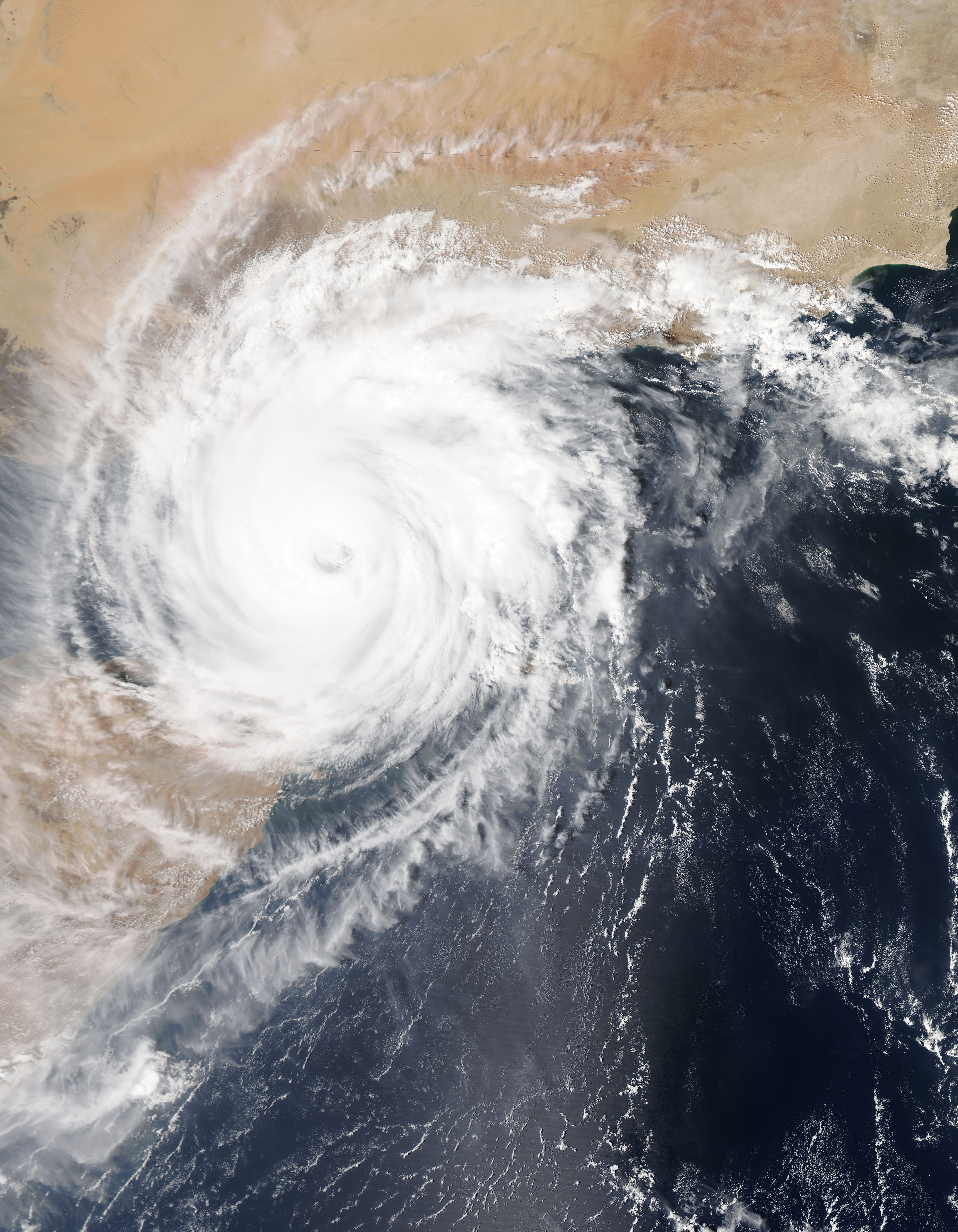
nasa-63030Other benefits to becoming an RMetS student member include eligibility to the Legacies Fund, grants and fellowships, and receiving a monthly copy of Weather magazine. Most importantly though, through becoming a RMetS member you support a professional society who are committed to increasing awareness of the importance of weather and climate in policy and decision-making. Alongside this week’s publication of RMetS’ strategic plan, both the Met Office and NASA have published press releases stating that 2017 was the warmest year on record without El Niño. The atmosphere and oceans of our planet are changing at unprecedented rates: rising sea levels, reductions in Arctic sea-ice, and an increased frequency of extreme weather events to name but a few climate change impacts. Becoming an RMetS student member does not only benefit your career and knowledge, but also supports a society that is committed to promoting and raising awareness of weather and climate science.