Innovating for Sustainable Development

Email: Rachael.Byrom@pgr.reading.ac.uk

In 2016 the United Nations (UN) Sustainable Development Goals (SDGs) officially came into force to tackle key global challenges under a sustainable framework.

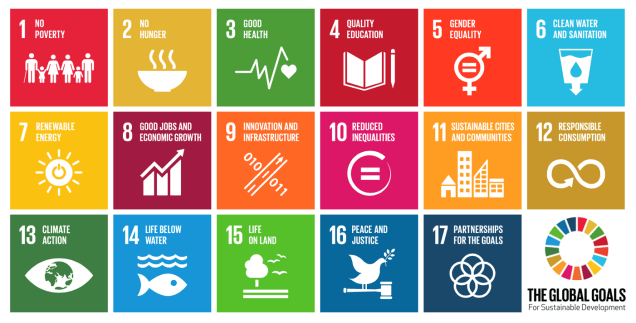
The SDGs comprise 17 global goals and 169 targets to be achieved across the next 15 years. As part of the ‘2030 Agenda’ for sustainable development, these goals aim to address a range of important global environmental, social and economic issues such as climate change, poverty, hunger and inequality. Adopted by leaders across the world, these goals are a ‘call for action’ to ensure that no one is left behind. However, the SDGs are not legally binding. The success of goals will rely solely on the efforts of individual countries to establish and implement a national framework for achieving sustainable development.
UN SDGs
The United Nation’s 17 Sustainable Development Goals

As part of the NERC funded ‘Innovating for Sustainable Development’ programme, students here in the Department of Meteorology were given the opportunity to explore and find solutions to key environmental challenges as outlined in the UN’s SDGs.

Run by the SCENARIO and SSCP doctoral training partnerships, the programme challenged students from a variety of disciplines and institutions to re-frame the SDGs from a multi-disciplinary perspective and to develop tangible, innovative solutions for sustainable development.

The programme began with an ‘Interdisciplinary Challenges Workshop’ where students participated in activities and exercises to review the importance of the SDGs and to consider their multi-disciplinary nature. Students were encouraged to think creatively and discuss issues related to each of the goals, such as: ‘Is this SDG achievable?’, ‘Are the goals contradictory?’ and ‘How could I apply my research to help achieve the SDGs?’
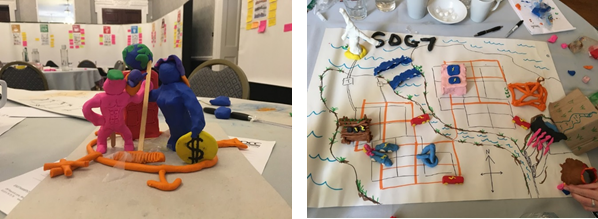
SDGs
Visual representations of SDG 5 and SDG 7

Following this, three ‘Case Study’ days explored a handful of the SDGs in greater detail, with representatives from industry, start-ups and NGOs explaining how they are working to achieve a particular SDG, their current challenges and possible opportunities for further innovation.

The first Case Study day focused on both SDG 7 – Affordable and Clean Energy and SDG 12 – Responsible Consumption and Production. For SDG 7, insightful talks were given by the Moving Energy Initiative on the issue of delivering energy solutions to millions of displaced people, and BBOXX, on their work to produce and distribute off-grid solar power systems to rural communities in places such as Kenya and Rwanda. In the afternoon, presentations given by Climate-KIC start up NER and Waitrose showcased the efforts currently being taken to reduce wasteful food production and packaging, while Forum for the Future emphasised the importance of addressing sustainable nutrition.

The second Case Study day focused on SDG 6 – Clean Water and Sanitation. Experts from WaterAid, De-Solenator, Bear Valley Ventures, UKWIR and the International Institute for Environmental Development outlined the importance of confronting global sanitation and water challenges in both developing and developed nations. Alarmingly, it was highlighted that an estimated 40% of the global population are affected by water scarcity and 2.4 billion people still lack access to basic sanitation services, with more than 80% of human activity wastewater discharged into rivers without going through any stage of pollution removal (UN, 2016).

Case study
Participants discussing ideas during the second Case Study day

The last Case Study day explored SDG 9 – Industry, Innovation and Infrastructure and SDG 11 – Sustainable Cities and Communities. A range of talks on building technologies, carbon neutral buildings and sustainable solar technologies were given, along with a presentation by OPDC on the UK’s largest regeneration project. The day finished off with an overview from the Greater London Authority about the London Infrastructure Map and their new approach to sustainable planning and development across the city.

The programme finished off with a second workshop. Here students teamed up to develop innovative business ideas aimed at solving the SDG challenges presented throughout the Case Study events. Business coaches and experts were on hand to offer advice to help the teams develop ideas that could become commercially viable.

On the 16th March the teams presented their business ideas at the ‘Meet the Cleantech Pioneers’ networking event at Imperial’s new Translation and Innovation Hub (I-HUB). An overview of the projects can be found here. This event, partnered with the Climate-KIC accelerator programme, provided an excellent platform for participants to showcase and discuss their ideas with a mix of investors, entrepreneurs, NGOs and academics all interested in achieving sustainable development.

I-HUB
The final showcase event at Imperial’s I-HUB

Overall the programme provided a great opportunity to examine the importance of the SDGs and to work closely with PhD students from a range of backgrounds. Fundamentally the process emphasised the point that, in order for the world to meet the 2030 Agenda, many sustainable development challenges still need to be better understood and many solutions still need to be provided – and here scientific research can play a key role. Furthermore, it was made clear that a high level of interdisciplinary thinking, research and innovation is needed to achieve sustainable development.

Institutes

References:

UN, 2016: Clean Water and Sanitation – Why it matters, United Nations, Accessed 05 March 2017. [Available online at http://www.un.org/sustainabledevelopment/wp-content/uploads/2016/08/6_Why-it-Matters_Sanitation_2p.pdf]

The Influence of the Weather on Bird Migration

Email: d.l.a.flack@pgr.reading.ac.uk

As well as being a meteorologist, I am a bird watcher. This means I often combine meteorology and bird watching to see the impact of the weather on birds. Now that we are well into March my focus in bird watching turns to one thing – the migration.

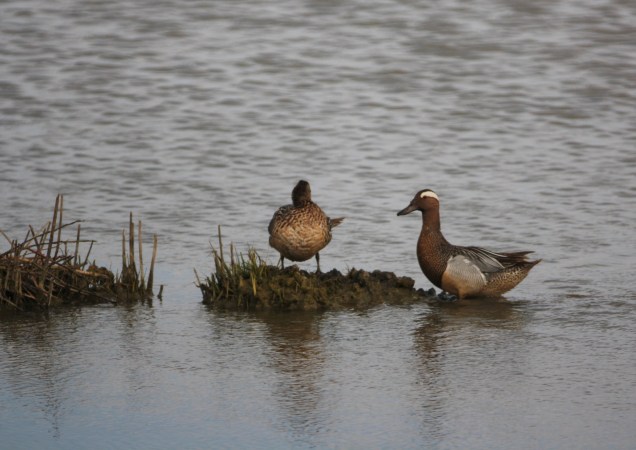
March generally marks the time when the first summer migrants start arriving into the UK. Already this year we have had reports of Sand Martin, Wheatear, Garganey, Little Ringed Plover, White Wagtail, Osprey, Swallow, House Martin, Ring Ouzel and Whitethroat (up to 9 March), some of which are depicted below.

Wheatear_PhDblog
Wheatear
Garganey_PhDgroup
Garganey
White_wagtail_PhDgroup
White Wagtail
OLYMPUS DIGITAL CAMERA
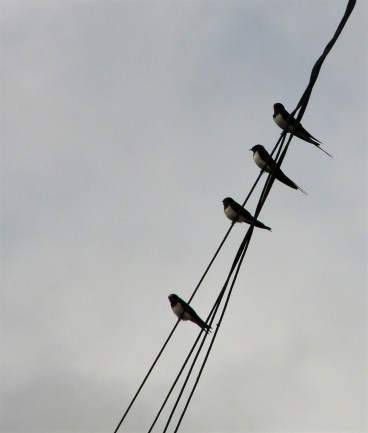
Swallow

There are many people that consider the arrival dates of certain migratory species of birds and how this arrival date changes over many years. I do keep extensive records of the birds that I see (and thus arrival dates), but what interests me more are the odd days in the record, and the sightings of unusual birds and working out how they arrived at their destinations.

A good example of this can be found by looking at my first Swallow sighting of the year in Kent and East Sussex. Since I started bird watching in 2001 my first Swallow of the year has moved from around 10 April to between 26-March and 1 April. However in 2013 my first record was 15 April. Then in 2015 and 2016 I saw my first Swallow on 1 April and 27 March respectively (I was in Cheshire in 2014 in late March/early April).

So what happened; why were the Swallows late in Kent in 2013? Well, it all comes down to wind direction. The spring of 2013 was very chilly and along the east coast there were plenty of N/NE winds – this would have provided a head wind so the Swallows would preferentially not migrate up the east coast in those conditions but instead migrate up the west coast where there were southerlies.

So, the wind direction plays a key part in the migration of birds. If conditions are for a tailwind or very light winds the birds will migrate; otherwise they will stay put. However, headwinds can lead to some interesting phenomena associated with bird migration – ‘falls’.

A ‘fall’ occurs when there are a large number of migrants building up along the coastline at a departure point (so for the interest of UK bird watchers Northern France), as they cannot get to their destination. When the wind direction changes the birds will then migrate en masse and quite literally fall out of the sky.

It’s not all about the wind direction though; rain is also a key factor that bird watchers consider when looking at weather forecasts. Essentially, fronts and showers are great for bird watchers. On migration birds will often fly higher than they normally would. This means on a clear sunny day you could easily miss birds passing overhead as they are so high up. However, with the rain the birds will often fly lower, avoiding the in-cloud turbulence. For many of the summer migrants their food sources (insects) also fly lower in these conditions.

This means that a forecast of showers with a southerly wind is generally what I look for from mid-April onwards (particularly as an inland birder), as it means there is a good chance of migratory species turning up – also because then I can head out after work as the evenings are brighter. This is something that I did last year and ended up recording the first Sandwich Tern (photo below (not of the bird I saw)) of the year in Berkshire.

sandwich_tern_PhDblog
Sandwich Tern

So in summary, it’s not as simple as just keeping an eye on the wind direction – there are other factors that can influence the birds’ migration and where they will end up. For more information about the impact of weather on bird sightings (considering both rare and common birds) check out my blog.

Meteorology Ball 2017

Email: K.M.Milczewska@pgr.reading.ac.uk

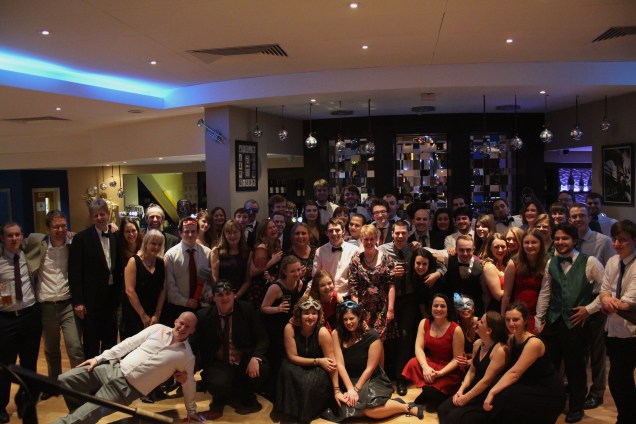
On Friday 17th February, the annual Meteorology Ball provided a great excuse for members of the department and their guests to dress up for the evening. But for all the excitement of this year’s masquerade theme, the Ball is mainly a charity event. Through the sale of raffle tickets and an auction of promises, the event aims to raise money for the David Grimes Trust, administered by the Reading San Francisco Libre Association (RSFLA), in honour of the well-remembered academic from our department who devoted a great deal of his time to the charity.

RSFLA supports environmental and educational projects in the rural Nicaraguan town of San Francisco Libre, which was ‘twinned’ with Reading in 1994 in order to encourage the exchange of culture and knowledge. Over the past few years, the Meteorology department has supported this link through regular cake sales, running the Reading Half Marathon and, of course, the annual ball.

David Grimes was a respected, integral member of the department and there are many among us who reminisce about his goodwill, interactive lectures and Panto appearances. There are also those among us who, despite never having had the chance to meet David, can easily imagine the positive impact he had both in and outside of our department, through our continued support of the charity under his name. The money  raised is mainly spent on educational support in the San Francisco Libre district: helping to fund a scholarship programme, build a library and toilet facilities among various other projects – and the people who benefit directly have a special message for us all!
https://youtu.be/vWsf9TWwWp4

The generosity of over 80 people attending made the event a great success, raising over £1500 through bidding on bizzarre auction items and lessons, as well as purchasing raffle tickets. To add to this, Santander will be chipping in with an extra £1500 to match, bringing the total raised to over £3000 for the charity! Such success would never have happened, had it not been for all the help we received from Santander, local businesses offering prizes for the raffle, and most importantly: all of those who bought a ticket to come! On behalf of all the organisers, I would like to finish this post with a massive bout of thanks for making the evening worth all the effort and continuing the important tradition of fundraising for the David Grimes Trust.

IMG_1534.JPG

Met Office Academic Partnership Poster and Presentation Session

Email: h.v.turner@pgr.reading.ac.uk

All photos courtesy of Carlo Cafaro

On 22nd and 23rd February, a group of students from the University of Reading visited the UK Met Office in Exeter to share our work and listen to talks from academics and Met Office employees. It was a great opportunity to discuss our work with other scientists from outside the university.

We arrived at the Met Office at 12 on the Wednesday. Once we had hung up our posters and had lunch, we listened to our first talk from Dale Barker, who is Deputy Director of Weather Science at the UK Met Office. He gave us an overview of the Met Office Academic Partnership (MOAP) and the variety of work that takes place within the partnership.  The MOAP brings together the UK Met Office with the universities of Exeter, Reading, Leeds, and Oxford to collaborate on projects and share science. It aims to pull together world-class expertise in weather and climate science to tackle key problems in these areas, and to provide an environment to develop the science leaders of tomorrow. The next talk was from Prof. Nadine Unger from the University of Exeter who spoke about aerosol pollution and work she has been involved in with African nations to reduce health problems caused by pollution. Our very own Dr Clare Watt then spoke about space weather, focusing on the magnetosphere and the impact of ‘killer’ electrons. The final talk of the day was from Dr Steven Böing from the University of Leeds. He spoke about semi-Lagrangian cloud modelling and how it can be used to increase forecast accuracy.

The poster session then took place in the Street. A lot of useful discussions were had during this session (and over the whole two days) as we were able to share our work with each other and also with passing members of Met Office staff. I certainly realized some new things about my results and had ideas about future directions for my work.

On the second day we had a presentation on career opportunities within the scientific areas of the Met Office from Mo Mylne, who is Science Project and Planning Manager at the UK Met Office. This really highlighted the breadth of roles that are available at the national meteorological service. This was followed by a talk from Prof. Coralia Cartis from the University of Oxford who spoke about parameter estimation for climate modelling using optimization techniques. After this, we were taken on tours of the Met Office to see some of areas that scientists are involved in. We then had lunch and a final opportunity to discuss our posters before the event finished.

Overall, then, it was a very enjoyable event with a great variety of subjects covered by the talks. I found the use of optimization techniques for parameter estimation particularly interesting and I hope to incorporate some of the ideas into my own research. I feel I have personally learned a lot, both about my own results and new ideas to consider. Thank you to all at the Met Office who organized the event.

Quo Vadis 2017

“Quo Vadis”, Latin for “where are you going?”, is an annual event held in the Department of Meteorology in which 2nd year PhD students present their work as if they were in an international conference.  In addition to providing the opportunity for students to present their research in a professional yet friendly environment, Quo Vadis has an emphasis on where on-going research is heading (as its name suggests).  Over the years presenters have always walked away with constructive feedback on their presentation style and scientific work, and occasionally, a new collaboration with someone in the audience!

This year’s Quo Vadis was held on 1st February, 2017.  26 excellent talks covering a wide range of meteorology-related topics were delivered by PhD students in their 2nd year in the one-day event.  A full schedule of the event can be found here.  The morning sessions covered topics such as Atmospheric Dynamics, Tropical Meteorology and Space Weather, whereas the afternoon sessions focused on Oceanography, Climate Change, Urban Meteorology and Data Assimilation.

Every year a winning talk is selected based on criteria including knowledge of the subject, methods and innovativeness, results, presentation style and ability to answer questions.  This has always been a tough job for the evaluation committee formed by staff members, as our students tend to be very good at presenting their cutting edge research!

This year’s Quo Vadis winner is Christoph Kent.  He gave an excellent presentation on representing surface roughness in urban areas to determine the vertical wind profile above the surface.  Understanding wind in urban areas is essential to stakeholders in sectors such as renewable energy, construction and many more.  In addition to the winner, 3 honourable mentions were made.  They went to Jonathan Beverley, Thomas Eldridge and Elizabeth Cooper, whose talks were about the influence of Asian summer monsoon on European summer weather, the use of the Temperature Humidity Infrared Radiometer, and the use of data assimilation to improve flood prediction, respectively.

At the end of the event a buffet was served to thank all our speakers and the evaluation committee, congratulate the well-deserved winner and honourable mentions, as well as to celebrate research excellence of the Department of Meteorology.  Quo Vadis 2017 was a huge success, you can find out more about the event on our Twitter account @SocialMetwork, or under the hashtag #QuoVadis2017.

AGU Fall Meeting – Posters and Protests

Email: r.e.emerton@pgr.reading.ac.uk

From 12th to 16th December 2016, the annual American Geophysical Union (AGU) Fall Meeting took place at the Moscone Centre in San Francisco. AGU remains the largest Earth and Space Science conference in the world with more than 25,000 scientists.

agu
Overlooking the Poster Hall in Moscone South

At the 2016 Fall Meeting, I was one of around 8000 students who arrived in San Francisco to present one of the 15,000 posters that would be displayed over the course of the week. While I knew that AGU is one of the largest Earth science conferences, and had indeed spent hours on the plane fine-tuning my schedule to choose which of the ~200 hydrology sessions (let alone the meteorology sessions also related to my work) I would attend, the scope and diversity of the research presented throughout the week really sunk in when I stood on the mezzanine overlooking the poster hall on the first day of the conference.

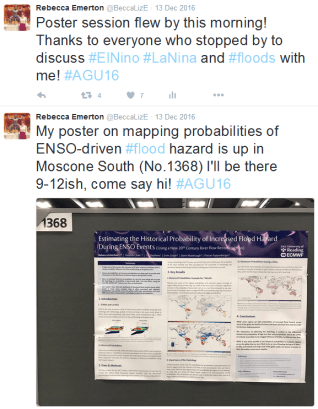
I was lucky enough to be awarded an AGU student travel grant in order to present my latest PhD research that I’ve been working on at the University of Reading, in collaboration with the European Centre for Medium-Range Weather Forecasts (ECMWF), and funded by NERC as part of the SCENARIO Doctoral Training Partnership. My work maps the historical probability of increased (or decreased) flood hazard across the globe during ENSO (El Niño and La Niña) events, using the first 20th Century ensemble river flow reanalysis, created at ECMWF as part of this work. But more on that another time!

blogpostscreenshotUnlike other conferences I’d presented at, the poster sessions at AGU span half a day – while you are only expected to be there to discuss the work for two hours, it’s inevitable that you get caught up in discussion and I saw many presenters (myself included) who stuck by their poster for the full 4.5 hours! I thoroughly enjoyed my poster session, where several familiar faces dropped by for an update on my work, and others stopped to pose new questions and make a few suggestions for improvements to my maps (wait, why didn’t I think of that?!). As a student presenter, I could also register for the Outstanding Student Poster Award – which means that my poster was anonymously judged, and I will soon be receiving  feedback on my poster and presentation – an opportunity I was excited about to make sure I continue to improve the way I communicate my research.

For me, some of the sessions that were highlights of the conference included  ‘Global Floods: Forecasting, Monitoring, Risk Assessment and Socioeconomic Response‘, ‘Large-scale Climate Variability and its Impact on Hydrological Systems, Water Resources and Population‘, ‘Forecasting Hydrology at Continental Scale‘, ‘Transforming Hydrologic Prediction and Decision Making: Uncertainty’ and ‘ENSO Dynamics, Observations and Predictability in light of the 2015-2016 El Niño Event‘. With such a range of science being presented, there’s also plenty of opportunity (well, so long as you haven’t double- or triple-booked sessions in your schedule already!) to listen to talks outside of your own field – which is how I ended up in an 8am talk on operational earthquake forecasting and early warning. It was brilliant to learn about forecasting natural hazards outside of hydrology and meteorology!

There was also the social aspect that’s a big part of any conference – networking, networking and more networking! While it can be daunting, particularly at a conference of this size, to find and introduce yourself to scientists in your field whose work you’ve read but you’ve never met, I was pleased to first bump into some friendly faces who in turn introduced me to the new faces. Plus, it’s an AGU tradition that ‘AGU beer’ is served at 3.30pm sharp and the conference centre fills with groups of friends and colleagues in heated debates and discussions about anything from volcanoes to Jupiter’s magnetosphere.

It was impossible not to notice, however, the many more politically-themed conversations than would normally be overheard at such an event, as a result of uncertainty about the future of science in light of the recent US presidential election. While I was in the middle of research discussions at my poster, a ‘Stand up for Science‘ rally took place a few blocks away from the conference centre, where scientists donned lab coats and held signs – “stand up for science”, “ice has no agenda – it just melts” – protesting to raise awareness of the challenges, and to support science. You can read the Guardian article here.

blogscreenshot2

All in all, AGU was a brilliant chance to present and discuss part of my research that I had just finished – it was certainly overwhelming and tough to choose which sessions to stop by (which meant I missed one or two presentations that sounded great), but I would recommend it for showcasing your work (and receiving feedback via the OSPA) and meeting scientists in your field that you wouldn’t normally bump into at conferences in Europe, especially if you can apply for one of AGU’s travel grants to help cover the costs of getting there.

P.S. You can watch presentations from the AGU Fall Meeting 2016 on the website.

Of course, I couldn’t fly all the way out to California and not find time to explore San Francisco a little.


Met Festivities.

The Christmas period is a busy time for many and PhD students are no exception. Below are quick highlights from the department written by three of our PhD students. Read below to learn more about our recent Royal Meteorological Society South-East local centre meeting, the adventures of the Met Choir, and the much-anticipated departmental pantomime.

“Will we have a white Christmas in Reading this year? What does the term “white Christmas” even mean? Both of these questions were addressed at the beginning of the Royal Meteorological Society’s local south-east centre meeting on the 7th of December by the department of meteorology’s recently retired Ross Reynolds.

The evening began with inevitable mince pies and a poster showcase by eight PhD students from a variety of research areas, which initiated lively discussions. The Met choir singers added to the festive spirit with a repertoire of carols before the oral presentations began.

First up was Jake Gristey, whose research project investigates satellite constellations to measure energy flux in and out of the Earth’s atmosphere. Updating the satellite constellation will allow satellites to measure outgoing energy flux to a higher accuracy than any instrument has done previously, allowing for an accurate calculation of Earth’s radiation budget. Eunice Lo spoke about a geoengineering method, Sulphate Aerosol Injection (SAI) which involves releasing sulphate particles into the atmosphere with the aim of increasing the Earth’s albedo. The idea is based on historical volcanic aerosol release which led to a decrease in global temperatures. Eunice is basing her studies of the effects of SAI on a future world following a particular economic scenario. Our last speaker of the evening was James Shaw, who researches the modelling of atmospheric transport over terrain. He is currently developing a new mesh for numerical transport schemes over mountains, with a focus on the accurate representation of near-surface cells.

The meeting exhibited the huge variety of research happening in the department and was an overall success. This was the last local-cente meeting of the year, with the next one taking place on 11th January 2017.”

Kaja Milczewska, K.M.Milczewska@pgr.reading.ac.uk

“An important part of the festive season for PhD students is the infamous Met Pantomime. Twice a week we all get together over our lunchtimes to practice and perfect all the jokes accrued by the members of the department this year. Although planning begins in September, it’s only come December when it all comes together. That crazy wig arrives from Amazon and we’ve created oversized comic props from all the cardboard Hobbycraft can spare. The jokes and jibes get funnier every time we practice them and staff just keep providing more and more material (oh no they don’t!). There’s definitely an undercurrent of excitement – and a little apprehension – as the big evening draws near. This years’ comic spectacle: Snow White and the Research Dwarves, complete with lights, sound, and a fantastic buffet.”

Sarah Bentley, S.Bentley@pgr.reading.ac.uk

whole_cast

“This year the meteorology choir have been busy rehearsing for performances both within the department and externally. A recently formed tradition and definite highlight has been singing for the residents of the Lakeside care home as well as for the annual department Christmas celebration. We also have been lucky enough this year to perform at a local and national meeting of the Royal Meteorological Society. The choir is open to all, regardless of musical ability and we have members ranging from students all the way up to head of department.”

Samantha Buzzard, s.c.buzzard@pgr.reading.ac.uk

Merry Christmas and Happy New Year from the Social Metwork.

Discovering COP22

Email: j.f.talib@pgr.reading.ac.uk

Over the past two weeks 25,000 delegates have been gathering in Marrakech to discuss mitigation and adaptation for climate change. On the 4th November 2016 the Paris Agreement came into force and as a result discussions during the conference debated its implementation. The Walker Institute and the Department of Meteorology (University of Reading), with the support of the NERC SCENARIO doctoral training partnership and an UNFCCC partnership, supported two PhD students to be official UN observers at COP22, and enabled remote participation with students back at Reading University. To find out more about our work with COP22 continue reading this blog post and check out:

Today (18/11/16) the UK government are set to announce that the United Kingdom has ratified the Paris Agreement. Yesterday, Boris Johnson (UK foreign secretary) signed the Paris Agreement after no objections were raised by the House of Commons or House of Lords. The United Kingdom in accordance with the Intended Nationally Determined Contributions (INDCs) of the European Union, are set to reduce greenhouse gas emissions by 40% by 2030 relative to 1990 emission levels. Today also marks the end of the 22nd Conference of the Parties (COP) for the United Nations Framework Convention on Climate Change and here are some quick summary points that PhD students took away from observing the process in Marrakech:

1) The significance of the Paris Agreement.

“Now that we have Paris, we need to take action immediately”

Teresa Anderson, ActionAid UK.

The Paris Agreement marks a change in the intentions during the COP process. Due to the success and ratification of the Paris Agreement more discussions can be based on the adaptation and mitigation against climate change, rather than negotiating global targets on climate change prevention. The Paris Agreement states that a global response is needed to respond to the threat of climate change and that global temperature rise should be kept well below 2°C and that efforts should be pursued to limit the global temperature rise to 1.5°C. COP22 Marrakech, began by stating that this is the “COP of Action”, and therefore the focus seen during side events, negotiations, dignitary speeches and press conferences was on the need for action.

“Countries have strongly supported the [Paris] Agreement because they realize their own national interest is best secured by pursuing the common good. Now we have to translate words into effective policies and actions.”

Mr Ban Ki-Moon, Secretary General of the United Nations.

paris-agreement-signing

2) A continued effort is needed to concentrate on the individual.

As SCENARIO PhD students we were challenged to understand the process that takes place during a UNFCCC conference. To do this we interviewed many conference delegates including policymakers, research organisations, industry experts, entrepreneurs, environmental consultants and funding sources to name a few. A common theme that ran through most of our interviews is that action is needed to prioritise the individual as well as thinking in terms of national- and community-level. To ensure the successful mitigation and adaptation to climate change, strategies need to come into place that protect the rights of the individual. This poses a global challenge, stretching from protecting the livelihoods of indigenous cultures and those impacted by sea level rise on low-lying islands, to supporting workers who rely on the non-renewable energy industry. In terms of climate research we need to ensure that we make our scientific conclusions accessible on an individual-level so that our work has a greater impact.

“a key goal for us is making climate change research accessible to the user community”

Clare Kapp, WMO Press Office Communications Leader.

3) Action is needed now, however the Paris Agreement only implies action post-2020.

Throughout our attendance in plenary meetings and side events there was an emphasis that whilst the Paris Agreement is an important stepping stone to combatting climate change, action is needed before 2020 for the Paris Agreement to be reached. Currently INDCs are proposed for between 2021-2030, however for the intended global temperature targets to be achieved it was argued that action is needed now. Although, pre-2020 action raises much contention, with the most popular argument against pre-2020 action being that more time and effort is needed for negotiations to ensure that a better understanding of national efforts to climate change mitigation is determined.

“We need to take action before 2020. Working for action post-2020 is not going to be enough. We need to start acting now.”

Honduras Party Representative.

“We need more time to work on the rule book for the Paris Agreement. Discussions on this should continue.”

Switzerland Party Representative.

4) There is a difference in opinion on whether 1.5°C can be reached.

For me the most interesting question we asked conference delegates was “do you think the target of 1.5°C can be reached?” This question brought a difference of opinion including some party members arguing that the change in our non-renewable energy dependence is far too great for the target to be achieved. Meanwhile, other political representatives and NGO delegates argued that accepting the target is unachievable before even trying makes negotiations and discussions less successful. There was also anticipation for the future IPCC report titled, Special Report on Global Warming of 1.5°C above pre-industrial levels and related global greenhouse gas emission pathways.

“Of course we want to fight for 1.5°C, why fight for 2°C? It just makes sense to fight for 1.5°C”

Martina Duncan, Party Representative for Grenada.

COP22 has been a fantastic opportunity for PhD students in our department to interact and understand the process that takes place during a UNFCCC conference. Whilst the past couple of weeks have been dominated by the results of the US election and the associated uncertainties, there has been an increasing global recognition of climate change and that action should be taken. In the next few years the challenge to mitigate and adapt towards climate change will be an increasing priority, and let us hope that these annual UNFCCC conferences are key stepping stones for climate change action.

“This is a problem people are recognising, and that it is time to change”

Jonathan Pershing, US Climate Envoy

Thank you all those who have supported our work at COP22 this year. Thank you to the Walker Institute, NERC SCENARIO doctoral training partnership and UNFCCC for this brilliant opportunity. Thank you to all those who have supported us with publicity including NERC, Royal Meteorological Society, members of staff and PhD students at the University of Reading and Lucy Wallace who has ensured the appropriate communication of our project. Plus a huge thanks to all delegates and staff at COP22 who volunteered their time to talk to us.