Inside COP29

Thea Stevens – thea.stevens@pgr.reading.ac.uk

Juan Garcia Valencia – j.p.garciavalencia@pgr.reading.ac.uk

Introduction

Hi there! We are Thea (3rd year PhD) and Juan (2nd year PhD), and we had the privilege to attend Week 2 of COP29 at the end of last year. We thought it would be a good idea to write a blog as an accumulation of answers to the main questions we’ve encountered since coming back – we hope you enjoy reading about it and that it’s hopefully useful to anyone thinking of applying for this amazing opportunity next year! 
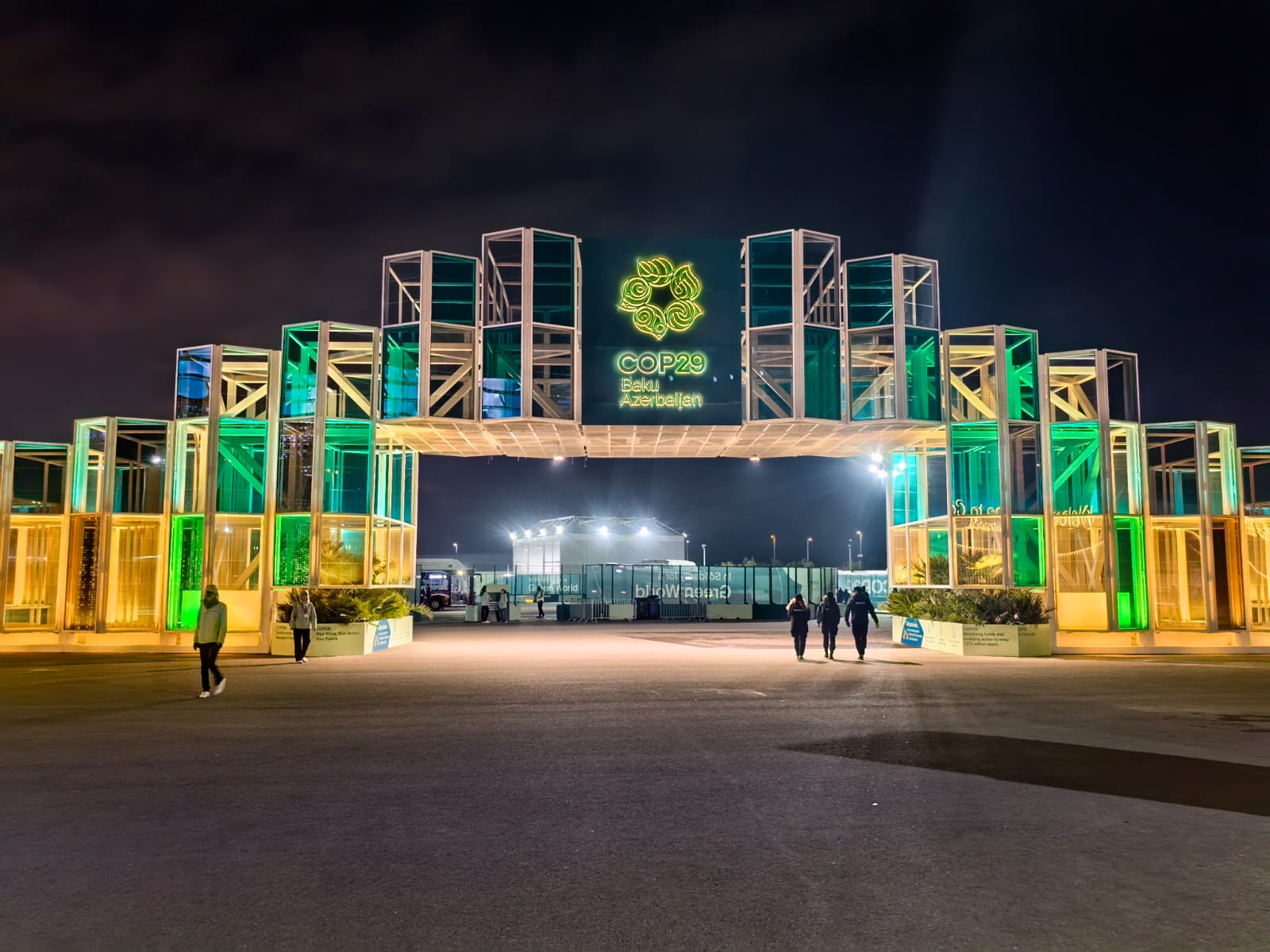
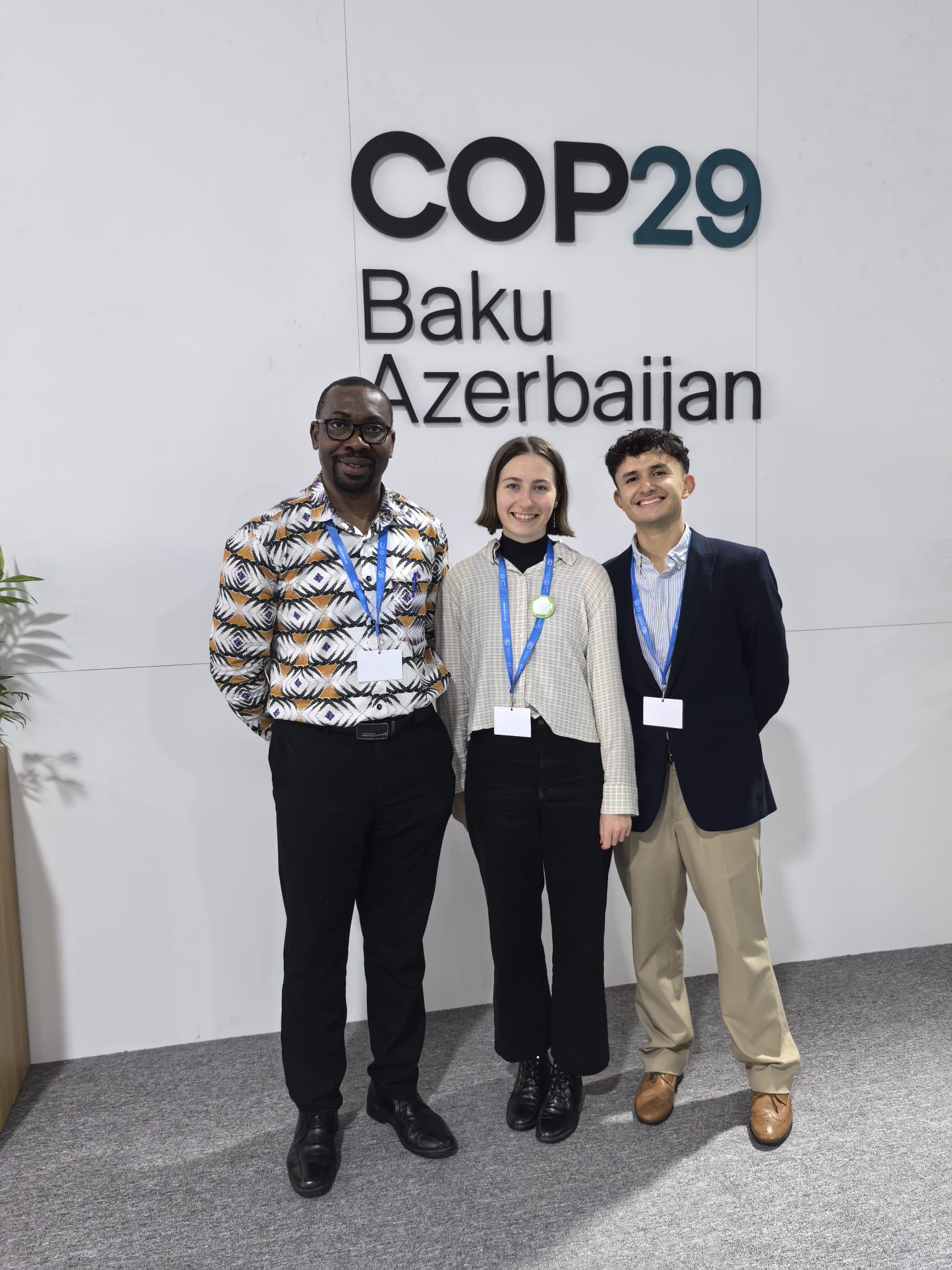
Picture 1, Entrance to COP29. Picture 2, Emmanuel Essah, Thea Stevens and Juan Garcia Valencia in COP29

Pre-COP 

What is COP29? 

COP29, the 29th Conference of the Parties, is the annual United Nations climate change conference and serves as the primary decision-making event under the United Nations Framework Convention on Climate Change (UNFCCC). Established by the treaty signed in 1992, COP brings together representatives from all UN member states and the European Union to address global climate challenges. This year, COP29 was held in November in Baku, Azerbaijan, drawing over 65,000 delegates from around the world, including diplomats, climate scientists, trade union leaders, and environmental activists. The event aims to negotiate effective strategies to combat the root causes of climate change. In essence, it’s the world’s largest and most significant gathering dedicated to climate action.

What were the expectations going into COP29?

Even before the summit began, COP29 was widely referred to as the “Finance COP” due to the prominence of one particular issue: climate finance. This term highlights the obligation of developed nations to provide financial resources to developing countries. These funds are intended to help nations build clean-energy systems, adapt to a warming world, and recover from disasters exacerbated by climate change. A significant focus of the negotiations and media coverage was the New Collective Quantified Goal (NCQG), a proposed climate finance target aimed at channelling resources to developing nations to combat climate change effectively.

However, discussions were also expected to extend beyond finance, addressing crucial topics such as Article 6 of the Paris Agreement, as well as strategies for adaptation and mitigation. We had the incredible opportunity to attend the second week of COP29—a pivotal stage of the process when ministers usually tackle the intricate details of agreements crafted in the first week, working to reach consensus. Heading into the conference, we anticipated hearing much more about the NCQG and its potential connections to other pressing climate issues.

Why did we apply to go?

“I decided to apply to attend COP29 due to the significance of geopolitical progress in ensuring that countries act in accordance with science. I think it is easy for us to forget the magnitude of what we study as meteorologists and climate scientists. To be able to follow how our scientific understanding shapes what actions are taken on a political scale feels important in order to put our work into context. I have also been following the progress of COPs for a long time – I was that geeky teenager in geography class who got a bit obsessed with the developments made there. So, on a more personal level, it also felt like a really exciting opportunity.” – Thea 

“My decision to apply for COP29 stemmed from a deep interest in the science-policy interface. As a PhD student researching monsoons and their variability with climate change, my work primarily involves analysing large datasets with the aim of crafting papers that can inform decision-making. While this scientific foundation is critical, I was eager to move beyond the confines of my computer screen and engage directly with the global climate community. This experience promised not only professional growth but also the chance to see firsthand how research and advocacy converge on the global stage so I knew I had to give it a go!” – Juan

What did we do in preparation? 

Having closely followed previous COPs and participated in COPCAS, we were familiar with the structure and nature of these conferences, which gave us a sense of what to expect. However, we knew that attending in person would be a completely different experience. In preparation, we undertook extensive training and courses. The Walker Institute’s help was invaluable, as they provided numerous opportunities to upskill and address our questions. They even arranged security training, given that we were heading to a politically sensitive region. Additionally, the IISD webinars were incredibly helpful in providing up-to-date insights on negotiation progress and key facts. Staying informed through these resources and keeping up with current news allowed us to approach the conference well-prepared and confident.

During COP 

What was the schedule like? 

The daily schedule at COP29 was intense. With only one week to make the most of the experience, our days were packed with meetings from 9:00AM – 6:00PM. We started each morning with the RINGO (Research and Independent Non-Governmental Organisations) meeting, which brought together members of the observer scientific community. These sessions provided a valuable space to discuss key themes and points of interest for the day, while also offering great networking opportunities.

The rest of the day was a whirlwind of press conferences, negotiations, and side events hosted by a wide range of organisations. Most events were open to all attendees, though some, particularly negotiations in the second week and high-profile press conferences (such as those featuring Antonio Guterres, Secretary-General of the UN!), were closed-door.

Another key aspect of our responsibilities was meeting twice daily with our team back at the Walker Institute. These sessions were a great chance to share our findings, report on the atmosphere on the ground, and receive valuable recommendations for upcoming events. More often than not, these check-ins also provided a much-needed energy and mood boost to keep us going through the busy days!

How did we decide on what to attend? 

Understanding the true scope of events and talks at COP took a while to get your head around. There is so much going on, and so much you could be going to it always felt like you were missing something. It was helpful to be able to think of the types of events you could go to into three different categories: the negotiations, the side events and the pavilion events. Each one of these had quite a different atmosphere, which was helpful to consider when deciding what to go to. 

The pavilions were basically a full conference on their own, with every country and NGO having their own elaborately decorated area. Talks here were slightly more informal and there was a wide diversity of topics. If you wanted to get some information on a more specific topic and also have time to talk with the people presenting this was the place to be. 

The side events were often more specific to the ongoing negotiations and included panel discussions and press conferences. These were often really exciting opportunities to get an update on the negotiations that we might not have been allowed to sit in on, and they often provided a more candid and emotive response to the developments. 

Lastly were the negotiations themselves. These were very slow and bureaucratic, but despite this, they were really fascinating to watch. It was what was going on in these negotiation rooms that really mattered to the outcome of COP! We had been given very good advice before we went to properly follow just one of the negotiation pieces so that you could understand how it was being shaped over time. However, as we attended the second week, the negotiations occurring behind closed doors increased more and more, and the agenda for these was constantly changing. We found it best to just jump on any opportunity there was to attend one of these as they became increasingly difficult to access. 

Having an overview of the different potential experiences in each of these parts of COP made it easier to asses what to go to and what might be interesting at any given time. 
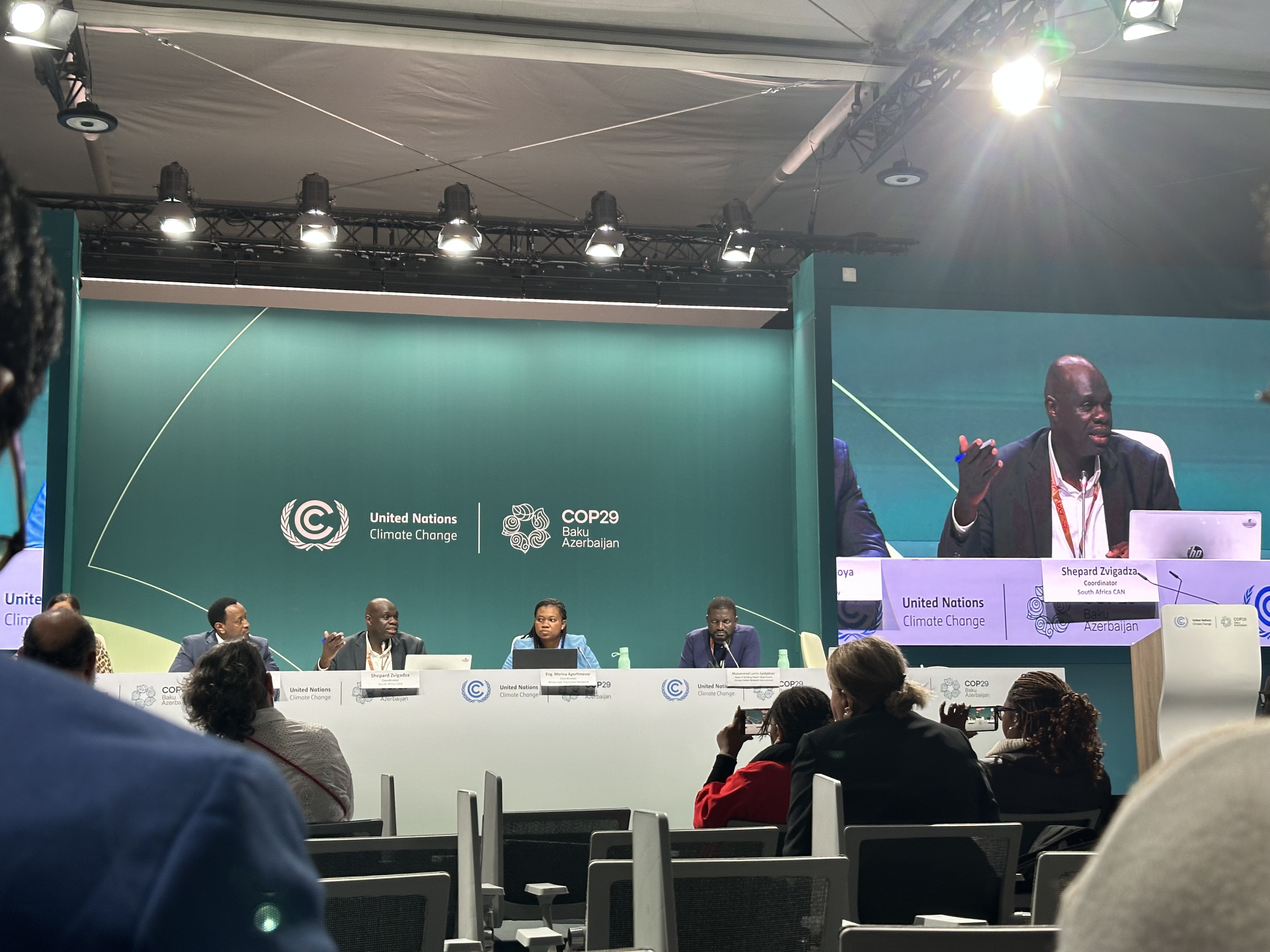
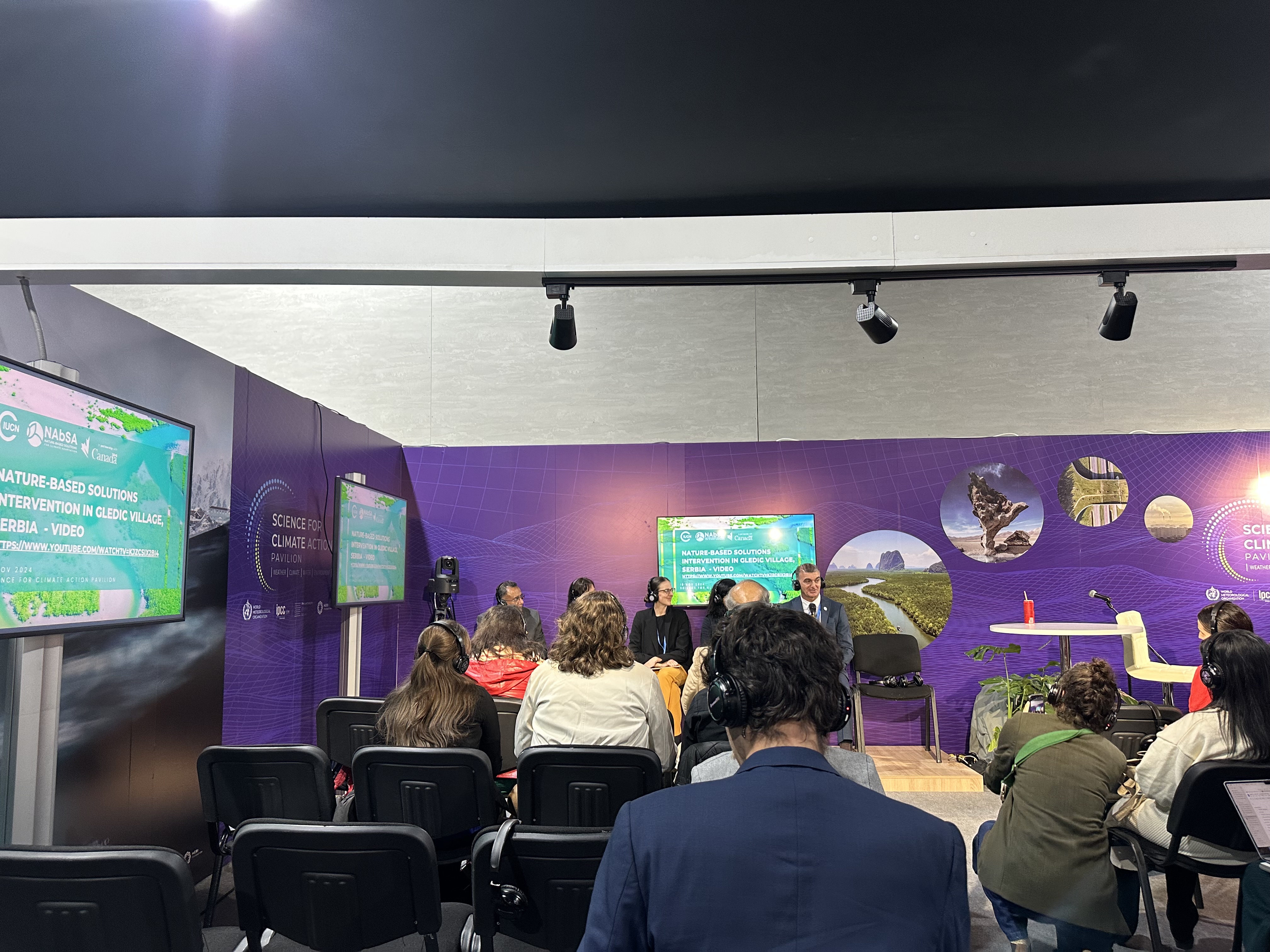
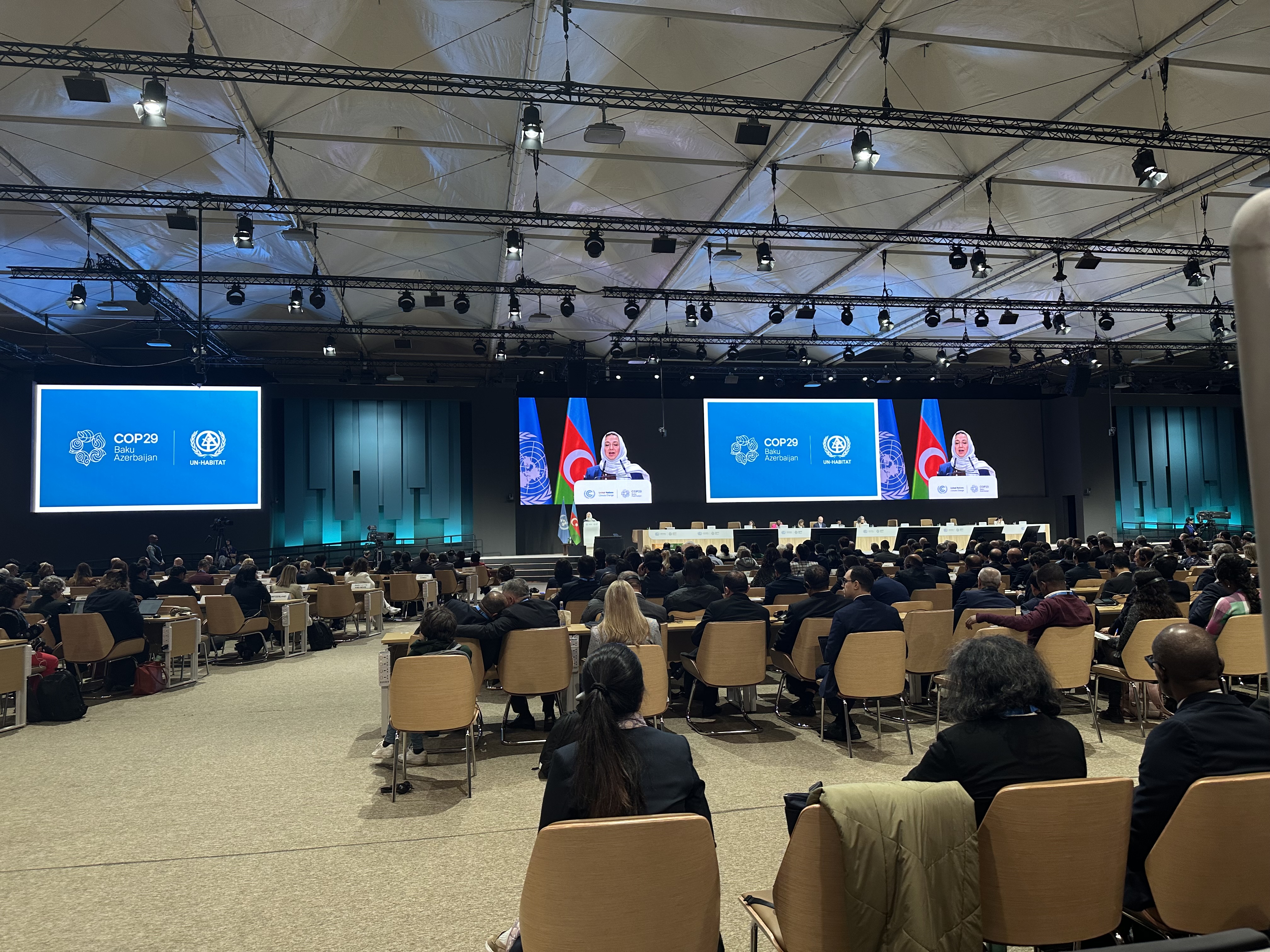
Picture 3, 4, and 5 show various events that happened in COP29, including a press conference, a science pavilion event and a plenary.

Who was someone interesting you met?

“While waiting in a queue to get into a negotiation, I met a delegate from an NGO based in South Africa. Through links to local religious groups, she helped guide communities to access climate-related financial aid. We discussed how amendments being made during different negotiations were having a direct impact on the accessibility of these funds. This provided a powerful reminder of how the negotiations had an impact on some of the most vulnerable communities not only in South Africa but all over the world. Having her watching and voicing opinions to negotiators between events provided a channel for these voices to be heard.” – Thea 

“Among the many incredible individuals I met, my interaction with two indigenous women from Chile left a profound impact. Their presentation on the consequences of lithium extraction in the Atacama Desert was both heartbreaking and inspiring. They spoke passionately about the devastating effects of privatized water and mineral resources, which have left their communities struggling with water scarcity and ecological exhaustion. Their unwavering determination to fight for their rights and protect their environment, despite significant challenges, was a powerful reminder of the human cost of unsustainable practices. Their story underscored the importance of amplifying marginalized voices in global climate discussions” – Juan

What is the role of the host country and how much influence do they have?

Hosting a COP entails significant responsibilities, including providing the facilities, security, and leadership required to ensure the summit’s success. In many ways, we were impressed by Azerbaijan’s efforts as the COP29 presidency. The facilities were well-prepared, and the transportation system was particularly noteworthy—clear, organised, and highly efficient, running seamlessly throughout the two weeks to help delegates commute to and from the conference centre with ease.

However, Azerbaijan’s selection as host sparked controversy from the moment it was announced at the end of COP28 in Dubai. One of the reasons was this it marked the third consecutive year that a petrostate was appointed to host the climate summit, raising concerns about potential conflicts of interest. This issue became a recurring theme throughout the conference, dominating discussions and even prompting high-profile criticisms. For example, Christiana Figueres, former UN climate chief, wrote an open letter during the first week, asserting that the COP process had become “no longer fit for purpose.”

By the second week, questions about the presidency’s ability to guide negotiations effectively were widespread. As the host country, Azerbaijan was expected to lead efforts to foster consensus among governments and non-Party stakeholders, particularly on critical issues like the NCQG and draft texts. Yet, progress was slow, and negotiations stretched into Saturday, further fuelling doubts about the presidency’s capacity to align its leadership with COP’s overarching goals.

Post-COP

What surprised you the most? 

“One of the most exciting and surprising things about COP was how accessible everything felt. As someone who wasn’t there for more than just to communicate what was happening to students at COPCAS, it felt really incredible that we were given access to the negotiations and all the plenary sessions. I obviously knew this was going to be the case before we went, but it was only really sitting when in on these events did I realise how unique of an opportunity this was.” – Thea

“One of the most striking aspects for me of attending last year’s COP was the incredible diversity of attendees, showcasing the universal impact of climate change and the essential need for broad representation in climate discussions. Among the most inspiring aspects was the strong presence of young people and activists, whose energy and commitment highlighted the vital role of the next generation in driving meaningful climate action” – Juan 

What do we think of the COP process? 

Going to COP and sitting in on the negotiations made the enormity of ambition and geopolitical complexity of bilateral agreements evident. Countries – with vastly different agendas and core beliefs – coming around a table trying to agree on something is an absurdly ambitious arrangement. Reducing fossil fuel consumption is unlike any another problem we face; their presence is pervasive in all of our lives. Fossil fuels are a bedrock of wealth and power in our global political economy. Despite alternative energies booming, and 2024 confirmed as the warmest year on record, this makes fossil fuels hard for the world to walk away from at the speed we need to do so. 

Whilst COP can be critiqued for being slow and disappointing, there remains hope in the vision of these bilateral negotiations. Given the increase in conflict and geopolitical instability these past few years, I left COP with an appreciation for the fact that there is still a negotiating table.

However, attending COP also brought to light how important it is to have ambitious domestic policies. COP will never really be the space where radical or big change will happen; this is instead the space where countries are all brought onto the same page. I think we left with more conviction that local politics and policies are where these larger changes need to happen.
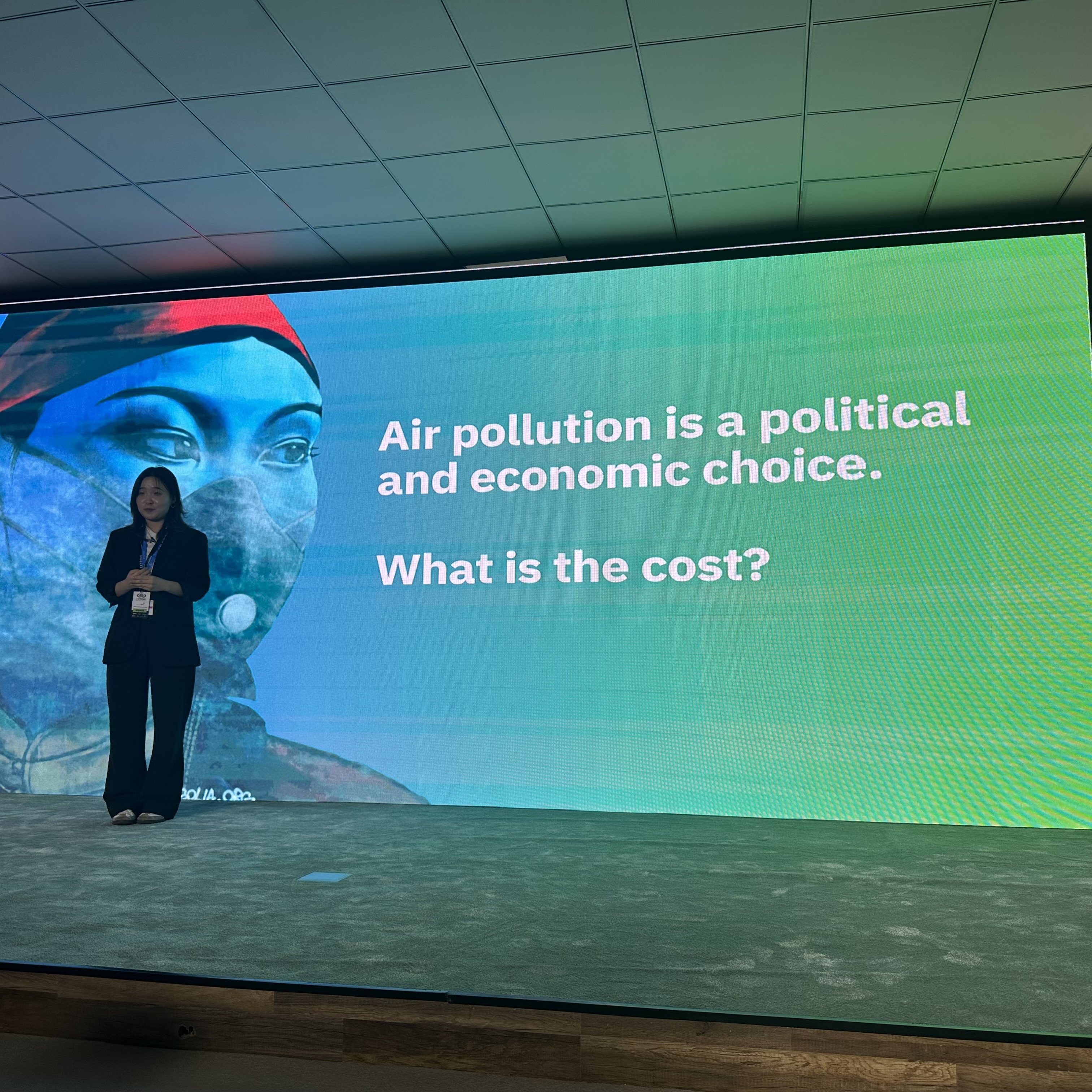
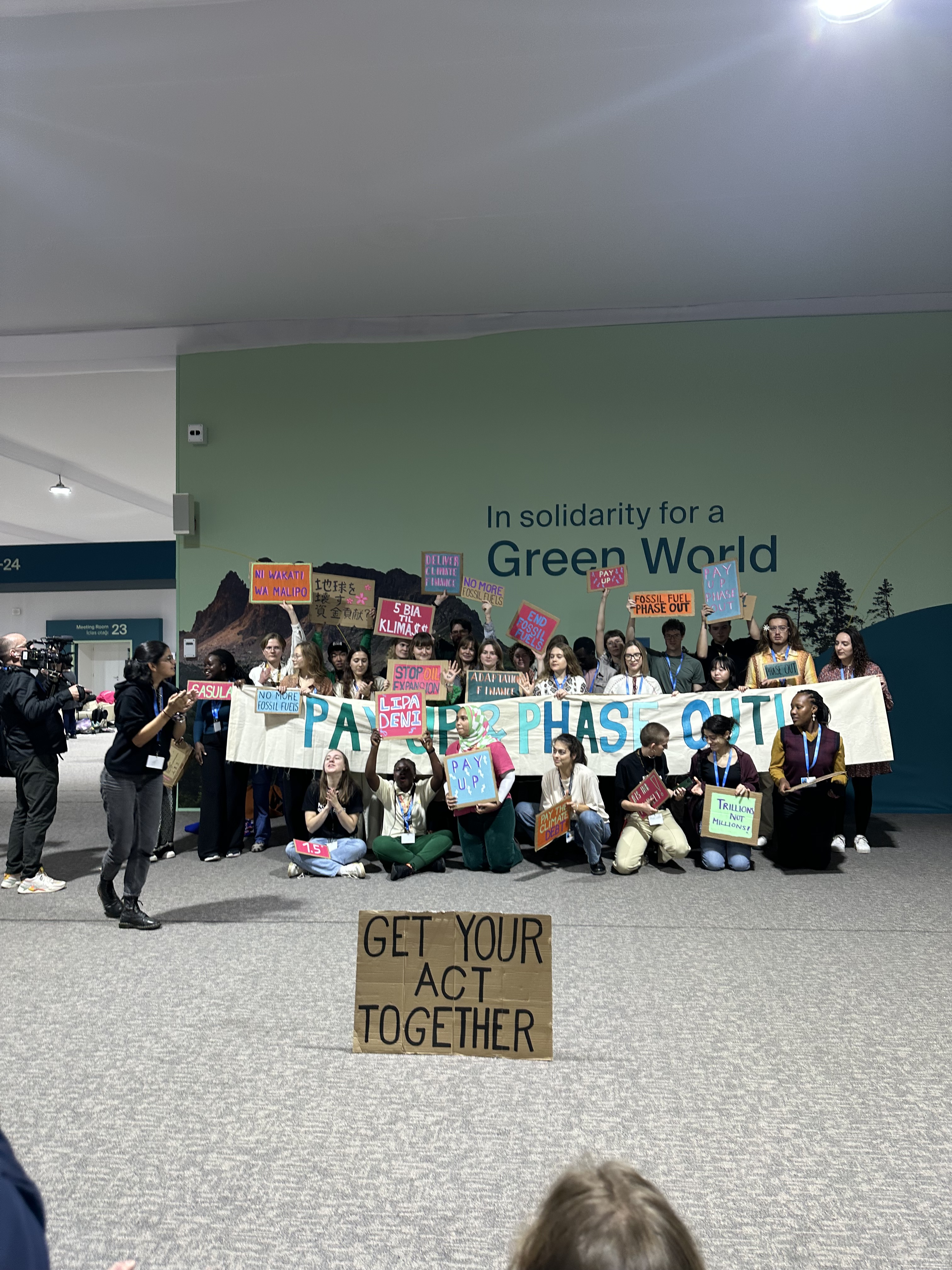
Picture 6, Powerful presentation by Enkhuun Byambadorji on Transforming Climate Narratives for Healthy. Picture 7, Organised protests by activists inside the Blue Zone.

Environments

What tips would you give to someone who is hoping to attend next year? 

  • Apply!! It’s an amazing opportunity both professionally and personally and it shouldn’t be missed. 
  • Wear comfortable yet formal attire. You will be walking around for most of the day but also meeting important and really cool people, so you definitely still want to look the part. 
  • Have business cards for networking 
  • Bring a power bank 
  • Practice your elevator pitch- in case you stumble across somebody interested in your research. 
  • Take lots of pictures!

Conclusion 

We wanted to end this blog by saying a massive thank you to the Walker Institute for their support in making this experience possible. Attending COP29 was a transformative journey that deepened our commitment to climate action and inspired us to continue advocating for a sustainable future.
Good morning Baltimore! AMS 2024

Isabel Smithi.h.smith@pgr.reading.ac.uk

Hannah Croadh.croad@pgr.reading.ac.uk

In January 2024, Isabel Smith and Hannah Croad attended the 104th American Meteorological Society (AMS) annual meeting in Baltimore, Maryland. As fourth-year PhD students this was something of a “last hurrah” of our PhDs (with the remainder of our project monies and carbon budgets being used up), representing a fantastic opportunity to see the latest research happening in meteorology, meet other scientists working in our respective fields, and present our own work to a large audience at this late stage in our projects.

We arrived in Baltimore on the Friday before the conference started, navigating the busy streets near the Inner Harbour in a thick fog to find our hotel. The many plumes of steam coming from vents in the street were somewhat disconcerting, but it turns out this is the result of an underground steam pipe system and is completely safe. As exciting as this was, Baltimore is slightly lacking in terms of other tourist attractions, so on the Saturday we chose to visit Washington DC, only a 1-hour train ride away. We had a great day wandering about the capital city, visiting the Smithsonian’s National Air and Space Museum, and seeing all the iconic monuments including the Capitol building and the White House. Back in Baltimore on the Sunday, there was a buzz about the city as Baltimore’s NFL Ravens team were hosting the Kansas City Chiefs. Although we did not attend the game, and the Ravens lost, it was a great honour to be within a mile radius of Taylor Swift.

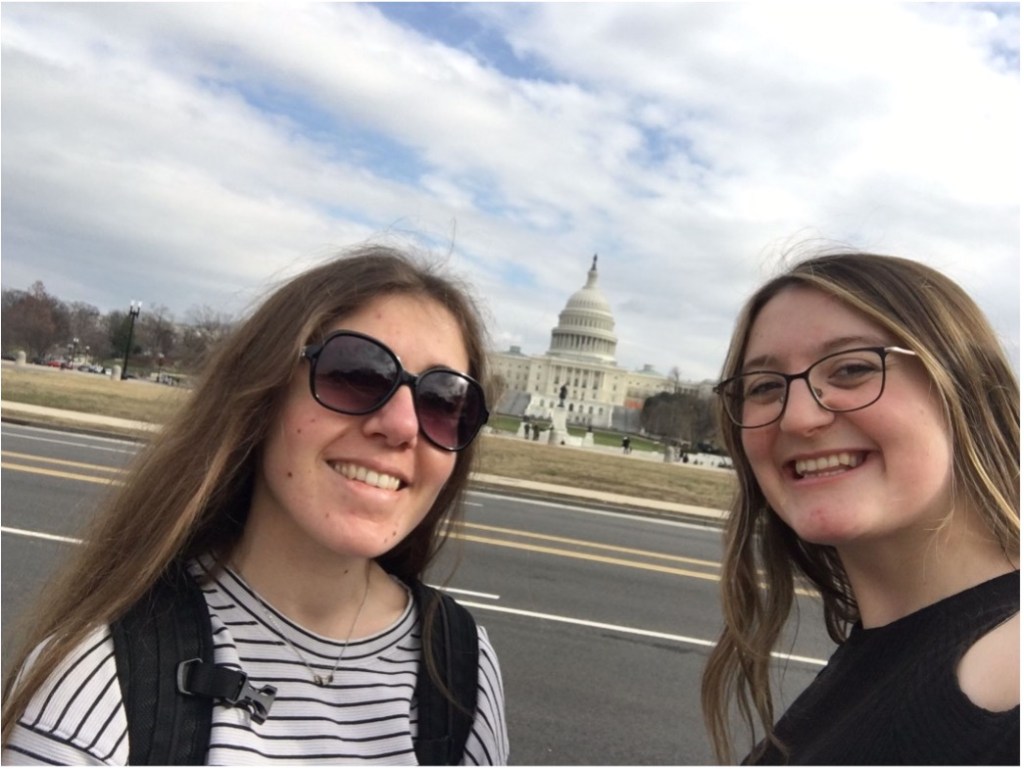
Figure 1: Posing for a selfie in front of the Capitol building in Washington DC whilst the sun made a brief appearance.

The conference started on Sunday, with registration (where we picked up some cool lanyards), speeches from outgoing and incoming AMS presidents, student posters, and an interesting panel discussion about how the two sides of American politics must come together in the fight against climate change. It was also great to meet up with two first-year PhD students from the department, Karan Ruparell and Robby Marks, for who this was the first international conference of their PhD.  

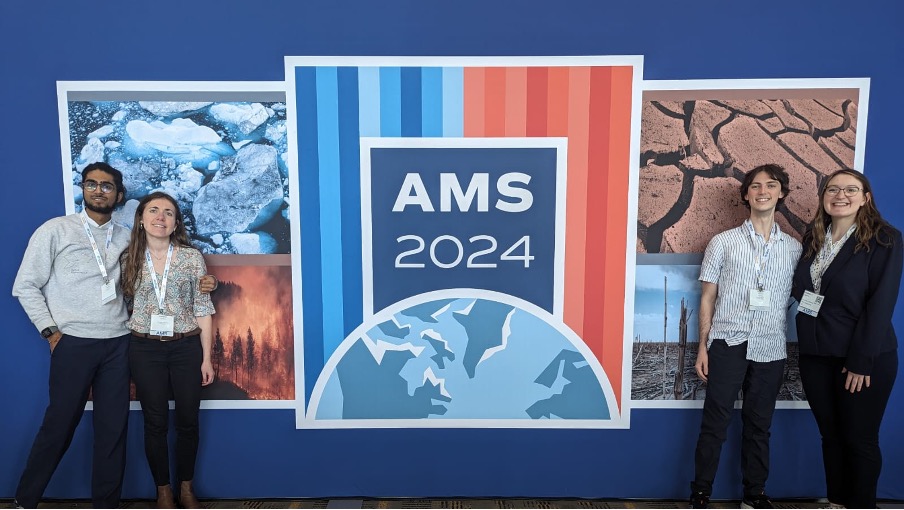
Figure 2: PhD students (from left to right: Karan, Hannah, Robby, Isabel) from the University of Reading at the AMS 2024 annual meeting with the climate-striped-inspired logo.

The main conference programme was scheduled from Monday to Thursday. The size of the conference was overwhelming, with up to 40 parallel sessions at any one time amongst the many different mini- conferences and symposia. Hence, it was important to research which sessions you wanted to go to in advance.  We did this using the AMS app, although it was rather slow and buggy (AMS if you’re reading this, please improve for next year). Isabel attended the 4-day symposium on Aviation, Range and Aerospace meteorology (ARAM), being held in the same room of the conference center each day. In contrast, Hannah attended many different sessions and so was continuously moving between different rooms, with the highlights being the Daniel Keyser symposium on synoptic-dynamic meteorology on Monday and the Polar symposium on Thursday. 

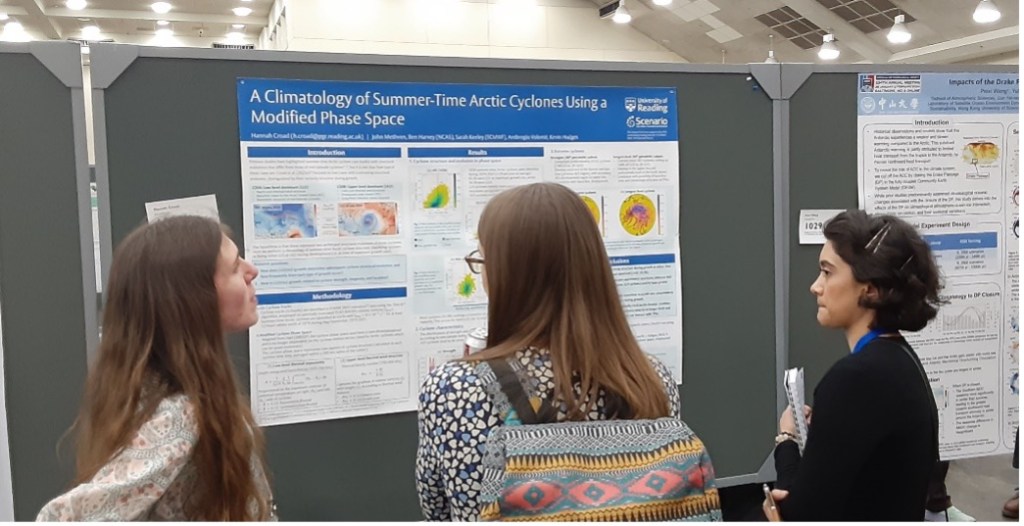
The biggest day of the conference for us was Thursday, as we were both going to be presenting our work. Starting bright and early, Isabel gave an oral presentation in the ARAM symposium, talking about her work on trends in aviation scale turbulence. In the afternoon, Hannah presented a poster in the Polar symposium, talking about her climatology of summer-time Arctic cyclones. We found it interesting to compare the two different presentation formats. For oral presentations your research is likely to reach more people as you have a captive audience for 12 minutes, but the format is more nerve-wracking and there is only limited time for questions and discussion. Less people are likely to visit a poster, but the 1.5 hour format allows for longer and more in-depth discussion with those who do approach you (assuming your poster survives the flight in your suitcase of course). Regardless of the format, we both really enjoyed sharing and discussing our work with other scientists and found the day to be thoroughly rewarding. 

Figure 3: Isabel giving her presentation in the ARAM symposium.
Figure 4: Hannah (left) presenting her poster at the Polar symposium. 

In summary, we both had a fantastic time at the AMS 2024 annual meeting. Not only did we enjoy and learn a lot from the conference talks and posters, it was also great to catch up with current and ex-students from the department, old friends and lecturers from our time at the University of Oklahoma as undergraduate students, and to make new contacts in our respective fields. Although large conferences like AMS can be daunting, attending gives you an appreciation of the wide variety of research happening all over the world, conducive to a stimulating and inspiring atmosphere. They also provide fantastic opportunities to network and to learn new things outside of your immediate research topic. Hence, we would both recommend attending a big conference like AMS if you get the chance to do so in your PhD! 

AGU in Sunny San Francisco

Flynn Ames - f.ames@pgr.reading.ac.uk

For my first (and given carbon budgets, possibly the last) in-person conference of my PhD, I was lucky enough to go to AGU (American Geophysical Union Conference) in December 2023, taking place in San Francisco, California. As my first time in America, there was a lot to be excited about. As my first time presenting at a conference, there was a lot to be nervous about. So what did I discover?

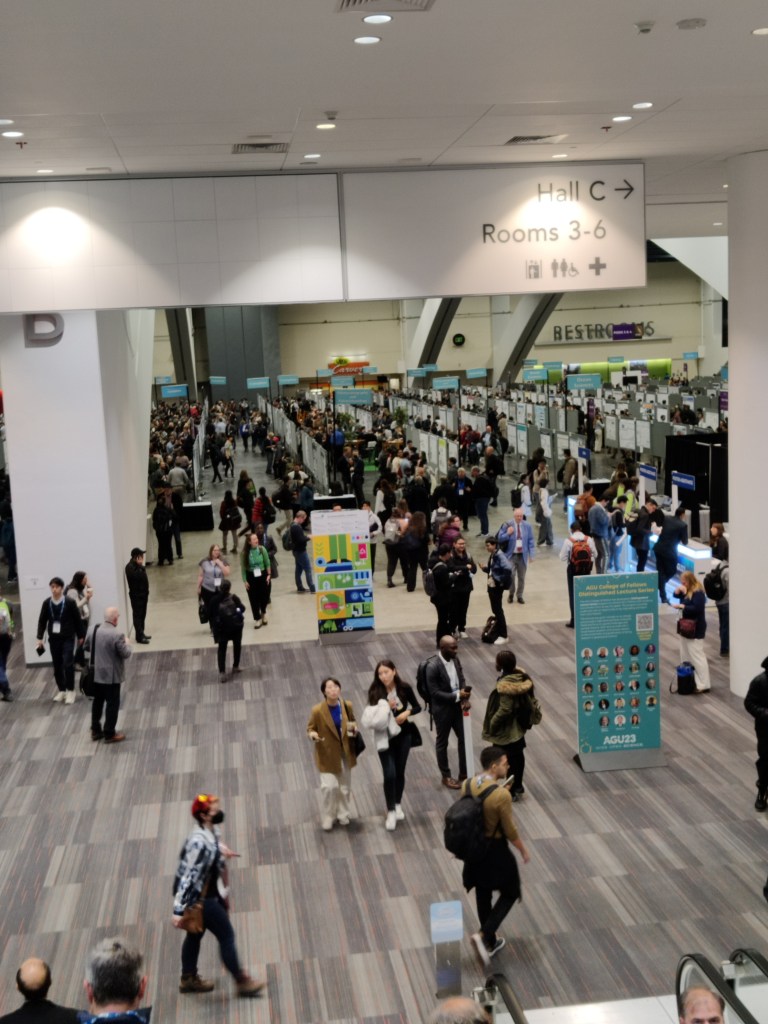
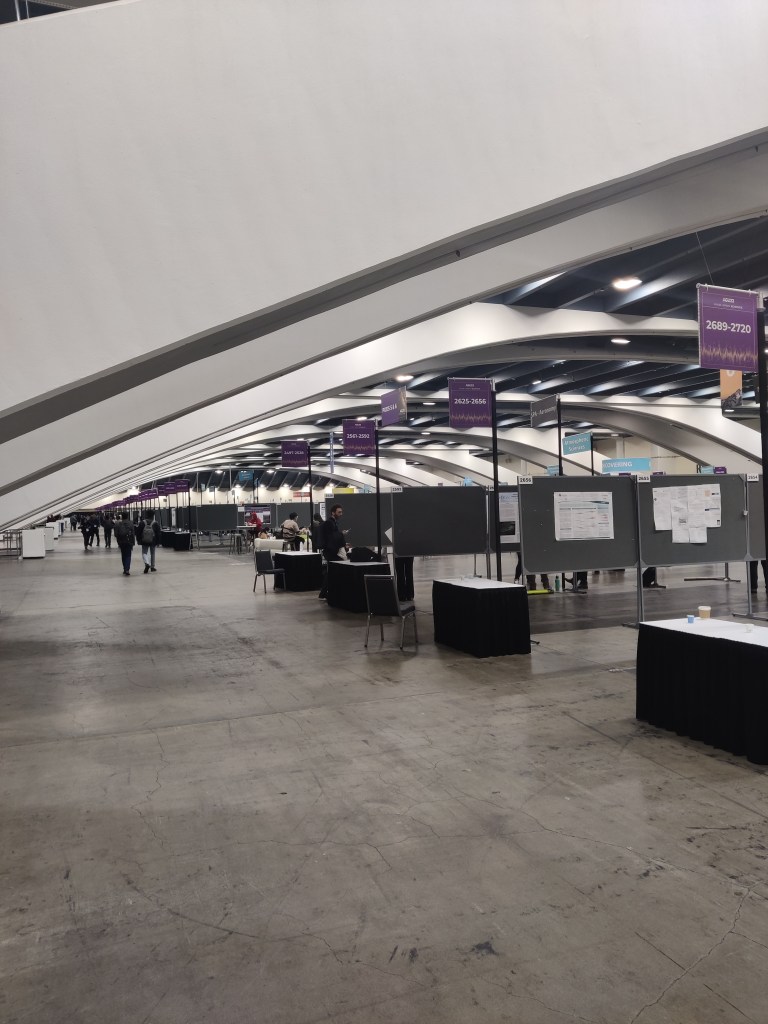
To echo the previous year’s post: AGU is big. I mean really big. I mean seriously (please take me seriously) its huge. The poster hall was the size of an aircraft hangar – poster slots were numbered from 1 to over 3000, with each slot used by a different person for each day. Dozens of talk sessions were held at any time simultaneously across the three separate buildings (that thankfully were very close to each other), commencing anytime from 8am to 6pm, Monday to Friday. I was recommended the AGU app and would (uncharacteristically) do the same as it was very helpful in navigating the sessions. I’d also recommend properly planning what you want to attend in advance of the conference – it is very easy to miss potentially relevant sessions otherwise.

The poster hall from two different angles on Monday Morning (left) and Friday evening (right).

The keynote lectures (one per day) were like something out of Gamescom or E3. They always started with flashy, cinematic vignettes. Hosts and speakers had their own entrance theme song to walk out on stage to, whether that be Katy Perry ‘Fireworks’ or Johnny Cash ‘Ring of Fire’ (and of course, they had the cliche teleprompter from which to read). Some Keynote talks were OK in terms of content, but others were definitely a miss, seemingly prioritising style over substance or referring to subject matter in too abstract a way, so that it was difficult to gauge what the take home message was meant to be. I’d say attend at least one for the experience but skip the rest if they don’t appeal to you.

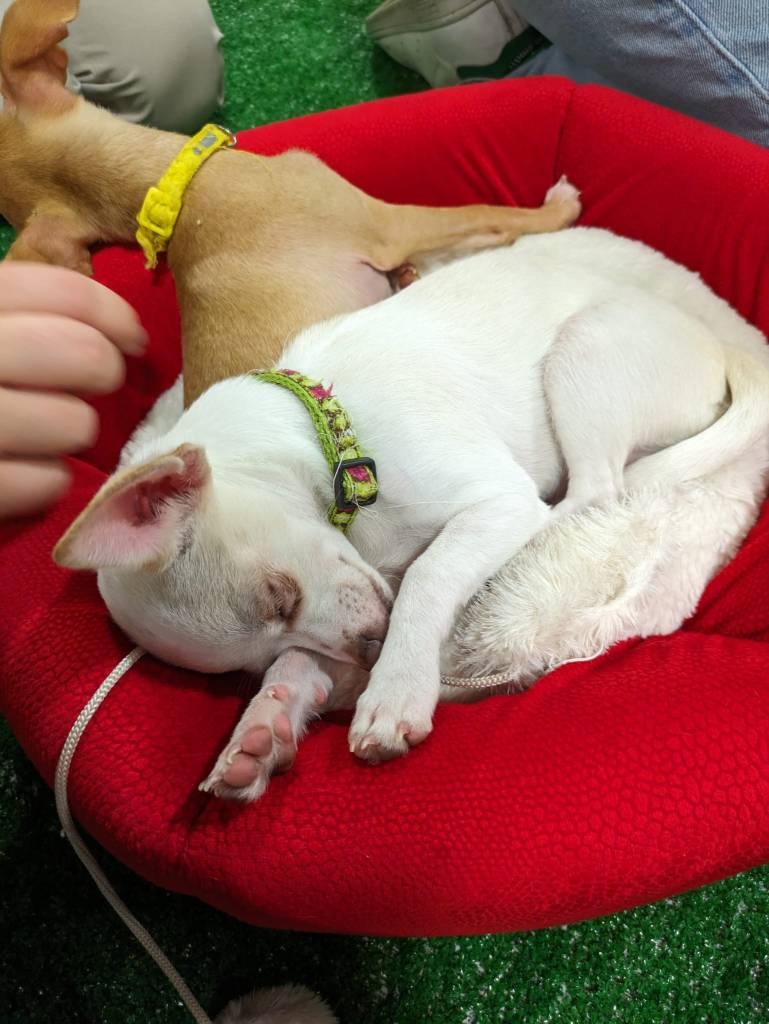
There were also miscellaneous activities to partake in. Exhibition Hall F was where you could find stalls of many research organisations, along with any American or Chinese university you can name (NASA had a cool one with some great graphics). In that same place you could also get a free massage (in plain sight of everyone else) or a professional headshot (which I tried – they brushed something on my face, I don’t know what it was) or even hang out with the puppies (a stall frequented by a certain Met PhD student). You could say there was something for everyone.

I wasn’t the only one needing rest after a long day of conferencing.

I found poster sessions to be far more useful than talks. Most talks were eight minutes long, with a red light switching on after seven. With these time constraints, presenters are often forced to assume knowledge and cram in content and slides. The presentations can be hard to follow at the best of times, but especially when you yourself are presenting later in the week and all you can do is watch and wait for that red light, knowing that it will be deciding your fate in days to come. In contrast, posters can be taken at one’s own pace – you can ask the presenter to tailor their “spiel” to you, whether that’s giving a higher-level overview (as I asked for 100% of the time) or skipping straight to the details. You get a proper chance to interact and have conversations with those doing work you’re interested in, in contrast to talks where your only hope is to hunt down and corner the presenter in the few microseconds after a session ends.

With that said, there were many great talks. Some of the coolest talks I attended were on existing and future mission concepts to Europa (moon of Jupiter) and Enceladus (moon of Saturn) respectively, which has tangential relevance to my own project (icy moon oceanography – probably best left for a future post). In these talks, they discussed the science of the upcoming Europa Clipper mission, along with a robotic EEL concept (like a robot snake) for traversing within and around the icy crevasses on Enceladus’s surface. It was really cool (and very lucky) getting to interact with people working on Europa Clipper and the current Juno mission orbiting Jupiter. Given the time taken between a mission’s proposal, getting (and sometimes losing) funding, planning, construction, and eventual launch and arrival, many of these scientists had been working on these missions for decades! 

My own talk was scheduled for the final conference day (given the luck with everything else, I won’t complain) at 8:40 am. While seemingly early, I struggled to sleep beyond 3:30am most days anyway owing to jet lag so by 8:40am, stress ensured I was wide awake, alert, and focused. 

The talk was over in a flash – I blinked and it was done (more or less).

The most academically helpful part of the conference was the conversations I had with people about my work after the talk. This was my main take away from AGU – that getting to know people in your field and having in-depth conversations really can’t have been achieved by reading someone’s paper, or even sending an email. Meeting in-person really helps. A poster session can thankfully make this feel very natural (as opposed to just randomly walking up to strangers – not for me…) and is therefore something I recommend taking advantage of. Besides, if they’re presenting a poster, they’re less able to run away, even if they want to.

A quick bullet point list of other things I learned (and didn’t) while at AGU:

Things I learned:

  • Apparently, PhD students having business cards is normal in America? – I got handed one during a dinner and the whole table didn’t understand why I was confused
  • NO BISCUITS DURING COFFEE BREAKS in America – probably because you can’t get biscuits easily in America. Regardless, my stomach deemed this a poor excuse.
  • Food portions are, in general, much bigger – surely to make up for the lack of biscuits during coffee breaks.

Things I didn’t learn:

  • How the automatic flush mechanism worked in the conference venue toilets (I really tried)
  • Given there were dozens of sessions happening simultaneously at the conference, probably many other things.

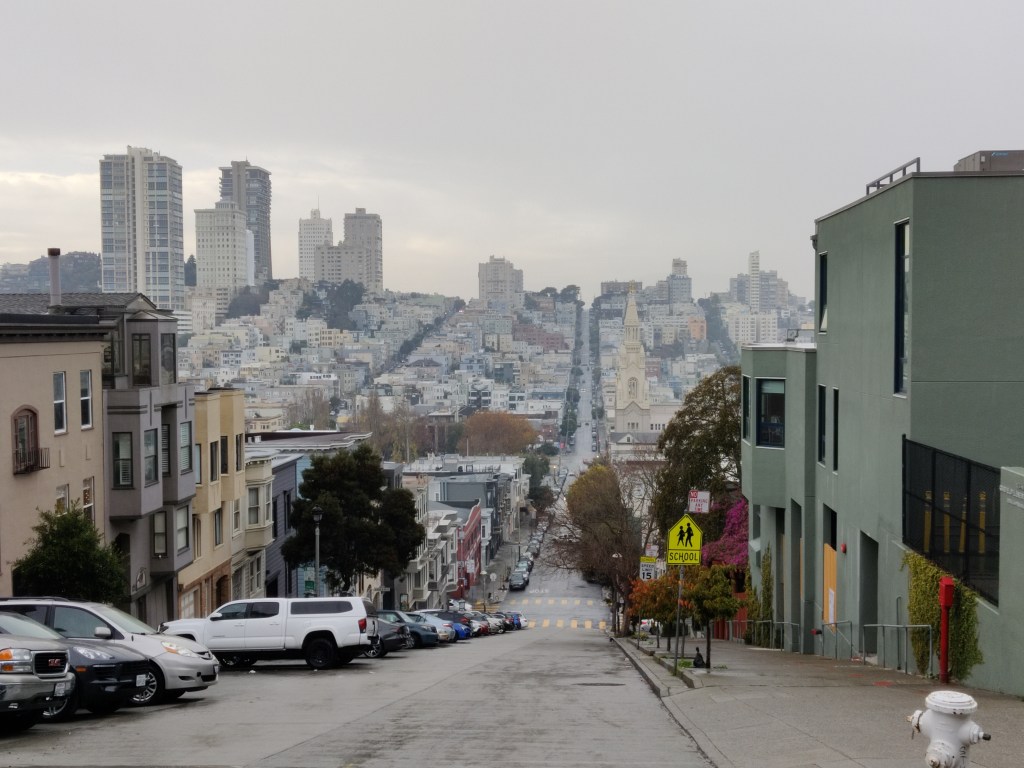
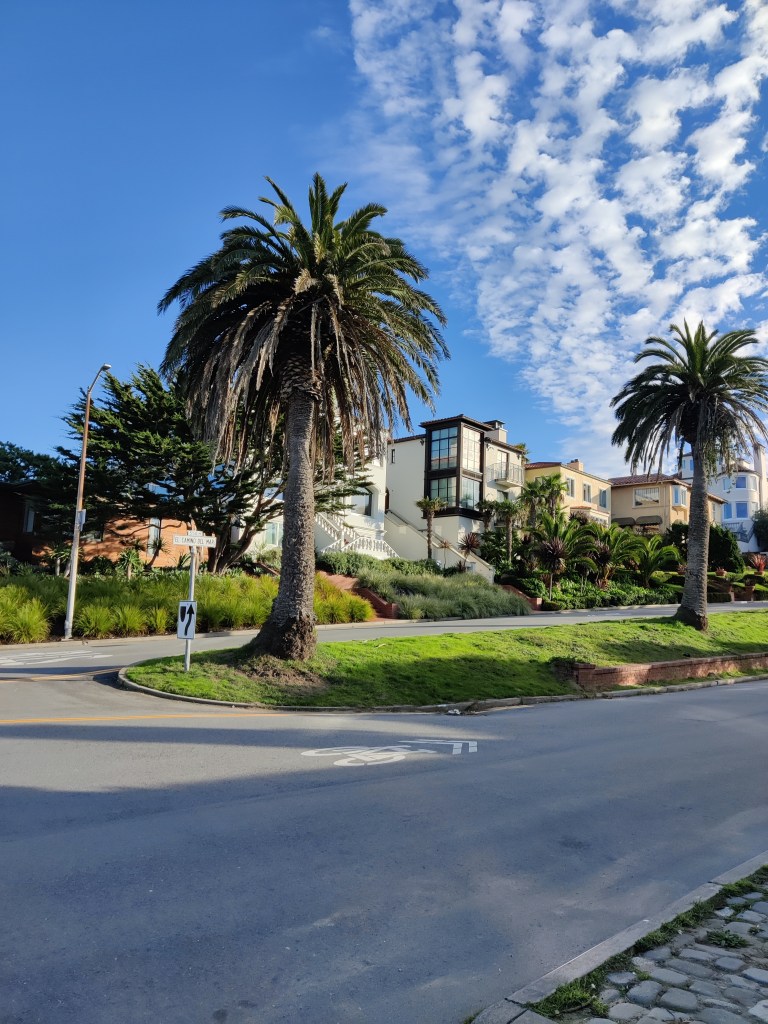
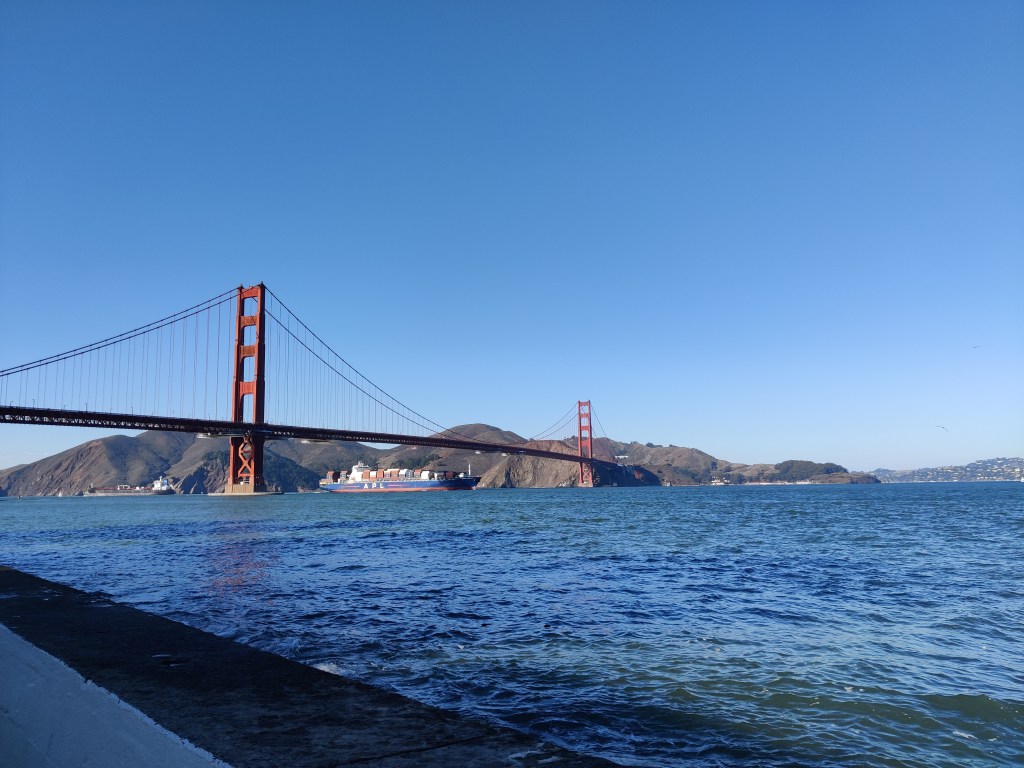
After AGU finished, I was lucky enough to spend extra time in San Francisco. The city really has a piece of everything: fantastic walks near the Golden Gate and coastal area, the characteristic steep streets and cable cars, lots of great places to eat out (great for vegans/vegetarians too! :)), and they had unexpectedly good street musicians. The weather was very nice for December – around 18 degrees. I even got sunburned on one of the days. Public transport is great in San Francisco and getting around the city was no issue.

Some of the various sights (and only pictures I took) in San Francisco.

But San Francisco also appears to be a city of extremes. There are mansions near the beach in an area that looks like a screenshot from Grand Theft Auto Five. Meanwhile in the city itself, the scale of homelessness is far beyond anything I’ve observed here in the UK. I’d very frequently walk past people with large trolleys containing what appeared to be all their belongings. Nearby the Tenderloin district, pitched tents on the pathways next to roads were common, with people cooking on gas stoves. The line to what appeared to be one soup kitchen stretched outside and round the corner. Drug use was also very noticeable. I frequently spotted people slumped over in wheelchairs, others passed out in a subway station or outside a shop. People pass by as if no-ones there. It’s one thing hearing about these issues, but it is eye-opening to see it.

Overall, attending AGU in San Francisco was an experience I will not forget and certainly a highlight of my PhD so far – I’m very grateful I was able to go! Next year’s AGU will take place in Washington DC from 9th-13th December. Will you be there? Will you be the one to write next years AGU post?  Stay tuned to the Social Metwork (and for the latter, your email inbox) to find out.

Future of Cumulus Parametrization conference, Delft, July 10-14, 2017

Email: m.muetzelfeldt@pgr.reading.ac.uk

For a small city, Delft punches above its weight. It is famous for many things, including its celebrated Delftware (Figure 1). It was also the birthplace of one of the Dutch masters, Johannes Vermeer, who coincidentally painted some fine cityscapes with cumulus clouds in them (Figure 2). There is a university of technology with some impressive architecture (Figure 3). It holds the dubious honour of being the location of the first assassination using a pistol (or so we were told by our tour guide), when William of Orange was shot in 1584. To this list, it can now add hosting a one-week conference on the future of cumulus parametrization, and hopefully bringing about more of these conferences in the future.

Delftware_display

Figure 1: Delftware.

Vermeer-view-of-delft

Figure 2: Delft with canopy of cumulus clouds. By Johannes Vermeer, 1661.

Delft_AULA

Figure 3: AULA conference centre at Delft University of Technology – where we were based for the duration of the conference.

So what is a cumulus parametrization scheme? The key idea is as follows. Numerical weather and climate models work by splitting the atmosphere into a grid, with a corresponding grid length representing the length of each of the grid cells. By solving equations that govern how the wind, pressure and heating interact, models can then be used to predict what the weather will be like days in advance in the case of weather modelling. Or a model can predict how the climate will react to any forcings over longer timescales. However, any phenomena that are substantially smaller than this grid scale will not be “seen” by the models. For example, a large cumulonimbus cloud may have a horizontal extent of around 2km, whereas individual grid cells could be 50km in the case of a climate model. A cumulonimbus cloud will therefore not be explicitly modelled, but it will still have an effect on the grid cell in which it is located – in terms of how much heating and moistening it produces at different levels. To capture this effect, the clouds are parametrized, that is, the vertical profile of the heating and moistening due to the clouds are calculated based on the conditions in the grid cell, and this then affects the grid-scale values of these variables. A similar idea applies for shallow cumulus clouds, such as the cumulus humilis in Vermeer’s painting (Figure 2), or present-day Delft (Figure 3).

These cumulus parametrization schemes are a large source of uncertainty in current weather and climate models. The conference was aimed at bringing together the community of modellers working on these schemes, and working out which might be the best directions to go in to improve these schemes, and consequently weather and climate models.

Each day was a mixture of listening to presentations, looking at posters and breakout discussion groups in the afternoon, as well as plenty of time for coffee and meeting new people. The presentations covered a lot of ground: from presenting work on state-of-the-art parametrization schemes, to looking at how the schemes perform in operational models, to focusing on one small aspect of a scheme and modelling how that behaves in a high resolution model (50m resolution) that can explicitly model individual clouds. The posters were a great chance to see the in-depth work that had been done, and to talk to and exchange ideas with other scientists.

Certain ideas for improving the parametrization schemes resurfaced repeatedly. The need for scale-awareness, where the response of the parametrization scheme takes into account the model resolution, was discussed. One idea for doing this was the use of stochastic schemes to represent the uncertainty of the number of clouds in a given grid cell. The concept of memory also cropped up – where the scheme remembers if it had been active at a given grid cell in a previous point in time. This also ties into the idea of transitions between cloud regimes, e.g. when a stratocumulus layer splits up into individual cumulus clouds. Many other, sometimes esoteric, concepts were discussed, such as the role of cold pools, how much tuning of climate models is desirable and acceptable, how we should test our schemes, and what the process of developing the schemes should look like.

In the breakout groups, everyone was encouraged to contribute, which made for an inclusive atmosphere in which all points of view were taken on board. Some of the key points of agreement from these were that it was a good idea to have these conferences, and we should do it more often! Hopefully, in two years’ time, another PhD student will write a post on how the next meeting has gone. We also agreed that it would be beneficial to be able to share data from our different high resolution runs, as well as to be able to compare code for the different schemes.

The conference provided a picture of what the current thinking on cumulus parametrization is, as well as which directions people think are promising for the future. It also provided a means for the community to come together and discuss ideas for how to improve these schemes, and how to collaborate more closely with future projects such as ParaCon and HD(CP)2.

RMetS Impact of Science Conference 2017.

Email – j.f.talib@pgr.reading.ac.uk

“We aim to help people make better decisions than they would if we weren’t here”

Rob Varley CEO of Met Office

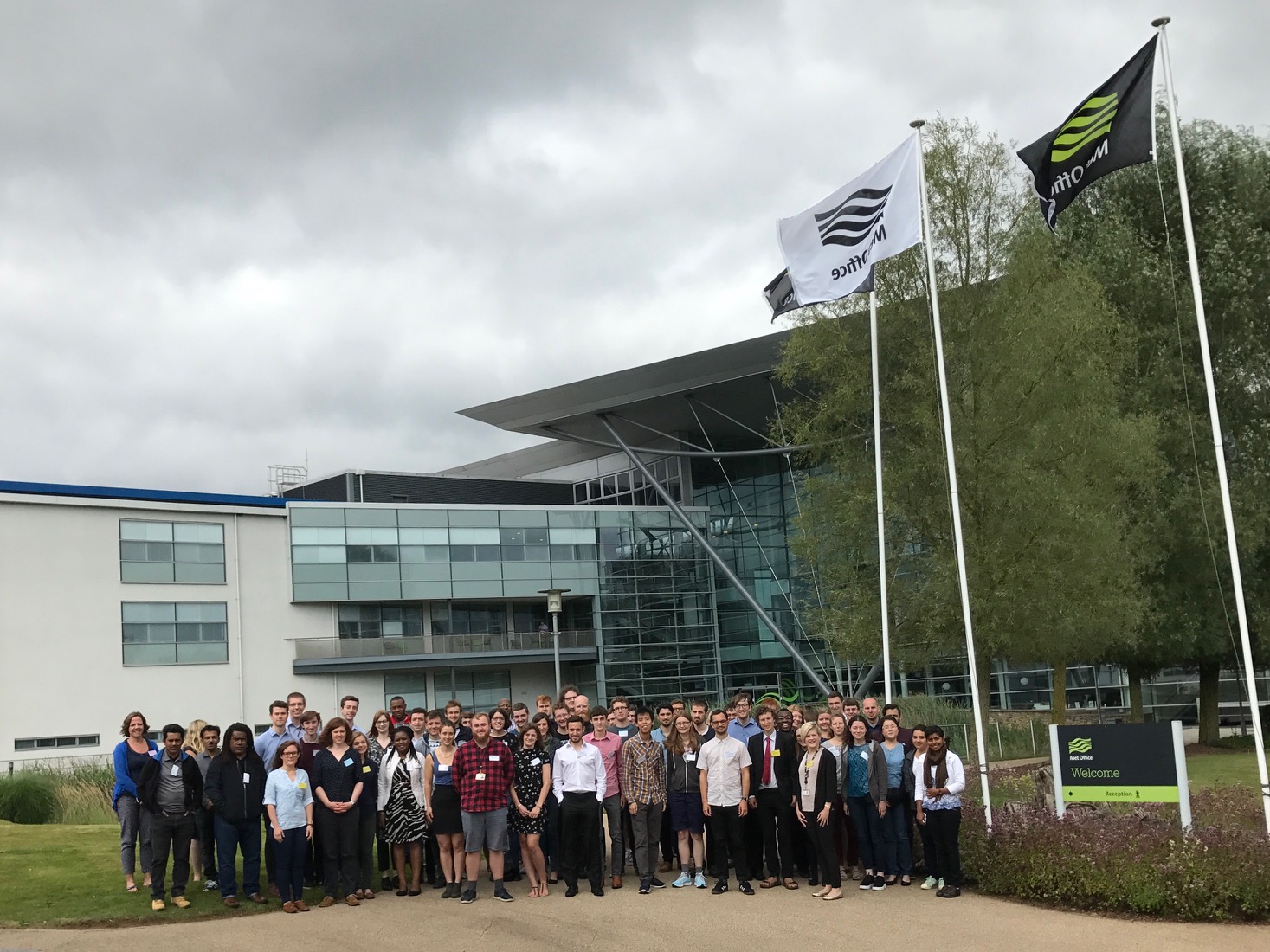
This week PhD students from the University of Reading attended the Royal Meteorological Society Impact of Science Conference for Students and Early Career Scientists. Approximately eighty scientists from across the UK and beyond gathered at the UK Met Office to learn new science, share their own work, and develop new communication skills.

image4

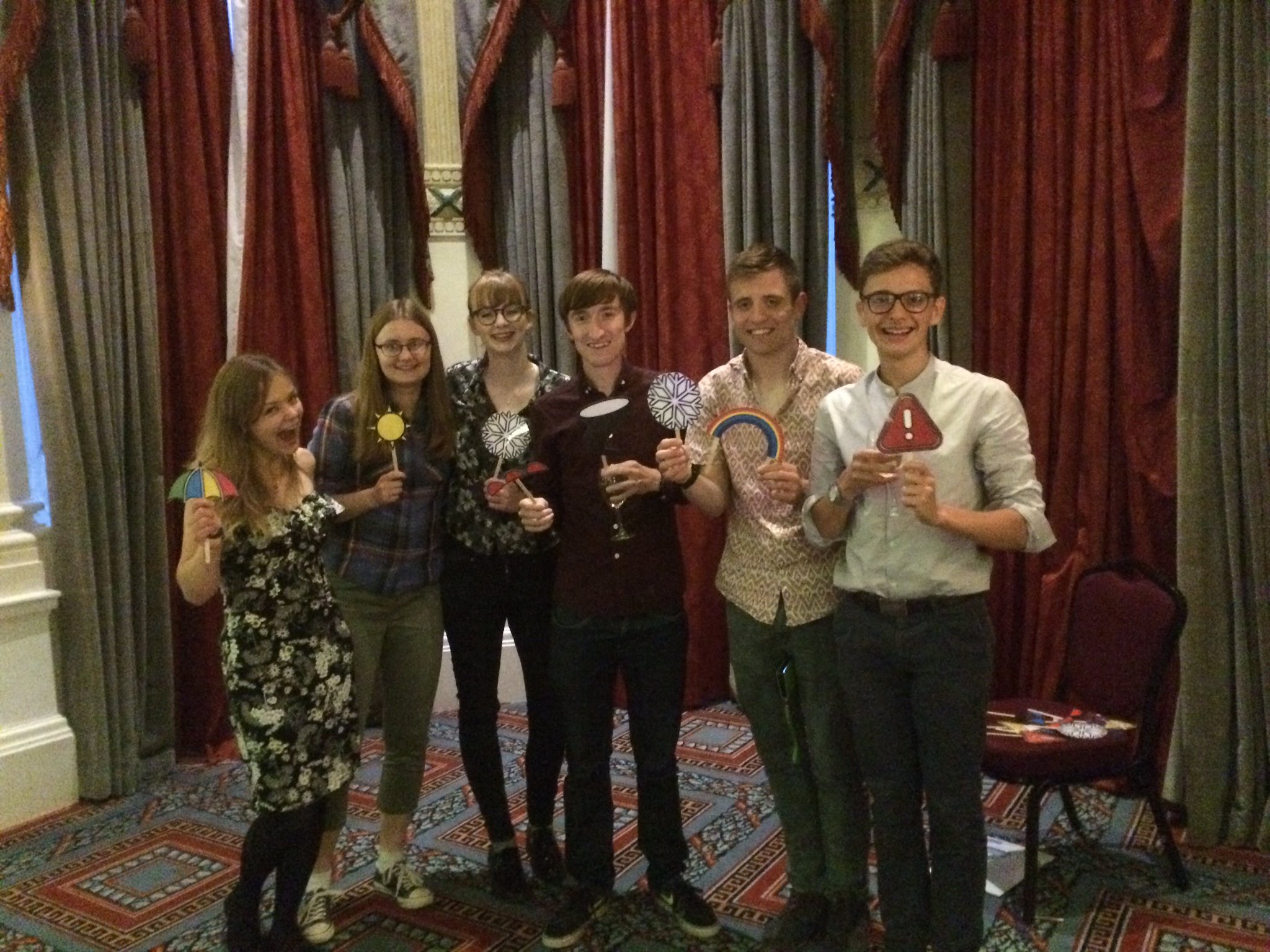
Across the two days students presented their work in either a poster or oral format. Jonathan Beverley, Lewis Blunn and I presented posters on our work, whilst Kaja Milczewska, Adam Bateson, Bethan Harris, Armenia Franco-Diaz and Sally Woodhouse gave oral presentations. Honourable mentions for their presentations were given to Bethan Harris and Sally Woodhouse who presented work on the energetics of atmospheric water vapour diffusion and the representation of mass transport over the Arctic in climate models (respectively). Both were invited to write an article for RMetS Weather Magazine (watch this space). Congratulations also to Jonathan Beverley for winning the conference’s photo competition!

IMG_3055
Jonathan Beverley’s Winning Photo.

Alongside student presentations, two keynote speaker sessions took place, with the latter of these sessions titled Science Communication: Lessons from the past, learning for future impact. Speakers in this session included Prof. Ellie Highwood (Professor of Climate Physics and Dean for Diversity and Inclusion at University of Reading), Chris Huhne (Co-chair of ET-index and former Secretary of State for Energy and Climate Change), Leo Hickman (editor for Carbon Brief) and Dr Amanda Maycock (NERC Independent Research Fellow and Associate Professor in Climate Dynamics, University of Leeds). Having a diverse range of speakers encouraged thought-provoking discussion and raised issues in science communication from many angles.

Prof. Ellie Highwood opened the session challenging us all to step beyond the typical methods of scientific communication. Try presenting your science without plots. Try presenting your work with no slides at all! You could step beyond the boundaries even more by creating interesting props (for example, the notorious climate change blanket). Next up Chris Huhne and Leo Hickman gave an overview of the political and media interactions with climate change science (respectively). The Brexit referendum, Trump’s withdrawal from the Paris Accord and the rise of the phrase “fake news” are some of the issues in a society “where trust in the experts is falling”. Finally, Dr Amanda Maycock presented a broad overview of influential science communicators from the past few centuries. Is science relying too heavily on celebrities for successful communication? Should the research community put more effort into scientific outreach?

Communication and collaboration became the two overarching themes of the conference, and conferences such as this one are a valuable way to develop these skills. Thank you to the Royal Meteorology Society and UK Met Office for hosting the conference and good luck to all the young scientists that we met over the two days.

#RMetSImpact

DEkAxGgXkAAmaWE.jpg large

Also thank you to NCAS for funding my conference registration and to all those who provided photos for this post.