Models and Memories: Our NCAS CMSS 2025 Experience

Piyali Goswami: p.goswami@pgr.reading.ac.uk

Mehzooz Nizar: m.nizar@pgr.reading.ac.uk

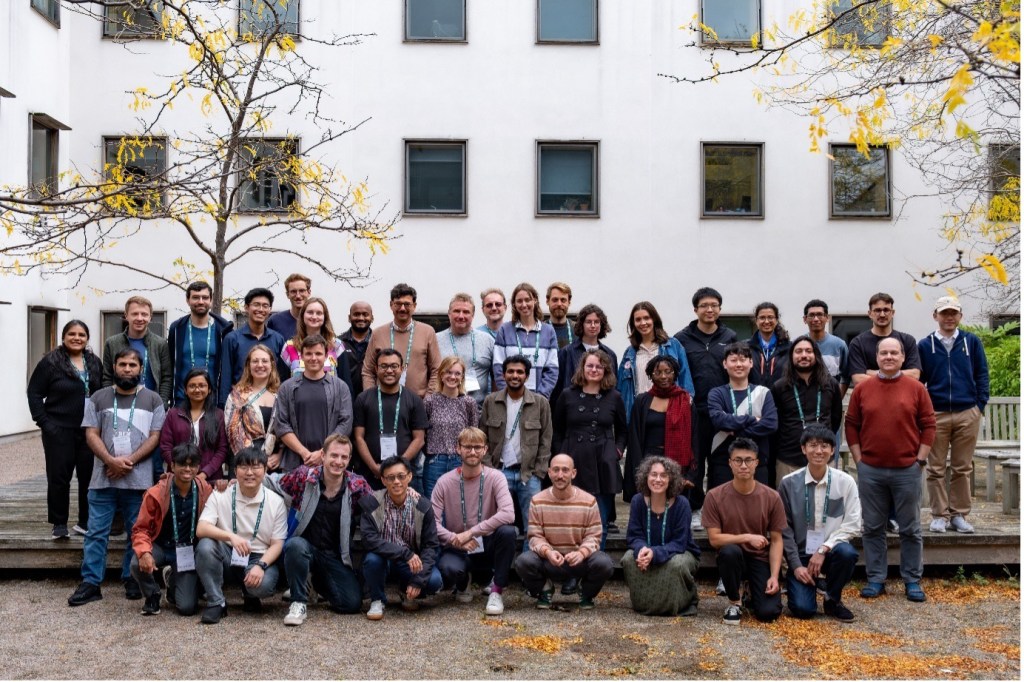
This September, we attended the NCAS Climate Modelling Summer School (CMSS), held at the University of Cambridge from 8th to 19th September. Five of us from the University of Reading joined this two-week residential programme. It was an intense and inspiring experience, full of lectures, coding sessions, discussions, and social events. In this blog, we would like to share our experiences.

 Picture 1: Group Picture of Students and teaching staff. One cohort, many time zones, zero dull moments…

About NCAS CMSS

The NCAS Climate Modelling Summer School (CMSS) is a visionary program, launched in 2007 with funding originating from grant proposals led by Prof. Pier Luigi Vidale. Run by leading researchers from the National Centre for Atmospheric Science and the University of Reading, it’s an immersive, practice-driven program that equips early-career researchers and PhD students with deeper expertise in climate modelling, Earth system science, and state-of-the-art computing. Held biennially in Cambridge, CMSS has trained 350 students from roughly 40 countries worldwide.

The CMSS 2025 brought together around 30 participants, including PhD students and professionals interested in the field of Climate Modelling. 

Long Days, Big Ideas: Inside Our Schedule

The school was full of activity from morning to evening. We started around 9:00 AM and usually wrapped up by 8:30 PM, with a good mix of lectures, practical sessions, and discussions that made the long days fly by.

Week 1 was led by Dr Hilary Weller, who ran an excellent series on Numerical Methods for Atmospheric Models. Mornings were devoted to lectures covering core schemes; afternoons shifted to hands-on Python sessions to implement and test the methods. Between blocks, invited talks from leading researchers across universities highlighted key themes in weather and climate modelling. After dinner, each day closed with a thought-provoking discussion on climate modelling, chaired by Prof. Pier Luigi Vidale, where participants shared ideas on improving models and their societal impact. 

The week concluded with group presentations summarising the key takeaways from Hilary’s sessions and our first collaborative activity that set the tone for the rest of the school. It was followed by a relaxed barbecue evening, where everyone finally had a chance to unwind, chat freely, and celebrate surviving our first week together. 

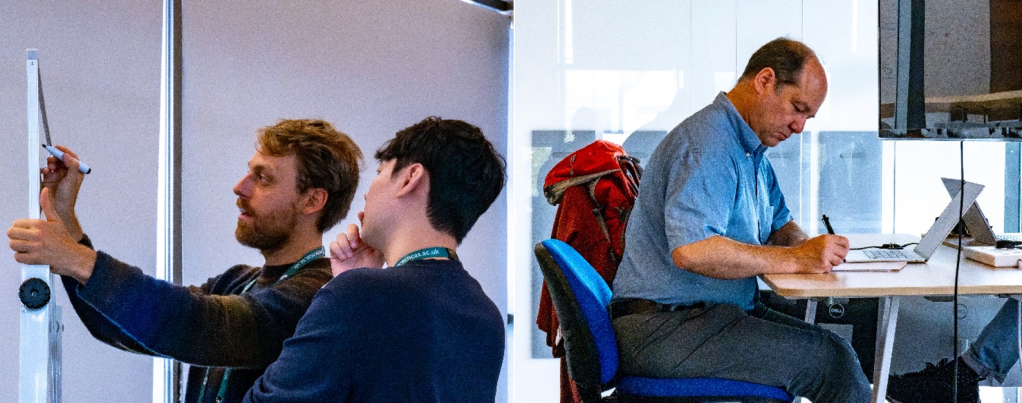
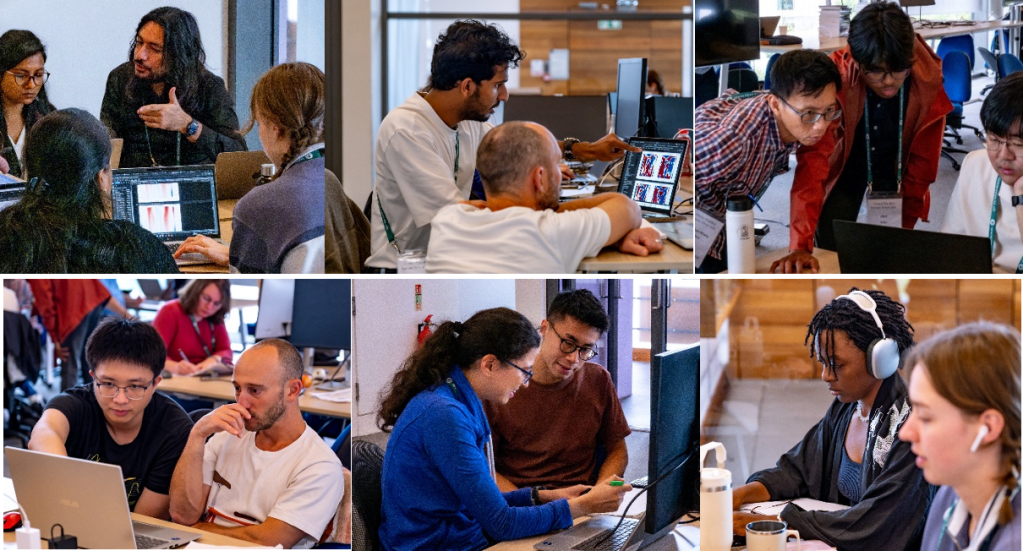
Picture 2 : Working on our group projects. Looks like NASA, feels like: ‘what’s our team name?’

Week 2 was all about getting hands-on with a climate model and learning how to analyse its output. We moved into group projects using SpeedyWeather.jl to design and run climate model experiments. It is a global atmospheric model with simplified physics, designed as a research playground. One of the developers of SpeedyWeather.jl, Milan Klöwer, was with us throughout the week to guide and support our work. Each team explored a different question, from sensitivity testing to analysing the model outputs, and spent the afternoons debugging, plotting, and comparing results. Evenings featured talks from leading scientists on topics such as the hydrological cycle, land and atmosphere interactions, and the carbon cycle. 

The week also included a formal dinner at Sidney Sussex, a welcomed pause before our final presentations. On Friday 19th of September, every group presented its findings before we all headed home. Some slides were finished only seconds before presenting, but the atmosphere was upbeat and supportive. It was a satisfying end to two weeks of hard work, shared learning, and plenty of laughter. A huge thank you to the teaching team for being there, from the “silly” questions to the stubborn bugs. Your patience, clarity, and genuine care made all the difference.

Picture 3: SpeedyWeather, as told by its favourite storyteller Milan, Picture 4: Pier Luigi probably preparing for the next summer school..

Coffee, Culture, and Climate Chat

The best part of the summer school was the people. The group was diverse: PhD students, and professionals from different countries and research areas. We spent nearly every moment together, from breakfast to evening socials, often ending the day with random games of “Would You Rather” or talking about pets. The summer school’s packed schedule brought us closer and sparked rich chats about science and life, everything from AI’s role in climate modelling to the policy levers behind climate action. We left with a lot to think about. Meeting people from around the world exposed us to rich cultural diversity and new perspectives on how science is practiced in different countries, insights that were both fresh and valuable. It went beyond training: we left with skills, new friends, and the seeds of future collaborations, arguably the most important part of research.

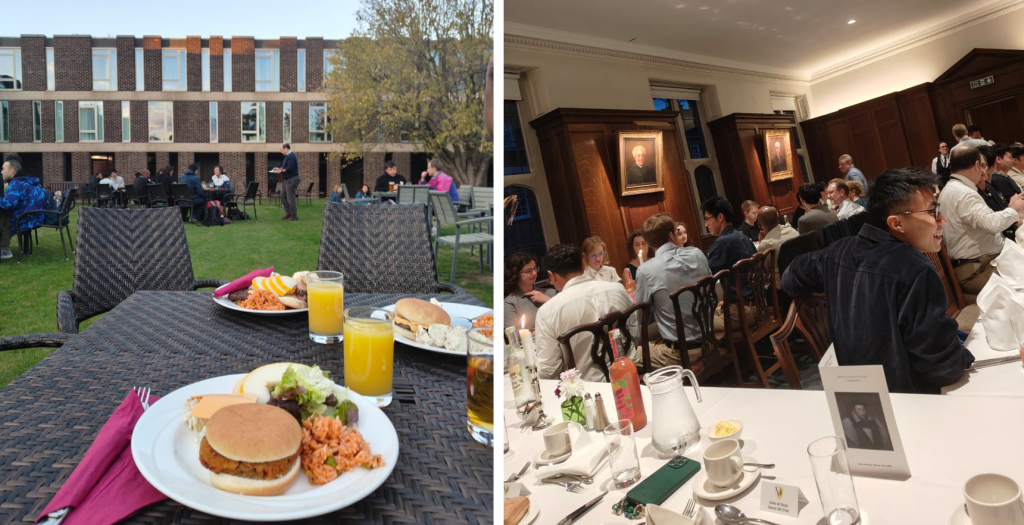
Picture 5: Barbecue evening after wrapping up the first week, Picture 6: Formal dinner at Sidney Sussex, one last evening together before the final presentations

Reflections and takeaways

We didn’t become expert modellers in two weeks, but we did get a glimpse of how complex and creative climate modelling can be. The group presentations were chaotic but fun. Different projects, different approaches, and a few slides that weren’t quite finished in time. Some of us improvised more than we planned, but the atmosphere was supportive and full of laughter. More than anything, we learned by doing and by doing it together. The long days, the discussions, and the teamwork made it all worthwhile.

If you ever get the chance to go, take it. You’ll come back with new ideas, good memories, and friends who make science feel a little more human.

For the future participants

The NCAS CMSS usually opens in early spring, with applications closing around June. With limited spots, selection is competitive and merit-based, evaluating both fit for the course and the expected benefit to the student.

Bring curiosity, enthusiasm, and a healthy dose of patience, you’ll need all three. But honestly, that’s what makes it fun. You learn quickly, laugh a lot, and somehow find time to celebrate when a script finally runs without error. By the end, you’ll be tired, happy, and probably a little proud of how much you managed to do (and probably a few new friends who helped you debug along the way).

The Making of STRATATOUILLE

By Elliot Mckinnon-Gray and Niamh Ocallaghan

The making of 2024’s departmental pantomime Stratatouille actually began all the way back in the summer of that year. There had been conversations on some stifling hot days (not that there were many!) around the theme for the current year’s panto. A film viewing had taken place and characters had begun to be assigned. However, come October, no one could have predicted the twist this tale would have taken leading to the majority of PhD students reluctantly(?) donning chef hats and rat ears for the best part of the coming December.

STRATATOUILLE Poster

Our story actually begins even earlier, mere days after the roaring success of sshRACC in December 2023 – as is apparently tradition – the fabled Panto Cupboard Key was foisted upon me by one of last year’s organisers. I won’t name and shame – but my fate was sealed; I was to become the organiser for the 2024 departmental pantomime. But who, pray, would heed my call for a co-organiser in this, my hour of need? It all came down to a rather conniving bit of deception, whereby I managed to trick my co-coordinator into accepting the key when they may have been expecting a tasty treat. Who says the pantomime is begrudgingly organised? But our destiny was well and truly decided and laid out in front of us. In nine to ten short months, we would be organising a corral of unruly PhD students and support staff to put on the world’s greatest annual university meteorology department pantomime.

Coming back to where we began, at the start of the academic year, we had an extremely strong candidate for what we thought was going to be the theme of the panto, but as always, the story for the panto is decided in the second(?) PhD Group Meeting of the year in a democratic process. This is where our original plan got unseated. The strongest proprietor (with many supporters) of the originally planned theme made the fatal mistake of prioritising career development over their wishes for a panto theme and could not make the deciding session. As Rabbie Burns reminds us, “The best laid plans of mice and men often go awry” – this was one such instance. With only half the organising committee present to propose the original idea, a plucky upstart with one good joke took the stage and captured the imagination of the PhD cohort, and so it was decided: Stratatouille would be the theme for this year’s panto. As fatefully predicted in last year’s panto blog post… 

Plot 

After innumerable lunchtime and evening writing sessions, the bulk of the panto story was baked and ready to consume. It is here where we have to give another massive thank you to Caleb Miller, who spent hours and hours essentially transposing the original story of the film Ratatouille to be based in our department following the terribly cobbled together idea of a story that we had. All we had to do now was pepper it with jokes and puns pertaining to food and/or meteorology and we had a script that even Patton Oswalt would be proud to perform. 

Audience review #1 

“The best panto I’ve seen for many years”

– Dr. Pete Inness 

The story begins with Remi the undergrat realising he feels unable to fulfil his ambition of doing serious research while surrounded by his decidedly unserious fellow undergrats. All they care about is getting drunk off snakebites, but Remi has a dream of becoming a great scientist and doing exceptional and interesting original research. While feeling dejected that he is too inferior to publish original research, he has an apparition of King Sir Professor Brian Hoskins* who gives him a message that anyone can be a scientist if they put their heart into it. 

Then we meet Linguini, a floundering PhD student who feels like he isn’t cut out for the work he is undertaking and expected to do. In a moment of serendipity, Linguini leaves his laptop open and unlocked in the BH coffee area where Remi is able to take a look at the work he is carrying out analysing some CheeseCDF files. Remi realises Linguini’s coding is terrible, fixes a few bugs and manages to greatly improve the code Linguini was working on. This leads to Linguini accepting help from Remi to write a paper as part of his PhD.

In the next scene, Linguini is showing Remi around his PhD office, when the WCD (Weekly Cuisine Discussion) bell goes, and all the PhD students diligently trudge down to GU01 to attend. Admittedly the WCD scene doesn’t further the story much apart from giving Remi an insight into the breadth of research done in this meteorology kitchen. But we got a lot of laughs, good jokes and puns, and silly costumes into this scene so it was an audience and cast favourite. It is later in this scene that we meet the terrifying supervisor, brilliantly played by our regular cartoon villain Catherine Toolan. The supervisor is very tough on Linguini with high expectations and little patience. But that is all too easy for Remi who manages to complete the task the supervisor asked for in no time at all. They (Linguini napping with his feet up) spend the next few hours “cooking up some actual research”. When the supervisor returns, she is amazed to see that ‘Linguini’ has disproved the entire concept of PV. Suspicious that he has managed to attain such a level of skill so quickly, she recommends that he first present the work at a conference before they crack on with publishing the work. 

At the conference, Linguini gives a great presentation (Remi is giving him slide-by-slide instructions) but makes a fatal error by taking nearly all of the credit and failing to mention he got any help from Remi. This alienates Remi who storms out of the conference to return to the department. Jumping forward in time, when Remi returns to and hatches a cunning plan to derail the entire department – stealing the tea and coffee money box (topical departmental news has appeared in the script!). Back at the conference, Remi is making a total fool of himself by not being able to answer even the simplest of questions from the audience, embarrassing his supervisor in the process. She interrogates him about this and finds out much to her dismay that an undergrat helped with the research. So disgusted is she at this that supervisor and the other staff members strike, leaving the department destitute of senior figures. 

This leads to a moment where Remi and Linguini make up thanks to an apology, and Remi recruits a team of undergrats to help finish writing the paper they started. The paper is submitted to the journal Nature: Valley Bar where it is eventually inspected by the feared Reviewer 2, who is so impressed by the work that he recommends it be published with no changes (apart from citing one of his own papers). The story ends with KSPBH* re-appearing and handing Remi the keys to the department and naming the building after him. 

Songs 

Please Stop Me Now – there was a running theme of ‘difficult to sing but possibly worth the effort since they are well loved tunes’ for most songs this year, and this one was no exception. A parody of Queen’s 1979 mega-hit of Don’t Stop Me Now, our extremely talented band carried our pretty rubbish singing – but that didn’t stop it being some attendees’ favourite part of the show. 

Audience review #2 

“How did you guys come up with all those song lyrics and make them work? So funny and so impressive!” 

– MSc Student 

Come on Remi – One of the more singable tunes based on Come on Eileen by Dexys Midnight Runners, all about how much work Remi was going to have to do to get Linguini through his PhD work. In practising this one, we had choir master Catherine bellowing at us to sing louder, a task we all found much easier after a few glasses of boxed wine from the Winnersh Sainsbury’s. The Middle – Jimmy Eat World was the third song which I don’t think we even came up with a spoof title for; a punk-pop particularly catchy tune about the trials and tribulations of poor Linguini the PhD first year who is letting his stress get in the way of enjoying the start of his PhD. Money, Money, Money – an ABBA classic we also didn’t need to change the title of about the rats stealing the money box. We made the bold decision this year to plant much of the songs mid-scene. A directorial choice that I think helped the coherent telling of the story. Special mention here to Nathan’s amazing piano playing skills here – the rendition of Erik Satie’s Gymnopedie during the John Meth-Coq-au-Vin monologue was only improvised in the final dress rehearsal earlier that day! 500 Lines – a version of the Proclaimers’ singalong classic 500 Miles about how many lines Remi has to write to get their paper done! H-O-S-K-I-N-S : I’m not sure how Sir Brian feels about being the subject of the panto or at least a song every year, and this one was a little on the nose; but you really couldn’t ask for a better fit for one of the songs of the summer – Chappell Roan’s Hot to Go had exactly the right mood for what we wanted to sing, and I think it made for a great outro wonderfully delivered by one of the best KSPBH performances we’ve seen in a while by our very own Douglas Mulangwa.

Casting 

It can be a bit like pulling teeth trying to cast the leading roles in the panto, and as one of the few first-year PhDs who have shown the extroversion to be able to tackle this and with great stage presence, the inimitable Jake Keller somewhat reluctantly agreed to be Remi with a fateful “if I have to” when asked repeatedly. I think he came around to really enjoying it, and the audience were also quite impressed –

Audience review #3 

[To Jake] “You were great!” 

– Regius Professor Keith Shine 

And Andrea Rivosecchi as Linguini – at first he accepted but then realised he would have to learn even more lines than the main character; so we looked around and found a great doppelganger for the second act – not sure if any of you noticed – but in the second act Linguini was played by a different Italian man in Riccardo Monfardini! Some veterans of the game came through and gave us some great performances with Catherine as Supervisor and Hette Houtman as Pete Dinners. Shout out to Hette as one of last year’s organisers for also helping us with timing and who to contact for various admin duties. The remaining roles had under 5 lines, but all were delivered hilariously and brilliantly, and you all appear to have agreed.

Audience Review #5 

“Catherine was quite scary as supervisor” 

– Dr Andy Apple Turnover Turner (Catherine’s PhD Supervisor) 

The Night (and Day) of the Panto 

So as many of you agreed, the Act 1 cameo from our antipodean friend Robbie Marks (the star of last year’s panto) was one of the best moment’s of the panto: 

Audience review #4 

“I can’t believe Robby came through and made that for us!” 

– Gabrielle Ching-Johnson (Undergrat #2) 

This is where I would like to make the point that he sent me those videos the morning of the show, and we had to hurriedly stitch together his several renditions of that speech in different locations with the cinematic walk off. Special thanks to Rosie (last year’s co-organiser) for helping with the video editing, and generally for being a great help to us organisers this year by giving advice and keeping us on time (mostly). Robby was sent a video of the mirthful reaction to his cameo with the reaction “F*** yeah, glad I could make an appearance”. The day went much more smoothly than last year, with us occupying the Madejski lecture theatre from 2pm onwards with no interruptions, we had plenty of time to set up the tech and instruments, as well as squeeze in a final full rehearsal. Set up the ticket booth, and we were ready to go! 150 people filed in for a great attendance to our show. Not to forget a great buffet beforehand to get everyone in the mood for the flagship event in the departmental calendar. 

Act 1 and Act 2 managed to run for about the same amount of time, 30 mins a piece for an hour-long panto, as we had planned – brilliant! The interval acts, however put paid to that. A mammoth 45-minute session full of controversy and some of the biggest laughs of the night. We saw Stroopwaffels crowned the winner of the big biscuit bracket, however this was vetoed by the head of department who quite rightly pointed out they are not a biscuit and so the runner up chocolate hobnobs was our true champion. Professor Coq-au-Vin was not the only one to take issue with this controversial result. The 3L68 team of Dan Shipley, Jake Bland and Brian Lo made the argument that Bourbons had been wrongfully expelled and would have won this year, and so Dan delivered a hilarious diatribe explaining how they came to decide which Bourbon was best, and therefore the true winner of the biscuit bracket. I don’t remember which one it was in the end (M&S?) – check the video recordings of the night to find out for yourselves. 

A pleasant break from the commotion of the biscuit brackets was brought around from some classical piano performed by Amber Te Winkel, and then some might say the only reason they attend the panto – Mr Mets. A blinder of an episode where Peter Clark was apologised to (again – and rejected on his behalf by Humphrey), and insinuated to have signed up to OnlyFans with the most innocent of intentions. The theme of the story was John Methven’s takeover as head of department, with him bumbling along and struggling to fulfil the role while eating copious amounts of ‘free’ food (it’s not free if you use department funds to pay for it, Prof. Methven!). Just to clarify that no one thinks John will struggle to fulfil the role, but as HOD I’m afraid you have to expect a fair bit of derision at these sorts of performances! 

Following that, another side-splittingly funny act followed with an after party led by DJ Shonk that included a rare slow number – all in aid of blossoming romance on the dancefloor. 

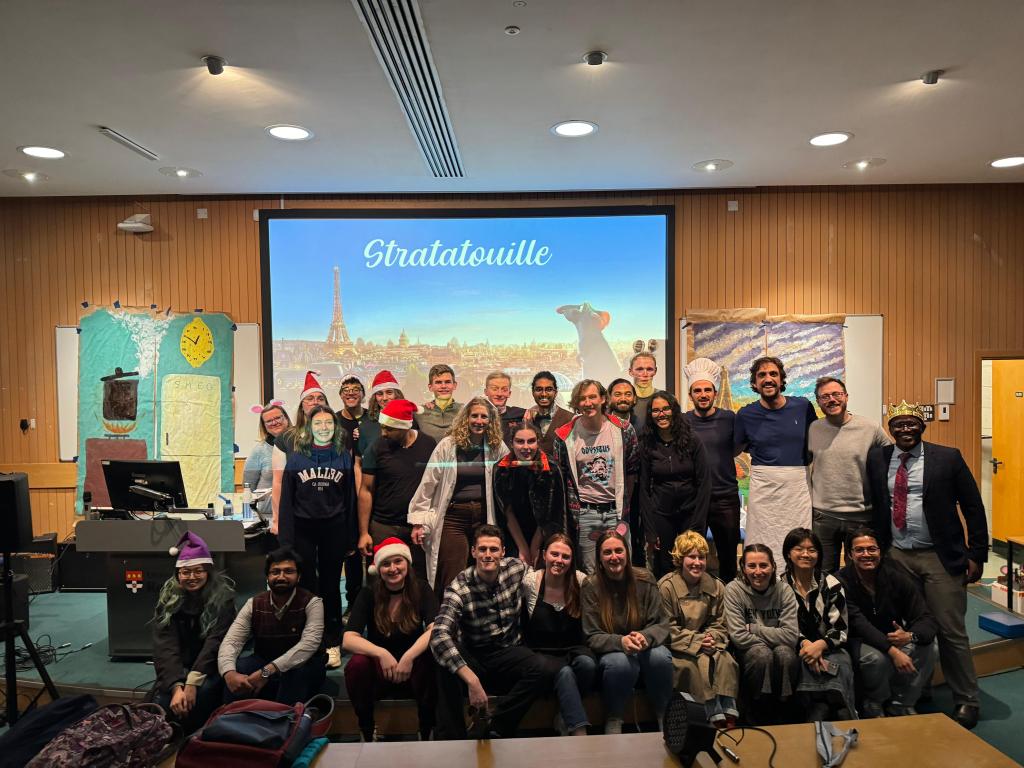
The amazing cast and crew who made STRATATOUILLE happen!

Reflections 

As always, the Panto is months of hard work to organise, and things only ever seem to come together in the eleventh hour. But we had a great team and cast and band that really made it come together beautifully. Acting on stage, playing in a live band, organising a production, generally being a thesp isn’t the kind of thing you expect to hear from a large majority of the PhD students of the world’s leading Meteorology department. But it is these experiences, very far outside most of our comfort zones that builds strong and adaptable characters. And I think this experience has probably given us, as organisers and performers alike, more useful skills than we might have realised. This will, however, probably be these director-producers’ debut and final production. 

A huge thank you to everyone who attended and contributed to the panto in any way, no matter how small. Your participation is what makes this a great bonding experience for the department, and you are all greatly appreciated! 

One last time, 

Your Panto Organisers 
Elliot and Niamh 

Inside COP29

Thea Stevens – thea.stevens@pgr.reading.ac.uk

Juan Garcia Valencia – j.p.garciavalencia@pgr.reading.ac.uk

Introduction

Hi there! We are Thea (3rd year PhD) and Juan (2nd year PhD), and we had the privilege to attend Week 2 of COP29 at the end of last year. We thought it would be a good idea to write a blog as an accumulation of answers to the main questions we’ve encountered since coming back – we hope you enjoy reading about it and that it’s hopefully useful to anyone thinking of applying for this amazing opportunity next year! 

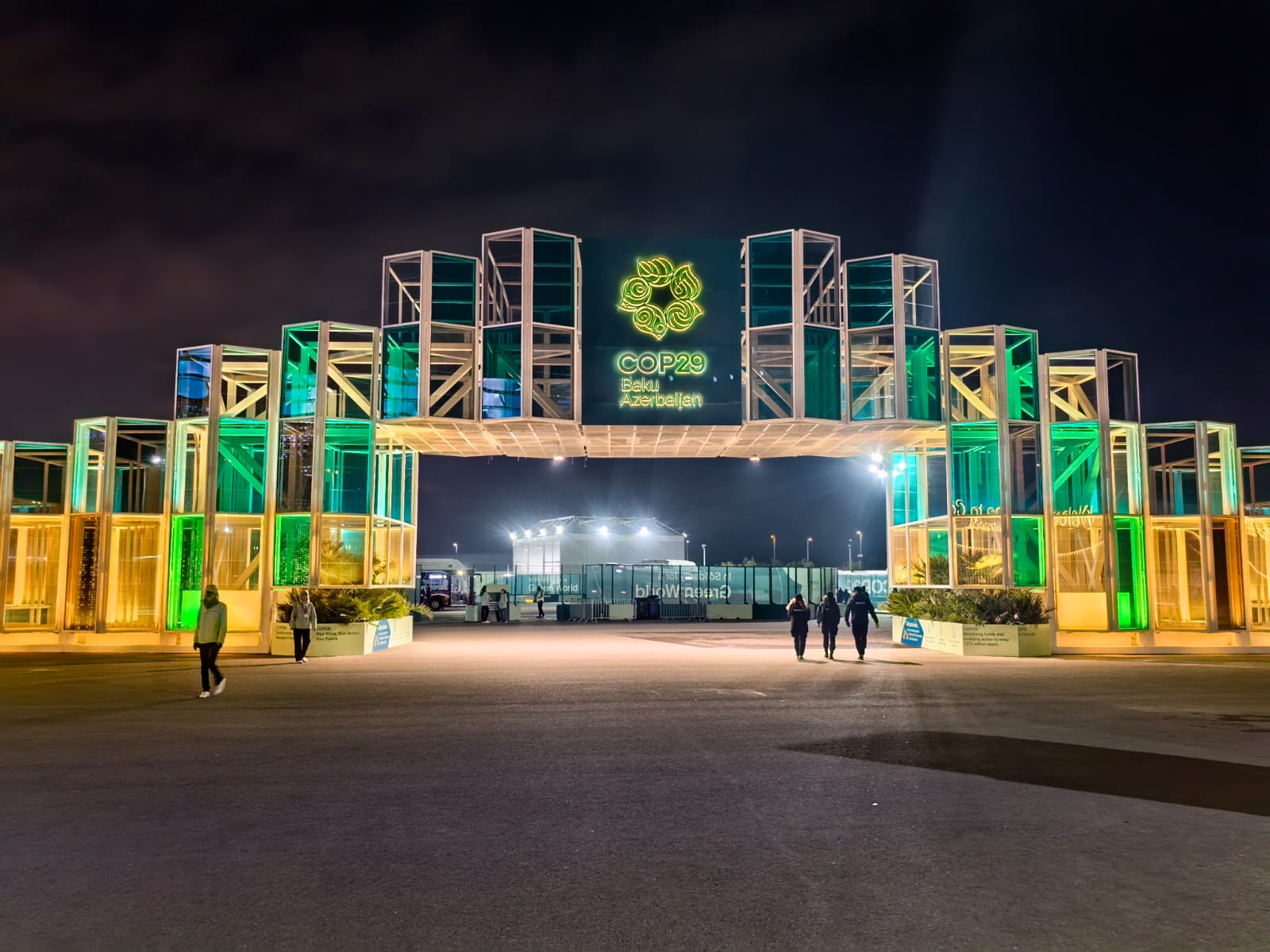
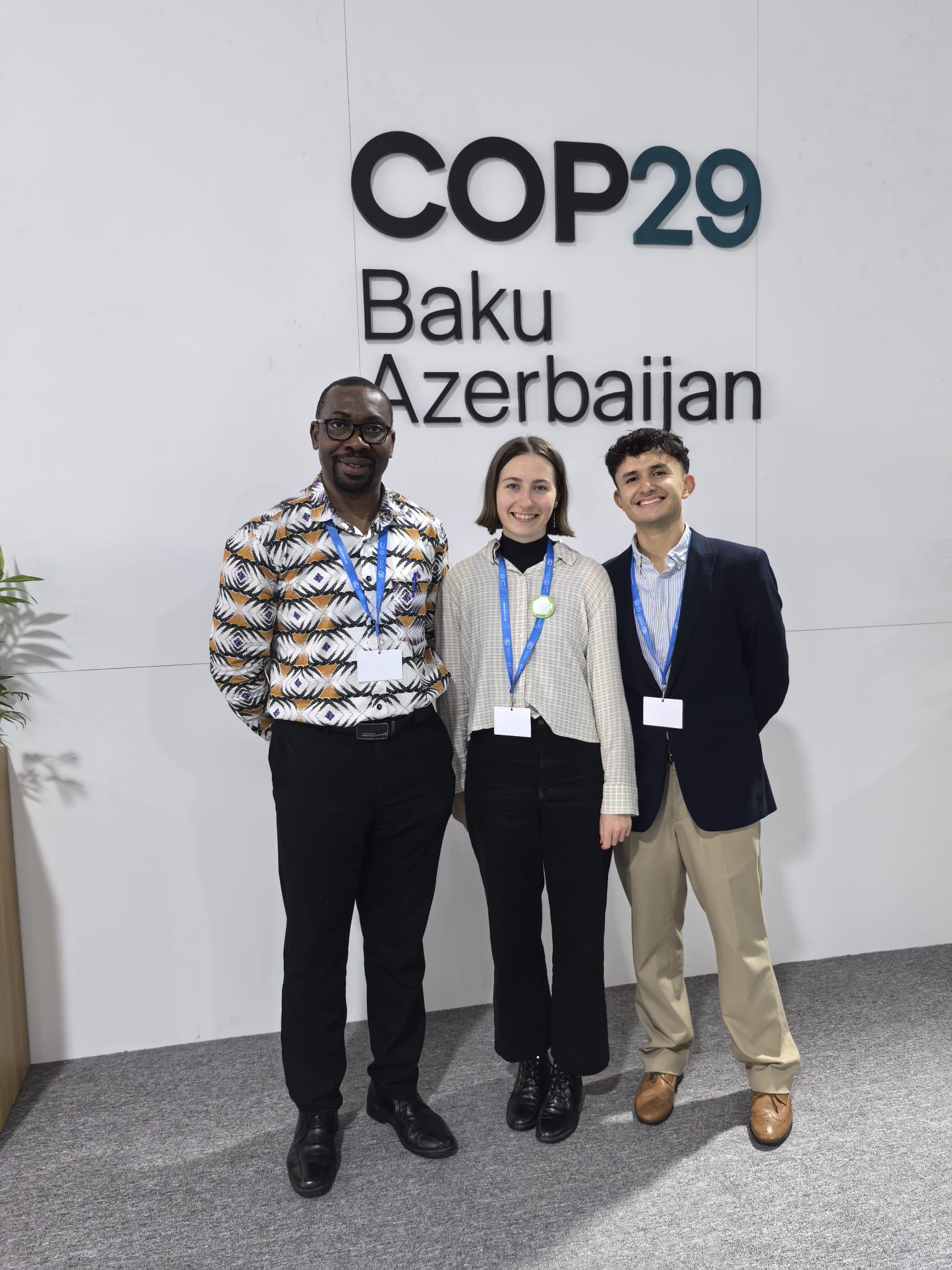
Picture 1, Entrance to COP29. Picture 2, Emmanuel Essah, Thea Stevens and Juan Garcia Valencia in COP29

Pre-COP 

What is COP29? 

COP29, the 29th Conference of the Parties, is the annual United Nations climate change conference and serves as the primary decision-making event under the United Nations Framework Convention on Climate Change (UNFCCC). Established by the treaty signed in 1992, COP brings together representatives from all UN member states and the European Union to address global climate challenges. This year, COP29 was held in November in Baku, Azerbaijan, drawing over 65,000 delegates from around the world, including diplomats, climate scientists, trade union leaders, and environmental activists. The event aims to negotiate effective strategies to combat the root causes of climate change. In essence, it’s the world’s largest and most significant gathering dedicated to climate action.

What were the expectations going into COP29?

Even before the summit began, COP29 was widely referred to as the “Finance COP” due to the prominence of one particular issue: climate finance. This term highlights the obligation of developed nations to provide financial resources to developing countries. These funds are intended to help nations build clean-energy systems, adapt to a warming world, and recover from disasters exacerbated by climate change. A significant focus of the negotiations and media coverage was the New Collective Quantified Goal (NCQG), a proposed climate finance target aimed at channelling resources to developing nations to combat climate change effectively.

However, discussions were also expected to extend beyond finance, addressing crucial topics such as Article 6 of the Paris Agreement, as well as strategies for adaptation and mitigation. We had the incredible opportunity to attend the second week of COP29—a pivotal stage of the process when ministers usually tackle the intricate details of agreements crafted in the first week, working to reach consensus. Heading into the conference, we anticipated hearing much more about the NCQG and its potential connections to other pressing climate issues.

Why did we apply to go?

“I decided to apply to attend COP29 due to the significance of geopolitical progress in ensuring that countries act in accordance with science. I think it is easy for us to forget the magnitude of what we study as meteorologists and climate scientists. To be able to follow how our scientific understanding shapes what actions are taken on a political scale feels important in order to put our work into context. I have also been following the progress of COPs for a long time – I was that geeky teenager in geography class who got a bit obsessed with the developments made there. So, on a more personal level, it also felt like a really exciting opportunity.” – Thea 

“My decision to apply for COP29 stemmed from a deep interest in the science-policy interface. As a PhD student researching monsoons and their variability with climate change, my work primarily involves analysing large datasets with the aim of crafting papers that can inform decision-making. While this scientific foundation is critical, I was eager to move beyond the confines of my computer screen and engage directly with the global climate community. This experience promised not only professional growth but also the chance to see firsthand how research and advocacy converge on the global stage so I knew I had to give it a go!” – Juan

What did we do in preparation? 

Having closely followed previous COPs and participated in COPCAS, we were familiar with the structure and nature of these conferences, which gave us a sense of what to expect. However, we knew that attending in person would be a completely different experience. In preparation, we undertook extensive training and courses. The Walker Institute’s help was invaluable, as they provided numerous opportunities to upskill and address our questions. They even arranged security training, given that we were heading to a politically sensitive region. Additionally, the IISD webinars were incredibly helpful in providing up-to-date insights on negotiation progress and key facts. Staying informed through these resources and keeping up with current news allowed us to approach the conference well-prepared and confident.

During COP 

What was the schedule like? 

The daily schedule at COP29 was intense. With only one week to make the most of the experience, our days were packed with meetings from 9:00AM – 6:00PM. We started each morning with the RINGO (Research and Independent Non-Governmental Organisations) meeting, which brought together members of the observer scientific community. These sessions provided a valuable space to discuss key themes and points of interest for the day, while also offering great networking opportunities.

The rest of the day was a whirlwind of press conferences, negotiations, and side events hosted by a wide range of organisations. Most events were open to all attendees, though some, particularly negotiations in the second week and high-profile press conferences (such as those featuring Antonio Guterres, Secretary-General of the UN!), were closed-door.

Another key aspect of our responsibilities was meeting twice daily with our team back at the Walker Institute. These sessions were a great chance to share our findings, report on the atmosphere on the ground, and receive valuable recommendations for upcoming events. More often than not, these check-ins also provided a much-needed energy and mood boost to keep us going through the busy days!

How did we decide on what to attend? 

Understanding the true scope of events and talks at COP took a while to get your head around. There is so much going on, and so much you could be going to it always felt like you were missing something. It was helpful to be able to think of the types of events you could go to into three different categories: the negotiations, the side events and the pavilion events. Each one of these had quite a different atmosphere, which was helpful to consider when deciding what to go to. 

The pavilions were basically a full conference on their own, with every country and NGO having their own elaborately decorated area. Talks here were slightly more informal and there was a wide diversity of topics. If you wanted to get some information on a more specific topic and also have time to talk with the people presenting this was the place to be. 

The side events were often more specific to the ongoing negotiations and included panel discussions and press conferences. These were often really exciting opportunities to get an update on the negotiations that we might not have been allowed to sit in on, and they often provided a more candid and emotive response to the developments. 

Lastly were the negotiations themselves. These were very slow and bureaucratic, but despite this, they were really fascinating to watch. It was what was going on in these negotiation rooms that really mattered to the outcome of COP! We had been given very good advice before we went to properly follow just one of the negotiation pieces so that you could understand how it was being shaped over time. However, as we attended the second week, the negotiations occurring behind closed doors increased more and more, and the agenda for these was constantly changing. We found it best to just jump on any opportunity there was to attend one of these as they became increasingly difficult to access. 

Having an overview of the different potential experiences in each of these parts of COP made it easier to asses what to go to and what might be interesting at any given time. 

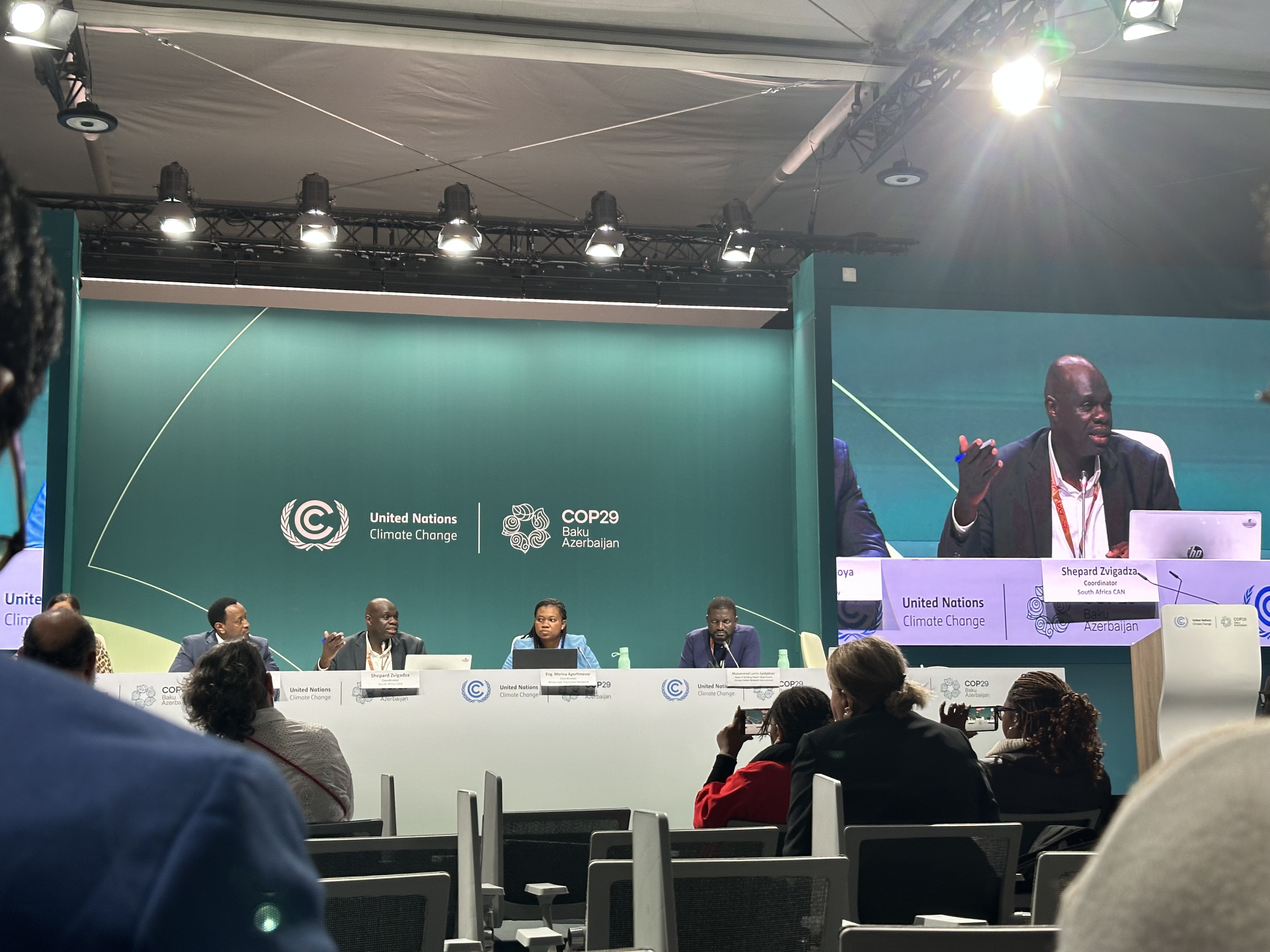
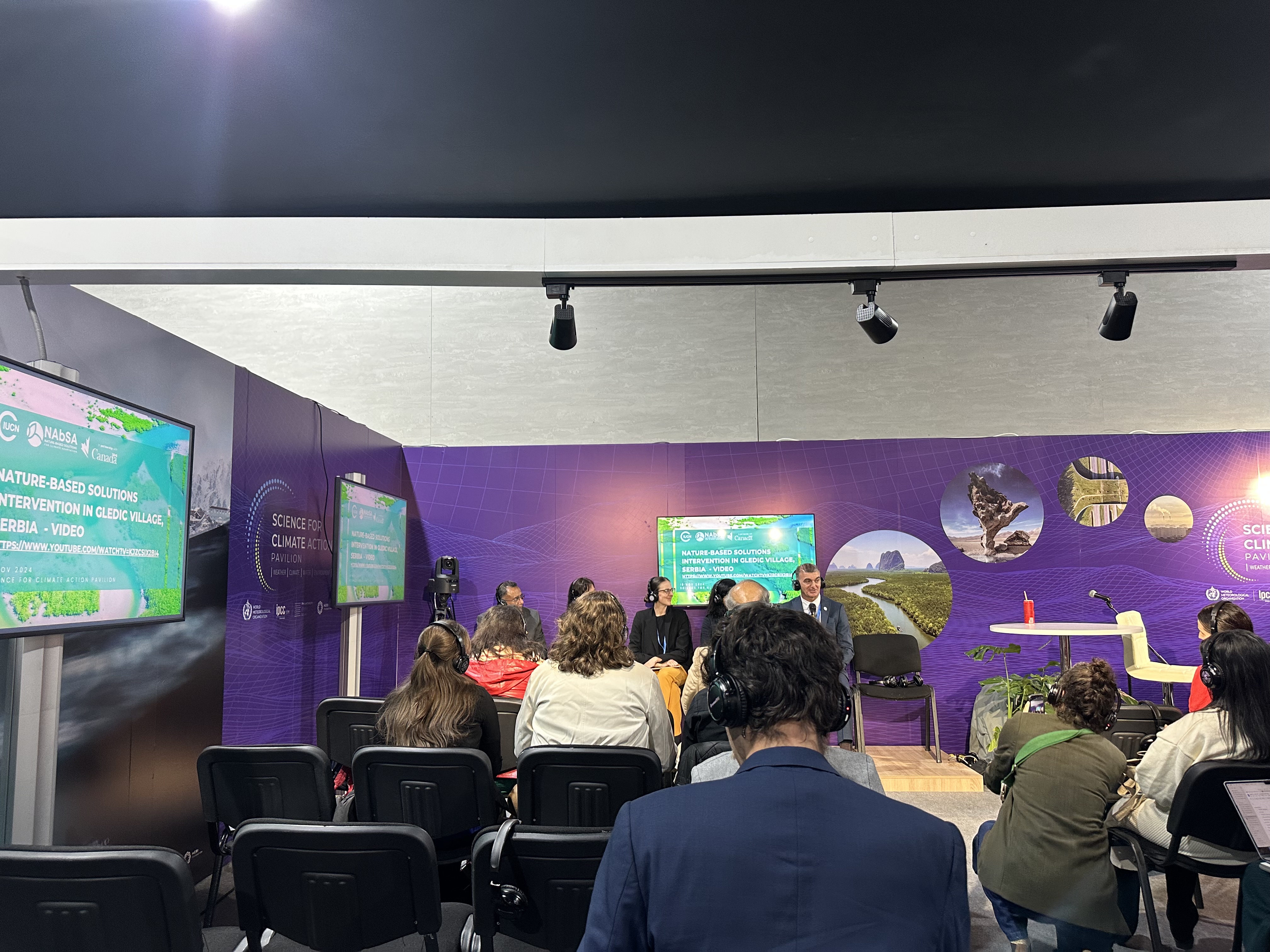
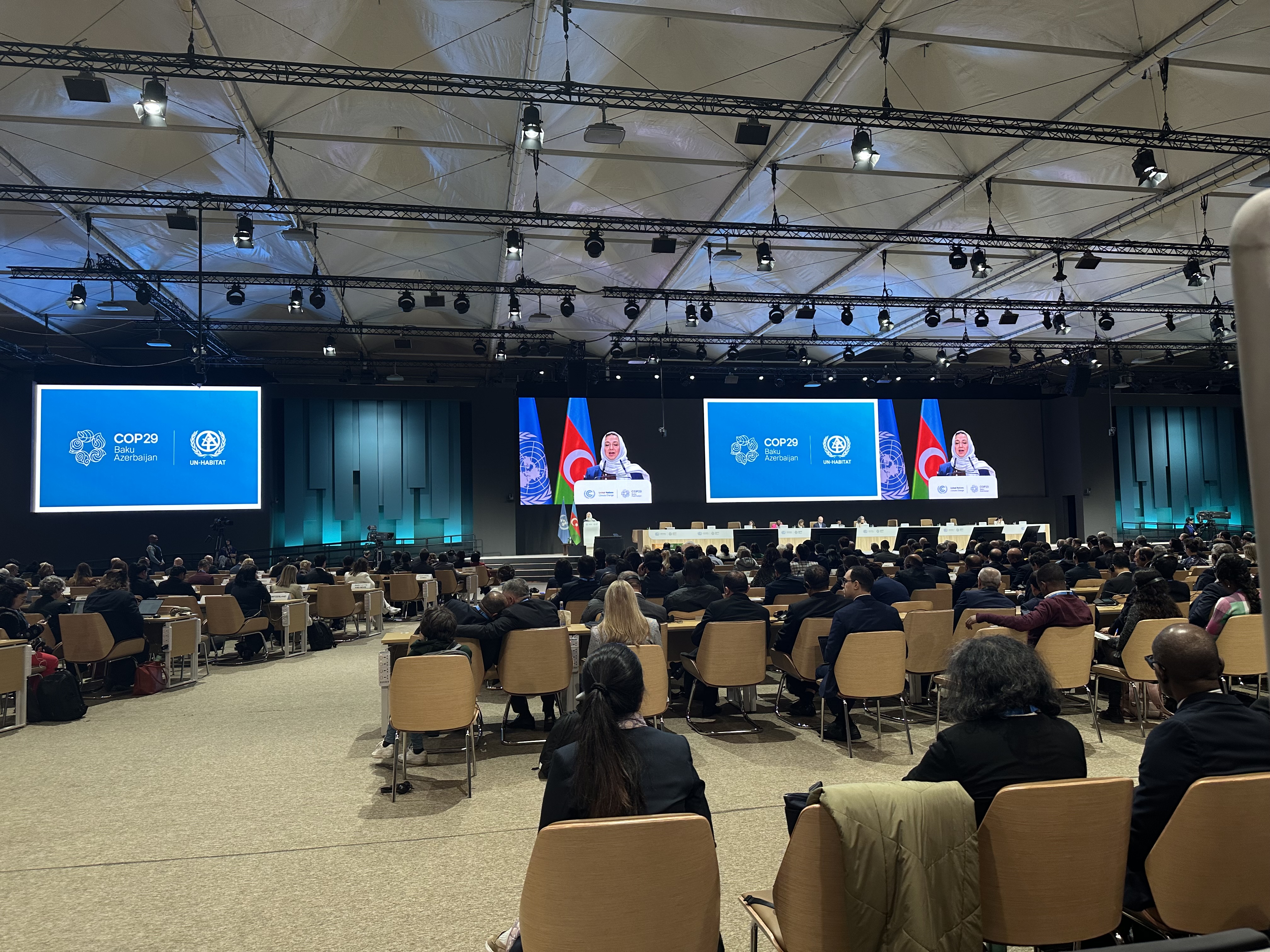
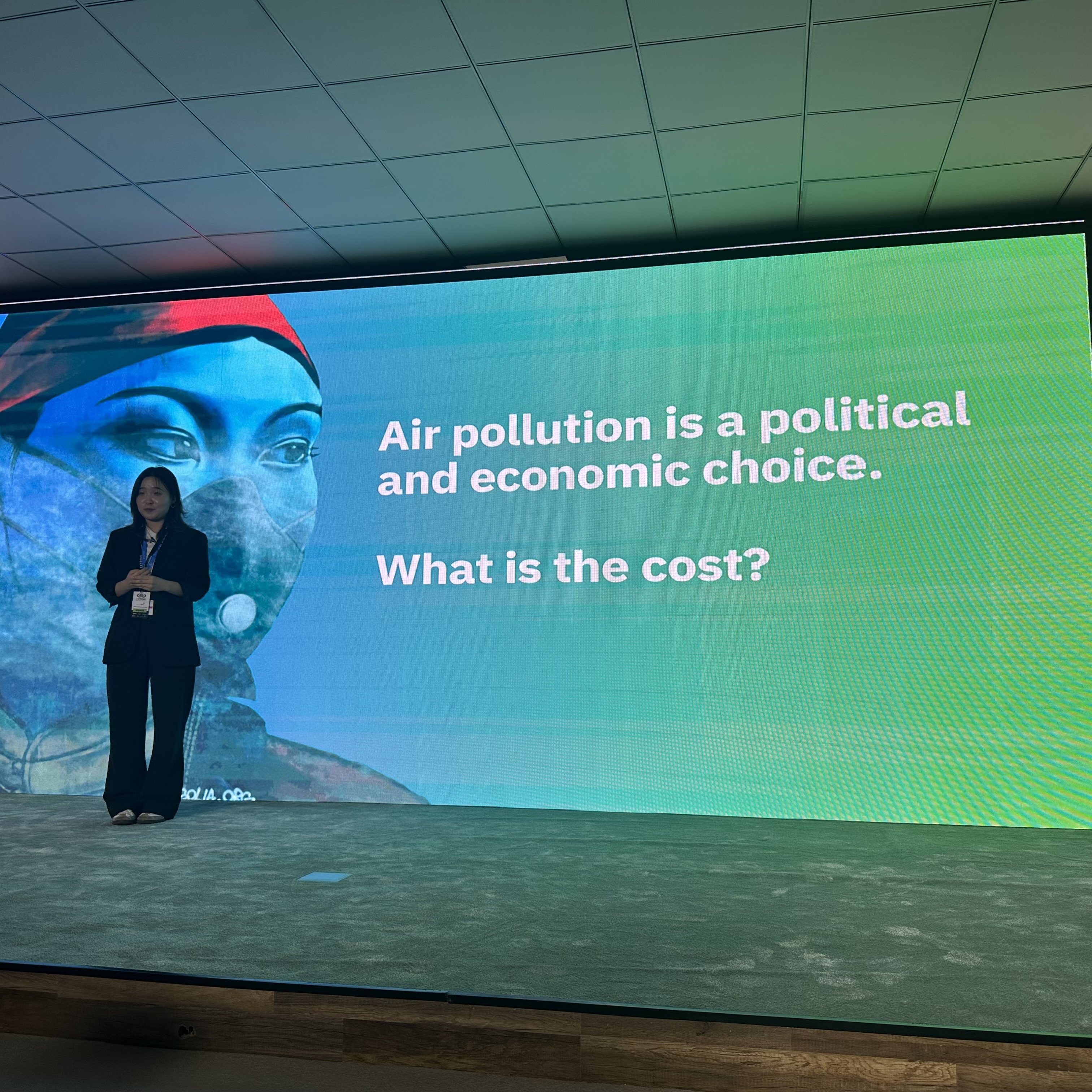
Picture 3, 4, and 5 show various events that happened in COP29, including a press conference, a science pavilion event and a plenary.

Who was someone interesting you met?

“While waiting in a queue to get into a negotiation, I met a delegate from an NGO based in South Africa. Through links to local religious groups, she helped guide communities to access climate-related financial aid. We discussed how amendments being made during different negotiations were having a direct impact on the accessibility of these funds. This provided a powerful reminder of how the negotiations had an impact on some of the most vulnerable communities not only in South Africa but all over the world. Having her watching and voicing opinions to negotiators between events provided a channel for these voices to be heard.” – Thea 

“Among the many incredible individuals I met, my interaction with two indigenous women from Chile left a profound impact. Their presentation on the consequences of lithium extraction in the Atacama Desert was both heartbreaking and inspiring. They spoke passionately about the devastating effects of privatized water and mineral resources, which have left their communities struggling with water scarcity and ecological exhaustion. Their unwavering determination to fight for their rights and protect their environment, despite significant challenges, was a powerful reminder of the human cost of unsustainable practices. Their story underscored the importance of amplifying marginalized voices in global climate discussions” – Juan

What is the role of the host country and how much influence do they have?

Hosting a COP entails significant responsibilities, including providing the facilities, security, and leadership required to ensure the summit’s success. In many ways, we were impressed by Azerbaijan’s efforts as the COP29 presidency. The facilities were well-prepared, and the transportation system was particularly noteworthy—clear, organised, and highly efficient, running seamlessly throughout the two weeks to help delegates commute to and from the conference centre with ease.

However, Azerbaijan’s selection as host sparked controversy from the moment it was announced at the end of COP28 in Dubai. One of the reasons was this it marked the third consecutive year that a petrostate was appointed to host the climate summit, raising concerns about potential conflicts of interest. This issue became a recurring theme throughout the conference, dominating discussions and even prompting high-profile criticisms. For example, Christiana Figueres, former UN climate chief, wrote an open letter during the first week, asserting that the COP process had become “no longer fit for purpose.”

By the second week, questions about the presidency’s ability to guide negotiations effectively were widespread. As the host country, Azerbaijan was expected to lead efforts to foster consensus among governments and non-Party stakeholders, particularly on critical issues like the NCQG and draft texts. Yet, progress was slow, and negotiations stretched into Saturday, further fuelling doubts about the presidency’s capacity to align its leadership with COP’s overarching goals.

Post-COP

What surprised you the most? 

“One of the most exciting and surprising things about COP was how accessible everything felt. As someone who wasn’t there for more than just to communicate what was happening to students at COPCAS, it felt really incredible that we were given access to the negotiations and all the plenary sessions. I obviously knew this was going to be the case before we went, but it was only really sitting when in on these events did I realise how unique of an opportunity this was.” – Thea

“One of the most striking aspects for me of attending last year’s COP was the incredible diversity of attendees, showcasing the universal impact of climate change and the essential need for broad representation in climate discussions. Among the most inspiring aspects was the strong presence of young people and activists, whose energy and commitment highlighted the vital role of the next generation in driving meaningful climate action” – Juan 

What do we think of the COP process? 

Going to COP and sitting in on the negotiations made the enormity of ambition and geopolitical complexity of bilateral agreements evident. Countries – with vastly different agendas and core beliefs – coming around a table trying to agree on something is an absurdly ambitious arrangement. Reducing fossil fuel consumption is unlike any another problem we face; their presence is pervasive in all of our lives. Fossil fuels are a bedrock of wealth and power in our global political economy. Despite alternative energies booming, and 2024 confirmed as the warmest year on record, this makes fossil fuels hard for the world to walk away from at the speed we need to do so. 

Whilst COP can be critiqued for being slow and disappointing, there remains hope in the vision of these bilateral negotiations. Given the increase in conflict and geopolitical instability these past few years, I left COP with an appreciation for the fact that there is still a negotiating table.

However, attending COP also brought to light how important it is to have ambitious domestic policies. COP will never really be the space where radical or big change will happen; this is instead the space where countries are all brought onto the same page. I think we left with more conviction that local politics and policies are where these larger changes need to happen.

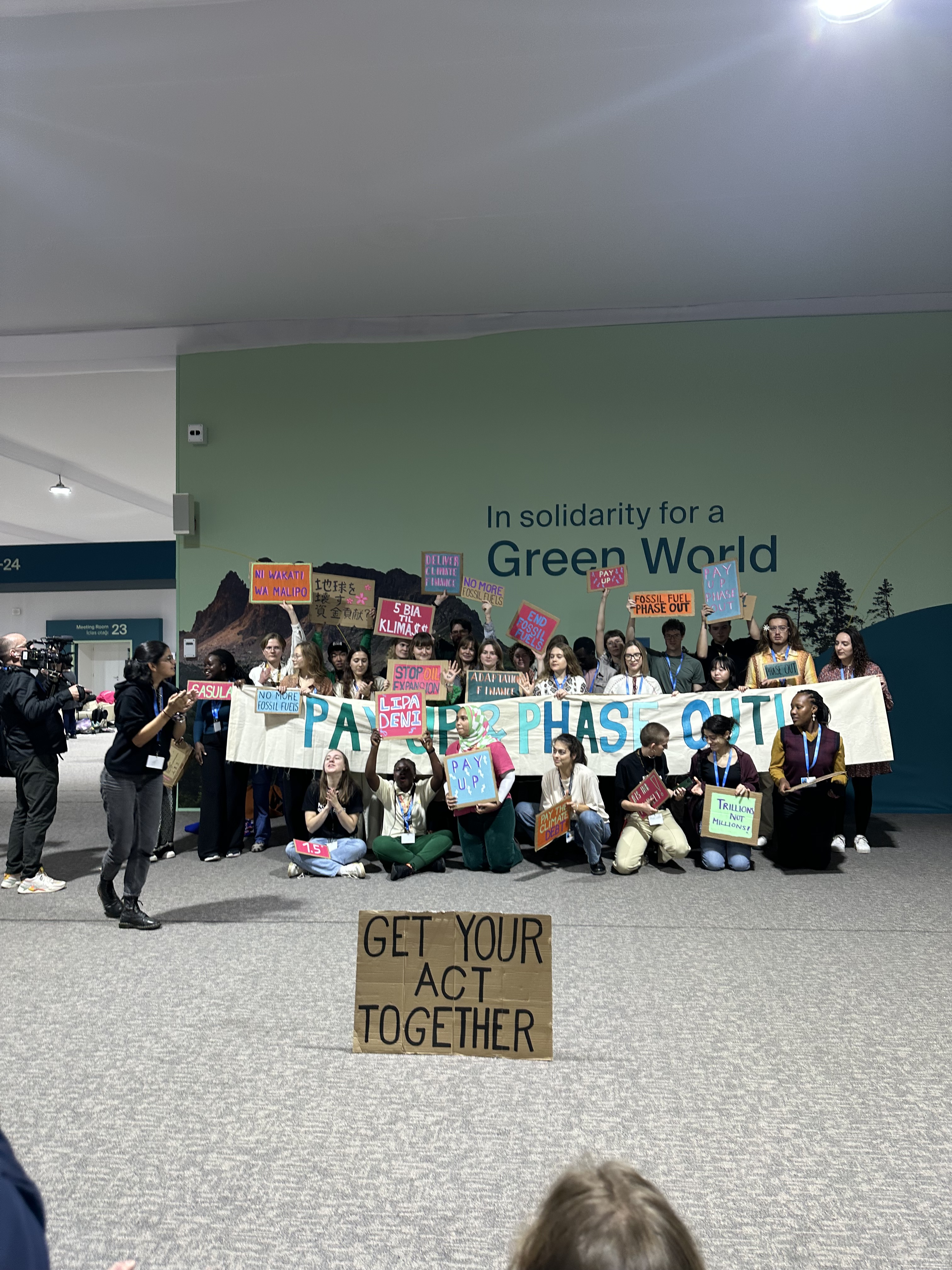
Picture 6, Powerful presentation by Enkhuun Byambadorji on Transforming Climate Narratives for Healthy. Picture 7, Organised protests by activists inside the Blue Zone.

Environments

What tips would you give to someone who is hoping to attend next year? 

  • Apply!! It’s an amazing opportunity both professionally and personally and it shouldn’t be missed. 
  • Wear comfortable yet formal attire. You will be walking around for most of the day but also meeting important and really cool people, so you definitely still want to look the part. 
  • Have business cards for networking 
  • Bring a power bank 
  • Practice your elevator pitch- in case you stumble across somebody interested in your research. 
  • Take lots of pictures!

Conclusion 

We wanted to end this blog by saying a massive thank you to the Walker Institute for their support in making this experience possible. Attending COP29 was a transformative journey that deepened our commitment to climate action and inspired us to continue advocating for a sustainable future.
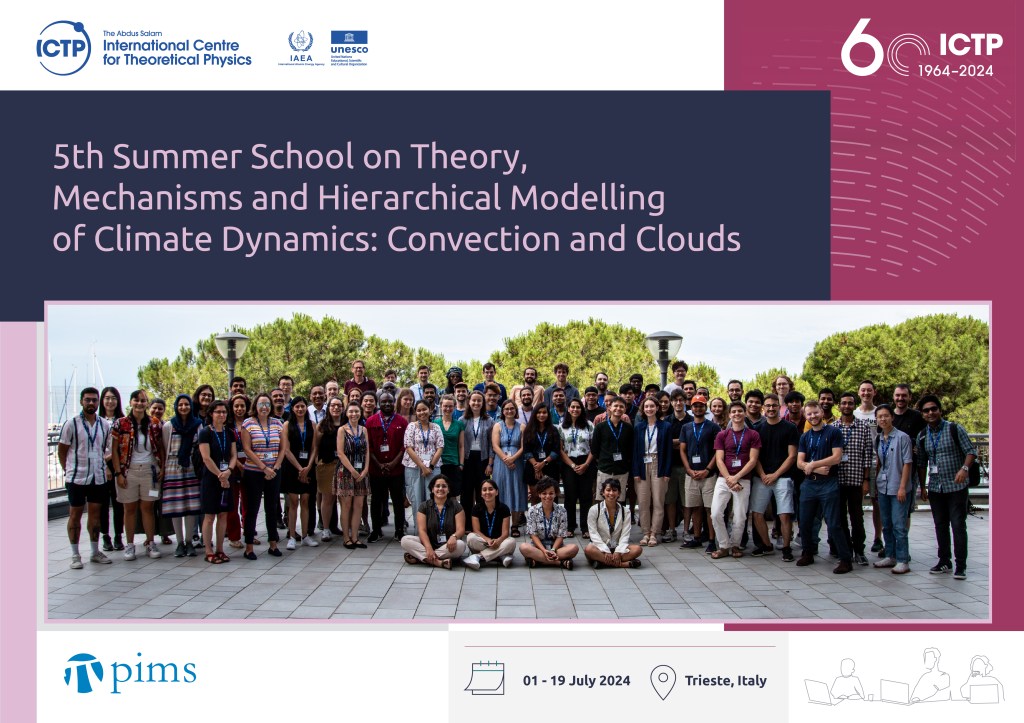
The 5th ICTP Summer School on Modelling of Climate Dynamics: Convection and Clouds, and Conference on Convective Organisation (WCO4)

By Juan Garcia Valencia

In the tropics, organised convective systems provide the majority of precipitation and are often responsible for extreme events. To understand these systems, researchers now use kilometre-resolution (k-scale) global and regional convection-permitting models, along with the latest satellite observations. Machine learning tools have also emerged as important supplements to our dynamical and thermodynamic understanding.

It’s crucial to understand these tools to address key questions such as:

  • How do deep and shallow convection organise in k-scale models?
  • Can energy budgets help explain their precipitation biases?
  • What are the recent advances in convective parameterisation?

These questions were the focus of the “5th Summer School on Theory, Mechanisms and Hierarchical Modelling of Climate Dynamics: Convection and Clouds,” which I had the privilege of attending from the 1st–19th of July 2024 at the International Centre for Theoretical Physics (ICTP) in Trieste, Italy.

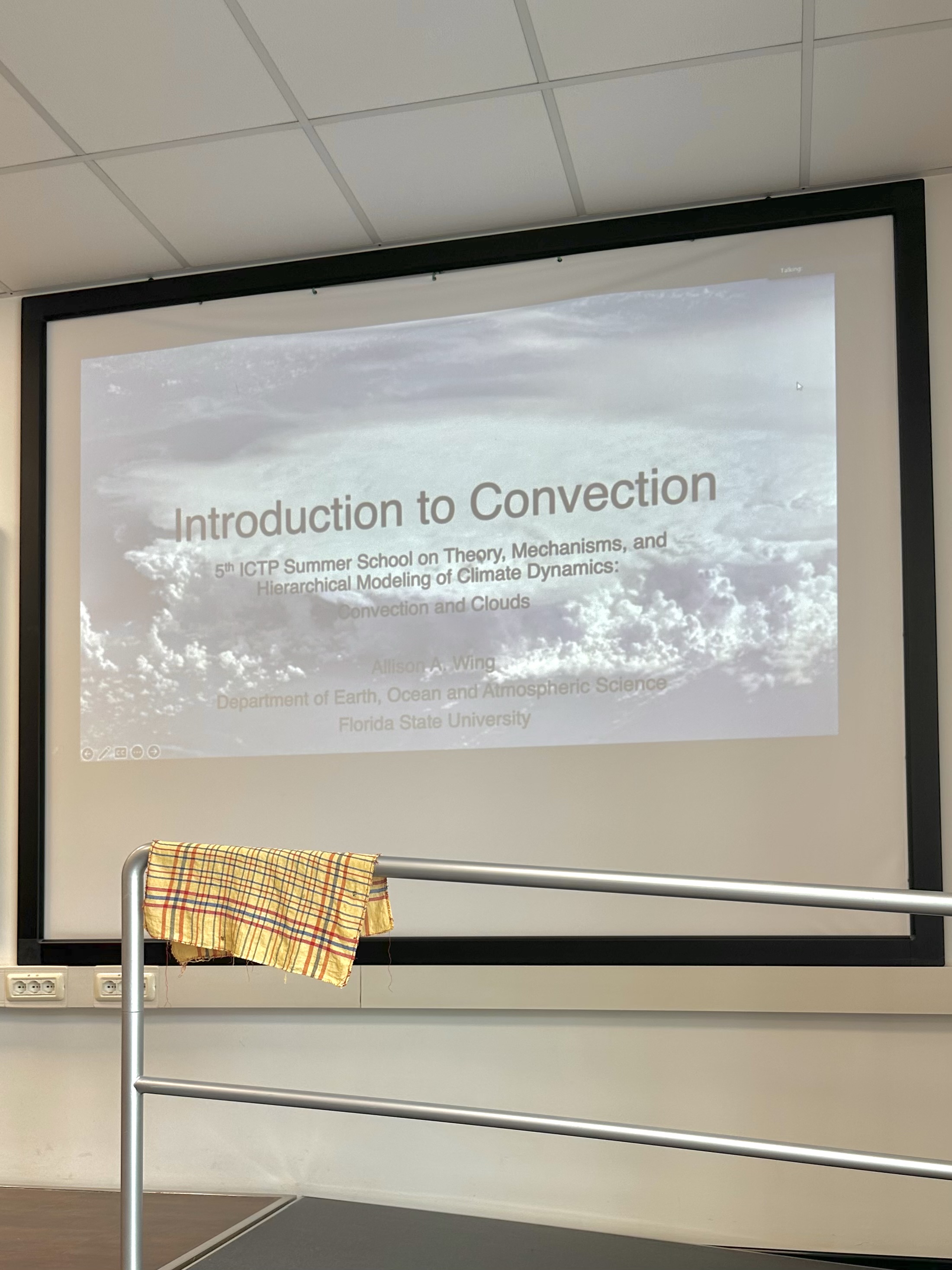
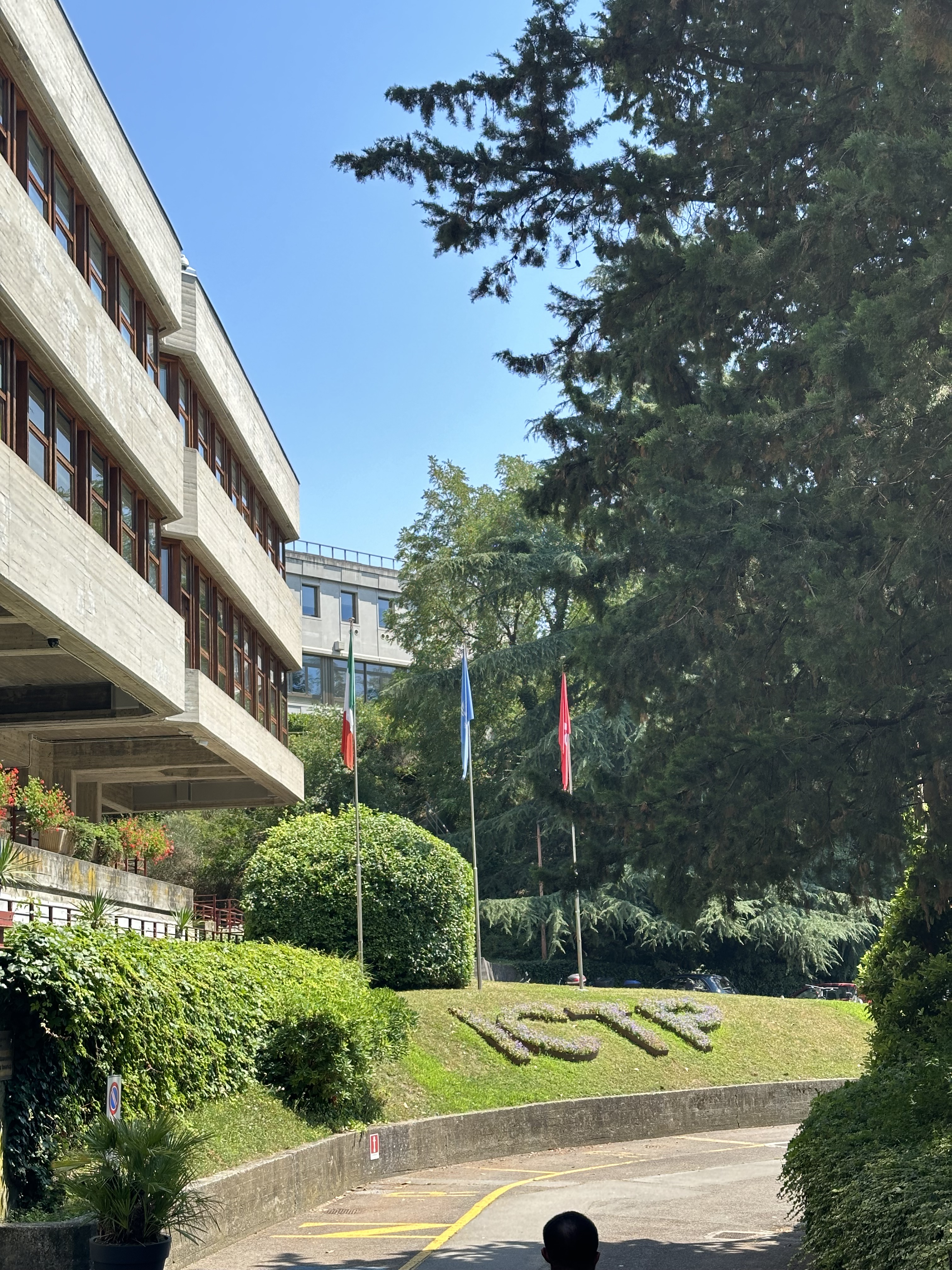
Picture 1 and 2. First lecture and campus. 

The program offered a mix of introductory and advanced lectures, hands-on data analysis through participant projects, and the chance to get involved in the “4th Workshop on Convective Organisation and Precipitation Extremes (WCO4).” The opportunity to attend arose because two of my supervisors, Chris Holloway and Lorenzo Tomassini, presented their work at the conference and taught some of the lectures in the course. As a PhD student researching monsoons using kilometre-scale simulations, I also felt like I had to attend! 

The three-week schedule was intense, with most days running from 9 AM to 6 PM (thankfully with plenty of coffee breaks and a long lunch). A typical day began with lectures from leading experts like Simona Bordoni, Robert Pincus, and Courtney Schumacher. Topics ranged from convection and radiation to RCE, stochastic parameterisation, and observations. Afternoons were usually dedicated to computer lab sessions or group project work.

Picture 3. Attendees of the summer school. 

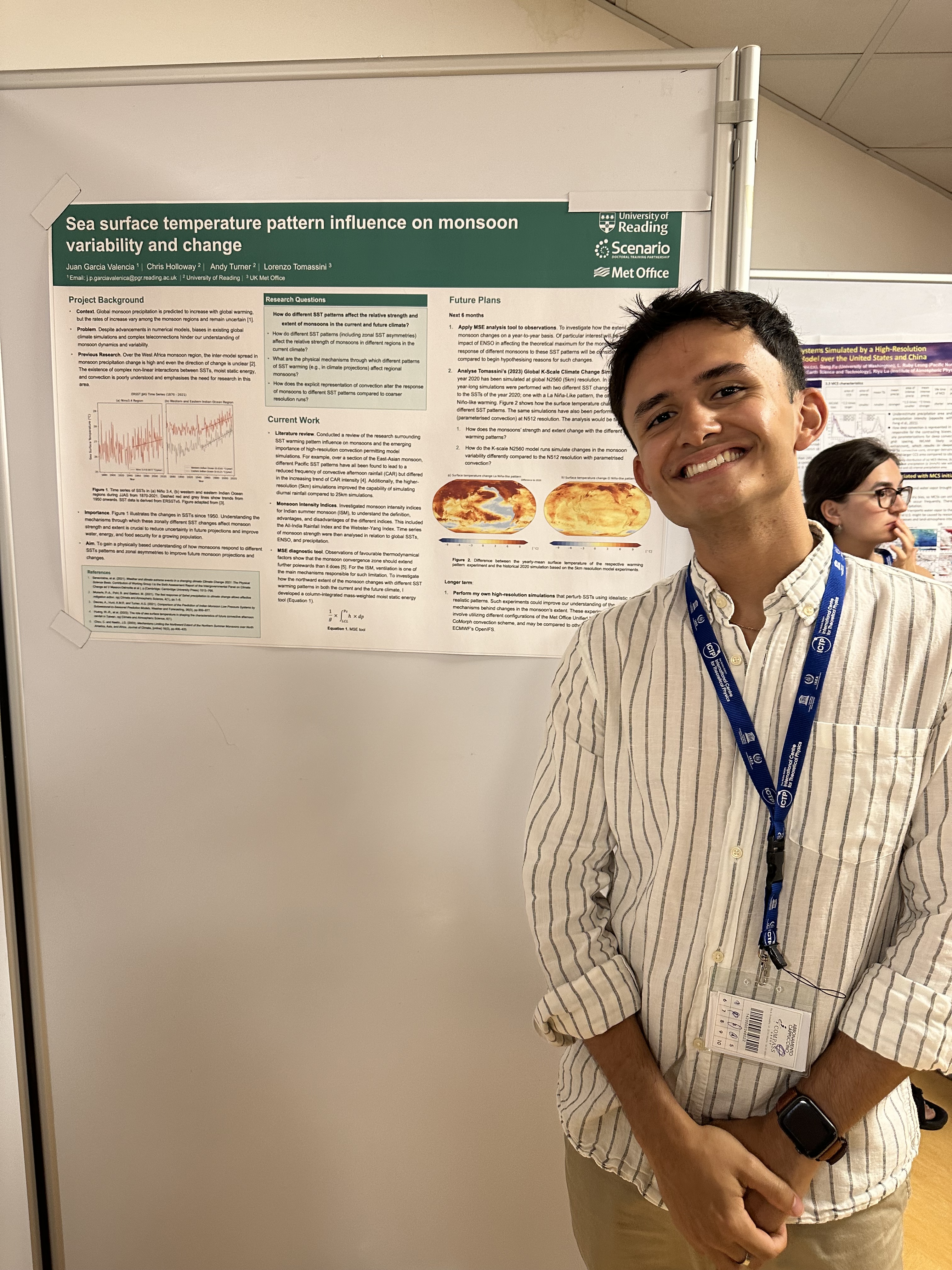
The second week centred on the WCO4 conference, covering topics from convective self-aggregation in idealized experiments to precipitation extremes associated with organized convection and optimizing our use of observational data. Students had the opportunity to present posters on their research—an incredibly valuable experience for me as I received loads of useful feedback about my ideas and goals. This was also my first time presenting research at an international event, so it was great to show what I’ve been working on in front of all the attendees and meet so many people genuinely interested in my work.

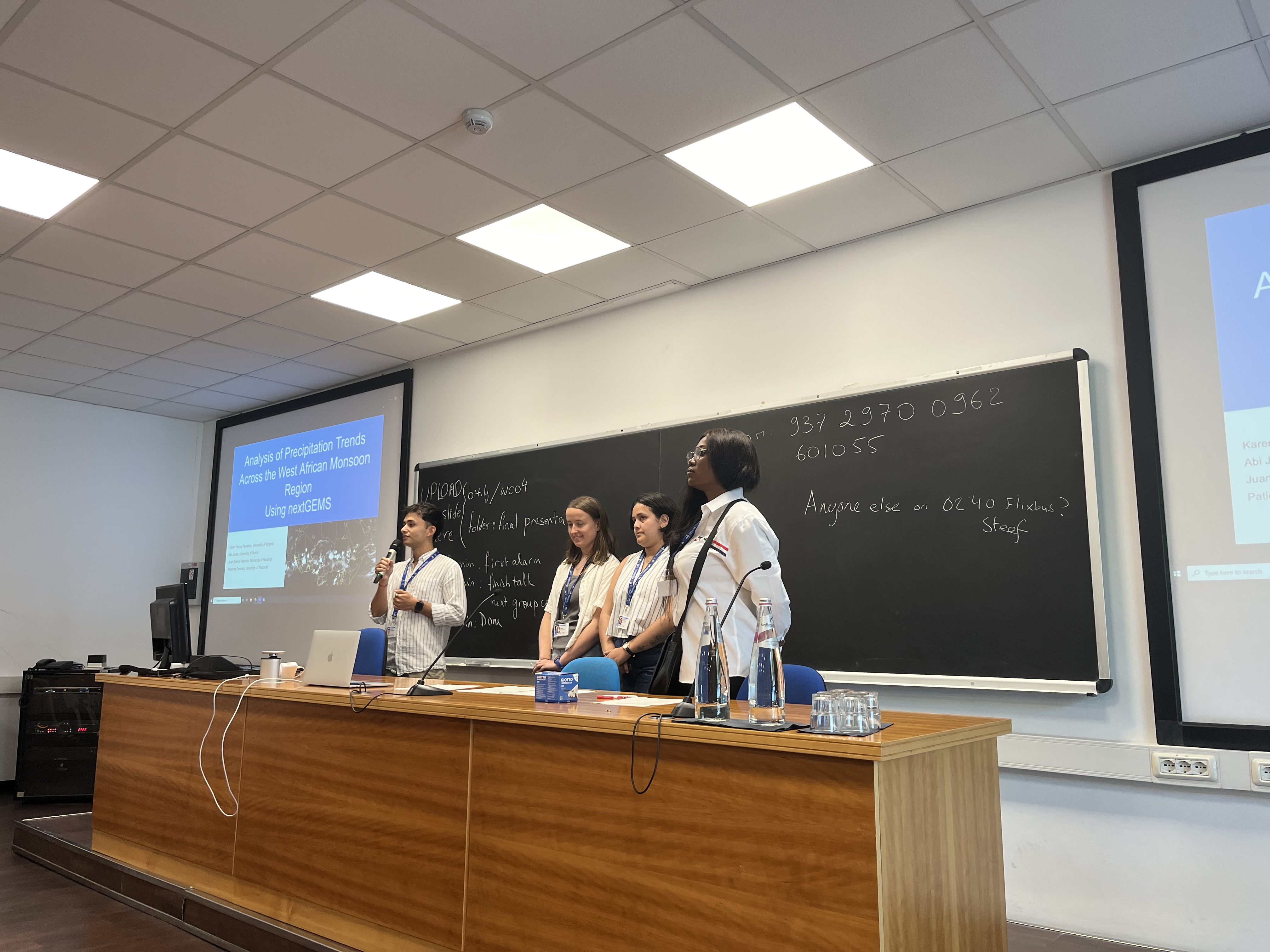
The final week focused on hands-on projects. In groups of 4–5, we analysed numerical model data and presented our results to everyone. My group examined how precipitation extremes change in a warming world using NextGEMS data, but every group had different topics that they had chosen according to their interest and expertise. Many of the tasks and analyses we did were similar to my first-year work, so I left with a plenty of new ideas for my research!

Picture 4. End of group project presentation and poster presentation. 

Being an international centre, the school and conference brought together staff and students from all corners of the globe—one of my favourite aspects of the course. Despite knowing no one beforehand, I quickly got to know other PhDs and post-docs from various institutions, all working on projects similar to mine. I felt at ease in this new environment, making friends and meeting potential future colleagues!

Another fantastic aspect of this summer school was its stunning location on Italy’s sunny, warm northern Adriatic coast. After each day’s activities, we were free to spend our evenings as we pleased. This was the perfect opportunity to relax by the sea, swim, and explore Trieste’s picturesque town centre. More often than not, we’d venture into town for pizza and, of course, gelato!

Starting Your PhD Journey: Tips for Success

So, you’ve officially embarked on the exciting journey that is a PhD—congrats! You’ve reached a major milestone, and whether you’re feeling excited, overwhelmed, or a mix of both, just know you’ve signed up for an adventure like no other. A PhD is an incredible opportunity to dive headfirst into a subject you’re passionate about, build a toolkit of valuable skills, and—who knows?—maybe even make history in your field.

But let’s be real: it’s not all rainbows and groundbreaking discoveries. The PhD life can be challenging, sometimes feeling like a marathon through an obstacle course. You’ll have moments that test your patience, confidence, and sometimes, your sanity. That’s why here at Social Metwork, we’ve gathered some golden advice from seasoned PhD students to help you navigate these waters. Our goal? To make this transition into PhD life a little smoother, maybe even a little fun.

We’ll break these tips down into three areas: navigating day-to-day life as a PhD student, getting organized like a pro, and growing into the great scholar you’re destined to be. Ready? Let’s dive in!

1. Navigating Day-to-day Life as a PhD Student

Work-life balance

The first year of your PhD can feel overwhelming as you try to juggle research, coursework, and life. One key piece of advice? Don’t overwork yourself. As Laura Risley puts it, “Sometimes if you’re struggling with work, an afternoon off is more useful than staying up late and not taking a break.” It’s easy to get absorbed in your work, but stepping away to recharge can actually help you return with fresh perspectives.

Getting involved in activities outside your PhD is another great way to maintain balance (L. Risley, 2024). Whether it’s exploring more of Reading, participating in a hobby, or just getting outside for some fresh air, your brain will thank you for the break. Remember, “Your PhD is important, but so is your health,” so make sure to take care of yourself and make time for things that bring you joy: exercise, good food, and sleep!

Lastly, don’t underestimate the power of routine. Building a consistent schedule can help bring some stability to PhD life. Most importantly, be kind to yourself. The weight of expectations can be heavy so give yourself permission to not have it all figured out yet. You won’t understand everything right away, and that’s completely normal!

Socialising and Building a Support System

Your cohort is your lifeline. The people you start with are going through the same experiences, and they will be your greatest support system. Whether you’re attending department events, organizing a BBQ, or just grabbing a coffee, socializing with your peers is a great way to get through everything. At the end of the day, we are all in this together! As Rhiannon Biddiscombe wisely says, “Go for coffee with people, go to Sappo, enjoy the pub crawls, waste a night out at PT, take part in the panto, spend time in the department in-person” — so make sure you get involved!

If what you want is to meet new people, you could even help organise social events, like research groups or casual hangouts – feeling connected within your department can make all the difference when you’re having a tough week. And hey, if you’re looking for a fun group activity, “Market House in town has darts boards, ping pong tables, and shuffleboard (you slide little discs to the end of the board, it’s good fun!)”.  

2. Getting Organised Like a Pro

Writing and Coding

Staying organised is critical for both your mental health and your research. Adam Gainford recommends you start by setting up a reference manager early on—trust us, you’ll thank yourself later. And if your research involves coding, learn version control tools like GitHub to keep your projects neat and manageable. As a fellow PhD student says “Keeping organised will help keep your future self sane (and it’s a good skill that will help you with employability and future group projects)”.

A golden rule for writing: write as you go. Don’t wait until the last minute to start putting your thoughts on paper. Whether it’s jotting down a few ideas, outlining a chapter, or even starting a draft, regular writing will save you from stress later on. Remember what Laura always says, “It’s never too early to start writing.”

Time Management

Managing your time as a PhD student is a balancing act. Plans will shift, deadlines will change, and real life will get in the way—it’s all part of the process. Instead of stressing over every slipped deadline, try to “go with the flow”. Your real deadlines are far down the road, and as long as you’re progressing steadily, you’re doing fine.

Being organised also doesn’t have to be complicated. Some find it helpful to create daily, weekly, or even monthly plans. Rhiannon recommends keeping a calendar is a great way to track meetings, seminars, and research group sessions – I myself could not agree more and find time-blocking is a great way to make sure everything gets done. Regarding your inbox, make sure you “stay on top of your emails but don’t look at them constantly. Set aside a few minutes a day to look at emails and sort them into folders, but don’t let them interrupt your work too much!”. Most importantly though, don’t forget to schedule breaks—even just five minutes of stepping away can help you reset (and of course, make sure you have some valuable holiday time off!).

3. Growing into the Scholar You’re Meant to Be

Asking for Help

This journey isn’t something you’re expected to do alone. Don’t be afraid to reach out for help from your friends, supervisors, or other PhD students. Asking questions is a sign of strength, not weakness. What’s great is that everyone has different backgrounds, and more often than not, someone will be able to help you navigate whatever you’re facing (trust me, as a geography graduate my office mates saved my life with atmospheric physics!). Whether you’re stuck on a tricky equation or need clarification on a concept, ask ask ask! 

“You’ve got a whole year to milk the ‘I’m a first year’ excuse, but in all seriousness, its never too late to ask when you’re unsure!” – a fellow PhD student.

Navigating Supervisor Meetings

Your supervisors are there to guide you, but communication is key. Be honest with them, especially when you’re struggling or need more support. If something doesn’t make sense, speak up—don’t nod along and hope for the best, “they should always have your back” (it will also be very embarrassing if you go along with it and are caught out with questions…). 

Also, “If you know some things you want to get out of your PhD, communicate that with your supervisors”. Open communication will help you build a stronger working relationship and ensure you get what you need from the process.

Dealing with Imposter Syndrome

Imposter syndrome can hit hard during a PhD, especially when you’re surrounded by brilliant people doing impressive work. But here’s the thing: don’t compare yourself to others. Everyone’s PhD is different—some projects lend themselves to quick results, while others take longer. Just because someone publishes early doesn’t mean your research is less valuable or that you’re behind – we are all on our own journeys. 

And remember, no one expects you to know everything right away. “There might be a pressure, knowing that you’ve been ‘handpicked’ for a project, that you should know things already; be able to learn things more quickly than you’re managing; be able to immediately understand what your supervisor is talking about when they bring up XYZ concept that they’ve been working on for 20+ years. In reality, no reasonable person expects you to know everything or even much at all yet. You were hand-picked for the project because of your potential to eventually become an independent researcher in your field – A PhD is simply training you for that, so you need to finish the PhD to finish that training.”

If you’d struggling with imposter syndrome, or want to learn about ways to deal with it, I highly recommend attending the imposter syndrome RRDP. 

A Few Final Words of Wisdom

The PhD rollercoaster is full of ups and downs, but remember, you’re doing fine. “If you’re supervisors are happy, then don’t worry! Everything works out in the end, even when it seems to not be working for a while! “– Laura Risley

It’s also super important to enjoy the process. You’ve chosen a topic you’re passionate about, and this is a rare opportunity to fully immerse yourself in it. Take advantage of that! Don’t shy away from opportunities to share your work. Whether it’s giving a talk, presenting a poster (or writing for the Social Metwork blog!!), practice makes perfect when it comes to communicating your research.

Embarking on a PhD is no small feat, but hopefully with these tips, you’ll have the tools to manage the challenges and enjoy the ride. And if all else fails, remember the most important advice of all: “Vote in the Big Biscuit Bracket—it’s the most important part of being a PhD student!”. 

From the department’s PhDs students to you! 

Written by Juan Garcia Valencia 

Good morning Baltimore! AMS 2024

Isabel Smithi.h.smith@pgr.reading.ac.uk

Hannah Croadh.croad@pgr.reading.ac.uk

In January 2024, Isabel Smith and Hannah Croad attended the 104th American Meteorological Society (AMS) annual meeting in Baltimore, Maryland. As fourth-year PhD students this was something of a “last hurrah” of our PhDs (with the remainder of our project monies and carbon budgets being used up), representing a fantastic opportunity to see the latest research happening in meteorology, meet other scientists working in our respective fields, and present our own work to a large audience at this late stage in our projects.

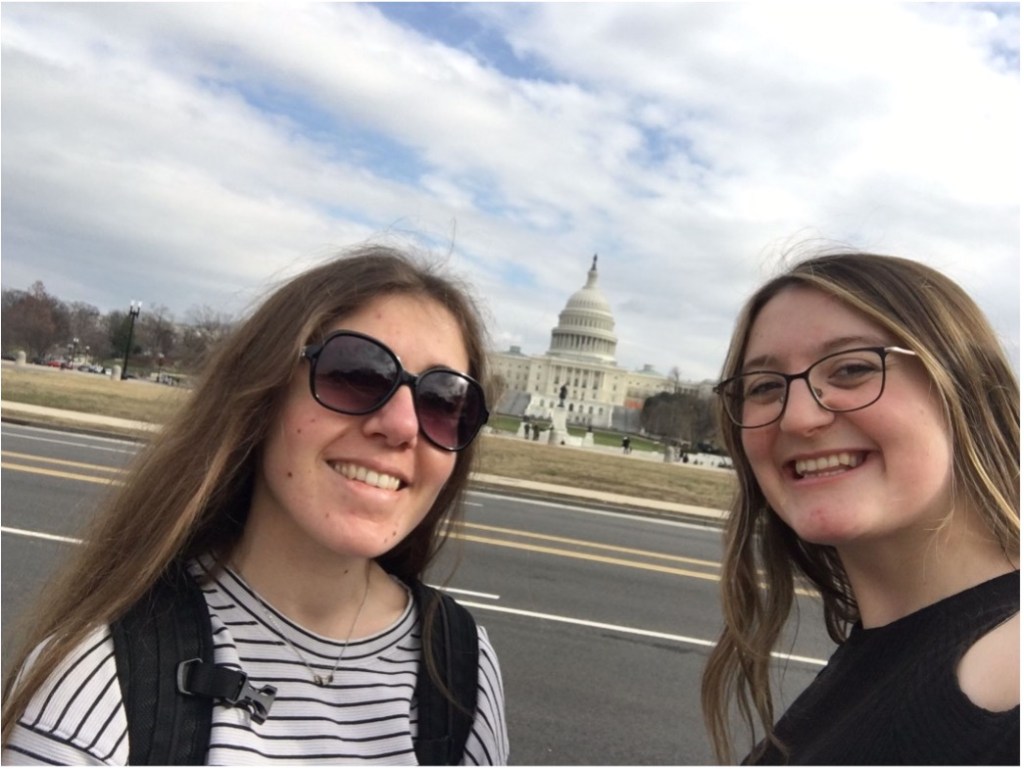
We arrived in Baltimore on the Friday before the conference started, navigating the busy streets near the Inner Harbour in a thick fog to find our hotel. The many plumes of steam coming from vents in the street were somewhat disconcerting, but it turns out this is the result of an underground steam pipe system and is completely safe. As exciting as this was, Baltimore is slightly lacking in terms of other tourist attractions, so on the Saturday we chose to visit Washington DC, only a 1-hour train ride away. We had a great day wandering about the capital city, visiting the Smithsonian’s National Air and Space Museum, and seeing all the iconic monuments including the Capitol building and the White House. Back in Baltimore on the Sunday, there was a buzz about the city as Baltimore’s NFL Ravens team were hosting the Kansas City Chiefs. Although we did not attend the game, and the Ravens lost, it was a great honour to be within a mile radius of Taylor Swift.

Figure 1: Posing for a selfie in front of the Capitol building in Washington DC whilst the sun made a brief appearance.

The conference started on Sunday, with registration (where we picked up some cool lanyards), speeches from outgoing and incoming AMS presidents, student posters, and an interesting panel discussion about how the two sides of American politics must come together in the fight against climate change. It was also great to meet up with two first-year PhD students from the department, Karan Ruparell and Robby Marks, for who this was the first international conference of their PhD.  

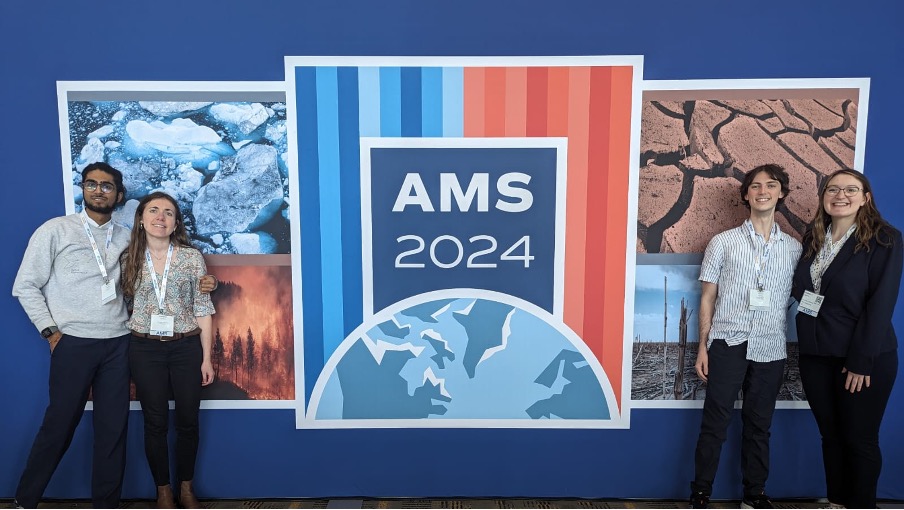
Figure 2: PhD students (from left to right: Karan, Hannah, Robby, Isabel) from the University of Reading at the AMS 2024 annual meeting with the climate-striped-inspired logo.

The main conference programme was scheduled from Monday to Thursday. The size of the conference was overwhelming, with up to 40 parallel sessions at any one time amongst the many different mini- conferences and symposia. Hence, it was important to research which sessions you wanted to go to in advance.  We did this using the AMS app, although it was rather slow and buggy (AMS if you’re reading this, please improve for next year). Isabel attended the 4-day symposium on Aviation, Range and Aerospace meteorology (ARAM), being held in the same room of the conference center each day. In contrast, Hannah attended many different sessions and so was continuously moving between different rooms, with the highlights being the Daniel Keyser symposium on synoptic-dynamic meteorology on Monday and the Polar symposium on Thursday. 

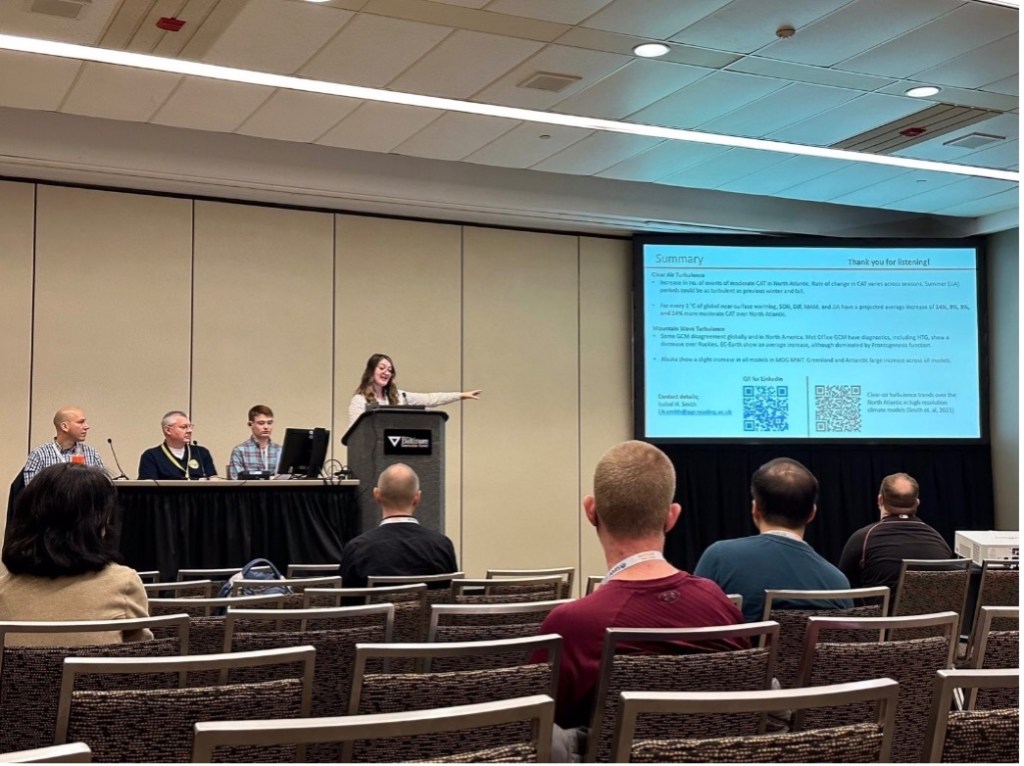
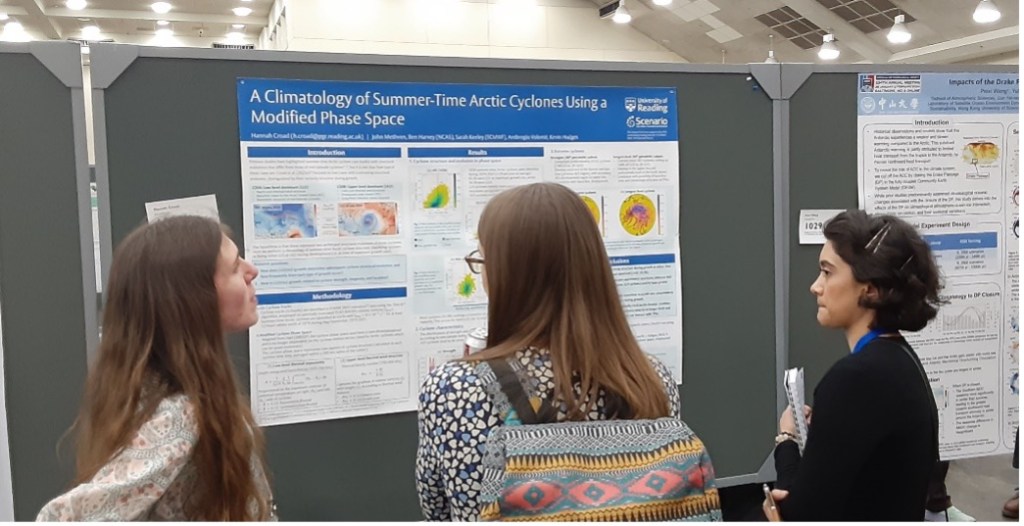
The biggest day of the conference for us was Thursday, as we were both going to be presenting our work. Starting bright and early, Isabel gave an oral presentation in the ARAM symposium, talking about her work on trends in aviation scale turbulence. In the afternoon, Hannah presented a poster in the Polar symposium, talking about her climatology of summer-time Arctic cyclones. We found it interesting to compare the two different presentation formats. For oral presentations your research is likely to reach more people as you have a captive audience for 12 minutes, but the format is more nerve-wracking and there is only limited time for questions and discussion. Less people are likely to visit a poster, but the 1.5 hour format allows for longer and more in-depth discussion with those who do approach you (assuming your poster survives the flight in your suitcase of course). Regardless of the format, we both really enjoyed sharing and discussing our work with other scientists and found the day to be thoroughly rewarding. 

Figure 3: Isabel giving her presentation in the ARAM symposium.
Figure 4: Hannah (left) presenting her poster at the Polar symposium. 

In summary, we both had a fantastic time at the AMS 2024 annual meeting. Not only did we enjoy and learn a lot from the conference talks and posters, it was also great to catch up with current and ex-students from the department, old friends and lecturers from our time at the University of Oklahoma as undergraduate students, and to make new contacts in our respective fields. Although large conferences like AMS can be daunting, attending gives you an appreciation of the wide variety of research happening all over the world, conducive to a stimulating and inspiring atmosphere. They also provide fantastic opportunities to network and to learn new things outside of your immediate research topic. Hence, we would both recommend attending a big conference like AMS if you get the chance to do so in your PhD! 

AGU in Sunny San Francisco

Flynn Ames - f.ames@pgr.reading.ac.uk

For my first (and given carbon budgets, possibly the last) in-person conference of my PhD, I was lucky enough to go to AGU (American Geophysical Union Conference) in December 2023, taking place in San Francisco, California. As my first time in America, there was a lot to be excited about. As my first time presenting at a conference, there was a lot to be nervous about. So what did I discover?

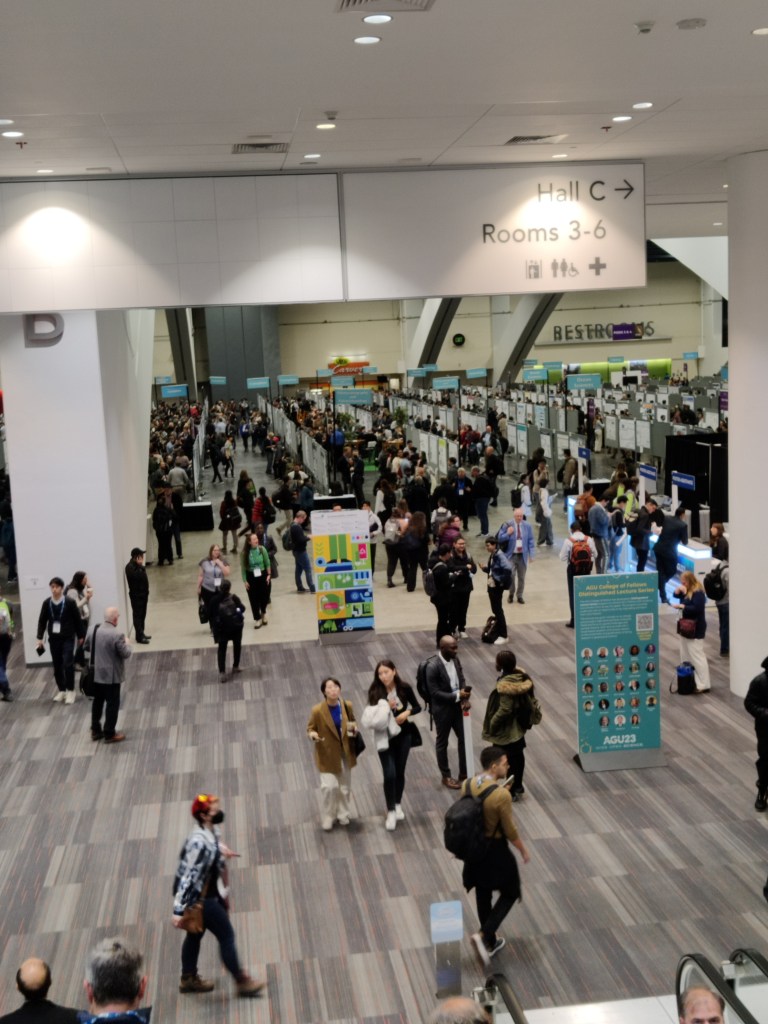
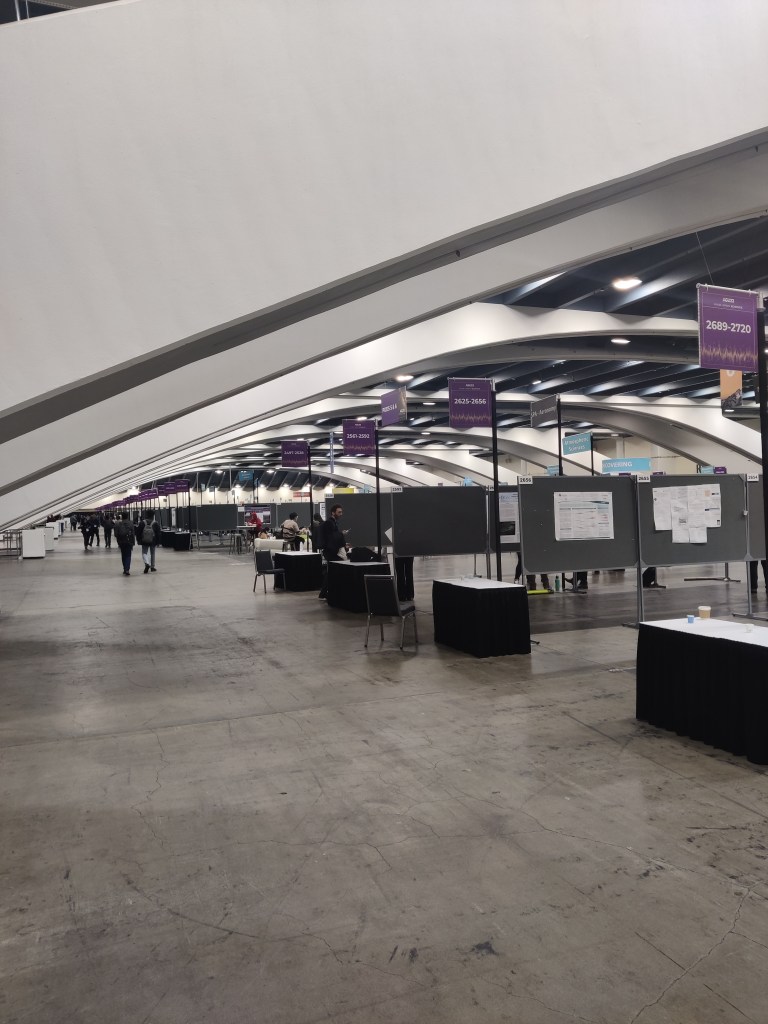
To echo the previous year’s post: AGU is big. I mean really big. I mean seriously (please take me seriously) its huge. The poster hall was the size of an aircraft hangar – poster slots were numbered from 1 to over 3000, with each slot used by a different person for each day. Dozens of talk sessions were held at any time simultaneously across the three separate buildings (that thankfully were very close to each other), commencing anytime from 8am to 6pm, Monday to Friday. I was recommended the AGU app and would (uncharacteristically) do the same as it was very helpful in navigating the sessions. I’d also recommend properly planning what you want to attend in advance of the conference – it is very easy to miss potentially relevant sessions otherwise.

The poster hall from two different angles on Monday Morning (left) and Friday evening (right).

The keynote lectures (one per day) were like something out of Gamescom or E3. They always started with flashy, cinematic vignettes. Hosts and speakers had their own entrance theme song to walk out on stage to, whether that be Katy Perry ‘Fireworks’ or Johnny Cash ‘Ring of Fire’ (and of course, they had the cliche teleprompter from which to read). Some Keynote talks were OK in terms of content, but others were definitely a miss, seemingly prioritising style over substance or referring to subject matter in too abstract a way, so that it was difficult to gauge what the take home message was meant to be. I’d say attend at least one for the experience but skip the rest if they don’t appeal to you.

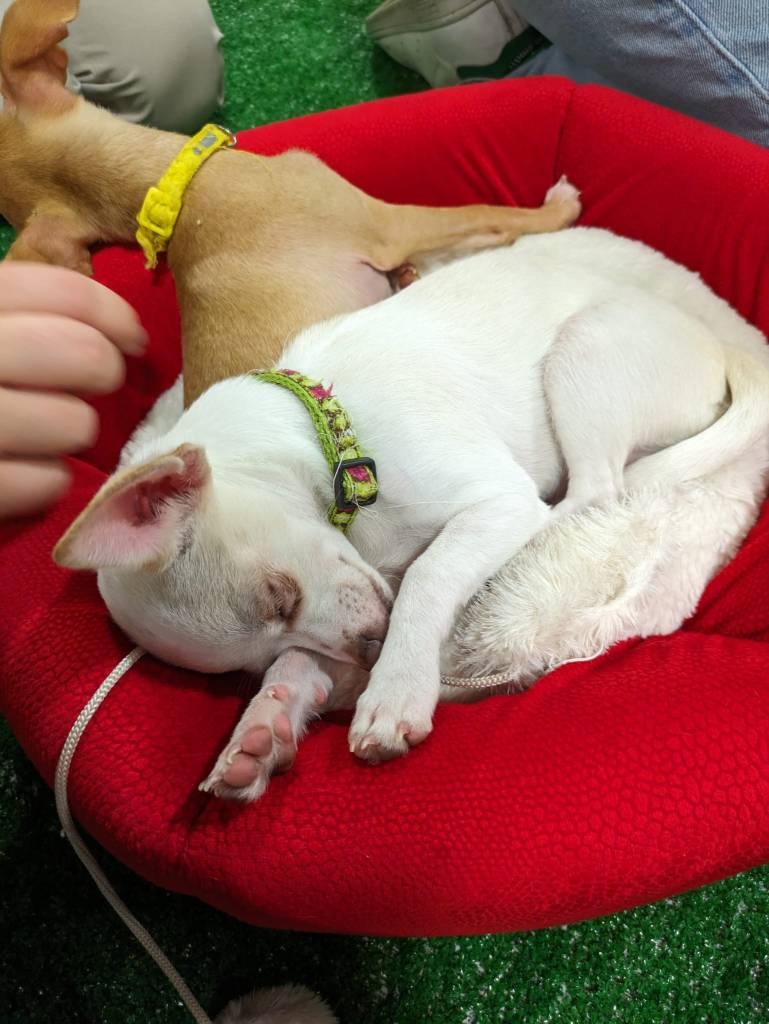
There were also miscellaneous activities to partake in. Exhibition Hall F was where you could find stalls of many research organisations, along with any American or Chinese university you can name (NASA had a cool one with some great graphics). In that same place you could also get a free massage (in plain sight of everyone else) or a professional headshot (which I tried – they brushed something on my face, I don’t know what it was) or even hang out with the puppies (a stall frequented by a certain Met PhD student). You could say there was something for everyone.

I wasn’t the only one needing rest after a long day of conferencing.

I found poster sessions to be far more useful than talks. Most talks were eight minutes long, with a red light switching on after seven. With these time constraints, presenters are often forced to assume knowledge and cram in content and slides. The presentations can be hard to follow at the best of times, but especially when you yourself are presenting later in the week and all you can do is watch and wait for that red light, knowing that it will be deciding your fate in days to come. In contrast, posters can be taken at one’s own pace – you can ask the presenter to tailor their “spiel” to you, whether that’s giving a higher-level overview (as I asked for 100% of the time) or skipping straight to the details. You get a proper chance to interact and have conversations with those doing work you’re interested in, in contrast to talks where your only hope is to hunt down and corner the presenter in the few microseconds after a session ends.

With that said, there were many great talks. Some of the coolest talks I attended were on existing and future mission concepts to Europa (moon of Jupiter) and Enceladus (moon of Saturn) respectively, which has tangential relevance to my own project (icy moon oceanography – probably best left for a future post). In these talks, they discussed the science of the upcoming Europa Clipper mission, along with a robotic EEL concept (like a robot snake) for traversing within and around the icy crevasses on Enceladus’s surface. It was really cool (and very lucky) getting to interact with people working on Europa Clipper and the current Juno mission orbiting Jupiter. Given the time taken between a mission’s proposal, getting (and sometimes losing) funding, planning, construction, and eventual launch and arrival, many of these scientists had been working on these missions for decades! 

My own talk was scheduled for the final conference day (given the luck with everything else, I won’t complain) at 8:40 am. While seemingly early, I struggled to sleep beyond 3:30am most days anyway owing to jet lag so by 8:40am, stress ensured I was wide awake, alert, and focused. 

The talk was over in a flash – I blinked and it was done (more or less).

The most academically helpful part of the conference was the conversations I had with people about my work after the talk. This was my main take away from AGU – that getting to know people in your field and having in-depth conversations really can’t have been achieved by reading someone’s paper, or even sending an email. Meeting in-person really helps. A poster session can thankfully make this feel very natural (as opposed to just randomly walking up to strangers – not for me…) and is therefore something I recommend taking advantage of. Besides, if they’re presenting a poster, they’re less able to run away, even if they want to.

A quick bullet point list of other things I learned (and didn’t) while at AGU:

Things I learned:

  • Apparently, PhD students having business cards is normal in America? – I got handed one during a dinner and the whole table didn’t understand why I was confused
  • NO BISCUITS DURING COFFEE BREAKS in America – probably because you can’t get biscuits easily in America. Regardless, my stomach deemed this a poor excuse.
  • Food portions are, in general, much bigger – surely to make up for the lack of biscuits during coffee breaks.

Things I didn’t learn:

  • How the automatic flush mechanism worked in the conference venue toilets (I really tried)
  • Given there were dozens of sessions happening simultaneously at the conference, probably many other things.

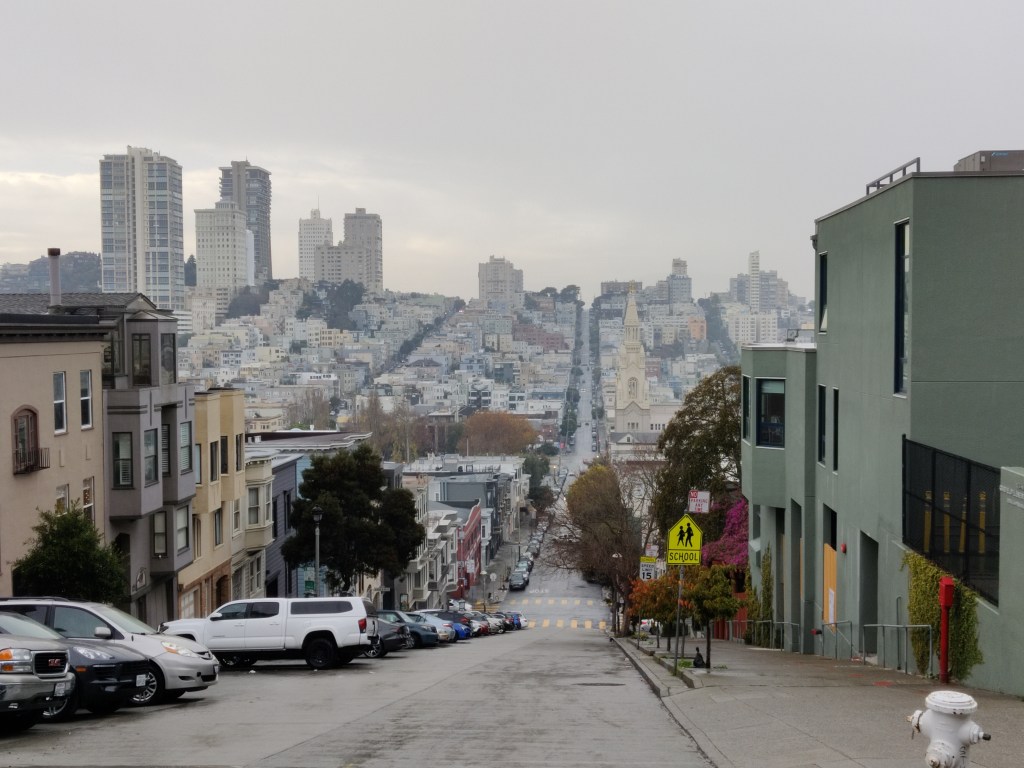
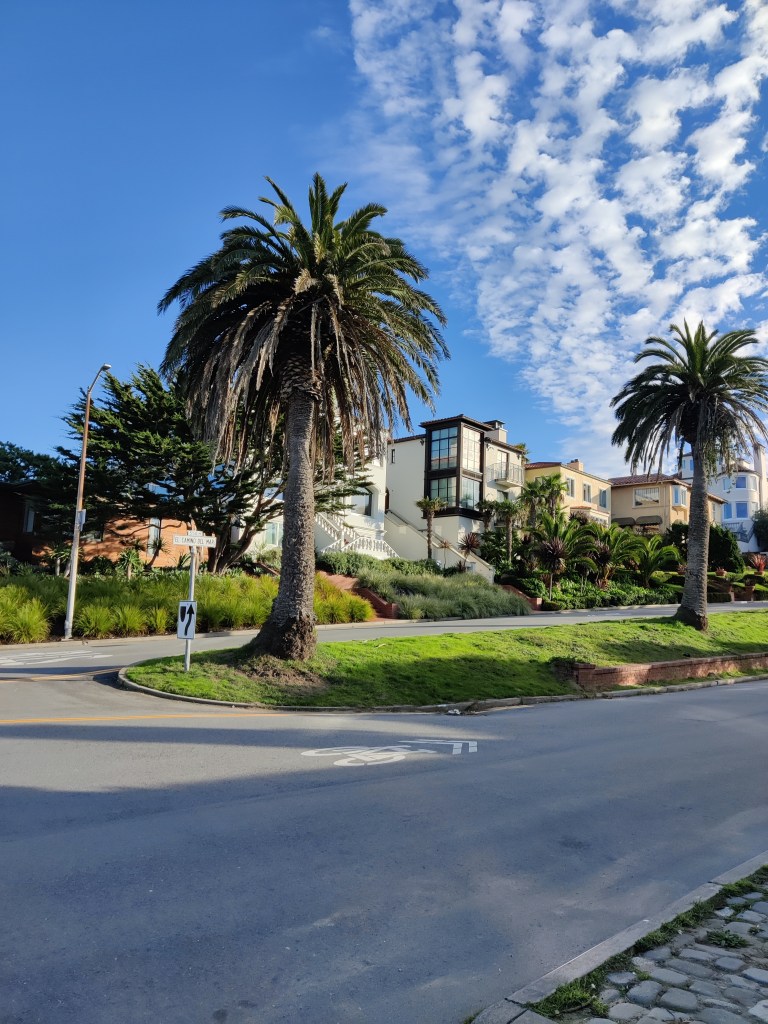
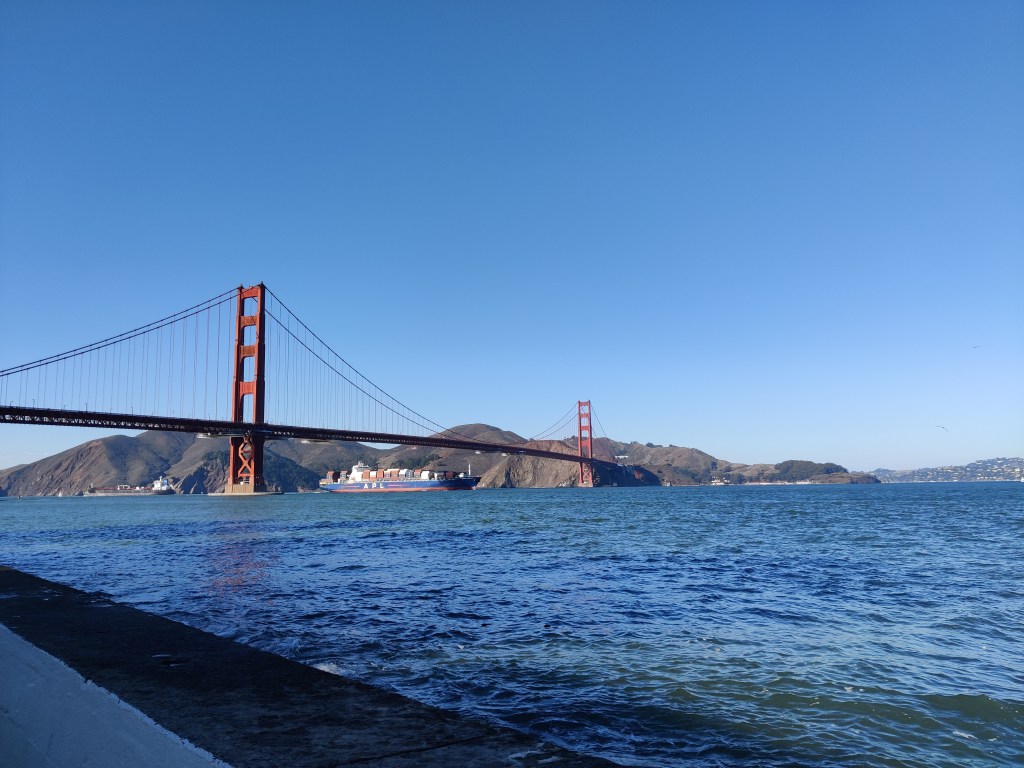
After AGU finished, I was lucky enough to spend extra time in San Francisco. The city really has a piece of everything: fantastic walks near the Golden Gate and coastal area, the characteristic steep streets and cable cars, lots of great places to eat out (great for vegans/vegetarians too! :)), and they had unexpectedly good street musicians. The weather was very nice for December – around 18 degrees. I even got sunburned on one of the days. Public transport is great in San Francisco and getting around the city was no issue.

Some of the various sights (and only pictures I took) in San Francisco.

But San Francisco also appears to be a city of extremes. There are mansions near the beach in an area that looks like a screenshot from Grand Theft Auto Five. Meanwhile in the city itself, the scale of homelessness is far beyond anything I’ve observed here in the UK. I’d very frequently walk past people with large trolleys containing what appeared to be all their belongings. Nearby the Tenderloin district, pitched tents on the pathways next to roads were common, with people cooking on gas stoves. The line to what appeared to be one soup kitchen stretched outside and round the corner. Drug use was also very noticeable. I frequently spotted people slumped over in wheelchairs, others passed out in a subway station or outside a shop. People pass by as if no-ones there. It’s one thing hearing about these issues, but it is eye-opening to see it.

Overall, attending AGU in San Francisco was an experience I will not forget and certainly a highlight of my PhD so far – I’m very grateful I was able to go! Next year’s AGU will take place in Washington DC from 9th-13th December. Will you be there? Will you be the one to write next years AGU post?  Stay tuned to the Social Metwork (and for the latter, your email inbox) to find out.

WesCon 2023: From Unexpected Radiosondes to Experimental Forecasts

Adam Gainford – a.gainford@pgr.reading.ac.uk

Summer might seem like a distant memory at this stage, with the “exact date of snow” drawing ever closer and Mariah Carey’s Christmas desires broadcasting to unsuspecting shoppers across the country. But cast your minds back four-to-six months and you may remember a warmer and generally sunnier time, filled with barbeques, bucket hats, and even the occasional Met Ball. You might also remember that, weather-wise, summer 2023 was one of the more anomalous summers we have experienced in the UK. This summer saw 11% more rainfall recorded than the 1991-2020 average, despite June being dominated by hot, dry weather. In fact, June 2023 was also the warmest June on record and yet temperatures across the summer turned out to be largely average. 

Despite being a bit of an unsettled summer, these mixed conditions provided the perfect opportunity to study a notoriously unpredictable type of weather: convection. Convection is often much more difficult to accurately forecast compared to larger-scale features, even using models which can now explicitly resolve these events. As a crude analogy, consider a pot of bubbling water which has brought to the boil on a kitchen hob. As the amount of heat being delivered to the water increases, we can probably make some reasonable estimates of the number of bubbles we should expect to see on the surface of the water (none initially, but slowly increasing in number as the temperature of the water approaches the boiling point). But we would likely struggle if we tried to predict exactly where those bubbles might appear. 

This is where the WesCon (Wessex Convection) field campaign comes in. WesCon participants spent the entire summer operating radars, launching radiosondes, monitoring weather stations, analysing forecasts, piloting drones, and even taking to the skies — all in an effort to better understand convection and its representation within forecast models. It was a huge undertaking, and I was fortunate enough to be a small part of it. 

In this blog I discuss two of the ways in which I was involved: launching radiosondes from the University of Reading Atmospheric Observatory and evaluating the performance of models at the Met Office Summer Testbed.

Radiosonde Launches and Wiggly Profiles

A core part of WesCon was frequent radiosonde launches from sites across the south and south-west of the UK. Over 300 individual sondes were launched in total, with each one requiring a team of two to three people to calibrate the sonde, record station measurements and fill balloons with helium. Those are the easy parts – the hard part is making sure your radiosonde gets off the ground in one piece.

You can see in the picture below that the observatory is surrounded by sharp fences and monitoring equipment which can be tricky to avoid, especially during gusty conditions. In the rare occurrences when the balloon experienced “rapid unplanned disassembly”, we had to scramble to prepare a new one so as not to delay the recordings by too long.

The University of Reading Atmospheric Observatory, overlooked by some mid-level cloud streets. 

After a few launches, however, the procedure becomes routine. Then you can start taking a cursory look at the data being sent back to the receiving station.

During the two weeks I was involved with launching radiosondes, there were numerous instances of elevated convection, which were a particular priority for the campaign given the headaches these cause for modellers. Elevated convection is where the ascending airmass originates from somewhere above the boundary layer, such as on a frontal boundary. We may therefore expect profiles of elevated convection to include a temperature inversion of some kind, which would prevent surface airmasses from ascending above the boundary layer. 

However, what we certainly did not expect to see were radiosondes appearing to oscillate with height (see my crude screenshot below). 

“The wiggler”! Oscillating radiosondes observed during elevated convection events.

Cue the excited discussions trying to explain what we were seeing. Sensor malfunction? Strong downdraughts? Not quite. 

Notice that the peak of each oscillation occurs almost exactly at 0°C. Surely that can’t be coincidental! Turns out these “wiggly” radiosondes have been observed before, albeit infrequently, and is attributed to snow building up on the surface of the balloon, weighing it down. As the balloon sinks and returns to above-freezing temperatures, the accumulated snow gradually melts and departs the balloon, allowing it to rise back up to the freezing level and accumulate more snow, and so on. 

That sounds reasonable enough. So why, then, do we see this oscillating behaviour so infrequently? One of the reasons discovered was purely technical. 

If you would like to read more about these events, a paper is currently being prepared by Stephen Burt, Caleb Miller and Brian Lo. Check back on the blog for further updates!

Humphrey Lean, Eme Dean-Lewis (left) and myself (right) ready to launch a sonde.

Met Office Summer Testbed

While not strictly a part of WesCon, this summer’s Met Office testbed was closely connected to the themes of the field campaign, and features plenty of collaboration. 

Testbeds are an opportunity for operational meteorologists, researchers, academics, and even students to evaluate forecast outputs and provide feedback on particular model issues. This year’s testbed was focussed on two main themes: convection and ensembles. These are both high priority areas for development in the Met Office, and the testbed provides a chance to get a broader, more subjective evaluation of these issues.

Group photo of the week 2 testbed participants.

Each day was structured into six sets of activities. Firstly, we were divided into three groups to perform a “Forecast Denial Experiment”, whereby each group is given access to a limited set of data and asked to issue a forecast for later in the day. One group only had access to the deterministic UKV model outputs, another group only had access to the MOGREPS-UK high-resolution ensemble output, and the third group has access to both datasets. The idea was to test whether ensemble outputs provide added value and accuracy to forecasts of impactful weather compared to just deterministic outputs. Each group was led by one or two operational meteorologists who navigated the data and, generally, provided most of the guidance. Personally, I found it immensely useful to shadow the op-mets as they made their forecasts, and came away with a much better understanding of the processes which goes into issuing a forecast.

After lunch, we would begin the ensemble evaluation activity which focussed on subjectively evaluating the spread of solutions in the high-resolution MOGREPS-UK ensemble. Improving ensemble spread is one of the major priorities for model development; currently, the members of high-resolution ensembles tend to diverge from the control member too slowly, leading to overconfident forecasts. It was particularly interesting to compare the spread results from MOGREPS-UK with the global MOGREPS-G ensemble and to try to understand the situations when the UK ensemble seemed to resemble a downscaled version of the global model. Next, we would evaluate three surface water flooding products, all combining ensemble data with other surface and impact libraries to produce flooding risk maps. Despite being driven by the same underlying model outputs, it was surprising how much each model differed in the case studies we looked at. 

Finally, we would end the day by evaluating the WMV (Wessex Model Variable) 300 m test ensemble, run over the greater Bristol area over this summer for research purposes. Also driven by MOGREPS-UK, this ensemble would often pick out convective structure which MOGREPS-UK was too coarse to resolve, but also tended to overdo the intensities. It was also very interesting to see the objective metrics suggested that WMV had much worse spread than MOGREPS-UK over the same area, a surprising result which didn’t align with my own interpretation of model performance.

Overall, the testbed was a great opportunity to learn more about how forecasts are issued and to get a deeper intuition for how to interpret model outputs. As researchers, it’s easy to look at model outputs as just abstract data, which is there to be verified and scrutinised, forgetting the impacts that it can have on the people experiencing it. While it was an admittedly exhausting couple of weeks, I would highly recommend more students take part in future testbeds!