Preparing for the assimilation of future ocean-current measurements

By Laura Risley

Ocean data assimilation (DA) is vital. Firstly, it is essential to improving forecasts of ocean variables. Not only that, the interaction between the ocean and atmosphere is key to numerical weather prediction (NWP) as coupled ocean-atmosphere DA schemes are used operationally.  

At present, observations of the ocean currents are not assimilated operationally. This is all set to change, as satellites are being proposed to measure these ocean currents directly. Unfortunately, the operational DA systems are not yet equipped to handle these observations due to some of the assumptions made about the velocities. In my work, we propose the use of alternative velocity variables to prepare for these future ocean current measurements. These will reduce the number of assumptions made about the velocities and is expected to improve the NWP forecasts.

What is DA? 

DA combines observations and a numerical model to give a best estimate of the state of our system – which we call our analysis. This will lead to a better forecast. To quote my lunchtime seminar ‘Everything is better with DA!’

Our model state usually comes from a prior estimate which we refer to as the background. A key component of data assimilation is that the errors present in both sets of data are taken into consideration. These uncertainties are represented by covariance matrices. 

I am particularly interested in variational data assimilation, which formulates the DA problem into a least squares problem. Within variational data assimilation the analysis is performed with a set of variables that differ from the original model variables, called the control variables. After the analysis is found in this new control space, there is a transformation back to the model space. What is the purpose of this transformation? The control variables are chosen such that they can be assumed approximately uncorrelated, reducing the complexity of the data assimilation problem.

Velocity variables in the ocean 

My work is focused on the treatment of the velocities in NEMOVAR. This is the data assimilation software used by the NEMO ocean model, used operationally at the Met Office and ECMWF. In NEMOVAR the velocities are transformed to their unbalanced components, and these are then used as control variables. The unbalanced components of the velocities are highly correlated, therefore contradicting the assumption made about control variables. This would result in suboptimal assimilation of future surface current measurements – therefore we seek alternative velocity control variables. 

The alternative velocity control variables we propose for NEMOVAR are unbalanced streamfunction and velocity potential. This would involve transforming the current control variables, the unbalanced velocities, to these alternative variables using Helmholtz Theorem. This splits a velocity field into its nondivergent (streamfunction) and irrotational (velocity potential) parts. These parts have been suggested by Daley (1993) as more suitable control variables than the velocities themselves. 

Numerical Implications of alternative variables 
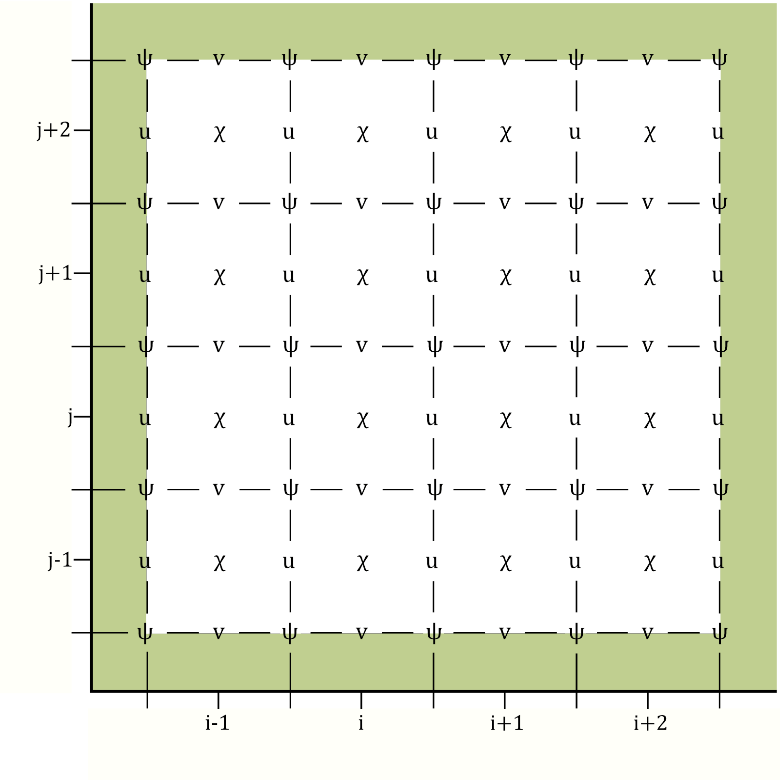
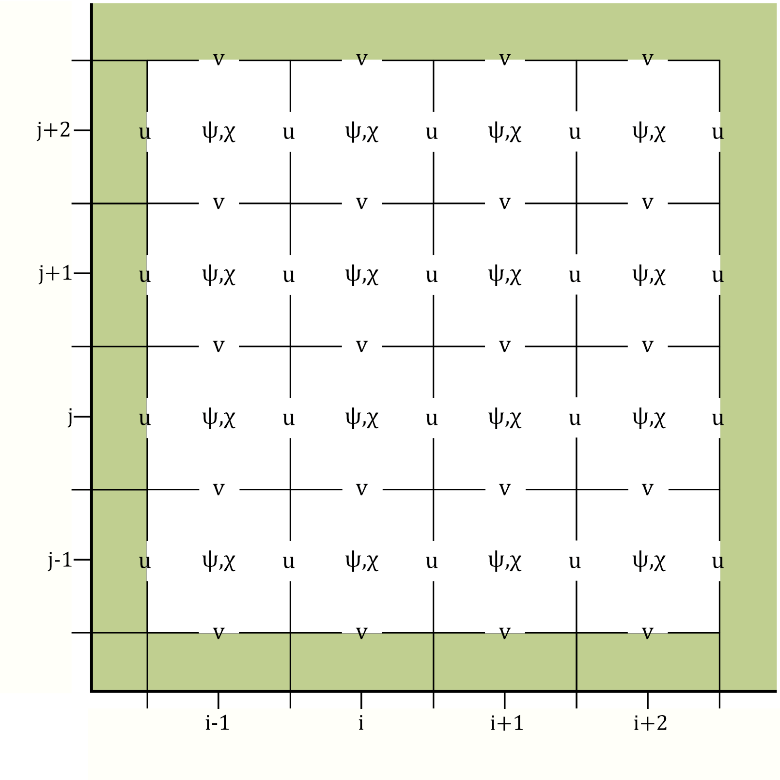
We have performed the transformation to these proposed control variables using the shallow water equations (SWEs) on a 𝛽-plane. To do so we discretised the variables on the Arakawa-C grid. The traditional placement of streamfunction on this grid causes issues with the boundary conditions. Therefore, Li et al. (2006) proposed placing streamfunction in the centre of the grid, as shown in Figure 1. This circumvents the need to impose explicit boundary conditions on streamfunction. However, using this grid configuration leads to numerical issues when transforming from the unbalanced velocities to unbalanced streamfunction and velocity potential. We have analysed these theoretically and here we show some numerical results.

Figure 1: The left figure shows the traditional Arakawa-C configuration (Lynch (1989), Watterson (2001)) whereby streamfunction is in the corner of each grid cell. The right figure shows the Arakawa-C configuration proposed by Li et al. (2006) where streamfunction is in the centre of the grid cell. The green shaded region represents land. 

Issue 1: The checkerboard effect 
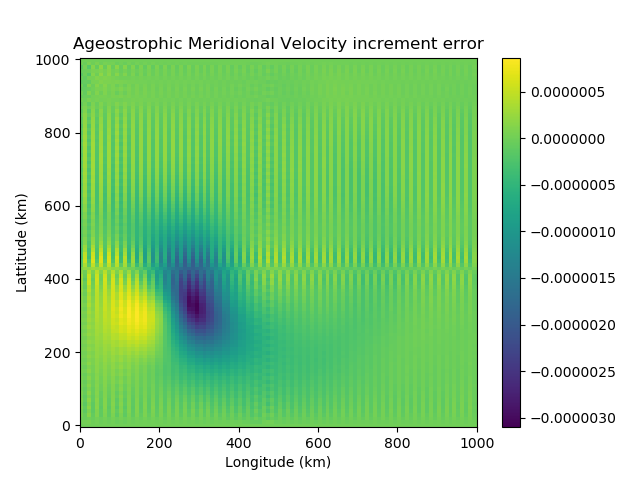
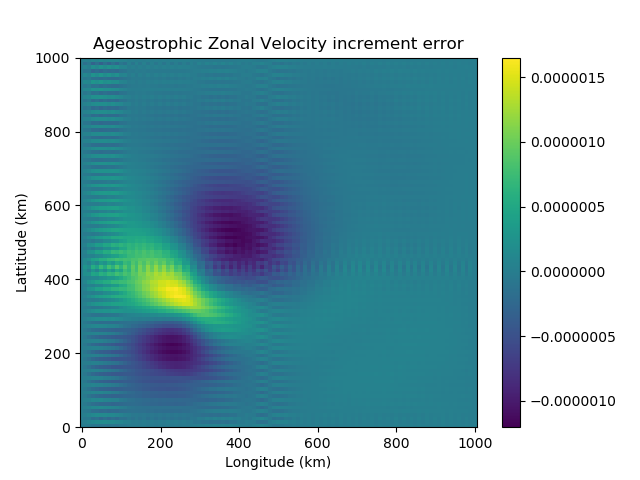
The transformation from the unbalanced velocities to unbalanced streamfunction and velocity potential involves averaging derivatives, due to the location of streamfunction in the grid cell. This process causes a checkerboard effect – whereby we have numerical noise entering the variable fields due to a loss of information. This is clear to see numerically using the SWEs. We use the shallow water model to generate a velocity field. This is transformed to its unbalanced components and then to unbalanced streamfunction and velocity potential. Using Helmholtz Theorem, the unbalanced velocities are reconstructed. Figure 2 shows the checkboard effect clearly in the velocity error.

Figure 2: The difference between the original ageostrophic velocity increments, calculated using the SWEs, and the reconstructed ageostrophic velocity increments. These are reconstructed using Helmholtz Theorem, from the ageostrophic streamfunction and velocity potential increments. On the left we have the zonal velocity increment error and on the right the meridional velocity increment error. 

Issue 2: Challenges in satisfying the Helmholtz Theorem 
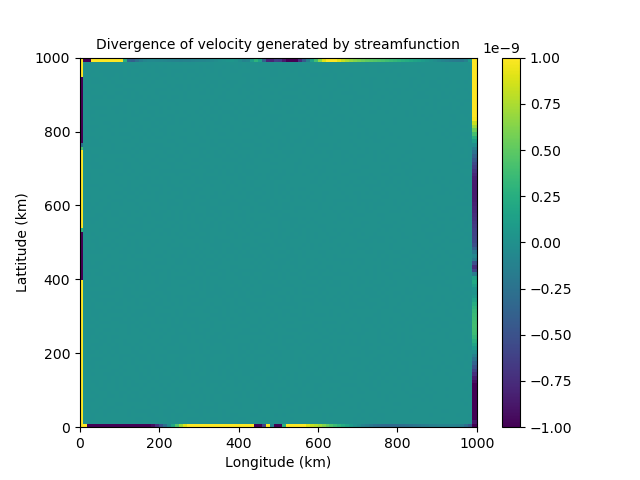
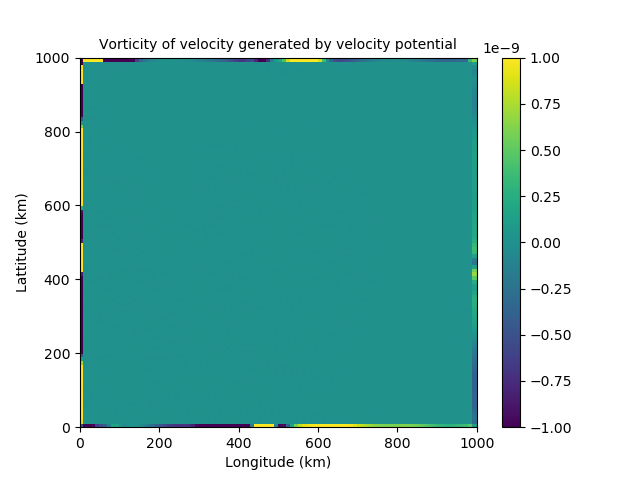
Helmholtz theorem splits the velocity into its nondivergent and irrotational components. We discovered that although streamfunction should be nondivergent and velocity potential should be irrotational, this is not the case at the boundaries, as can be seen in figure 3. This implies the proposed control variables are able to influence each other on the boundary. This would lead to them being strongly coupled and therefore correlated near the boundaries. This directly conflicts the assumption made that our control variables are uncorrelated. 

Figure 3: Issues with Helmholtz Theorem near the boundaries. The left shows the divergence of the velocity field generated by streamfunction. The right shows the vorticity of the velocity field generated by velocity potential. 

Overall, in my work we propose the use of alternative velocity control variables in NEMOVAR, namely unbalanced streamfunction and velocity potential. The use of these variables however leads to several numerical issues that we have identified and discussed. A paper on this work is in preparation, where we discuss some of the potential solutions. Our next work will further this investigation to a more complex domain and assess our proposed control variables in assimilation experiments. 

References: 

Daley, R. (1993) Atmospheric data analysis. No. 2. Cambridge university press. 

Li, Z., Chao, Y. and McWilliams, J. C. (2006) Computation of the streamfunction and velocity potential for limited and irregular domains. Monthly weather review, 134, 3384–3394. 

Lynch, P. (1989) Partitioning the wind in a limited domain. Monthly weather review, 117, 1492–1500. 

Watterson, I. (2001) Decomposition of global ocean currents using a simple iterative method. Journal of Atmospheric and Oceanic Technology, 18, 691–703
Nature vs Nurture in Convective-Scale Ensemble Spread

By Adam Gainford

Quantifying the uncertainty of upcoming weather is now a common procedure thanks to the widespread use of ensemble forecasting. Unlike deterministic forecasts, which show only a single realisation of the upcoming weather, ensemble forecasts predict a range of possible scenarios given the current knowledge of the atmospheric state. This approach allows forecasters to estimate the likelihood of upcoming weather events by simply looking at the frequency of event occurrence within all ensemble members. Additionally, by sampling a greater range of events, this approach highlights plausible worst-case scenarios, which is of particular interest for forecasts of extreme weather. Understanding the realistic range of outcomes is crucial for forecasters to provide informed guidance, and helps us avoid the kind of costly and embarrassing mistakes that are commonly associated with the forecast of “The Great Storm of 1987”*.

To have trust that our ensembles are providing an appropriate range of outputs, we need some method of verifying ensemble spread. We do this by calculating the spread-skill relationship, which essentially just compares the difference between member values to the skill of the ensemble as a whole. If the spread-skill relationship is appropriate, spread and skill scores should be comparable when averaged over many forecasts. If the ensemble shows a tendency to produce larger spread scores than skill scores, there is too much spread and not enough confidence in the ensemble given its accuracy: i.e., the ensemble is overspread. Conversely, if spread scores are smaller than skill scores, the ensemble is too confident and is underspread. 

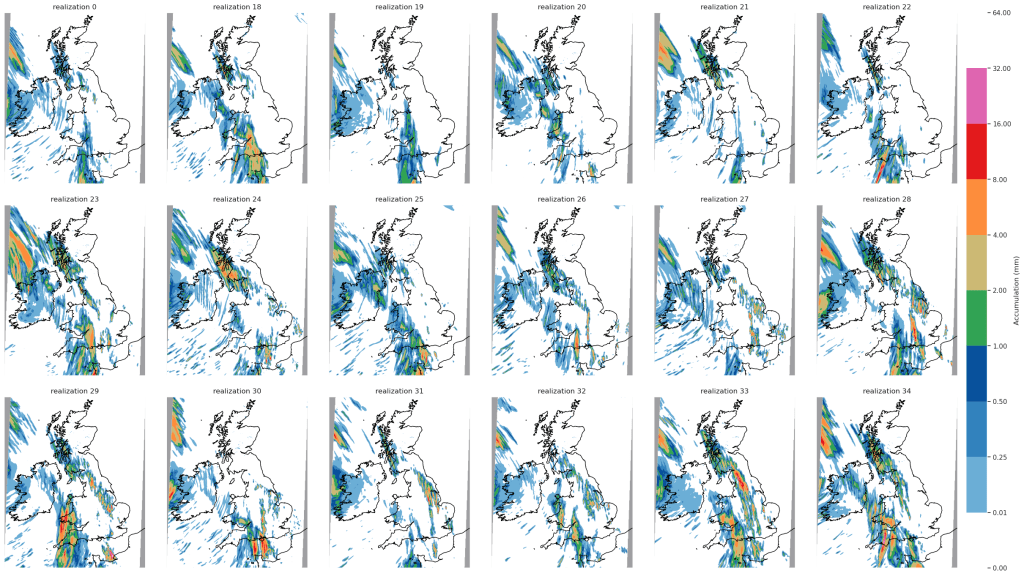
Figure 1: Postage stamp plots showing three-hourly precipitation accumulation valid for 2023-07-08 09Z at leadtime T+15 h. There is reasonable spread within both the frontal rain band effecting areas of SW England and Wales, and the convective features ahead of this front.

My PhD work has focussed on understanding the spread-skill relationship in convective-scale ensembles. Unlike medium range ensembles that are used to estimate the uncertainty of synoptic-scale weather at daily-to-weekly leadtimes, convective-scale ensembles quantify the uncertainty of smaller-scale weather at hourly-to-daily leadtimes. To do this, convective-scale ensembles must be run at higher resolutions than medium-range ensembles, with grid spacings smaller than 4 km. These higher resolutions allows the ensemble to explicitly represent convective storms, which has been repeatedly shown to produce more accurate forecasts compared coarser-resolution forecasts that must instead rely on convective parametrizations. However, running models at such high resolutions is too computationally expensive to be done over the entire Earth, so they are typically nested inside a lower-resolution “parent” ensemble which provides initial and boundary conditions. Despite this, researchers often report that convective-scale ensembles are underspread, and the range of outputs is too narrow given the ensemble skill. This is corroborated by operational forecasters, who report that the ensemble members often stay too close to the unperturbed control member. 

To provide the necessary context for understanding the underspread problem, many studies have examined the different sources and behaviours of spread within convective-scale ensembles. In general, spread can be produced through three different mechanisms: firstly, through differences in each member’s initial conditions; secondly, through differences in the lateral boundary conditions provided to each member; and thirdly, through the different internal processes used to evolve the state. This last source is really the combination of many different model-specific factors (e.g., stochastic physics schemes, random parameter schemes etc.), but for our purposes this represents the ways in which the convective-scale ensemble produces its own spread. This contrasts with the other two sources of spread, which are directly linked to the spread of the parent ensemble.  

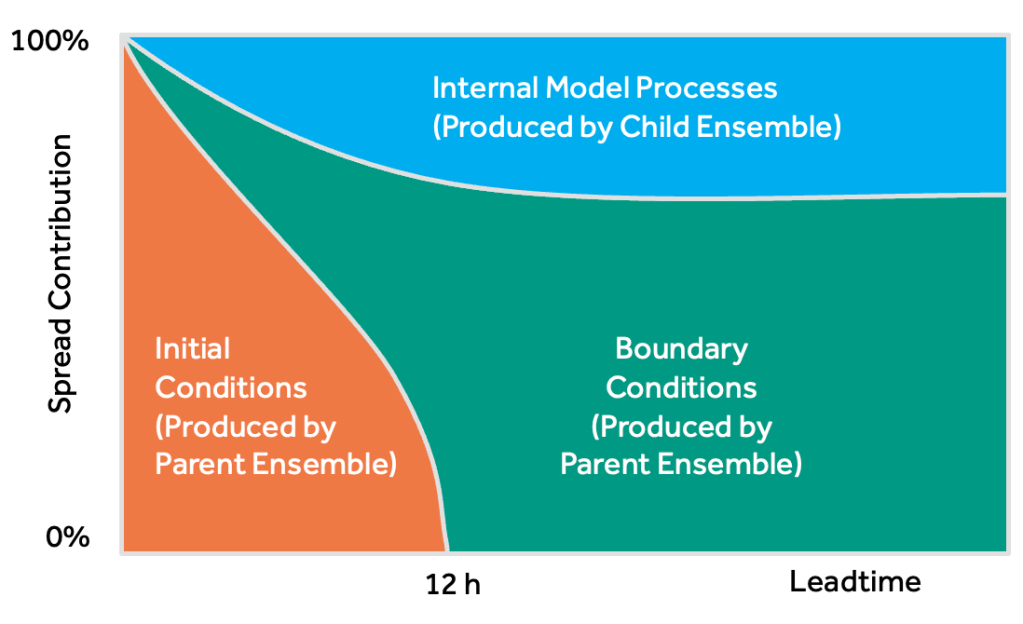
The evolution of each of these three spread sources is shown in Fig. 2. At the start of a forecast, the ensemble spread is entirely dictated by differences in the initial conditions provided to each ensemble member. As we integrate forward in time, though, this initial information is removed from the domain by the prevailing winds and replaced by information arriving through the boundaries. At the same time, internal model processes start spinning up additional detail within each ensemble member. For a UK-sized domain, it takes roughly 12 hours for the initial information to have fully left the domain, though this is of course highly dependent on the strength of the prevailing winds. After this time, spread in the ensemble is partitioned between internal processes and boundary condition differences.  

Figure 2: Attribution of spread within a convective-scale ensemble by leadtime. 

While the exact partitioning in this schematic shouldn’t be taken too literally, it does highlight the important role that the parent ensemble plays in determining spread in the child ensemble. Most studies which try to improve spread target the child ensemble itself, but this schematic shows that these improvements may have quite a limited impact. After all, if the spread of information arriving from the parent ensemble is not sufficient, this may mask or even overwhelm any improvements introduced to the child ensemble.  

However, there are situations where we might expect internal processes to show a more dominant spread contribution. Forecasts of convective storms, for instance, typically show larger spread than forecasts of other types of weather, and are driven more by local processes than larger-scale, external factors.

This is where our “nature” and “nurture” analogy becomes relevant. Given the similarities of this relationship to the common parent-child theory in behavioural psychology, we thought it would be a fun and useful gimmick to also use this terminology here. So, in the “nature” scenario, each child member shows large similarity to the corresponding parent member, which is due to the dominating influence of genetics (initial and boundary conditions). Conversely, in the “nurture” scenario, spread in the child ensemble is produced more by its response to the environment (internal processes), and as such, we see larger differences between each parent-child pair.  

While the nature and nurture attribution is well understood for most variables, few studies have examined the parent-child relationship for precipitation patterns, which are an important output for guidance production and require the use of neighbourhood-based metrics for robust evaluation. Given that this is already quite a long post, I won’t go into too much detail of our results looking at nature vs nurture for precipitation patterns. Instead, I will give a quick summary of what we found: 

  • Nurture provides a larger than average influence on the spread in two situations: during short leadtimes**, and when forecasting convective events driven by continental plume setups. 
  • In the nurture scenarios, spread is consistently larger in the child ensemble than the parent ensemble. 
  • In contrast to the nurture scenarios, nature provides larger than average spread at medium-to-long leadtimes and under mobile regimes, which is consistent with the boundary arguments mentioned previously. 
  • Spread is very similar between the child and parent ensembles in the nurture scenarios.  

If you would like to read more about this work, we will be submitting a draft to QJRMS very soon.  

To conclude, if we want to improve the spread of precipitation patterns in convective-scale ensembles, we should direct more attention to the role of the driving ensemble. It is clear that the exact nesting configuration used has a strong impact on the quality of the spread. This factor is especially important to consider given recent experiments with hectometric-scale ensembles which are themselves nested within convective-scale ensembles. With multiple layers of nesting, the coupling between each ensemble layer is likely to be complex. Our study provides the foundation for investigating these complex interactions in more detail. 

* This storm was actually well forecast by the Met Office. The infamous Michael Fish weather update in which he said there was no hurricane on the way was referring to a different system which indeed did not impact the UK. Nevertheless, this remains a good example of the importance of accurately predicting (and communicating) extreme weather events.  

** While this appears to be inconsistent with Fig. 2, the ensemble we used does not solely take initial conditions from the driving ensemble. Instead, the ensemble uses a separate, high-resolution data assimilation scheme to the parent ensemble. Each ensemble is produced in a way which makes the influence of the data assimilation more influential to the spread than the initial condition perturbations. 

AGU in Sunny San Francisco

Flynn Ames - f.ames@pgr.reading.ac.uk

For my first (and given carbon budgets, possibly the last) in-person conference of my PhD, I was lucky enough to go to AGU (American Geophysical Union Conference) in December 2023, taking place in San Francisco, California. As my first time in America, there was a lot to be excited about. As my first time presenting at a conference, there was a lot to be nervous about. So what did I discover?

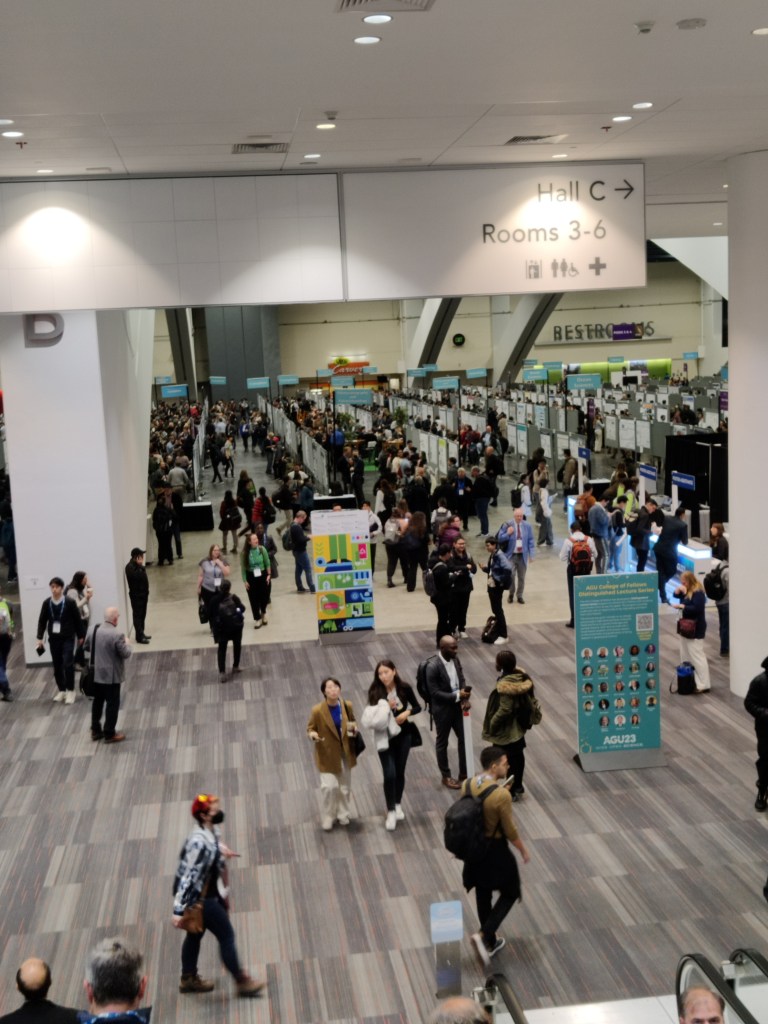
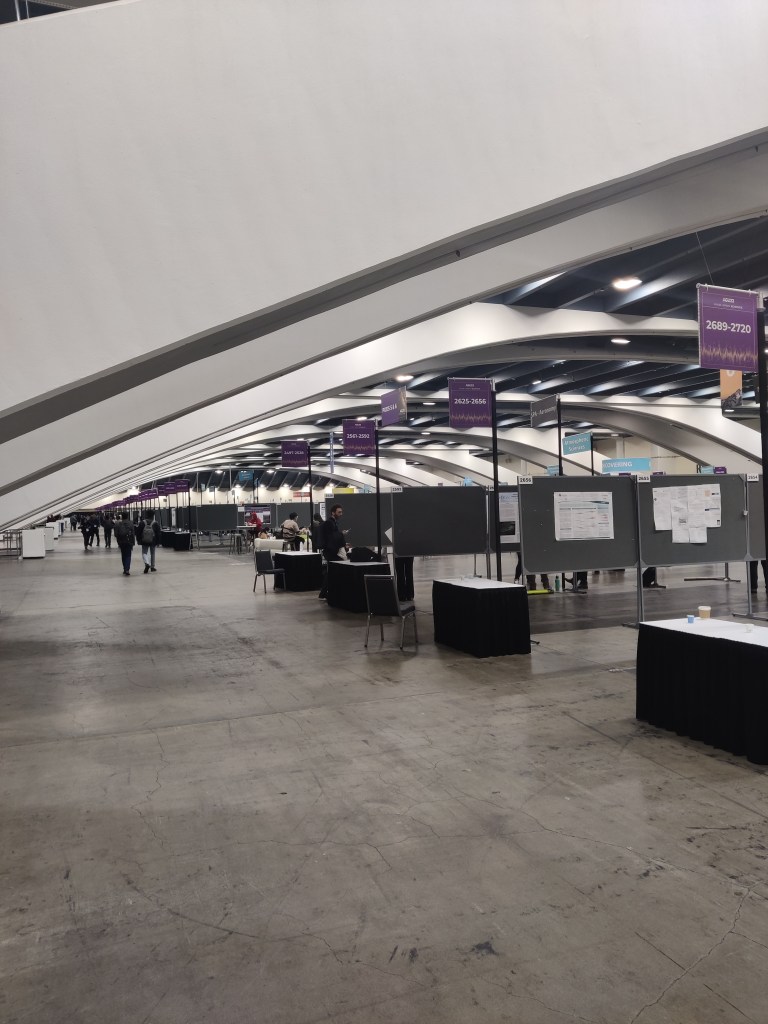
To echo the previous year’s post: AGU is big. I mean really big. I mean seriously (please take me seriously) its huge. The poster hall was the size of an aircraft hangar – poster slots were numbered from 1 to over 3000, with each slot used by a different person for each day. Dozens of talk sessions were held at any time simultaneously across the three separate buildings (that thankfully were very close to each other), commencing anytime from 8am to 6pm, Monday to Friday. I was recommended the AGU app and would (uncharacteristically) do the same as it was very helpful in navigating the sessions. I’d also recommend properly planning what you want to attend in advance of the conference – it is very easy to miss potentially relevant sessions otherwise.

The poster hall from two different angles on Monday Morning (left) and Friday evening (right).

The keynote lectures (one per day) were like something out of Gamescom or E3. They always started with flashy, cinematic vignettes. Hosts and speakers had their own entrance theme song to walk out on stage to, whether that be Katy Perry ‘Fireworks’ or Johnny Cash ‘Ring of Fire’ (and of course, they had the cliche teleprompter from which to read). Some Keynote talks were OK in terms of content, but others were definitely a miss, seemingly prioritising style over substance or referring to subject matter in too abstract a way, so that it was difficult to gauge what the take home message was meant to be. I’d say attend at least one for the experience but skip the rest if they don’t appeal to you.

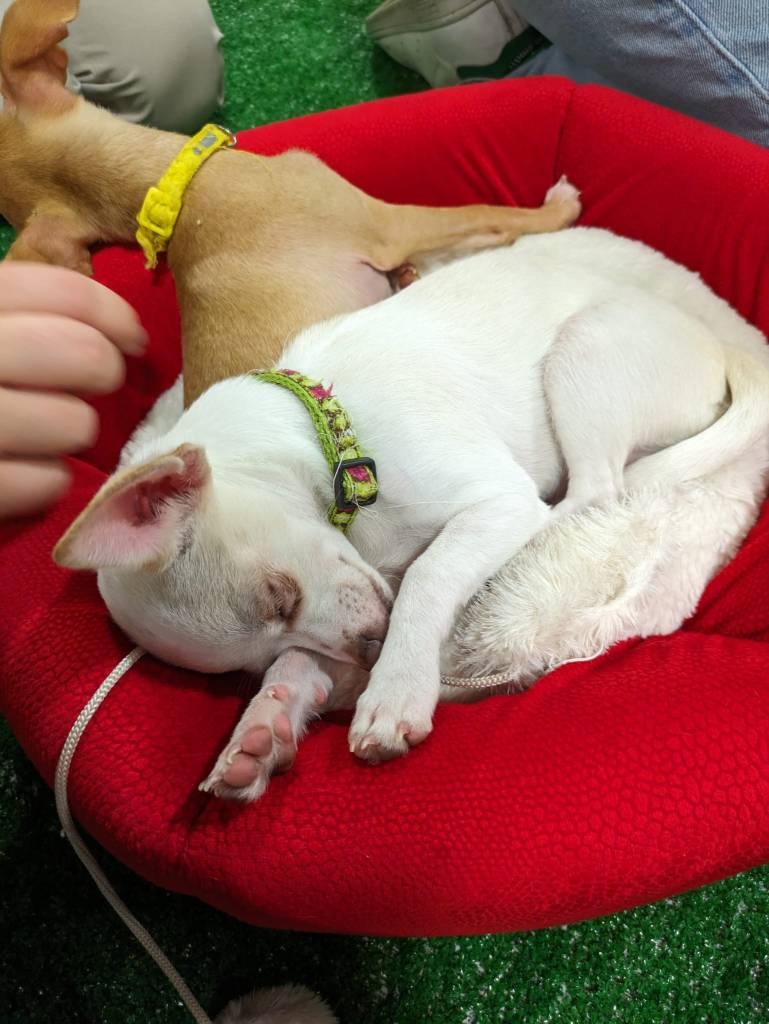
There were also miscellaneous activities to partake in. Exhibition Hall F was where you could find stalls of many research organisations, along with any American or Chinese university you can name (NASA had a cool one with some great graphics). In that same place you could also get a free massage (in plain sight of everyone else) or a professional headshot (which I tried – they brushed something on my face, I don’t know what it was) or even hang out with the puppies (a stall frequented by a certain Met PhD student). You could say there was something for everyone.

I wasn’t the only one needing rest after a long day of conferencing.

I found poster sessions to be far more useful than talks. Most talks were eight minutes long, with a red light switching on after seven. With these time constraints, presenters are often forced to assume knowledge and cram in content and slides. The presentations can be hard to follow at the best of times, but especially when you yourself are presenting later in the week and all you can do is watch and wait for that red light, knowing that it will be deciding your fate in days to come. In contrast, posters can be taken at one’s own pace – you can ask the presenter to tailor their “spiel” to you, whether that’s giving a higher-level overview (as I asked for 100% of the time) or skipping straight to the details. You get a proper chance to interact and have conversations with those doing work you’re interested in, in contrast to talks where your only hope is to hunt down and corner the presenter in the few microseconds after a session ends.

With that said, there were many great talks. Some of the coolest talks I attended were on existing and future mission concepts to Europa (moon of Jupiter) and Enceladus (moon of Saturn) respectively, which has tangential relevance to my own project (icy moon oceanography – probably best left for a future post). In these talks, they discussed the science of the upcoming Europa Clipper mission, along with a robotic EEL concept (like a robot snake) for traversing within and around the icy crevasses on Enceladus’s surface. It was really cool (and very lucky) getting to interact with people working on Europa Clipper and the current Juno mission orbiting Jupiter. Given the time taken between a mission’s proposal, getting (and sometimes losing) funding, planning, construction, and eventual launch and arrival, many of these scientists had been working on these missions for decades! 

My own talk was scheduled for the final conference day (given the luck with everything else, I won’t complain) at 8:40 am. While seemingly early, I struggled to sleep beyond 3:30am most days anyway owing to jet lag so by 8:40am, stress ensured I was wide awake, alert, and focused. 

The talk was over in a flash – I blinked and it was done (more or less).

The most academically helpful part of the conference was the conversations I had with people about my work after the talk. This was my main take away from AGU – that getting to know people in your field and having in-depth conversations really can’t have been achieved by reading someone’s paper, or even sending an email. Meeting in-person really helps. A poster session can thankfully make this feel very natural (as opposed to just randomly walking up to strangers – not for me…) and is therefore something I recommend taking advantage of. Besides, if they’re presenting a poster, they’re less able to run away, even if they want to.

A quick bullet point list of other things I learned (and didn’t) while at AGU:

Things I learned:

  • Apparently, PhD students having business cards is normal in America? – I got handed one during a dinner and the whole table didn’t understand why I was confused
  • NO BISCUITS DURING COFFEE BREAKS in America – probably because you can’t get biscuits easily in America. Regardless, my stomach deemed this a poor excuse.
  • Food portions are, in general, much bigger – surely to make up for the lack of biscuits during coffee breaks.

Things I didn’t learn:

  • How the automatic flush mechanism worked in the conference venue toilets (I really tried)
  • Given there were dozens of sessions happening simultaneously at the conference, probably many other things.

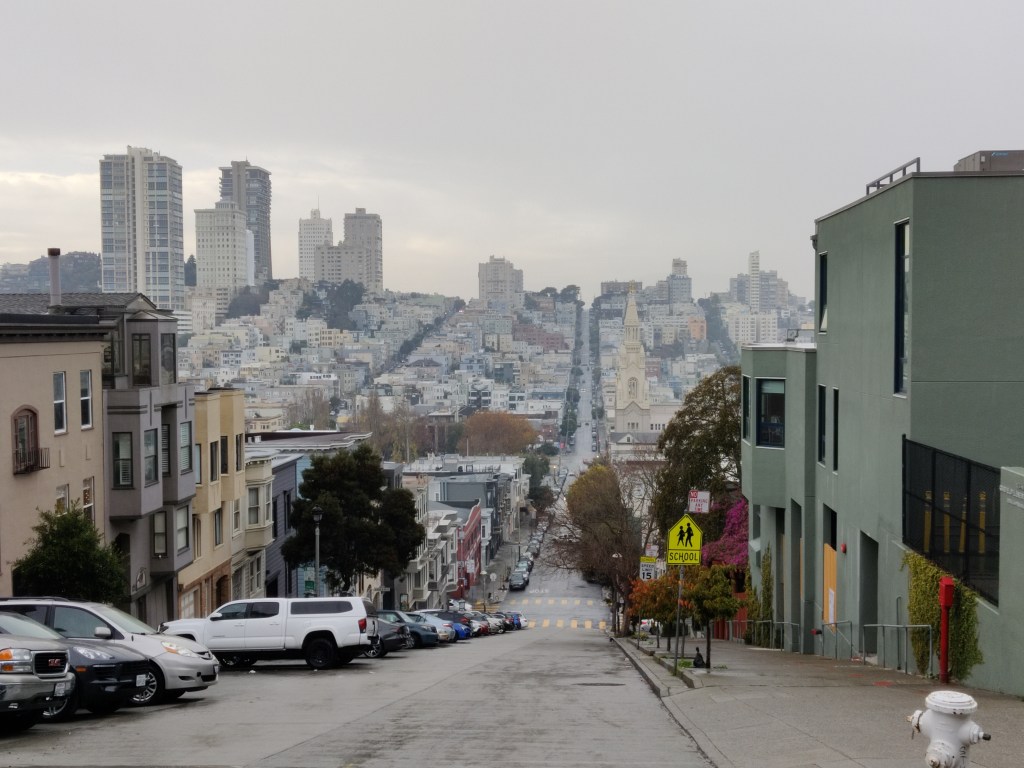
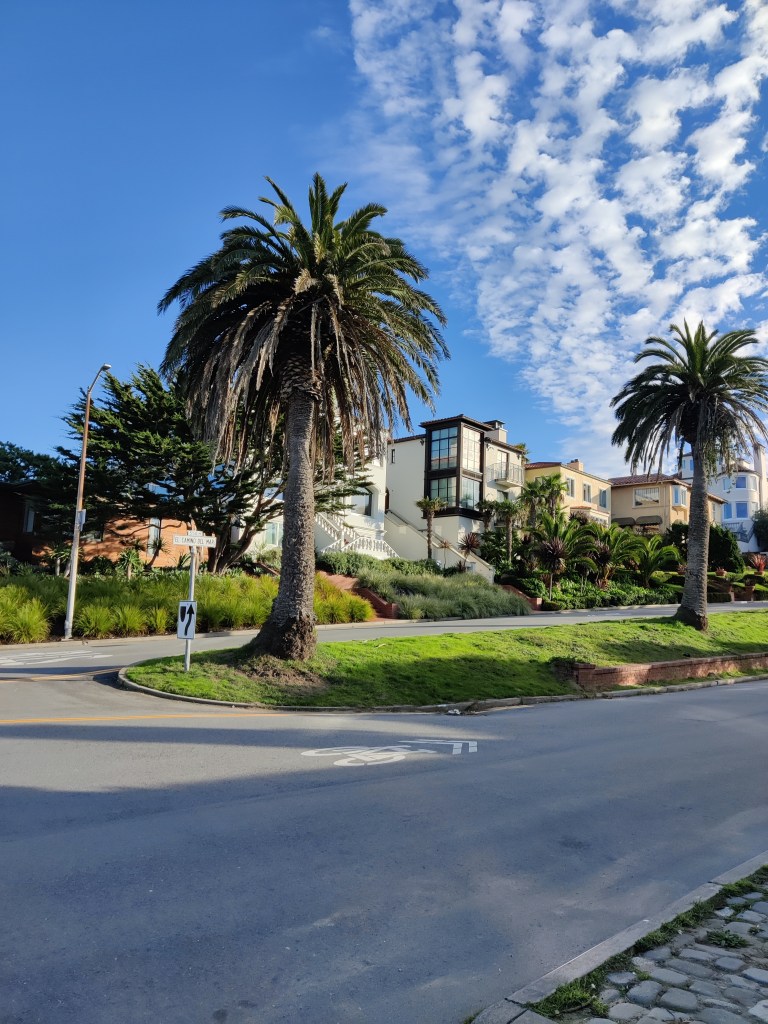
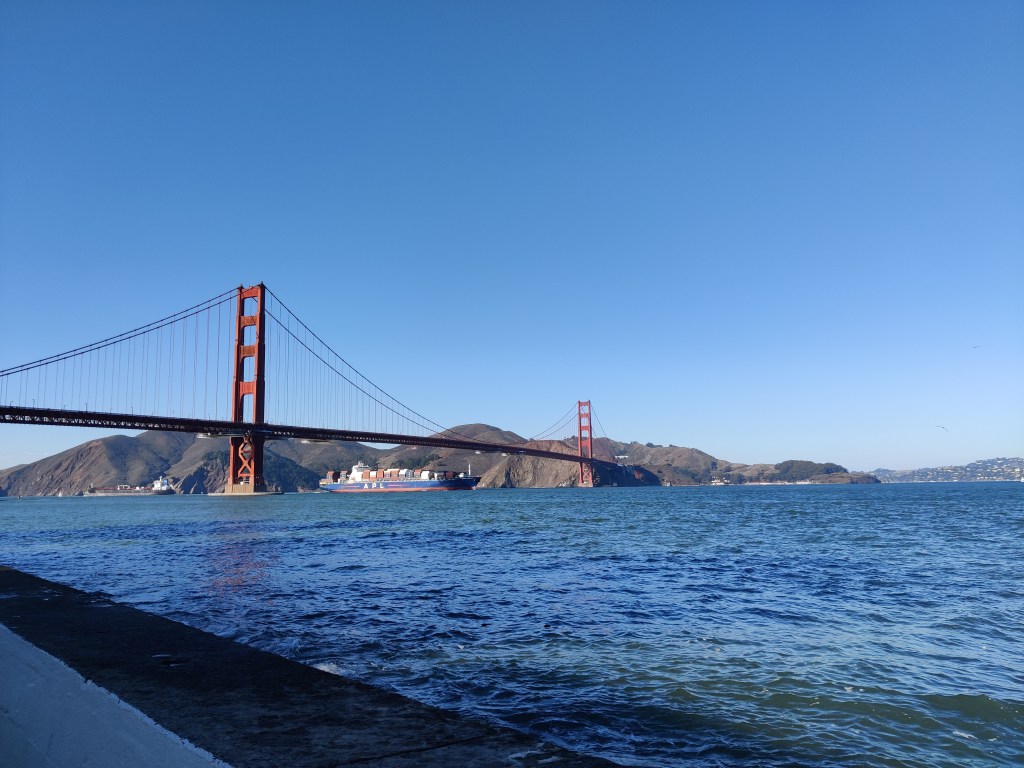
After AGU finished, I was lucky enough to spend extra time in San Francisco. The city really has a piece of everything: fantastic walks near the Golden Gate and coastal area, the characteristic steep streets and cable cars, lots of great places to eat out (great for vegans/vegetarians too! :)), and they had unexpectedly good street musicians. The weather was very nice for December – around 18 degrees. I even got sunburned on one of the days. Public transport is great in San Francisco and getting around the city was no issue.

Some of the various sights (and only pictures I took) in San Francisco.

But San Francisco also appears to be a city of extremes. There are mansions near the beach in an area that looks like a screenshot from Grand Theft Auto Five. Meanwhile in the city itself, the scale of homelessness is far beyond anything I’ve observed here in the UK. I’d very frequently walk past people with large trolleys containing what appeared to be all their belongings. Nearby the Tenderloin district, pitched tents on the pathways next to roads were common, with people cooking on gas stoves. The line to what appeared to be one soup kitchen stretched outside and round the corner. Drug use was also very noticeable. I frequently spotted people slumped over in wheelchairs, others passed out in a subway station or outside a shop. People pass by as if no-ones there. It’s one thing hearing about these issues, but it is eye-opening to see it.

Overall, attending AGU in San Francisco was an experience I will not forget and certainly a highlight of my PhD so far – I’m very grateful I was able to go! Next year’s AGU will take place in Washington DC from 9th-13th December. Will you be there? Will you be the one to write next years AGU post?  Stay tuned to the Social Metwork (and for the latter, your email inbox) to find out.

Oceans in Weather and Climate Course 2018

email: r.frew@pgr.reading.ac.uk

Between the 11th-16th March myself and four other PhDs and post docs attended the Ocean in Weather and Climate (OiWC) course at the Met Office, Exeter. This NERC advanced training course was aimed at PhDs, postdocs and beyond. It provided a great opportunity to spend a week meeting other Oceanography researchers at varying stages of their career, and to expand your understanding of the oceans role in climate beyond the scope of your own work.

The week kicked off with an ice breaker where we had do some ‘Scientific speed dating’, chatting to other participants about: Where are you from? What do you work on? What is your main hobby? What is the biggest question in your field of research? This set the tone for a very interactive week full of interesting discussions between all attendees and speakers alike. Course participants were accommodated at The Globe Inn situated in Topsham, a cute village-sized town full of pastel-coloured houses, cosy pubs, art galleries, and beautiful riverside walks to stretch your legs in the evenings.

The days consisted of four 1.5 hour sessions, split up by caffeine and biscuit breaks to recharge before the next session.

Topics covered in the lecture-style talks included…

  • Dynamical Theory
  • Modelling the Ocean
  • Observations
  • Ocean-atmosphere coupling
  • Air-sea fluxes
  • High Resolution Ocean modelling in coupled forecast systems
  • The Meridional Overturning Circulation
  • The Southern Ocean in climate and climatic change
  • Climate variability on diurnal, seasonal, annual, inter-annual, decadal timescales
  • Climate extremes
  • Climate sensitivity, heat uptake and sea level.

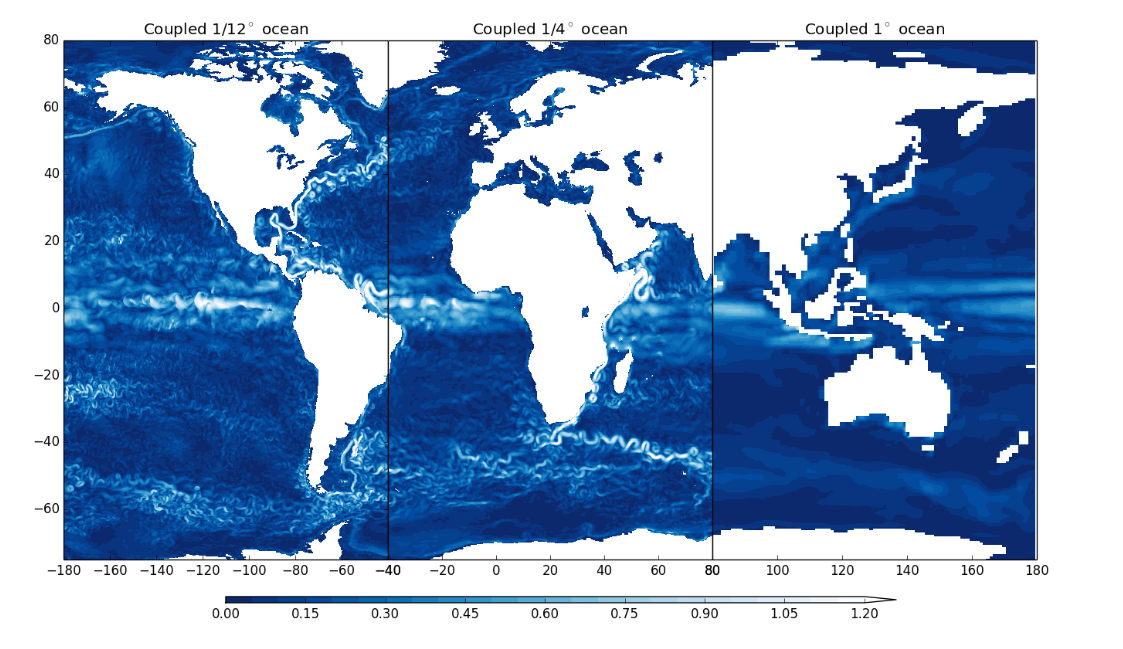
OceanResolutionFigure
A recurring figure of the week…. taken from Helene Hewitt’s talk on high resolution ocean modelling showing ocean surface currents from HadGEM3-based global coupled models at different resolutions (eddy resolving, eddy permitting and eddy parameterised).


All the talks were very interesting and were followed by some stimulating discussion. Each session provided an overview of each topic and an indication of the current research questions in each area at the moment.

In the post lunch session, there were group practical sessions. These explored observational ARGO float data and model output. The practicals, written in iPython notebooks, were designed to let us play with some data, giving us a series of questions to trigger group discussions to deepen understanding of topics covered that morning.

The course also included some ‘softer’ evening talks, giving research career advice in a more informal manner. Most evenings were spent exploring the lovely riverside walks and restaurants/pubs of Topsham. The final evening was spent all together at the Cosy Club in Exeter, rounding off a very interesting and enjoyable week!

A week at COP23

From the 6th -17th of November the UNFCCC’s (United Nation Framework Convention on Climate Change) annual meeting or “Conference of the Parties” – COP took place. This year was COP23 and was hosted by Bonn in the UN’s world conference centre with Fiji taking the presidency.

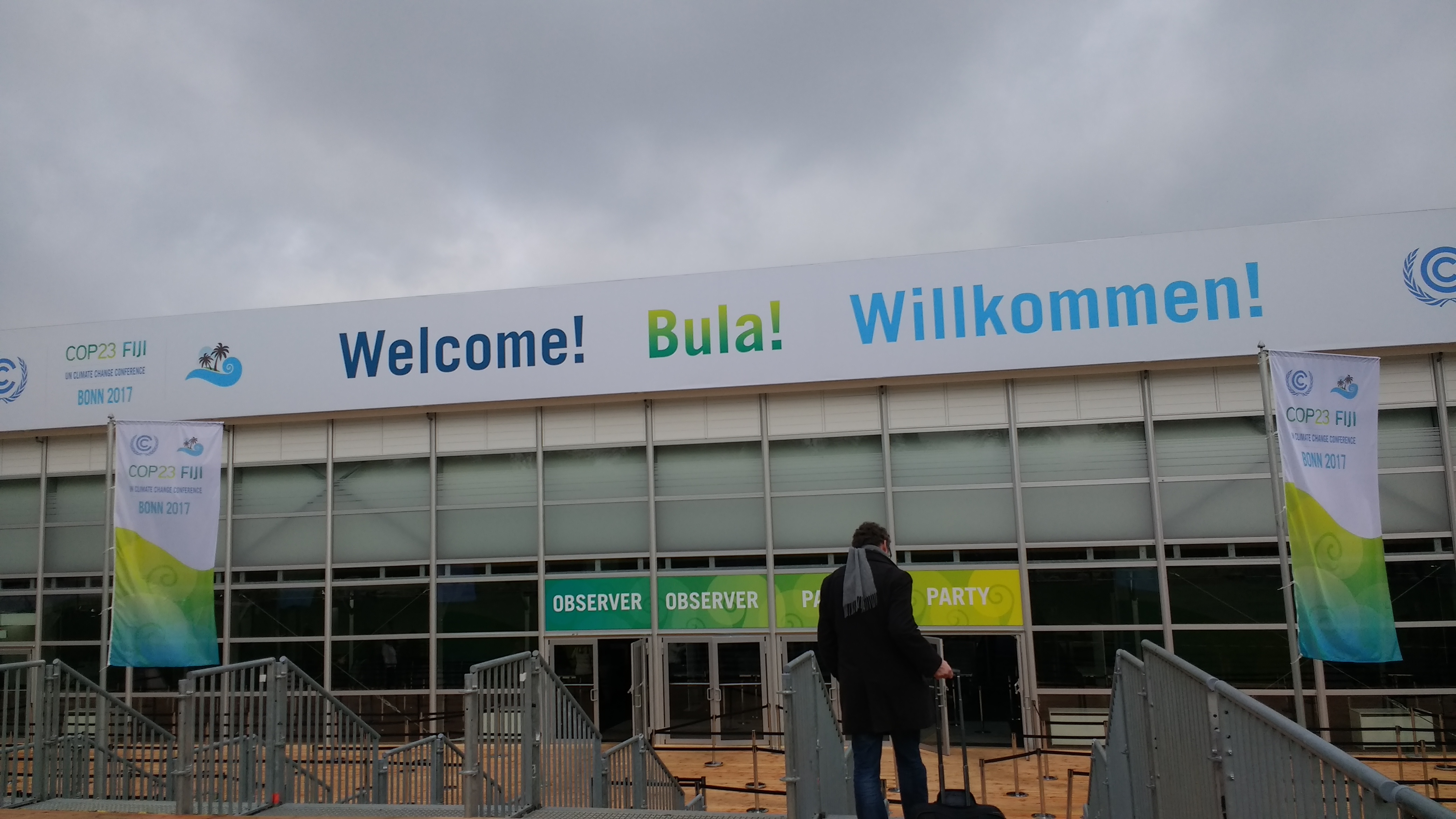
IMG_20171106_123155780

Heading into the Bonn Zone on the first day of the COP. The Bonn Zone was the part of the conference for NGO stands and side events.

As part of the Walker Institutes Climate Action Studio another SCENARIO PhD and I attended the first week of the COP while students back in Reading participated remotely via the UNFCCC’s YouTube channel and through interviews with other participants of the COP.

There are many different components to the COP, it is primarily the meeting of a number of different international Climate agreements with lots of work currently being done on the implementation on the Paris Agreement. However it is also a space where many different civil society groups doing work connected to or impacted by climate change come together, to make connections with other NGOs as well as governments. This is done in an official capacity within the “exhibition zone” of the conference and with a vast array of side events taking place throughout the two weeks. Outside of these official events there are also many demonstrations both inside and outside of the conference space.

Demonstrations in the Bonn Zone

As an observer I was able to watch some of the official negotiations. On the Wednesday I attended the SBSTA (Subsidiary Body for Scientific and Technological Advice) informal consultation on research and systematic observations. It was an illuminating experience to see the negotiation process in action. At times it was frustrating to see how picky it feels like the negotiation teams can be, however over the week I did have a newfound appreciation for the complexity of the issues that are having to be resolved. This meeting was based on writing a short summary of the IPCC report and other scientific reports used by the COP, and so was less politically charged than a lot of the other meetings. However this didn’t stop an unexpected amount of debate over whether to include examples such as carbon-dioxide concentrations.

One of the most useful ways to learn about the COP was by talking to the different people and groups who we met at COP. It was interesting to see the different angles with which people were approaching the COP. From researchers who were observing the political process, to environmental and human rights NGO’s trying to get governments to engage with issues that they’re working on.

Interviewing other COP participants at the Walker Institutes stand

A particular highlight was the ex-leader of the Green Party Natalie Bennett, she spoke with us and the students back in Reading about a wide range of topics, from women’s involvement in the climate movement to discussing my PhD.

Kelly Stone from Action Aid provided a great insight into how charities operate at the COP. She spoke of making connections with other charities, often there are areas of overlap between their work but on other issues they had diverging opinions. However these differences have to be put aside to make progress on their shared interests. Kelly also discussed how it always amazes her that people are surprised that everyone who attends COP does not agree on everything, “we’re not deciding if climate change is real”. The issues being dealt with at the COP are complex dealing with human rights, economics, technology as well as climate change. Often serious compromises have to be made and this must be done by reaching a consensus between all 197 Parties to the UNFCCC.

To read more about the student experience of COP and summaries of specific talks and interviews you can view the COP CAS blog here. You can also read about last years COP on this blog here.

Clockwise from top left: The opening on the evening of Monday 6th November showed Fiji leaving its own mark as the President of the conference. The Norwegian Pavilion had a real Scandi feel, while the Fiji Pavilion transported visitors to a tropical island.


Two Weeks in Paris Learning about Fluid Dynamics and Sampling French Pastries

Email: r.frew@pgr.reading.ac.uk

The Fluid Dynamics of Sustainability and the Environment (FDSE) residential summer school runs every summer for two weeks, alternating between Cambridge University and Ecole polytechnique, which run the summer school in partnership. I attended this years hosted by Ecole polytechnique, situated to the South of Paris. 40 PhD students attended from institutes around the world, all working on a range of topics who want to learn more about environmental fluid dynamics.

logo-wake-green

The lectures covered topics on fundamentals of fluid dynamics, flow instabilities, environmental fluid dynamics, cryosphere, atmosphere, physical oceanography and renewable energy. The lectures went at a very fast pace (approximately triple speed!), aiming to familiarise us with as many concepts as possible in the two weeks, resulting in everyone taking home a large overflowing folder full of lecture notes to refer back to in the future.

We were kept very busy throughout the two weeks. Each day started with breakfast (coffee and croissants) between 7.30-8.20 am, followed by two back to back lectures 8.30-10.30 am. There was then half an hour for everyone to fuel their brain with coffee and (warm!) mini pastries before another hour lecture before lunch break. Lunch was roughly 12-1.30 pm, although typically there were so many interesting questions after each lecture that we ran progressively later relative to the schedule meaning that I think we only actually started lunch on time on the first day. There were also a number of guest speakers speaking on topics such as public engagement, climate policy, meteorology on mars and air quality.

After lunch we had the final lecture of the day, followed by a short break before numerical sessions and lab experiments, which ran until roughly 6 pm. These sessions gave us the chance to really learn about a particular topic in more detail and to have a more hands on experience with some of the material being lectured. My labs were on tidal energy where we explored the energy output and efficiency of tidal turbines, and Art and Science, which encouraged us to engage with Science in new and more playful ways and also to challenge us to look at it differently.

However the day didn’t end after the labs, the evenings were also jam packed! The first evening was a poster session, giving us all the opportunity to learn more about what all of the other students work on and to mingle. Other evenings consisted of learning to row sessions, visits to the observatory, movie nights and discussions about the ‘science’ in The Day After Tomorrow movie and barbeques enjoying the warm light evenings (definitely missing those now I’m back in Reading).

During the weekend sandwiched in the middle of the two weeks, we were all transferred to a hostel in the centre of Paris, setting us all up perfectly for some weekend sightseeing in Paris. On the Friday evening there was a boat party reception on the Siene, supplying us all with lots of wine, many difference French cheeses to sample and a lively dance floor.

The school ended on Friday July 14th, Bastille Day. After a morning presenting a few slides on the labs we had completed in groups to share what we had learnt, we travelled into the centre of Paris ready for an evening enjoying the spectacular Bastille Day fireworks around the Eiffel tower, ending the summer school with a bang.

Personally the main take away from the summer school was not to learn the entirety of the lecture content, but to become familiar with a wide range of topics gain more hands on experience of laboratory experiments and to have a (rather large) folder full of lecture notes to refer back to whenever I stumble across a particular concept again in the future. And of course, it was great having the opportunity to meet lots of other PhD students from around the world working on related topics and to be able to discuss, engage and get to know each other over the two weeks. I would like to thank all of the organisers and lecturers of the summer school for a really interesting and enjoyable two weeks!


RMetS Impact of Science Conference 2017.

Email – j.f.talib@pgr.reading.ac.uk

“We aim to help people make better decisions than they would if we weren’t here”

Rob Varley CEO of Met Office

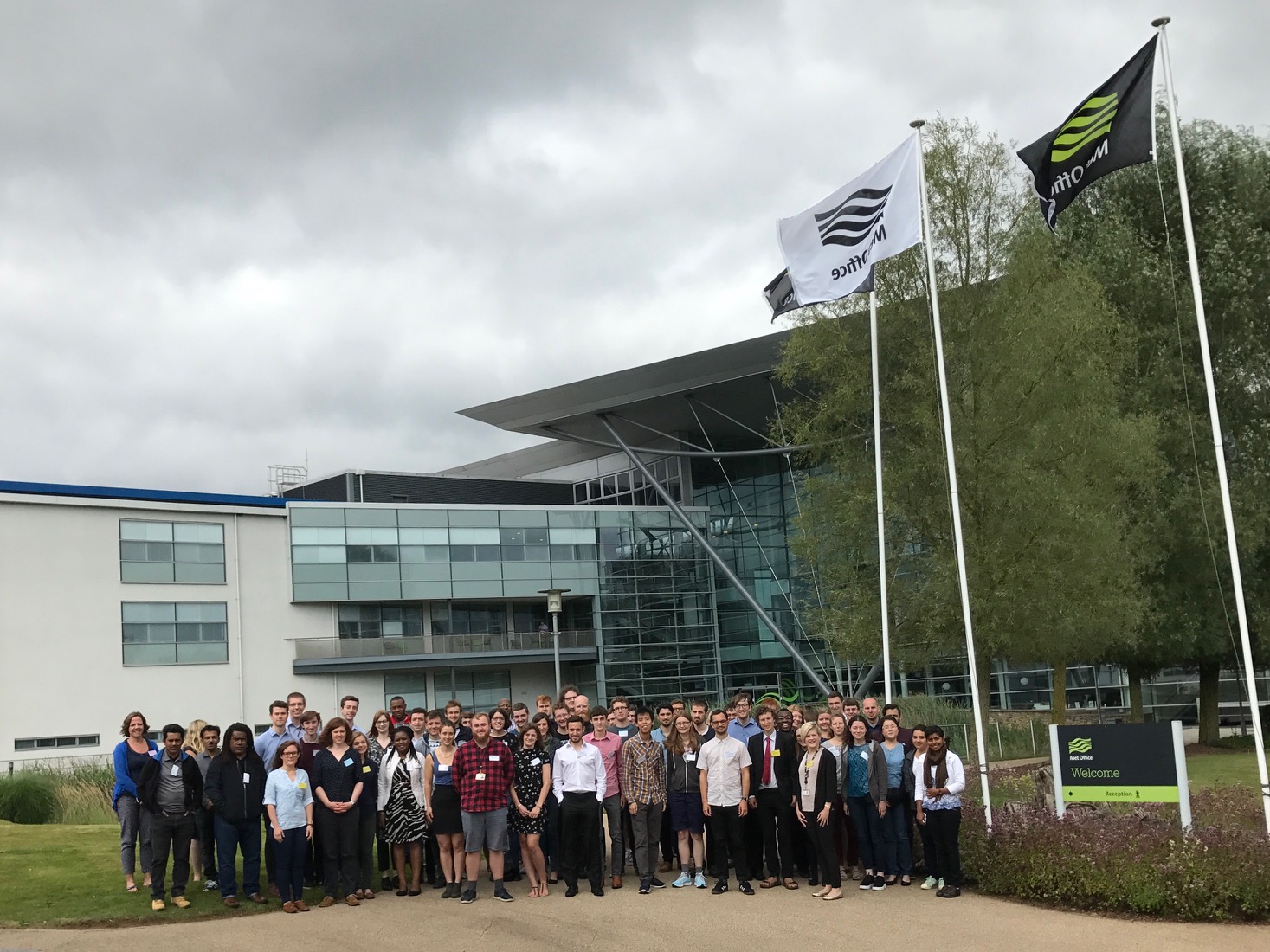
This week PhD students from the University of Reading attended the Royal Meteorological Society Impact of Science Conference for Students and Early Career Scientists. Approximately eighty scientists from across the UK and beyond gathered at the UK Met Office to learn new science, share their own work, and develop new communication skills.

image4

Across the two days students presented their work in either a poster or oral format. Jonathan Beverley, Lewis Blunn and I presented posters on our work, whilst Kaja Milczewska, Adam Bateson, Bethan Harris, Armenia Franco-Diaz and Sally Woodhouse gave oral presentations. Honourable mentions for their presentations were given to Bethan Harris and Sally Woodhouse who presented work on the energetics of atmospheric water vapour diffusion and the representation of mass transport over the Arctic in climate models (respectively). Both were invited to write an article for RMetS Weather Magazine (watch this space). Congratulations also to Jonathan Beverley for winning the conference’s photo competition!

IMG_3055
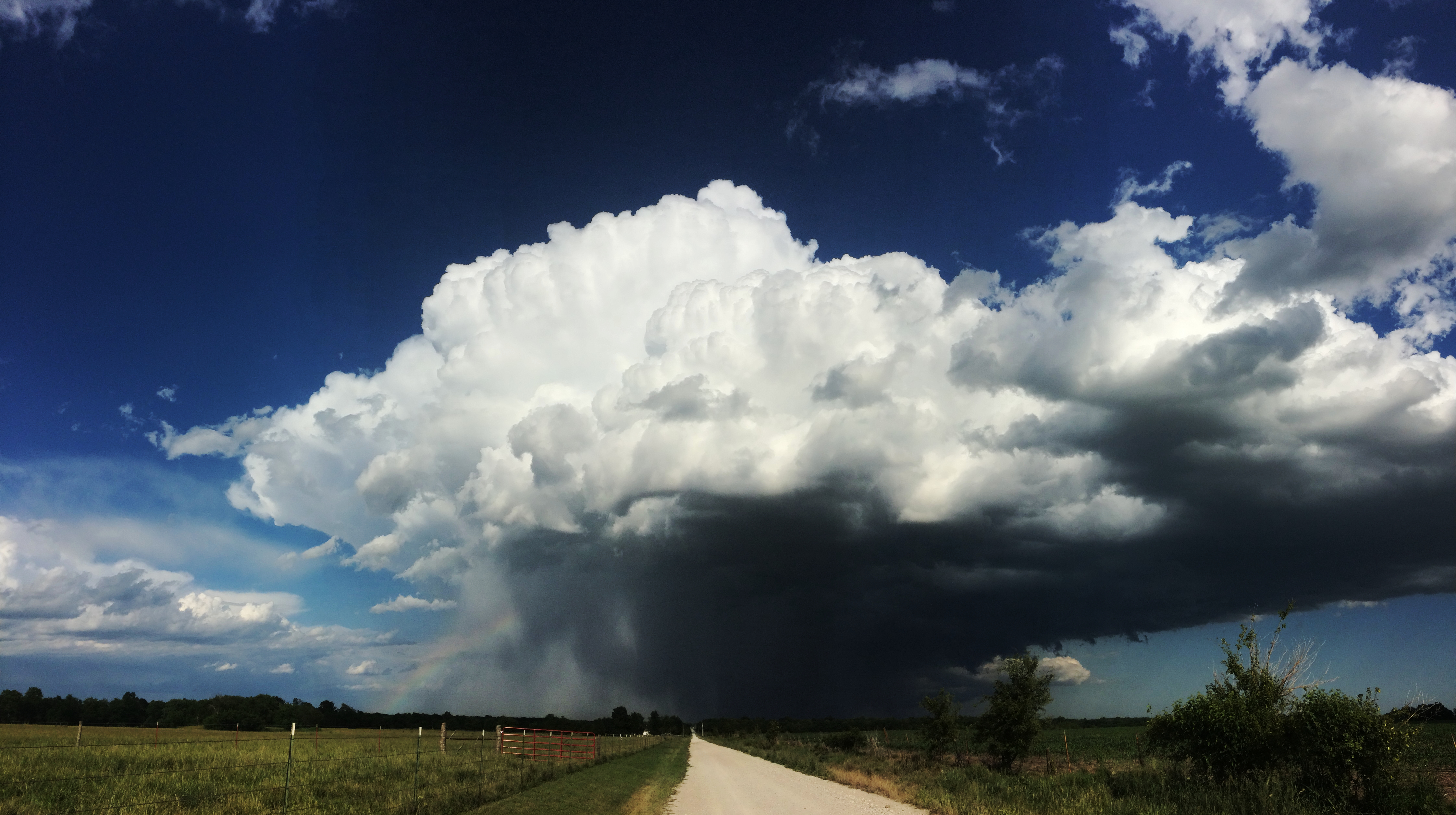
Jonathan Beverley’s Winning Photo.

Alongside student presentations, two keynote speaker sessions took place, with the latter of these sessions titled Science Communication: Lessons from the past, learning for future impact. Speakers in this session included Prof. Ellie Highwood (Professor of Climate Physics and Dean for Diversity and Inclusion at University of Reading), Chris Huhne (Co-chair of ET-index and former Secretary of State for Energy and Climate Change), Leo Hickman (editor for Carbon Brief) and Dr Amanda Maycock (NERC Independent Research Fellow and Associate Professor in Climate Dynamics, University of Leeds). Having a diverse range of speakers encouraged thought-provoking discussion and raised issues in science communication from many angles.

Prof. Ellie Highwood opened the session challenging us all to step beyond the typical methods of scientific communication. Try presenting your science without plots. Try presenting your work with no slides at all! You could step beyond the boundaries even more by creating interesting props (for example, the notorious climate change blanket). Next up Chris Huhne and Leo Hickman gave an overview of the political and media interactions with climate change science (respectively). The Brexit referendum, Trump’s withdrawal from the Paris Accord and the rise of the phrase “fake news” are some of the issues in a society “where trust in the experts is falling”. Finally, Dr Amanda Maycock presented a broad overview of influential science communicators from the past few centuries. Is science relying too heavily on celebrities for successful communication? Should the research community put more effort into scientific outreach?

Communication and collaboration became the two overarching themes of the conference, and conferences such as this one are a valuable way to develop these skills. Thank you to the Royal Meteorology Society and UK Met Office for hosting the conference and good luck to all the young scientists that we met over the two days.

#RMetSImpact

DEkAxGgXkAAmaWE.jpg large

Also thank you to NCAS for funding my conference registration and to all those who provided photos for this post.

Mountains and the Atmospheric Circulation within Models

Email: a.vanniekerk@pgr.reading.ac.uk

Mountains come in many shapes and sizes and as a result their dynamic impact on the atmospheric circulation spans a continuous range of physical and temporal scales. For example, large-scale orographic features, such as the Himalayas and the Rockies, deflect the atmospheric flow and, as a result of the Earth’s rotation, generate waves downstream that can remain fixed in space for long periods of time. These are known as stationary waves (see Nigam and DeWeaver (2002) for overview). They have an impact not only on the regional hydro-climate but also on the location and strength of the mid-latitude westerlies. On smaller physical scales, orography can generate gravity waves that act to transport momentum from the surface to the upper parts of the atmosphere (see Teixeira 2014), playing a role in the mixing of chemical species within the stratosphere.

hims
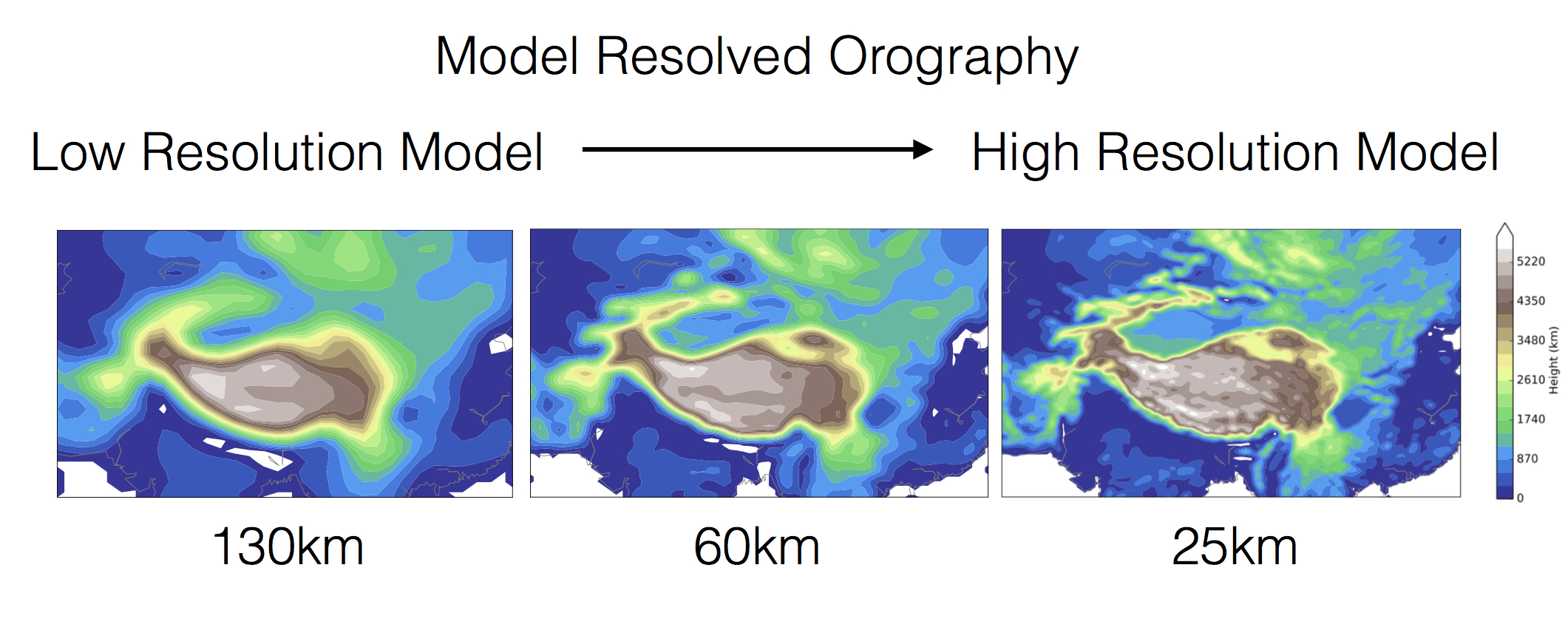
Figure 1: The model resolved orography at different horizontal resolutions. From a low (climate model) resolution to a high (seasonal forecasting) resolution. Note how smooth the orography is at climate model resolution.

Figure 1 shows an example of the resolved orography at different horizontal resolutions over the Himalayas. The representation of orography within models is complicated by the fact that, unlike other parameterized processes, such as clouds and convection, that are typically totally unresolved by the model, its effects are partly resolved by the dynamics of the model and the rest is accounted for by parameterization schemes.However, many parameters within these schemes are not well constrained by observations, if at all. The World Meteorological Organisation (WMO) Working Group on Numerical Experimentation (WGNE) performed an inter-model comparison focusing on the treatment of unresolved drag processes within models (Zadra et al. 2013). They found that while modelling groups generally had the same total amount of drag from various different processes, their partitioning was vastly different, as a result of the uncertainty in their formulation.

Climate models with typically low horizontal resolutions, resolve less of the Earth’s orography and are therefore more dependent on parameterization schemes. They also have large model biases in their climatological circulations when compared with observations, as well as exhibiting a similarly large spread about these biases. What is more, their projected circulation response to climate change is highly uncertain. It is therefore worth investigating the processes that contribute towards the spread in their climatological circulations and circulation response to climate change. The representation of orographic processes seem vital for the accurate simulation of the atmospheric circulation and yet, as discussed above, we find that there is a lot of uncertainty in their treatment within models that may be contributing to model uncertainty. These uncertainties in the orographic treatment come from two main sources:

  1. Model Resolution: Models with different horizontal resolutions will have different resolved orography.
  2. Parameterization Formulation: Orographic drag parameterization formulation varies between models.

The issue of model resolution was investigated in our recent study, van Niekerk et al. (2016). We showed that, in the Met Office Unified Model (MetUM) at climate model resolutions, the decrease in parameterized orographic drag that occurs with increasing horizontal resolution was not balanced by an increase in resolved orographic drag. The inability of the model to maintain an equivalent total (resolved plus parameterized) orographic drag across resolutions resulted in an increase in systematic model biases at lower resolutions identifiable over short timescales. This shows not only that the modelled circulation is non-robust to changes in resolution but also that the parameterization scheme is not performing in the same way as the resolved orography. We have highlighted the impact of parameterized and resolved orographic drag on model fidelity and demonstrated that there is still a lot of uncertainty in the way we treat unresolved orography within models. This further motivates the need to constrain the theory and parameters within orographic drag parameterization schemes.

References

Nigam, S., and E. DeWeaver, 2002: Stationary Waves (Orographic and Thermally Forced). Academic Press, Elsevier Science, London, 2121–2137 pp., doi:10.1016/B978-0-12-382225-3. 00381-9.

Teixeira MAC, 2014: The physics of orographic gravity wave drag. Front. Phys. 2:43. doi:10.3389/fphy.2014.00043 http://journal.frontiersin.org/article/10.3389/fphy.2014.00043/full

Zadra, A., and Coauthors, 2013: WGNE Drag Project. URL:http://collaboration.cmc.ec.gc.ca/science/rpn/drag_project/

van Niekerk, A., T. G. Shepherd, S. B. Vosper, and S. Webster, 2016: Sensitivity of resolved and parametrized surface drag to changes in resolution and parametrization. Q. J. R. Meteorol. Soc., 142 (699), 2300–2313, doi:10.1002/qj.2821.