When the Lakes Remember: Unravelling the Sudd Floods of 2022

By Douglas Mulangwa – d.mulangwa@pgr.reading.ac.uk

Between 2019 and 2024, East Africa experienced one of the most persistent high-water periods in modern history: a flood that simply would not recede. Lakes Victoria, Kyoga, and Albert all rose to exceptional levels, and the Sudd Wetland in South Sudan expanded to an unprecedented 163,000 square kilometres in 2022. More than two million people were affected across Uganda and South Sudan as settlements, roads, and farmland remained inundated for months.

At first, 2022 puzzled stakeholders, observers and scientists alike. Rainfall across much of the region was below average that year, yet flooding in the Sudd intensified. This prompted a closer look at the wider hydrological system. Conventional explanations based on local rainfall failed to account for why the water would not recede. The answer, it turned out, lay far upstream and more than a year earlier, hidden within the White Nile’s connected lakes and wetlands.
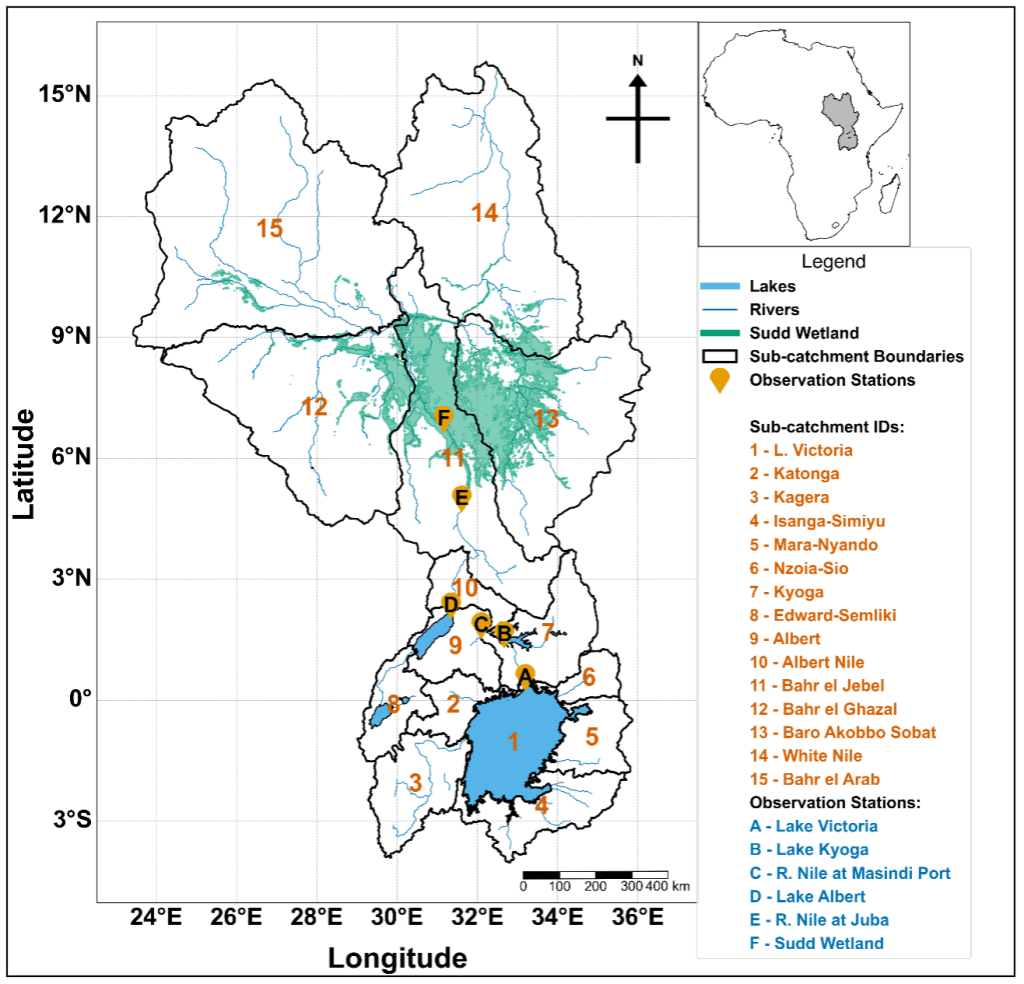
Figure 1: Map of the White Nile Basin showing delineated sub-catchments, lakes, major  rivers, and the Sudd Wetland extent. Sub-catchments are labelled numerically (1–15) with names listed in the legend. Observation stations (A–F) mark key hydrological data collection  locations used in this study: Lake Victoria (A), Lake Kyoga (B), River Nile at Masindi Port (C), Lake Albert (D), River Nile at Juba (E), and the Sudd Wetland (F). Background river networks and sub-catchment boundaries are derived from the HydroSHED dataset, and wetland extent is based on MODIS flood mask composites. The map is projected in geographic coordinates (EPSG:4326) with a graduated scale bar for accurate distance representation using UTM Zone 36N.

The White Nile: A Basin with Memory

The White Nile forms one of the world’s most complex lake, river, and wetland systems, extending from Lake Victoria through Lakes Kyoga and Albert into the Sudd. Hydrologically, it is a system of connected reservoirs that store, delay, and gradually release floodwaters downstream.

For decades, operational planning assumed that floodwaters take roughly five months to travel from Lake Victoria to the Sudd. That estimate was never actually tested with data; it originated as a rule of thumb based on Lake Victoria annual maxima in May and peak flooding in South Sudan in September/October.

Our recent study challenged that assumption. By combining daily lake-level and discharge data (1950–2024) with CHIRPS rainfall and MODIS flood-extent records (2002–2024), we tracked how flood peaks propagated through the system, segment by segment. Using an automated peak-matching algorithm, we quantified the lag between successive annual maxima peaks in Lake Victoria, Lake Kyoga, Lake Albert, and the Sudd Wetland.

The unprecedented high-water regime of 2019-2024
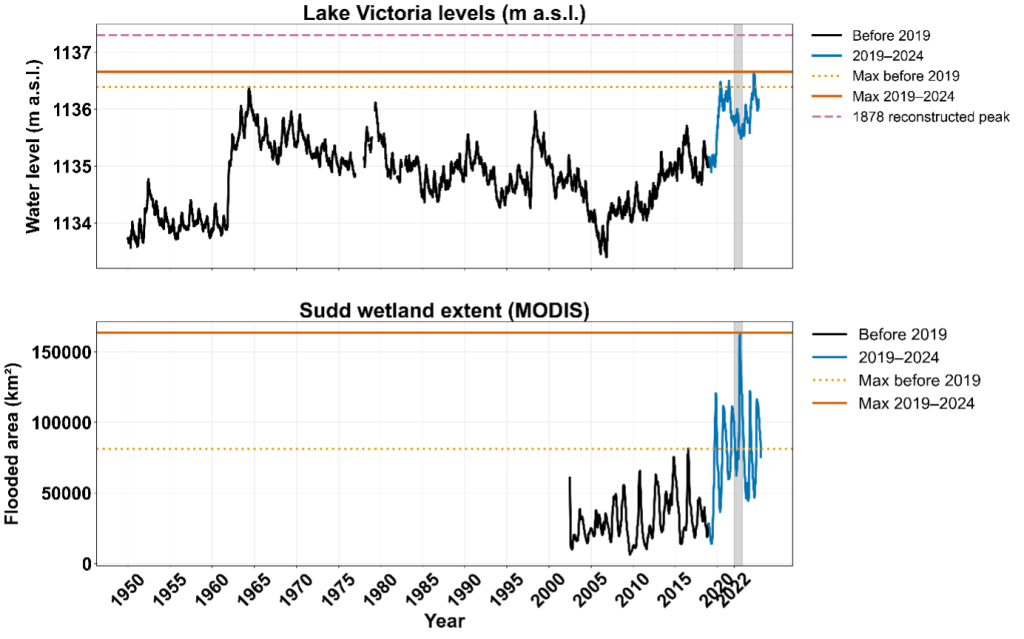
Figure 2: Lake Victoria water levels (1950–2024) and Sudd Wetland extents (2002–2024), with the 2019–2024 anomalous period shown in dark blue and earlier observations in black. The orange dotted line marks the pre-2019 maximum, while the solid vermillion line denotes the highest peak observed during 2019–2024. The dashed magenta line represents the reconstructed 1878 Lake Victoria peak (1137.3 m a.s.l.) from Nicholson & Yin (2001). The shaded grey band highlights the 2022 flood year, when the Sudd reached its largest extent in the MODIS record.

Between 2019 and 2024, both Lake Victoria and the Sudd reached record levels. Lake Victoria exceeded its historic 1964 peak in 2020, 2021, and 2024, while the Sudd expanded to more than twice its previous maximum extent. Each year from 2019 to 2024 stayed above any pre-2019 record, revealing that this was not a single flood season but a sustained multi-year regime.

The persistence of the 2019–2024 high-water regime mirrors earlier basin-wide episodes, including the 1961–64 and 1870s floods, when elevated lake levels and wetland extents were sustained across multiple years rather than confined to a single rainy season.  However, the 2020s stand out as the most extensive amongst all the episodes since the start of the 20th century. These data confirm that both the headwaters and terminal floodplain remained at record levels for several consecutive years during 2019–2024, highlighting the unprecedented nature of this sustained high-water phase in the modern observational era.

2019–2024: How Multi-Year Rainfall Triggers Propagated a Basin-Wide Flood

The sequence of flood events began with the exceptionally strong positive Indian Ocean Dipole of 2019, which brought extreme rainfall across the Lake Victoria basin. This marked the first in a series of four consecutive anomalous rainfall seasons that sustained elevated inflows into the lake system. The October–December 2019 short rains were among the wettest on record, followed by above-normal rainfall in the March–May 2020 long rains, another wet short-rains season in late 2020, and continued high rainfall through early 2021. Together, these back-to-back wet seasons kept catchments saturated and prevented any significant drawdown of lake levels between seasons. Lake Victoria rose by more than 1.4 metres between September 2019 and May 2020, the highest increase since the 1960s, and remained near the 1960s historical maximum for consecutive years. As that excess water propagated downstream, Lakes Kyoga and Albert filled and stayed high through 2021. Even when regional rainfall weakened in 2022, these upstream lakes continued releasing stored water into the White Nile. The flood peak that reached the Sudd in 2022 corresponded closely to the 2021 Lake Victoria high-water phase.

This sequence shows that the 2022 disaster was not driven by a single rainfall event but by cumulative wetness over multiple seasons. Each lake acted as a slow reservoir that buffered and then released the 2019 to 2021 excess water, resulting in multi-year flooding that persisted long after rainfall had returned to near-normal levels.

Transit Time and Floodwave Propagation

Quantitative tracking showed that it takes an average of 16.8 months for a floodwave to travel from Lake Victoria to the Sudd. The fastest transmission occurs between Victoria and Kyoga (around 4 months), while the slowest and most attenuated segment lies between Albert and the Sudd (around 9 months).

This overturns the long-held assumption of a five-month travel time and reveals a system dominated by floodplain storage and delayed release. The 2019–2021 period showed relatively faster propagation because of high upstream storage, while 2022 exhibited the longest lag as the Sudd absorbed and held vast volumes of water. By establishing this timing empirically, the study offers a more realistic foundation for early-warning systems.
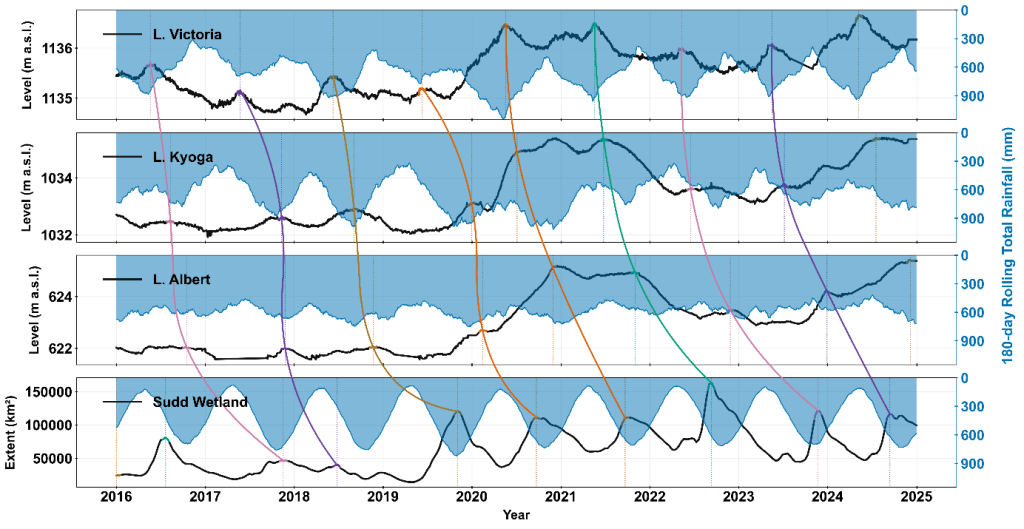
Figure 3: Lake Victoria, Lake Kyoga, and Lake Albert water levels, and Sudd Wetland inundated extent, from 2016 to 2024. Coloured spline curves indicate annual flood-wave trajectories traced from the timing of Lake Victoria annual maxima through the downstream of the White Nile system. Blue shading on the secondary (right) axis shows 180-day rolling rainfall totals over each basin. The panel sequence (Victoria–Kyoga, Kyoga–Albert, Albert–Sudd) highlights the progressive translation of flood waves through the connected lake–river–wetland network.

Wetland Activation and Flood Persistence

Satellite flood-extent maps reveal how the Sudd responded once the inflow arrived. The wetland expanded through multiple activation arms that progressively connected different sub-catchments:

  • 2019: rainfall-fed expansion on the east (Baro–Akobo–Sobat and White Nile sub-basins)
  • 2020–2021: a central-western arm from Bahr el Jebel extending into Bahr el Ghazal and a north-western connection from Bahr el Jebel to Bahr el Arab connected around Bentiu in Unity State.
  • 2022: The two activated arms persisted so the JJAS seasonal rainfall in South Sudan and the inflow from the upstream lakes just compounded the activation leading to the massive flooding in Bentiu, turning the town into an island surrounded by water.

This geometry confirms that the Sudd functions not as a single floodplain but as a network of hydraulically linked basins. Once activated, these wetlands store and recycle water through backwater effects, evaporation, and lateral flow between channels. That internal connectivity explains why flooding persisted long after rainfall declined.

The Bigger Picture

Understanding these long lags is vital for effective flood forecasting and anticipatory humanitarian action. Current early-warning systems in South Sudan and Uganda mainly rely on short-term rainfall forecasts, which cannot capture the multi-season cumulative storage and delayed release that drive multi-year flooding.

By the time floodwaters reach the Sudd Wetland, the hydrological signature of releases from Lake Victoria has been substantially transformed by storage, delay, and attenuation within the intermediate lakes and wetlands. This means that downstream flood conditions are not a direct reflection of upstream releases but the result of cumulative interactions across the basin’s interconnected reservoirs.

The results suggest that antecedent storage conditions in Lakes Victoria, Kyoga, and Albert should be incorporated into regional flood outlooks. When upstream lake levels are exceptionally high, downstream alerts should remain elevated even if rainfall forecasts appear moderate. This approach aligns with impact-based forecasting, where decisions are informed not only by rainfall predictions but also by hydrological memory, system connectivity and potential impact of the floods.

The 2019–2024 high-water regime joins earlier basin-wide flood episodes in the 1870s, 1910s, and 1960s, each linked to multi-year wet phases across the equatorial lakes. The 1961–64 event raised Lake Victoria by about 2.5 metres and reshaped the Nile’s flow for several years. The 1870s flood appears even more extensive, showing that compound, persistent flooding is part of the White Nile’s natural variability.

Climate-change attribution studies indicate that the 2019–2020 rainfall anomaly was intensified by anthropogenic warming, increasing both its magnitude and probability. If such events become more frequent, the basin’s long-memory behaviour could convert short bursts of rainfall into multi-year high-water regimes.

This work reframes how we view the White Nile. It is not a fast, responsive river system but a slow-moving memory corridor in which floodwaves propagate, store, and echo over many months. Recognising this behaviour opens practical opportunities: it enables longer forecast lead times based on upstream indicators, supports coordinated management of lake releases, and strengthens early-action planning for humanitarian agencies across the basin.

It also highlights the need for continued monitoring and data sharing across national borders. Sparse observations remain a major limitation: station gaps, satellite blind spots, and non-public lake-release data all reduce our ability to model the system in real time. Improving this observational backbone is essential if we are to translate scientific insight into effective flood preparedness.

By Douglas Mulangwa (PhD researcher, Department of Meteorology, University of Reading), with contributions from Evet Naturinda, Charles Koboji, Benon T. Zaake, Emily Black, Hannah Cloke, and Elisabeth M. Stephens.

Acknowledgements

This research was conducted under the INFLOW project, funded through the CLARE programme (FCDO and IDRC), with collaboration from the Uganda Ministry of Water and Environment, the South Sudan Ministry of Water Resources and Irrigation, the World Food Programme(WFP), IGAD Climate Prediction and Application Centre  (ICPAC), Médecins Sans Frontières (MSF), the Red Cross Red Crescent Climate Centre, Uganda Red Cross Society (URCS), the South Sudan Red Cross Red Crescent Society (SSRCS) and the Red Cross Red Crescent Climate Centre (RCCC).
Preparing for the assimilation of future ocean-current measurements

By Laura Risley

Ocean data assimilation (DA) is vital. Firstly, it is essential to improving forecasts of ocean variables. Not only that, the interaction between the ocean and atmosphere is key to numerical weather prediction (NWP) as coupled ocean-atmosphere DA schemes are used operationally.  

At present, observations of the ocean currents are not assimilated operationally. This is all set to change, as satellites are being proposed to measure these ocean currents directly. Unfortunately, the operational DA systems are not yet equipped to handle these observations due to some of the assumptions made about the velocities. In my work, we propose the use of alternative velocity variables to prepare for these future ocean current measurements. These will reduce the number of assumptions made about the velocities and is expected to improve the NWP forecasts.

What is DA? 

DA combines observations and a numerical model to give a best estimate of the state of our system – which we call our analysis. This will lead to a better forecast. To quote my lunchtime seminar ‘Everything is better with DA!’

Our model state usually comes from a prior estimate which we refer to as the background. A key component of data assimilation is that the errors present in both sets of data are taken into consideration. These uncertainties are represented by covariance matrices. 

I am particularly interested in variational data assimilation, which formulates the DA problem into a least squares problem. Within variational data assimilation the analysis is performed with a set of variables that differ from the original model variables, called the control variables. After the analysis is found in this new control space, there is a transformation back to the model space. What is the purpose of this transformation? The control variables are chosen such that they can be assumed approximately uncorrelated, reducing the complexity of the data assimilation problem.

Velocity variables in the ocean 

My work is focused on the treatment of the velocities in NEMOVAR. This is the data assimilation software used by the NEMO ocean model, used operationally at the Met Office and ECMWF. In NEMOVAR the velocities are transformed to their unbalanced components, and these are then used as control variables. The unbalanced components of the velocities are highly correlated, therefore contradicting the assumption made about control variables. This would result in suboptimal assimilation of future surface current measurements – therefore we seek alternative velocity control variables. 

The alternative velocity control variables we propose for NEMOVAR are unbalanced streamfunction and velocity potential. This would involve transforming the current control variables, the unbalanced velocities, to these alternative variables using Helmholtz Theorem. This splits a velocity field into its nondivergent (streamfunction) and irrotational (velocity potential) parts. These parts have been suggested by Daley (1993) as more suitable control variables than the velocities themselves. 

Numerical Implications of alternative variables 

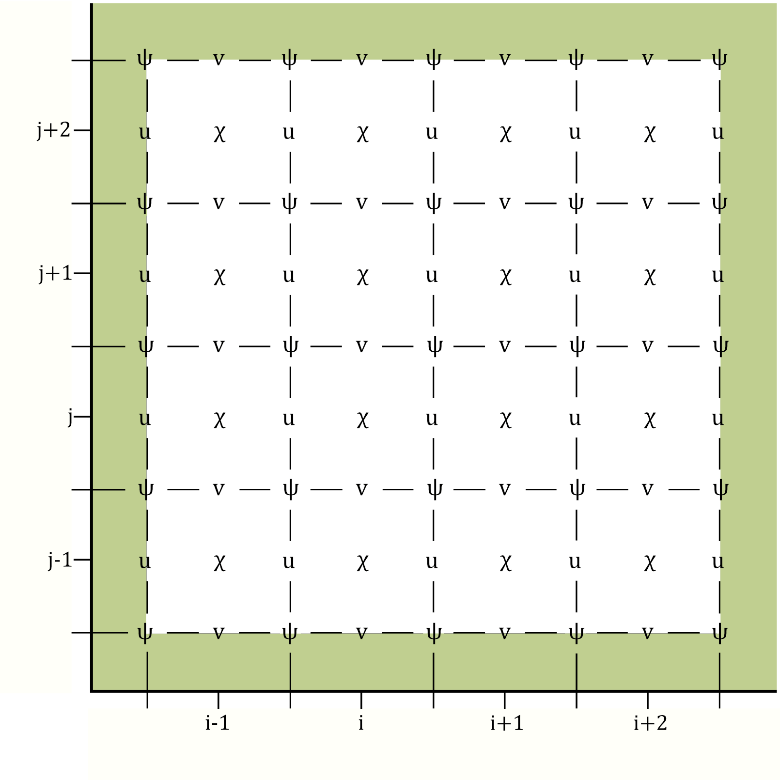
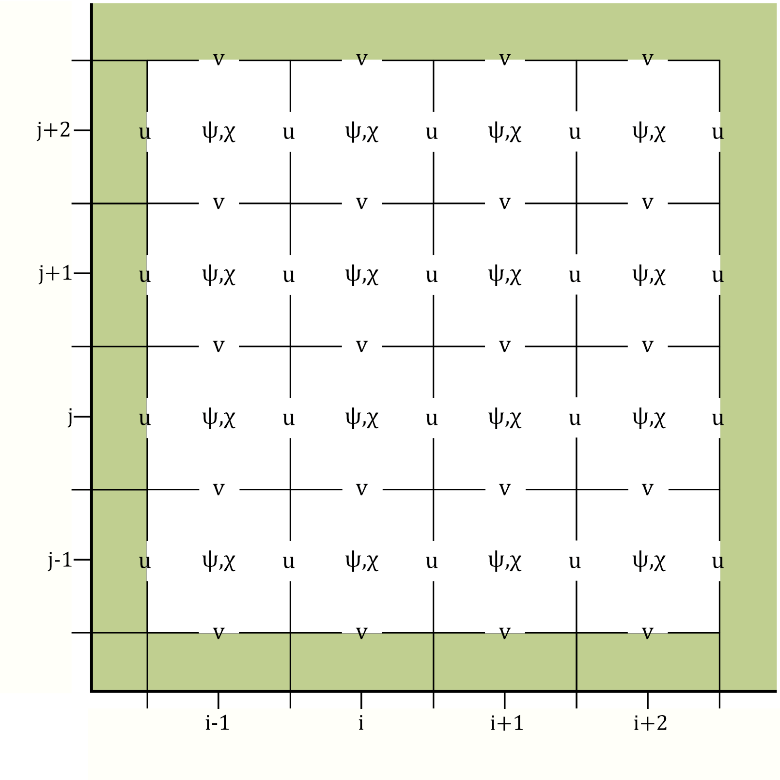
We have performed the transformation to these proposed control variables using the shallow water equations (SWEs) on a 𝛽-plane. To do so we discretised the variables on the Arakawa-C grid. The traditional placement of streamfunction on this grid causes issues with the boundary conditions. Therefore, Li et al. (2006) proposed placing streamfunction in the centre of the grid, as shown in Figure 1. This circumvents the need to impose explicit boundary conditions on streamfunction. However, using this grid configuration leads to numerical issues when transforming from the unbalanced velocities to unbalanced streamfunction and velocity potential. We have analysed these theoretically and here we show some numerical results.

Figure 1: The left figure shows the traditional Arakawa-C configuration (Lynch (1989), Watterson (2001)) whereby streamfunction is in the corner of each grid cell. The right figure shows the Arakawa-C configuration proposed by Li et al. (2006) where streamfunction is in the centre of the grid cell. The green shaded region represents land. 

Issue 1: The checkerboard effect 

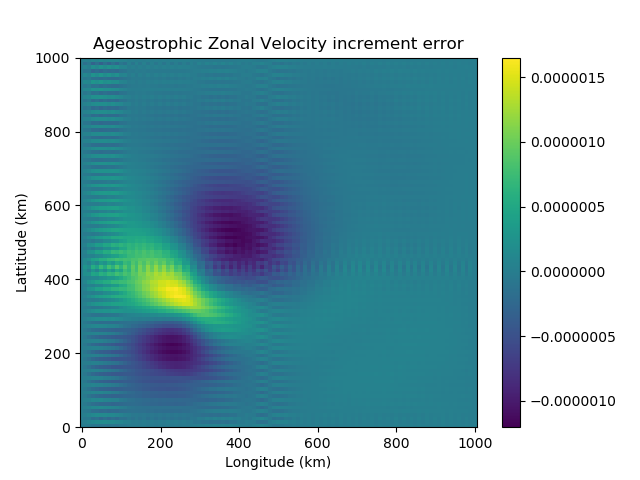
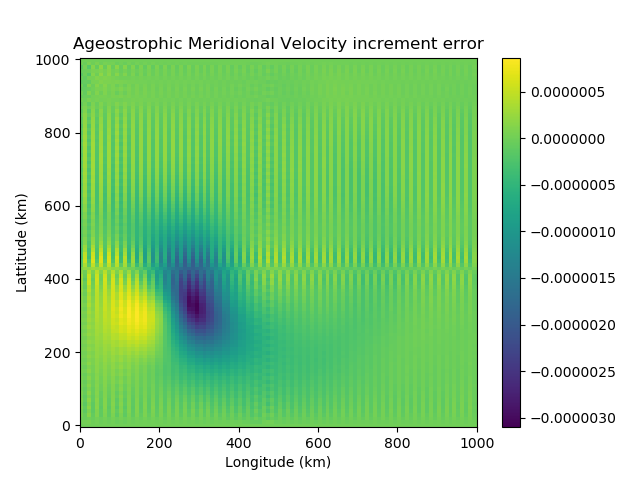
The transformation from the unbalanced velocities to unbalanced streamfunction and velocity potential involves averaging derivatives, due to the location of streamfunction in the grid cell. This process causes a checkerboard effect – whereby we have numerical noise entering the variable fields due to a loss of information. This is clear to see numerically using the SWEs. We use the shallow water model to generate a velocity field. This is transformed to its unbalanced components and then to unbalanced streamfunction and velocity potential. Using Helmholtz Theorem, the unbalanced velocities are reconstructed. Figure 2 shows the checkboard effect clearly in the velocity error.

Figure 2: The difference between the original ageostrophic velocity increments, calculated using the SWEs, and the reconstructed ageostrophic velocity increments. These are reconstructed using Helmholtz Theorem, from the ageostrophic streamfunction and velocity potential increments. On the left we have the zonal velocity increment error and on the right the meridional velocity increment error. 

Issue 2: Challenges in satisfying the Helmholtz Theorem 

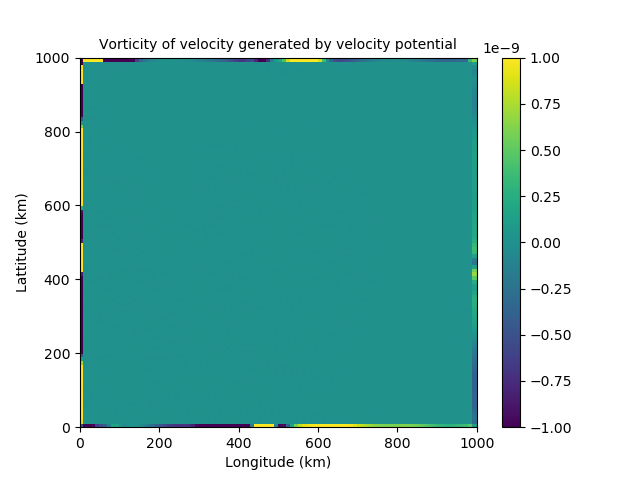
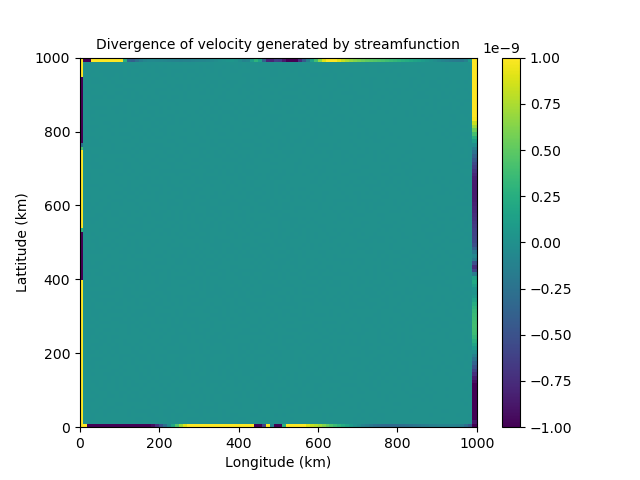
Helmholtz theorem splits the velocity into its nondivergent and irrotational components. We discovered that although streamfunction should be nondivergent and velocity potential should be irrotational, this is not the case at the boundaries, as can be seen in figure 3. This implies the proposed control variables are able to influence each other on the boundary. This would lead to them being strongly coupled and therefore correlated near the boundaries. This directly conflicts the assumption made that our control variables are uncorrelated. 

Figure 3: Issues with Helmholtz Theorem near the boundaries. The left shows the divergence of the velocity field generated by streamfunction. The right shows the vorticity of the velocity field generated by velocity potential. 

Overall, in my work we propose the use of alternative velocity control variables in NEMOVAR, namely unbalanced streamfunction and velocity potential. The use of these variables however leads to several numerical issues that we have identified and discussed. A paper on this work is in preparation, where we discuss some of the potential solutions. Our next work will further this investigation to a more complex domain and assess our proposed control variables in assimilation experiments. 

References: 

Daley, R. (1993) Atmospheric data analysis. No. 2. Cambridge university press. 

Li, Z., Chao, Y. and McWilliams, J. C. (2006) Computation of the streamfunction and velocity potential for limited and irregular domains. Monthly weather review, 134, 3384–3394. 

Lynch, P. (1989) Partitioning the wind in a limited domain. Monthly weather review, 117, 1492–1500. 

Watterson, I. (2001) Decomposition of global ocean currents using a simple iterative method. Journal of Atmospheric and Oceanic Technology, 18, 691–703

Nature vs Nurture in Convective-Scale Ensemble Spread

By Adam Gainford

Quantifying the uncertainty of upcoming weather is now a common procedure thanks to the widespread use of ensemble forecasting. Unlike deterministic forecasts, which show only a single realisation of the upcoming weather, ensemble forecasts predict a range of possible scenarios given the current knowledge of the atmospheric state. This approach allows forecasters to estimate the likelihood of upcoming weather events by simply looking at the frequency of event occurrence within all ensemble members. Additionally, by sampling a greater range of events, this approach highlights plausible worst-case scenarios, which is of particular interest for forecasts of extreme weather. Understanding the realistic range of outcomes is crucial for forecasters to provide informed guidance, and helps us avoid the kind of costly and embarrassing mistakes that are commonly associated with the forecast of “The Great Storm of 1987”*.

To have trust that our ensembles are providing an appropriate range of outputs, we need some method of verifying ensemble spread. We do this by calculating the spread-skill relationship, which essentially just compares the difference between member values to the skill of the ensemble as a whole. If the spread-skill relationship is appropriate, spread and skill scores should be comparable when averaged over many forecasts. If the ensemble shows a tendency to produce larger spread scores than skill scores, there is too much spread and not enough confidence in the ensemble given its accuracy: i.e., the ensemble is overspread. Conversely, if spread scores are smaller than skill scores, the ensemble is too confident and is underspread. 

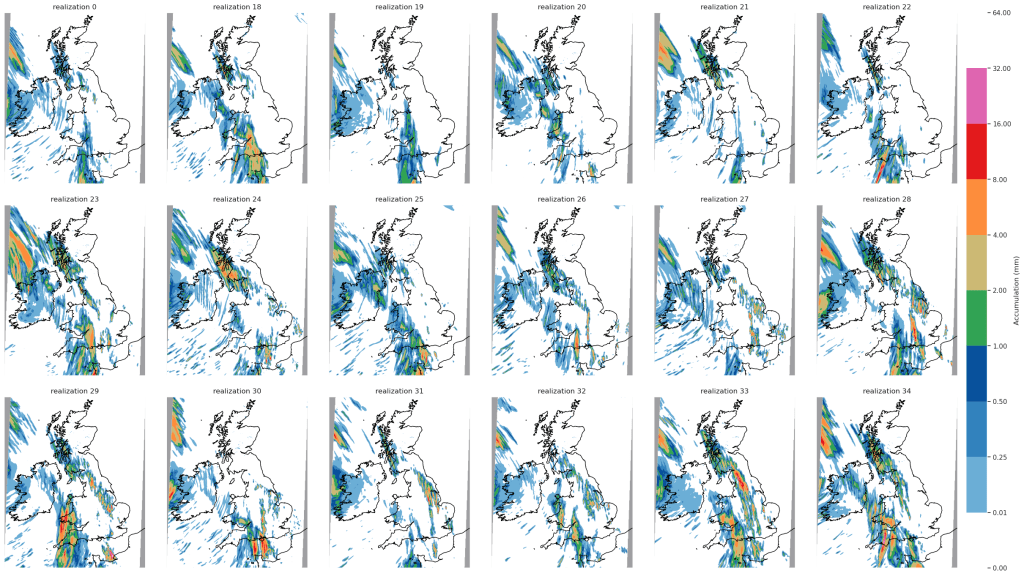
Figure 1: Postage stamp plots showing three-hourly precipitation accumulation valid for 2023-07-08 09Z at leadtime T+15 h. There is reasonable spread within both the frontal rain band effecting areas of SW England and Wales, and the convective features ahead of this front.

My PhD work has focussed on understanding the spread-skill relationship in convective-scale ensembles. Unlike medium range ensembles that are used to estimate the uncertainty of synoptic-scale weather at daily-to-weekly leadtimes, convective-scale ensembles quantify the uncertainty of smaller-scale weather at hourly-to-daily leadtimes. To do this, convective-scale ensembles must be run at higher resolutions than medium-range ensembles, with grid spacings smaller than 4 km. These higher resolutions allows the ensemble to explicitly represent convective storms, which has been repeatedly shown to produce more accurate forecasts compared coarser-resolution forecasts that must instead rely on convective parametrizations. However, running models at such high resolutions is too computationally expensive to be done over the entire Earth, so they are typically nested inside a lower-resolution “parent” ensemble which provides initial and boundary conditions. Despite this, researchers often report that convective-scale ensembles are underspread, and the range of outputs is too narrow given the ensemble skill. This is corroborated by operational forecasters, who report that the ensemble members often stay too close to the unperturbed control member. 

To provide the necessary context for understanding the underspread problem, many studies have examined the different sources and behaviours of spread within convective-scale ensembles. In general, spread can be produced through three different mechanisms: firstly, through differences in each member’s initial conditions; secondly, through differences in the lateral boundary conditions provided to each member; and thirdly, through the different internal processes used to evolve the state. This last source is really the combination of many different model-specific factors (e.g., stochastic physics schemes, random parameter schemes etc.), but for our purposes this represents the ways in which the convective-scale ensemble produces its own spread. This contrasts with the other two sources of spread, which are directly linked to the spread of the parent ensemble.  

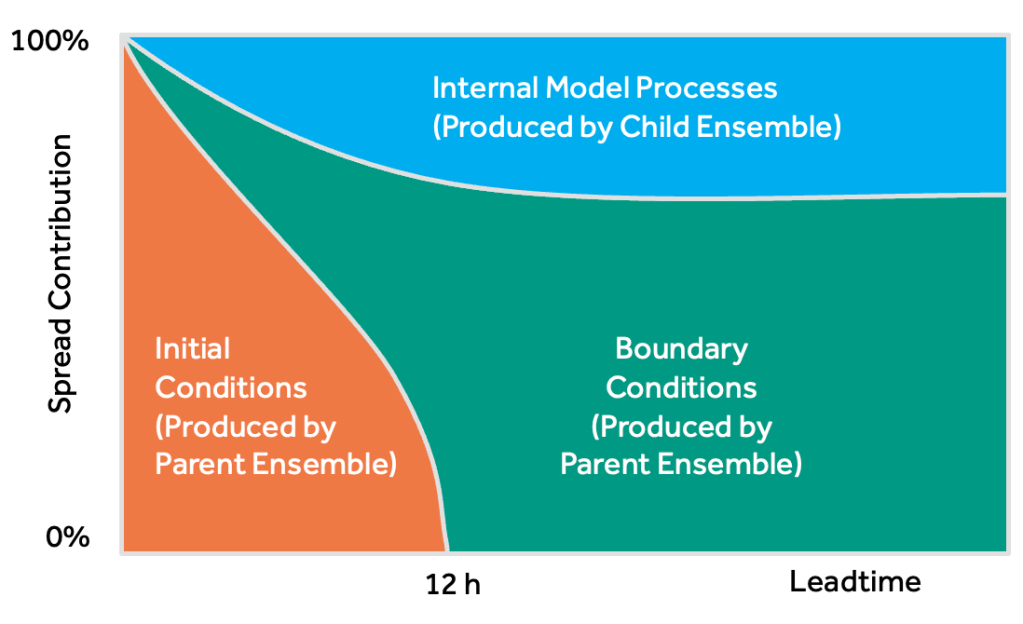
The evolution of each of these three spread sources is shown in Fig. 2. At the start of a forecast, the ensemble spread is entirely dictated by differences in the initial conditions provided to each ensemble member. As we integrate forward in time, though, this initial information is removed from the domain by the prevailing winds and replaced by information arriving through the boundaries. At the same time, internal model processes start spinning up additional detail within each ensemble member. For a UK-sized domain, it takes roughly 12 hours for the initial information to have fully left the domain, though this is of course highly dependent on the strength of the prevailing winds. After this time, spread in the ensemble is partitioned between internal processes and boundary condition differences.  

Figure 2: Attribution of spread within a convective-scale ensemble by leadtime. 

While the exact partitioning in this schematic shouldn’t be taken too literally, it does highlight the important role that the parent ensemble plays in determining spread in the child ensemble. Most studies which try to improve spread target the child ensemble itself, but this schematic shows that these improvements may have quite a limited impact. After all, if the spread of information arriving from the parent ensemble is not sufficient, this may mask or even overwhelm any improvements introduced to the child ensemble.  

However, there are situations where we might expect internal processes to show a more dominant spread contribution. Forecasts of convective storms, for instance, typically show larger spread than forecasts of other types of weather, and are driven more by local processes than larger-scale, external factors.

This is where our “nature” and “nurture” analogy becomes relevant. Given the similarities of this relationship to the common parent-child theory in behavioural psychology, we thought it would be a fun and useful gimmick to also use this terminology here. So, in the “nature” scenario, each child member shows large similarity to the corresponding parent member, which is due to the dominating influence of genetics (initial and boundary conditions). Conversely, in the “nurture” scenario, spread in the child ensemble is produced more by its response to the environment (internal processes), and as such, we see larger differences between each parent-child pair.  

While the nature and nurture attribution is well understood for most variables, few studies have examined the parent-child relationship for precipitation patterns, which are an important output for guidance production and require the use of neighbourhood-based metrics for robust evaluation. Given that this is already quite a long post, I won’t go into too much detail of our results looking at nature vs nurture for precipitation patterns. Instead, I will give a quick summary of what we found: 

  • Nurture provides a larger than average influence on the spread in two situations: during short leadtimes**, and when forecasting convective events driven by continental plume setups. 
  • In the nurture scenarios, spread is consistently larger in the child ensemble than the parent ensemble. 
  • In contrast to the nurture scenarios, nature provides larger than average spread at medium-to-long leadtimes and under mobile regimes, which is consistent with the boundary arguments mentioned previously. 
  • Spread is very similar between the child and parent ensembles in the nurture scenarios.  

If you would like to read more about this work, we will be submitting a draft to QJRMS very soon.  

To conclude, if we want to improve the spread of precipitation patterns in convective-scale ensembles, we should direct more attention to the role of the driving ensemble. It is clear that the exact nesting configuration used has a strong impact on the quality of the spread. This factor is especially important to consider given recent experiments with hectometric-scale ensembles which are themselves nested within convective-scale ensembles. With multiple layers of nesting, the coupling between each ensemble layer is likely to be complex. Our study provides the foundation for investigating these complex interactions in more detail. 

* This storm was actually well forecast by the Met Office. The infamous Michael Fish weather update in which he said there was no hurricane on the way was referring to a different system which indeed did not impact the UK. Nevertheless, this remains a good example of the importance of accurately predicting (and communicating) extreme weather events.  

** While this appears to be inconsistent with Fig. 2, the ensemble we used does not solely take initial conditions from the driving ensemble. Instead, the ensemble uses a separate, high-resolution data assimilation scheme to the parent ensemble. Each ensemble is produced in a way which makes the influence of the data assimilation more influential to the spread than the initial condition perturbations. 

The Weather Game

Ieuan Higgs – i.higgs@pgr.reading.ac.uk

It’s a colder-than-usual, early October Friday afternoon in the PhD offices of Brian Hoskins. The week is tired, motivation is waning and most importantly – Sappo is only 30 minutes away. As the collective mind of each office meanders further and further from work, someone inevitably pipes up with:

“Has anyone done their weather game predictions this week?”

Some mutterings might move around the room – grumbling about the unpredictability of rainfall in Singapore, or a verbal jab at the cold front that decided to move across Reading about 6 hours too early – until, as predictably as ENSO, a first year cautiously asks,

“…What’s the weather game?”

Which is then met with a suitable response, such as:

“The Weather Game? It’s a bit like fantasy football, but for us weather nerds – you’re going to love it!”. 

At least, that’s how I like to describe it.

The game was hotly contested this Autumn, with huge sign-up and participation across the entire term.

A particular shoutout to the Undergraduates, who were out in force and took 50% of the top 10 spots!

Plotting the cumulative scores for the top 32 players of the term, we are treated to a blindingly colourful cascade (thanks excel?) of points totals:

From this, it is clear that our eventual winner had led the pack for a solid five weeks by the competition end – although I’m sure they were a little nervous in those final two weeks. We can also see the dreaded “flatline” – players who clearly got off to a good start but then, for whatever reason, never submitted another prediction for the remainder of the game. Another interesting feature of these plots is the occasional downward bump – a symptom of the dreaded negative score, which were (thankfully) relatively few and far between.

The illustrious awards ceremony was held in WCD on the 8th of December. Category winners were treated to a bar of tasty chocolate, and the overall winner was gifted a delightful little ThermoPro Bluetooth Thermometer & Hygrometer. This seemed an ideal prize for students who might want check if their flat-share thermostat is being undemocratically switched on while they are out at lectures. Of course, a wooden spoon was given to the last place that played at least 8 of the 10 weeks (and if you’re having that much fun with the weather – can you really ever lose?).

With all of that said, we now put our winners’ names in lights (or on the blog) – immortalising them in the records of Weather Game glory.

Wooden Spoon: Catherine Toolan

Oil and Gas – 66.8 points – 32nd place

Best Pseudonym: Meg Stretton

The SIF Lord

External: Thomas Hall

Noctilucent – 518.6 points – 2nd place

Postgraduate: Caleb Miller

I own a sphere – 414.4 points – 8th place

Staff: Patrick McGuire

WindyCrashLandingOnYou – 432.4 points – 7th place

Overall Winner: Nathan Ng

Come Rain or (Keith) Shine – 534.3 points – 1st place

The Weather Game will be back in Spring of 2024. We are excited to run it, and hope to see many new and familiar faces (well, pseudonyms) there.

Mr Weathers

Ieuan Higgs and Nathan Edward-Inatimi

WesCon 2023: From Unexpected Radiosondes to Experimental Forecasts

Adam Gainford – a.gainford@pgr.reading.ac.uk

Summer might seem like a distant memory at this stage, with the “exact date of snow” drawing ever closer and Mariah Carey’s Christmas desires broadcasting to unsuspecting shoppers across the country. But cast your minds back four-to-six months and you may remember a warmer and generally sunnier time, filled with barbeques, bucket hats, and even the occasional Met Ball. You might also remember that, weather-wise, summer 2023 was one of the more anomalous summers we have experienced in the UK. This summer saw 11% more rainfall recorded than the 1991-2020 average, despite June being dominated by hot, dry weather. In fact, June 2023 was also the warmest June on record and yet temperatures across the summer turned out to be largely average. 

Despite being a bit of an unsettled summer, these mixed conditions provided the perfect opportunity to study a notoriously unpredictable type of weather: convection. Convection is often much more difficult to accurately forecast compared to larger-scale features, even using models which can now explicitly resolve these events. As a crude analogy, consider a pot of bubbling water which has brought to the boil on a kitchen hob. As the amount of heat being delivered to the water increases, we can probably make some reasonable estimates of the number of bubbles we should expect to see on the surface of the water (none initially, but slowly increasing in number as the temperature of the water approaches the boiling point). But we would likely struggle if we tried to predict exactly where those bubbles might appear. 

This is where the WesCon (Wessex Convection) field campaign comes in. WesCon participants spent the entire summer operating radars, launching radiosondes, monitoring weather stations, analysing forecasts, piloting drones, and even taking to the skies — all in an effort to better understand convection and its representation within forecast models. It was a huge undertaking, and I was fortunate enough to be a small part of it. 

In this blog I discuss two of the ways in which I was involved: launching radiosondes from the University of Reading Atmospheric Observatory and evaluating the performance of models at the Met Office Summer Testbed.

Radiosonde Launches and Wiggly Profiles

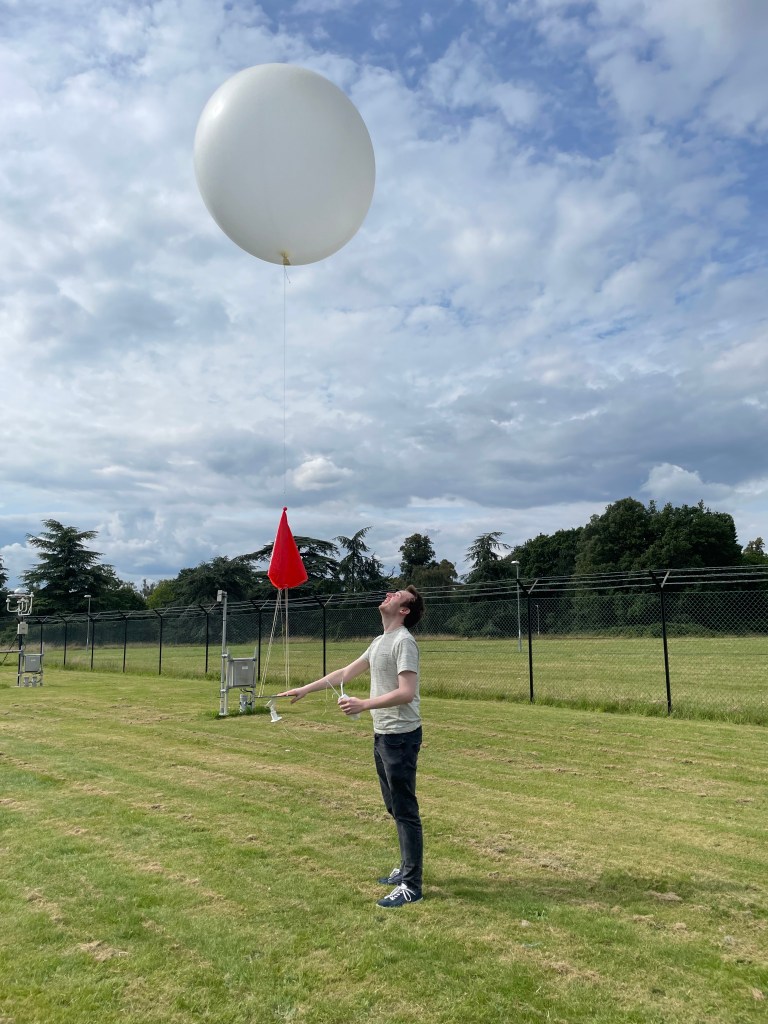
A core part of WesCon was frequent radiosonde launches from sites across the south and south-west of the UK. Over 300 individual sondes were launched in total, with each one requiring a team of two to three people to calibrate the sonde, record station measurements and fill balloons with helium. Those are the easy parts – the hard part is making sure your radiosonde gets off the ground in one piece.

You can see in the picture below that the observatory is surrounded by sharp fences and monitoring equipment which can be tricky to avoid, especially during gusty conditions. In the rare occurrences when the balloon experienced “rapid unplanned disassembly”, we had to scramble to prepare a new one so as not to delay the recordings by too long.

The University of Reading Atmospheric Observatory, overlooked by some mid-level cloud streets. 

After a few launches, however, the procedure becomes routine. Then you can start taking a cursory look at the data being sent back to the receiving station.

During the two weeks I was involved with launching radiosondes, there were numerous instances of elevated convection, which were a particular priority for the campaign given the headaches these cause for modellers. Elevated convection is where the ascending airmass originates from somewhere above the boundary layer, such as on a frontal boundary. We may therefore expect profiles of elevated convection to include a temperature inversion of some kind, which would prevent surface airmasses from ascending above the boundary layer. 

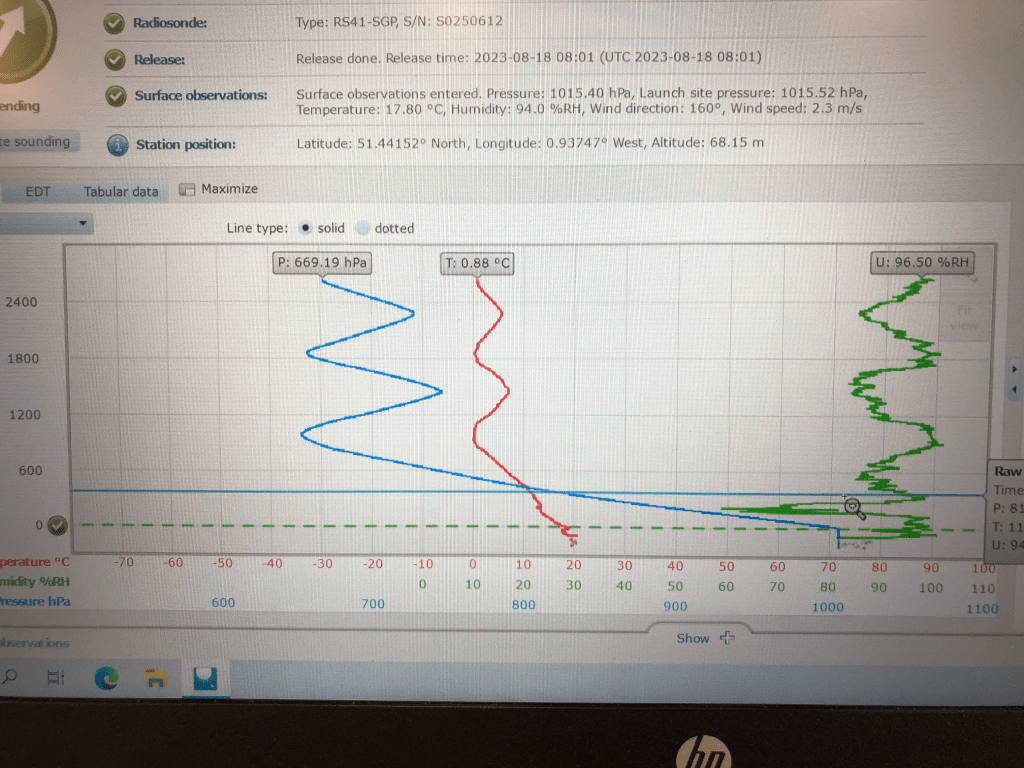
However, what we certainly did not expect to see were radiosondes appearing to oscillate with height (see my crude screenshot below). 

“The wiggler”! Oscillating radiosondes observed during elevated convection events.

Cue the excited discussions trying to explain what we were seeing. Sensor malfunction? Strong downdraughts? Not quite. 

Notice that the peak of each oscillation occurs almost exactly at 0°C. Surely that can’t be coincidental! Turns out these “wiggly” radiosondes have been observed before, albeit infrequently, and is attributed to snow building up on the surface of the balloon, weighing it down. As the balloon sinks and returns to above-freezing temperatures, the accumulated snow gradually melts and departs the balloon, allowing it to rise back up to the freezing level and accumulate more snow, and so on. 

That sounds reasonable enough. So why, then, do we see this oscillating behaviour so infrequently? One of the reasons discovered was purely technical. 

If you would like to read more about these events, a paper is currently being prepared by Stephen Burt, Caleb Miller and Brian Lo. Check back on the blog for further updates!

Humphrey Lean, Eme Dean-Lewis (left) and myself (right) ready to launch a sonde.

Met Office Summer Testbed

While not strictly a part of WesCon, this summer’s Met Office testbed was closely connected to the themes of the field campaign, and features plenty of collaboration. 

Testbeds are an opportunity for operational meteorologists, researchers, academics, and even students to evaluate forecast outputs and provide feedback on particular model issues. This year’s testbed was focussed on two main themes: convection and ensembles. These are both high priority areas for development in the Met Office, and the testbed provides a chance to get a broader, more subjective evaluation of these issues.

Group photo of the week 2 testbed participants.

Each day was structured into six sets of activities. Firstly, we were divided into three groups to perform a “Forecast Denial Experiment”, whereby each group is given access to a limited set of data and asked to issue a forecast for later in the day. One group only had access to the deterministic UKV model outputs, another group only had access to the MOGREPS-UK high-resolution ensemble output, and the third group has access to both datasets. The idea was to test whether ensemble outputs provide added value and accuracy to forecasts of impactful weather compared to just deterministic outputs. Each group was led by one or two operational meteorologists who navigated the data and, generally, provided most of the guidance. Personally, I found it immensely useful to shadow the op-mets as they made their forecasts, and came away with a much better understanding of the processes which goes into issuing a forecast.

After lunch, we would begin the ensemble evaluation activity which focussed on subjectively evaluating the spread of solutions in the high-resolution MOGREPS-UK ensemble. Improving ensemble spread is one of the major priorities for model development; currently, the members of high-resolution ensembles tend to diverge from the control member too slowly, leading to overconfident forecasts. It was particularly interesting to compare the spread results from MOGREPS-UK with the global MOGREPS-G ensemble and to try to understand the situations when the UK ensemble seemed to resemble a downscaled version of the global model. Next, we would evaluate three surface water flooding products, all combining ensemble data with other surface and impact libraries to produce flooding risk maps. Despite being driven by the same underlying model outputs, it was surprising how much each model differed in the case studies we looked at. 

Finally, we would end the day by evaluating the WMV (Wessex Model Variable) 300 m test ensemble, run over the greater Bristol area over this summer for research purposes. Also driven by MOGREPS-UK, this ensemble would often pick out convective structure which MOGREPS-UK was too coarse to resolve, but also tended to overdo the intensities. It was also very interesting to see the objective metrics suggested that WMV had much worse spread than MOGREPS-UK over the same area, a surprising result which didn’t align with my own interpretation of model performance.

Overall, the testbed was a great opportunity to learn more about how forecasts are issued and to get a deeper intuition for how to interpret model outputs. As researchers, it’s easy to look at model outputs as just abstract data, which is there to be verified and scrutinised, forgetting the impacts that it can have on the people experiencing it. While it was an admittedly exhausting couple of weeks, I would highly recommend more students take part in future testbeds!

Machine Learning: complement or replacement of Numerical Weather Prediction? 

Emanuele Silvio Gentile – e.gentile@pgr.reading.ac.uk

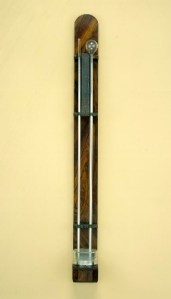
Figure 1 Replica of the first 1643 Torricelli barometer [1]

Humans have tried, for millennia, to predict the weather by finding physical relationships between observed weather events, a notable example being the descent in barometric pressure used as an indicator of an upcoming precipitation event. It should come as no surprise that one of the first weather measuring instrument to be invented was the barometer, by Torricelli (see in Fig. 1 a replica of the first Torricelli barometer), nearly concurrently with a reliable thermometer. Only two hundred years later, the development of the electric telegraph allowed for a nearly instant exchange of weather data, leading to the creation of the first synoptic weather maps in the US, followed by Europe. Synoptic maps allowed amateur and professional meteorologists to look at patterns between weather data in an unprecedented effective way for the time, allowing the American meteorologists Redfield and Epsy to resolve the dispute on which way the air flowed in a hurricane (anticlockwise in the Northern Hemisphere).

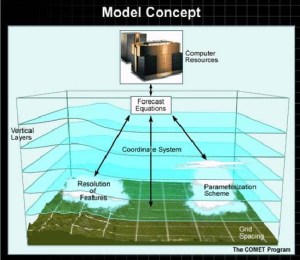
Figure 2 High Resolution NWP – model concept [2]

By the beginning of the 20th century many countries around the globe started to exchange data daily (thanks to the recently laid telegraphic cables) leading to the creation of global synoptic maps, with information in the upper atmosphere provided by radiosondes, aeroplanes, and in the 1930s radars. By then, weather forecasters had developed a large set of experimental and statistical rules on how to compute the changes to daily synoptic weather maps looking at patterns between historical sets of synoptic daily weather maps and recorded meteorological events, but often, prediction of events days in advance remained challenging.

In 1954, a powerful tool became available to humans to objectively compute changes on the synoptic map over time: Numerical Weather Prediction models. NWPs solve numerically the primitive equations, a set of nonlinear partial differential equations that approximate the global atmospheric flow, using as initial conditions a snapshot of the state of the atmosphere, termed analysis, provided by a variety of weather observations. The 1960s, marked by the launch of the first satellites, enabled 5-7 days global NWP forecasts to be performed. Thanks to the work of countless scientists over the past 40 years, global NWP models, running at a scale of about 10km, can now simulate skilfully and reliably synoptic-scale and meso-scale weather patterns, such as high-pressure systems and midlatitude cyclones, with up to 10 days of lead time [3].

The relatively recent adoption of limited-area convection-permitting models (Fig. 2) has made possible even the forecast of local details of weather events. For example, convection-permitting forecasts of midlatitude cyclones can accurately predict small-scale multiple slantwise circulations, the 3-D structure of convection lines, and the peak cyclone surface wind speed [4].

However, physical processes below convection permitting resolution, such as wind gusts, that present an environmental risk to lives and livelihoods, cannot be explicitly resolved, but can be derived from the prognostic fields such as wind speed and pressure. Alternative techniques, such as statistical modelling (Malone model), haven’t yet matched (and are nowhere near to) the power of numerical solvers of physical equations in simulating the dynamics of the atmosphere in the spatio-temporal dimension.

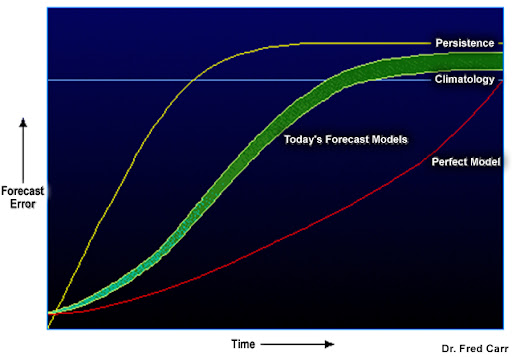
Figure 3 Error growth over time [5]

NWPs are not without flaws, as they are affected by numerical drawbacks: errors in the prognostic atmospheric fields build up through time, as shown in Fig. 3, reaching a comparable forecast error to that of a persisted forecast, i.e. at each time step the forecast is constant, and of a climatology-based forecast, i.e. mean based on historical series of observations/model outputs. Errors build up because NWPs iteratively solve the primitive equations approximating the atmospheric flow (either by finite differences or spectral methods). Sources of these errors are: too coarse model resolution (which leads to incorrect representation of topography), long integration time steps, and small-scale/sub-grid processes which are unresolved by the model physics approximations. Errors in parametrisations of small-scale physical processes grow over time, leading to significant deterioration of the forecast quality after 48h. Therefore, high-fidelity parametrisations of unresolved physical processes are critical for an accurate simulation of all types of weather events.

Figure 4 Met Office HPC [6]

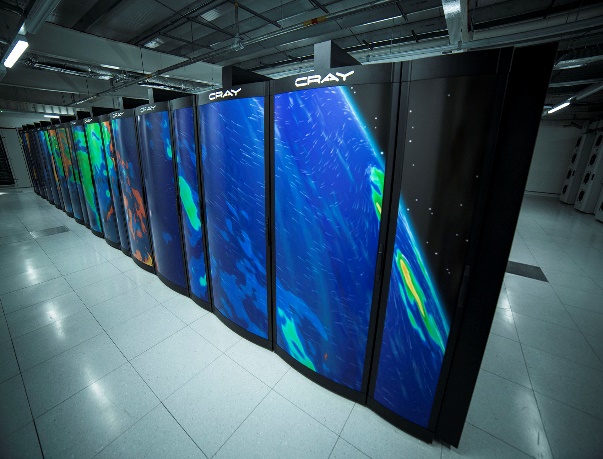
Another limitation of NWPs is the difficulty in simulating the chaotic nature of weather, which leads to errors in model initial conditions and model physics approximations that grow exponentially over time. All these limitations, combined with instability of the atmosphere at the lower and upper bound, make the forecast of rapidly developing events such as flash floods particularly challenging to predict. A further weakness of NWP forecasts is that they rely on the use of an expensive High Parallel Computing (HPC) facility (Fig. 4), owned by a handful of industrialised nations, which run coarse scale global models and high-resolution convection-permitting forecasts on domains covering area of corresponding national interest. As a result, a high resolution prediction of weather hazards, and climatological analysis remains off-limits for the vast majority of developing and third-world countries, with detrimental effects not just on first line response to weather hazards, but also for the development of economic activities such agriculture, fishing, and renewable energies in a warming climate. In the last decade, the cloud computing technological revolution led to a tremendous increase in the availability and shareability of weather data sets, which transitioned from local storage and processing to network-based services managed by large cloud computing companies, such as Amazon, Microsoft or Google, through their distributed infrastructure.

Combined with the wide availability of their cloud computing facilities, the access to weather data has become more and more democratic and ubiquitous, and consistently less dependent on HPC facilities owned by National Agencies. This transformation is not without drawbacks in case these tech giants decide to close the taps of the flow of data. During a row with the Australian government, Facebook banned access to Australian news content in Feb 2021. Although by accident, also government-related agencies such as the Bureau of Meteorology were banned, leaving citizens with restricted access to important weather information until the pages were restored. It is hoped that with more companies providing distributed infrastructure, the accessibility to vital data for citizen security will become more resilient.

The exponential accessibility of weather data sets has stimulated the development and the application of novel machine learning algorithms. As a result, weather scientists worldwide can crunch increasingly effectively multi-dimensional weather data, ultimately providing a new powerful paradigm to understand and predict the atmospheric flow based on finding relationships between the available large-scale weather datasets.

Machine learning (ML) finds meaningful representations of the patterns between the data through a series of nonlinear transformations of the input data. ML pattern recognition is distinguished into two types: supervised and unsupervised learning.

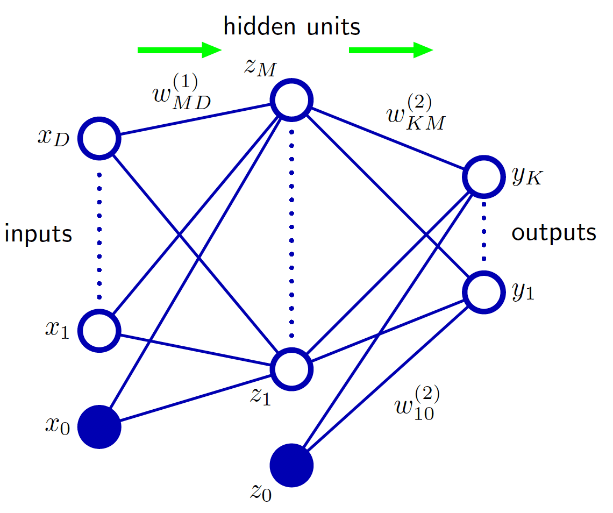
Figure5 Feed-forward neural network [6]

Supervised Learning is concerned with predicting an output for a given input. It is based on learning the relationship between inputs and outputs, using training data consisting in example input/output pairs, being divided into regression or classification, depending on the type of the output variable to be predicted (discrete or continuous). Support Vector Machine (SVM) or Regression (SVR), Artificial Neural Network (ANN, with the feed-forward step shown in Fig. 5), and Convolutional Neural Network (CNN) are examples of supervised learning.

Unsupervised learning is the task of finding patterns within data without the presence of any ground truth or labelling of the data, with a common unsupervised learning task being clustering (group of data points that are close to one another, relative to data points outside the cluster). Examples of unsupervised learning are the K-means and K-Nearest Neighbour (KNN) algorithms [7].

So far, ML algorithms have been applied to four key problems in weather prediction:  

  1. Correction of systematic error in NWP outputs, which involves post-processing data to remove biases [8]
  1. Assessment of the predictability of NWP outputs, evaluating the uncertainty and confidence scores of ensemble forecasting [9]
  1. Extreme detection, involving prediction of severe weather such as hail, gust or cyclones [10]
  1. NWP parametrizations, replacing empirical models for radiative transfer or boundary-layer turbulence with ML techniques [11]

The first key problem, which concerns the correction of systematic error in NWPs, is the most popular area of application of ML methods in meteorology. In this field, wind speed and precipitation observational data are often used to perform an ML linear regression on the NWP data with the end goal of enhancing its accuracy and resolving local details of the weather which were unresolved by NWP forecasts. Although attractive for its simplicity and robustness, linear regression presents two problems: (1) least-square methods used to solve linear regression do not scale well with the size of datasets (since matrix inversion required by least square is increasingly expensive for increasing datasets size), (2) Many relationships between variables of interest are nonlinear. Instead, classification tree-based methods have proven very useful to model non-linear weather events, from thunderstorm and turbulence detection to extreme precipitation events, and the representation of the circular nature of the wind. In fact, compared to linear regression, random trees exhibit an easy scalability with large-size datasets which have several input variables. Besides preserving the scalability to large datasets of tree-based method, ML methods such as ANN and SVM/R provide also a more generic and more powerful alternative for nonlinear-processes modelling. These improvements have come at the cost of a difficult interpretation of the underlying physical concepts that the model can identify, which is critical given that scientists need to couple these ML models with physical-equations based NWP for variable interdependence. As a matter of fact, it has proven challenging to interpret the physical meaning of the weights and nonlinear activation functions that describe in the ANN model the data patterns and relationships found by the model [12].

The second key problem, represented by the interpretation of ensemble forecasts, is being addressed by ML unsupervised learning methods such as clustering, which represents the likelihood of a forecast aggregating ensemble members by similarity. Examples include grouping of daily weather phenomena into synoptic types, defining weather regimes from upper air flow patterns, and grouping members of forecast ensembles [13].

The third key problem, which concerns the prediction of weather extremes, corresponding to weather phenomena which are a hazard to lives and economic activities, ML based methods tend to underestimate these events. The problem here lies with imbalanced datasets, since extreme events represent only a very small fraction of the total events observed [14].

The fourth key problem to which ML is currently being applied, is parametrisation. Completely new stochastic ML approaches have been developed, and their effectiveness, along with their simplicity compared to traditional empirical models has highlighted promising future applications in (moist) convection [15]

Further applications of ML methods are currently limited by intrinsic problems affecting the ML methods in relation to the challenges posed by weather data sets. While the reduction of the dimensionality of the data by ML techniques has proven highly beneficial for image pattern recognition in the context of weather data, it leads to a marked simplification of the input weather data, since it constrains the input space to individual grid cells in space or time [16]. The recent expansion of ANN into deep learning has provided new methodologies that can address these issues. This has pushed further the capability of ML models within the weather forecast domain, with CNNs providing a methodology for extracting complex patterns from large, structured datasets have been proposed, an example being the CNN model developed by Yunjie Liu in 2016 [17] to classify atmospheric rivers from climate datasets (atmospheric rivers are an important physical process for prediction of extreme rainfall events).

Figure 7 Sample images of atmospheric rivers correctly classified (true positive) by the deep CNN model in [18]

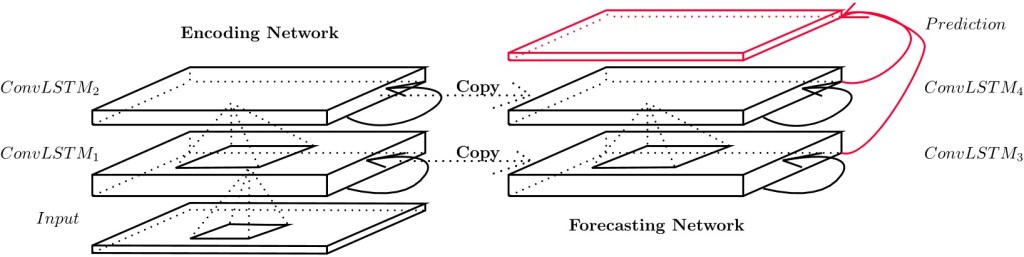
At the same time, Recursive Neural Networks (RNN), developed for natural language processing, are improving nowcasting techniques exploiting their excellent ability to work with the temporal dimension of data frames. CNN and RNN have now been combined, as illustrated in Fig. 6, providing the first nowcasting method in the context of precipitation, using radar data frames as input [18].

Figure 6 Encoding-forecasting ConvLSTM network for precipitation nowcasting [18]

While these results show a promising application of ML models to a variety of weather prediction tasks which extend beyond the area of competence of traditional NWPs, such as analysis of ensemble clustering, bias correction, analysis of climate data sets and nowcasting, they also show that ML models are not ready to replace NWP to forecast synoptic-scale and mesoscale weather patterns.

As a matter of fact, NWPs have been developed and improved for over 60 years with the very purpose to simulate very accurately and reliably the wind, pressure, temperature and other relevant prognostic fields, so it would be unreasonable to expect ML models to outperform NWPs on such tasks.

It is also true that, as noted earlier, the amount of available data will only grow in the coming decades, so it will be critical as well as strategic to develop ML models capable to extract patterns and interpret the relationships within such data sets, complementing NWP capabilities. But how long before an ML model will be capable to replace an NWP by crunching the entire set of historical observations of the atmosphere, extracting the patterns and the spatial-temporal relationships between the variables, and then performing weather forecasts?

Acknowledgement: I would like to thank my colleagues and friends Brian Lo, James Fallon, and Gabriel M. P. Perez, for reading and providing feedback on this article.

References

  1. https://collection.sciencemuseumgroup.org.uk/objects/co54518/replica-of-torricellis-first-barometer-1643-barometer-replica 
  1. https://www.semanticscholar.org/paper/High-resolution-numerical-weather-prediction-(NWP)-Allan-Bryan/a40e0ebd388b915bdd357f398baa813b55cef727/figure/6 
  1. Buizza, R., Houtekamer, P., Pellerin, G., Toth, Z., Zhu, Y. and Wei, M. (2005) A comparison of the ECMWF, MSC, and NCEP global ensemble prediction systems. Mon Weather Rev, 133, 1076 – 1097 
  1. Lean, H. and Clark, P. (2003) The effects of changing resolution on mesocale modelling of line convection and slantwise circulations in FASTEX IOP16. Q J R Meteorol Soc, 129, 2255–2278 
  1. http://www.chanthaburi.buu.ac.th/~wirote/met/tropical/textbook_2nd_edition/navmenu.php_tab_10_page_4.3.5.htm 
  1. Bishop, C., and Christopher, M., Pattern Recognition and Machine Learning, Springer 
  1. https://www.arup.com/projects/met-office-high-performance-computer 
  1. J. L. Aznarte and N. Siebert, “Dynamic Line Rating Using Numerical Weather Predictions and Machine Learning: A Case Study,” in IEEE Transactions on Power Delivery, vol. 32, no. 1, pp. 335-343, Feb. 2017, doi: 10.1109/TPWRD.2016.2543818. 
  1. Foley, Aoife M et al. (2012). “Current methods and advances in forecasting of wind power generation”. In: Renewable Energy 37.1, pp. 1–8. 
  1. McGovern, Amy et al. (2017). “Using artificial intelligence to improve real-time decision making for high-impact weather”. In: Bulletin of the American Meteorological Society 98.10, pp. 2073–2090 
  1. O’Gorman, Paul A and John G Dwyer (2018). “Using machine learning to parameterize moist convection: Potential for modeling of climate, climate change and extreme events”. In: arXiv preprint arXiv:1806.11037 
  1. Moghim, Sanaz and Rafael L Bras (2017). “Bias correction of climate modeled temperature and precipitation using artificial neural networks”. In: Journal of Hydrometeorology 18.7, pp. 1867–1884.  
  1. Camargo S J, Robertson A W Gaffney S J Smyth P and M Ghil (2007). “Cluster analysis of typhoon tracks. Part I: General properties”. In: Journal of Climate 20.14, pp. 3635–3653. 
  1. Ahijevych, David et al. (2009). “Application of spatial verification methods to idealized and NWP-gridded precipitation forecasts”. In: Weather and Forecasting 24.6, pp. 1485–1497. 
  1. Berner, Judith et al. (2017). “Stochastic parameterization: Toward a new view of weather and climate models”. In: Bulletin of the American Meteorological Society 98.3, pp. 565–588. 
  1. Fan, Wei and Albert Bifet (2013). “Mining big data: current status, and forecast to the future”. In: ACM sIGKDD Explorations Newsletter 14.2, pp. 1–5 
  1. Liu, Yunjie et al. (2016). “Application of deep convolutional neural networks for detecting extreme weather in climate datasets”. In: arXiv preprint arXiv:1605.01156. 
  1. Xingjian, SHI et al. (2015). “Convolutional LSTM network: A machine learning approach for precipitation nowcasting”. In: Advances in neural information processing systems, pp. 802–810. 

Diagnosing solar wind forecast errors

Harriet Turner – h.turner3@pgr.reading.ac.uk

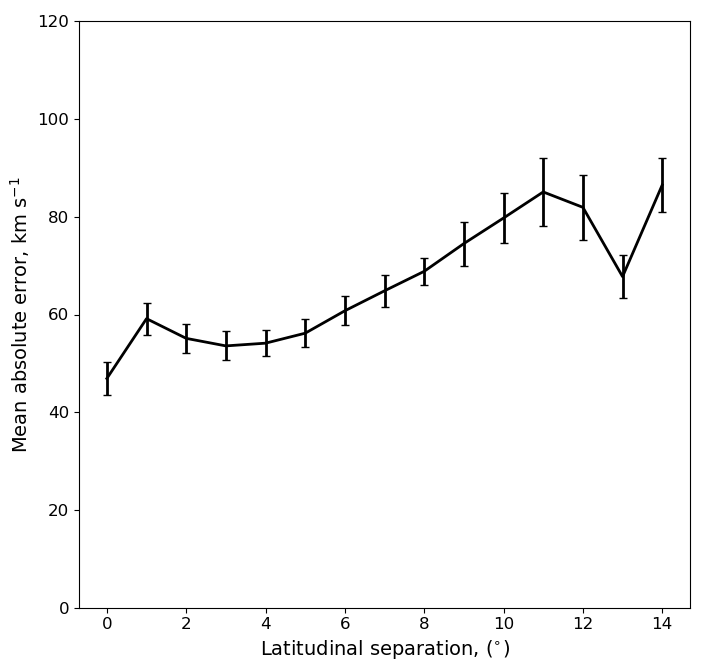
The solar wind is a continual outflow of charged particles that comes off the Sun, ranging in speed from 250 to 800 km s-1. During the first six months of my PhD, I have been investigating the errors in a type of solar wind forecast that uses spacecraft observations, known as corotation forecasts. This was the topic of my first paper, where I focussed on extracting the forecast error that occurs due to a separation in the spacecraft latitude. I found that up to a latitudinal separation of 6 degrees, the error contribution was approximately constant. Above 6 degrees, the error contribution increases as the latitudinal separation increases. In this blog post I will explain the importance of forecasting the solar wind and the principle behind corotation forecasts. I will also explain how this work has wider implications for future space missions and solar wind forecasting.

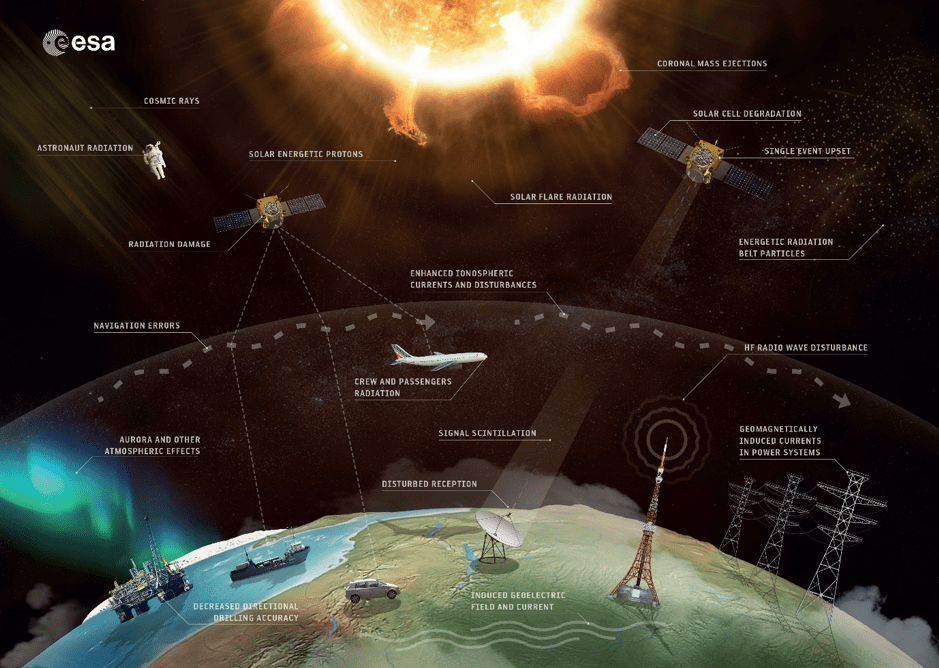
The term “space weather” refers to the changing conditions in near-Earth space. Extreme space weather events can cause several effects on Earth, such as damaging power grids, disrupting communications, knocking out satellites and harming the health of humans in space or on high-altitude flights (Cannon, 2013). These effects are summarised in Figure 1. It is therefore important to accurately forecast space weather to help mitigate against these effects. Knowledge of the background solar wind is an important aspect of space weather forecasting as it modulates the severity of extreme events. This can be achieved through three-dimensional computer simulations or through more simple methods, such as corotation forecasts as discussed below.

Figure 1. Cosmic rays, solar energetic particles, solar flare radiation, coronal mass ejections and energetic radiation belt particles cause space weather. Subsequently, this produces a number of effects on Earth. Source: ESA.

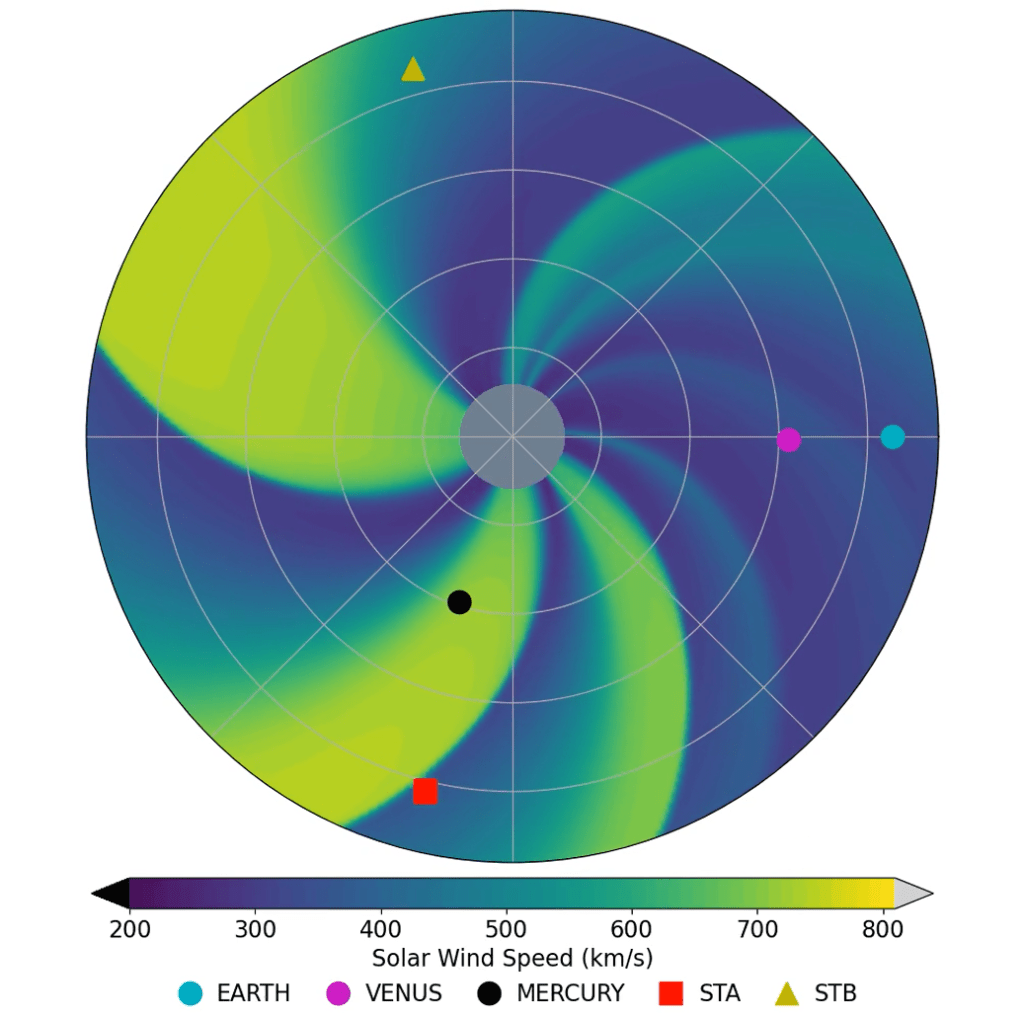
Solar wind flow is mostly radial away from the Sun, however the fast/slow structure of the solar wind rotates round with the Sun. If you were looking down on the ecliptic plane (where the planets lie, at roughly the Sun’s equator), then you would see a spiral shape of fast and slow solar wind, as in Figure 2. This makes a full rotation in approximately 27 days. As this rotates around, it allows us to use observations on this plane as a forecast for a point further on in that rotation, assuming a steady-state solar wind (i.e., the solar wind does not evolve in time). For example, in Figure 2, an observation from the spacecraft represented by the red square could be used as a forecast at Earth (blue circle), some time later. This time depends on the longitudinal separation between the two points, as this determines the time it takes for the Sun to rotate through that angle.

Figure 2. The spiral structure of the solar wind, which rotates anticlockwise. Here, STA and STB are the STEREO-A and STEREO-B spacecraft respectively. The solar wind shown here is the radial component. Source: HUXt model (Owens et al, 2020).

In my recent paper I have been investigating how the corotation forecast error varies with the latitudinal separation of the observation and forecast points.  Latitudinal separation varies throughout the year, and it was theorised that it should have a significant impact on the accuracy of corotation forecasts. I used the two spacecraft from the STEREO mission, which are on the same plane as Earth, and a dataset for near-Earth. This allowed for six different configurations to compute corotation forecasts, with a maximum latitudinal separation of 14 degrees. I analysed the 18-month period from August 2009 to February 2011 to help eliminate other affecting variables. Figure 3 shows the relationship between forecast error and latitudinal separation. Up to approximately 6 degrees, there is no significant relationship between error and latitudinal separation. Above this, however, the error increases approximately linearly with the latitudinal separation.

Figure 3. Variation of forecast error with the latitudinal separation between the spacecraft making the observation and the forecast location. Error bars span one standard error on the mean.

This work has implications for the future Lagrange space weather monitoring mission, due for launch in 2027. The Lagrange spacecraft will be stationed in a gravitational null, 60degrees in longitude behind Earth on the ecliptic plane. Gravitational nulls occur when the gravitational fields between two or more massive bodies balance out. There are five of these nulls, called the Lagrange points, and locating a spacecraft at one reduces the amount of fuel needed to stay in position. The goal of the Lagrange mission is to provide a side-on view of the Sun-Earth line, but it also presents an opportunity for consistent corotation forecasts to be generated at Earth. However, the Lagrange spacecraft will oscillate in latitude compared to Earth, up to a maximum of about 5 degrees. My results indicate that the error contribution from latitudinal separation would be approximately constant.

The next steps are to use this information to help improve the performance of solar wind data assimilation. Data assimilation (DA) has led to large improvements in terrestrial weather forecasting and is beginning to be used in space weather forecasting. DA combines observations and model output to find an optimum estimation of reality. The latitudinal information found here can be used to inform the DA scheme how to better handle the observations and to, hopefully, produce an improved solar wind representation.

The work I have discussed here has been accepted into the AGU Space Weather journal and is available at https://agupubs.onlinelibrary.wiley.com/doi/epdf/10.1029/2021SW002802.

References

Cannon, P.S., 2013. Extreme space weather – A report published by the UK royal academy of engineering. Space Weather, 11(4), 138-139.  https://agupubs.onlinelibrary.wiley.com/doi/full/10.1002/swe.20032

ESA, 2018. https://www.esa.int/ESA_Multimedia/Images/2018/01/Space_weather_effects 

Owens, M.J., Lang, M.S., Barnard, L., Riley, P., Ben-Nun, M., Scott, C.J., Lockwood, M., Reiss, M.A., Arge, C.N. & Gonzi, S., 2020. A Computationally Efficient, Time-Dependent Model of the Solar Wind for use as a Surrogate to Three-Dimensional Numerical Magnetohydrodynamic Simulations. Solar Physics, 295(3), https://doi.org/10.1007/s11207-020-01605-3

Connecting Global to Local Hydrological Modelling Forecasting – Virtual Workshop

Gwyneth Matthews g.r.matthews@pgr.reading.ac.uk
Helen Hooker h.hooker@pgr.reading.ac.uk 

ECMWF- CEMS – C3S – HEPEX – GFP 

What was it? 

The workshop was organised under the umbrella of ECMWF, the Copernicus services CEMS and C3S, the Hydrological Ensemble Prediction EXperiment (HEPEX) and the Global Flood Partnership (GFP). The workshop lasted 3 days, with a keynote speaker followed by Q&A at the start of each of the 6 sessions. Each keynote talk focused on a different part of the forecast chain, from hybrid hydrological forecasting to the use of forecasts for anticipatory humanitarian action, and how the global and local hydrological scales could be linked. Following this were speedy poster pitches from around the world and poster presentations and discussion in the virtual ECMWF (Gather.town).  

Figure 1: Gather.town was used for the poster sessions and was set up to look like the ECMWF site in Reading, complete with a Weather Room and rubber ducks. 

What was your poster about? 

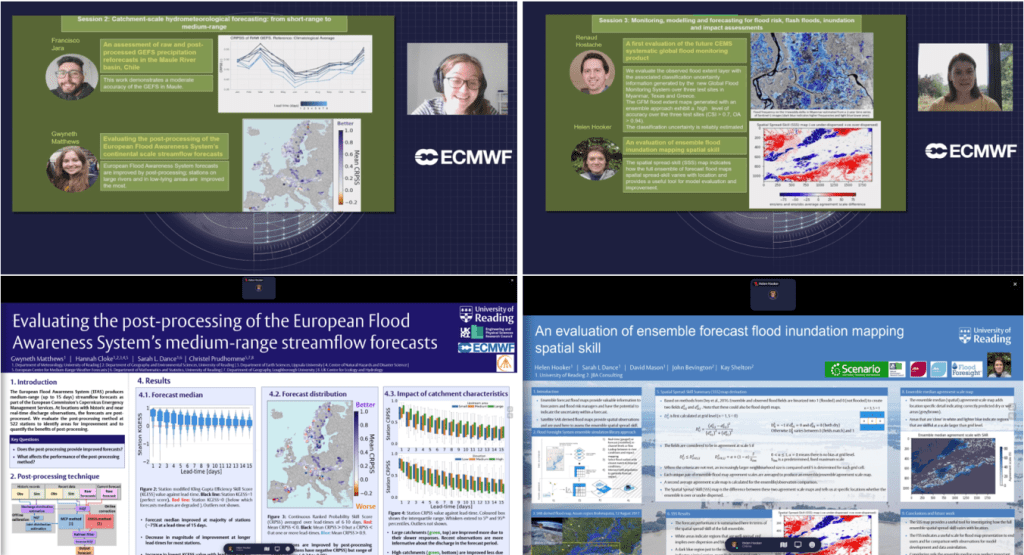
Gwyneth – I presented Evaluating the post-processing of the European Flood Awareness System’s medium-range streamflow forecasts in Session 2 – Catchment-scale hydrometeorological forecasting: from short-range to medium-range. My poster showed the results of the recent evaluation of the post-processing method used in the European Flood Awareness System. Post-processing is used to correct errors and account for uncertainties in the forecasts and is a vital component of a flood forecasting system. By comparing the post-processed forecasts with observations, I was able to identify where the forecasts were most improved.  

Helen – I presented An evaluation of ensemble forecast flood map spatial skill in Session 3 – Monitoring, modelling and forecasting for flood risk, flash floods, inundation and impact assessments. The ensemble approach to forecasting flooding extent and depth is ideal due to the highly uncertain nature of extreme flooding events. The flood maps are linked directly to probabilistic population impacts to enable timely, targeted release of funding. The Flood Foresight System forecast flood inundation maps are evaluated by comparison with satellite based SAR-derived flood maps so that the spatial skill of the ensemble can be determined.  

Figure 2: Gwyneth (left) and Helen (right) presenting their posters shown below in the 2-minute pitches. 

What did you find most interesting at the workshop? 

Gwyneth – All the posters! Every session had a wide range of topics being presented and I really enjoyed talking to people about their work. The keynote talks at the beginning of each session were really interesting and thought-provoking. I especially liked the talk by Dr Wendy Parker about a fitness-for-purpose approach to evaluation which incorporates how the forecasts are used and who is using the forecast into the evaluation.  

Helen – Lots! All of the keynote talks were excellent and inspiring. The latest developments in detecting flooding from satellites include processing the data using machine learning algorithms directly onboard, before beaming the flood map back to earth! If openly available and accessible (this came up quite a bit) this will potentially rapidly decrease the time it takes for flood maps to reach both flood risk managers dealing with the incident and for use in improving flood forecasting models. 

How was your virtual poster presentation/discussion session? 

Gwyneth – It was nerve-racking to give the mini-pitch to +200 people, but the poster session in Gather.town was great! The questions and comments I got were helpful, but it was nice to have conversations on non-research-based topics and to meet some of the EC-HEPEXers (early career members of the Hydrological Ensemble Prediction Experiment). The sessions felt more natural than a lot of the virtual conferences I have been to.  

Helen – I really enjoyed choosing my hairdo and outfit for my mini self. I’ve not actually experienced a ‘real’ conference/workshop but compared to other virtual events this felt quite realistic. I really enjoyed the Gather.town setting, especially the duck pond (although the ducks couldn’t swim or quack! J). It was great to have the chance talk about my work and meet a few people, some thought-provoking questions are always useful.